
Tech Express | October 9, 2026 — Apple Announces October 13 'Welcome Home' Event Focused on the Smart Home
Today's Tech Express: Apple announces an October 13 'Welcome home' smart home event; Terence Tao reposts a declaration urging mathematicians to stop working with OpenAI. Anthropic cuts Haiku 5.5 prices to a tenth, and a new Claude policy lets the AI end chats under abuse. Lumentum's optical capacity is sold out into early 2029; Microsoft launches a $2,599 Surface Laptop Ultra; SpaceX urges better orbital coordination; Huawei doubles down on homegrown-chip phones; Manus raises $500M+.
1. Apple announces surprise October 13 'Welcome home' event focused on the smart home
Source: The Verge
Apple has just announced a new October event, taking place in New York on October 13th at 9AM ET. The invite uses the tagline "Welcome home," hinting that the company's rumored smart home push will be the focus.
At the event, Apple is rumored to announce products including a smart home hub with a display, an updated HomePod Mini, and a new Apple TV. The company is also reportedly teaming up with LG on new smart home devices launching at the event, including a video doorbell, thermostat, and indoor camera; renders leaked yesterday purportedly showed off some of those devices.
Apple has reportedly been working on a new smart home hub for some time, and apparently even wanted to launch it sometime in 2025. However, delays to the upgraded, AI-powered Siri pushed that launch back. Siri AI finally launched last month (though with a beta tag), and now that it's out, Apple's next big push for the smart home appears about to begin.
2. Terence Tao reposts break-up declaration as mathematicians urge a halt to OpenAI collaboration
Source: Mydrivers
According to a report cited by Kuaikeji on October 9, tensions between OpenAI and the mathematics community have escalated again. Terence Tao, a leading figure in mathematics and a Fields Medalist, issued a break-up declaration on behalf of the Association for Human Mathematics (AHM), strongly urging all mathematicians to stop collaborating with OpenAI and to return to a scientific vision centered on human understanding.
The dispute stems from a batch of mathematical research manuscripts OpenAI published. Its internal models attempted to solve roughly 4,000 math problems, ultimately compiling research material covering 372 sets of results and releasing part of the Lean formal proof code. The declaration put it bluntly: "Publishing more than 700 documents at once demonstrates not academic research, but power." Tao, though not the author, reposted the full text on his personal blog, drawing intense attention to the controversy.
Less than a month earlier, Tao and 24 other Fields Medalists had published an open letter warning that AI companies were steering math research away from its original goals. Theoretical computer scientist Dana Moshkovitz, after reading the papers OpenAI released, described them as full of hard-to-understand constructions, vague reasoning steps and baffling citations; Scott Aaronson of UT Austin called OpenAI's release day "math doomsday." Others, such as Northwestern's Bryna Kra, argued that AI could help researchers explore problems that were previously hard to solve, but that companies should publish results in a way that meets academic norms so peers can check, understand and build on the work.

3. Anthropic releases Haiku 5.5, cutting prices to a tenth as the US-China LLM price war shifts
Source: Huxiu
On October 8, Anthropic released Haiku 5.5. For short requests of up to 100,000 tokens, it charges $0.1 per million input tokens and $0.5 per million output tokens — just one-tenth of the previous-generation Haiku 4.5.
That morning, Dragonfly managing partner Haseeb Qureshi posted two Artificial Analysis scatter plots on X, captioned: "If you want the cheapest LLMs, you should now buy American." The dashed line connecting all optimal solutions is the Pareto frontier: on the June chart, the cheapest end was almost entirely Chinese models such as Xiaomi MiMo, DeepSeek V4 Pro, MiniMax-M3 and Zhipu GLM-5.2; by October 8, the whole line had been taken over by Anthropic and OpenAI, leaving only MiMo barely hanging on at the edge.
The news dragged Hong Kong-listed LLM concept stocks lower: at 10:26 a.m. MiniMax's decline widened to 10% and Zhipu fell 5.6%, while the Hang Seng Tech Index dropped 1.93% by midday, with the two AI upstarts underperforming the index by nearly five times. The article recalls that over the past two years, Chinese open-source and high-value models had welded a "kill line" into the global LLM market, but since late June, Anthropic and OpenAI have cut prices in succession — Anthropic withdrew Sonnet 5's price hike in August and launched Opus 5.5 in September with overall costs cut 40%, while OpenAI pinned Luna's entry price at $0.1 input and $0.5 output.

4. Claude's new policy: persistent abuse can make the AI end the conversation
Source: Mydrivers
According to Android Authority, cited by Kuaikeji on October 9, Anthropic has updated Claude's usage policy to explicitly prohibit users from persistently and needlessly abusing or being cruel to the AI model. The new rules take effect on November 12, 2026.
Anthropic explained in its announcement that the addition mainly targets extreme cases, such as users attacking the model maliciously without any clear purpose. If someone keeps heaping meaningless abuse on Claude for a long time, the AI may end the current conversation. In normal use, users can still criticize Claude, question its answers, or express dissatisfaction with poor performance; creative work on negative subject matter, normal model testing and research activities are not restricted.
As early as August 2025, Anthropic had allowed some Claude models to end chats in extreme cases. When a user persists in harmful or abusive interactions and repeated attempts to redirect them fail, Claude can choose to end the conversation, though the user can still start a new chat and other conversations are unaffected. The company said ending the conversation will remain the primary way of handling such behavior, and it has not stipulated that abusing the AI leads to an immediate account ban. The change also signals that how users treat AI itself is increasingly being written into platform rules.

5. US optical leader Lumentum says its optical component capacity is sold out into early 2029
Source: Cailianshe
Cailianshe, October 9 — Michael Hurlston, CEO of US optical communications leader Lumentum Holdings, said Friday that the company's production capacity for optical components is fully sold out through early 2029, as tech companies race to build faster AI data centers.
Speaking to reporters in Tokyo, Japan, Hurlston said that for some products about 70% of demand still cannot be met next year, while for others 30% of demand into 2028 remains unmet. "We are running as hard as we can to add capacity as quickly as we can, but we are still way behind our customers' demand. Our capacity is all sold out, and right now there is no end in sight," he said. In April, he had predicted that full-2028 capacity would be booked within two quarters.
To meet surging demand, Lumentum has increased capacity at its key factory in the Tokyo metropolitan area 12-fold over the past two years, plans to invest at least $350 million in that plant and nearby facilities, and has expanded capacity at its Caswell, UK plant. Earlier this year, Nvidia invested $2 billion each in Lumentum and its rival Coherent. Hurlston said the company needs to consider acquisitions to expand its product line; building new capacity takes 3 to 5 years, though cloud giants have agreed to shoulder part of the capex risk.
6. Russia completes acceptance of a 130nm lithography machine costing about $6.5 million
Source: Mydrivers
According to CNews, cited by Kuaikeji on October 9, Russia has completed third-stage design acceptance for a lithography machine used to produce 130-nanometer process chips, with the acceptance certificate signed on August 7, 2026.
The 130nm lithography machine was developed by the Zelenograd Nano Technology Center (ZNTC) together with Belarusian company Planar. It is mainly used to project integrated-circuit topologies onto 200mm (8-inch) semiconductor wafers and to perform multiple projection replication in manufacturing very-large-scale integration (VLSI), with a designed process of 130 nanometers. Within the project, ZNTC built two prototypes of 193nm excimer lasers and completed associated photomasks, test structures and objective test benches, as well as basic process debugging. ZNTC was scheduled to deliver the third stage in March 2026, but it slipped to August.
Analysts note the device uses light sources including self-developed 193nm excimer lasers, plus other domestic components and domestic semiconductor materials, to achieve the required resolution. The lithography machine itself is estimated to cost 542.2 million rubles (about $6.5 million), with the two lasers costing 49 million and 46 million rubles. For Russia, which previously lacked the ability to produce such machines, this marks a new breakthrough; previously only ASML of the Netherlands, Canon and Nikon of Japan, and China's Shanghai Micro Electronics could produce such machines.

7. Microsoft launches $2,599 Surface Laptop Ultra to take on MacBook Pro
Source: MacRumors
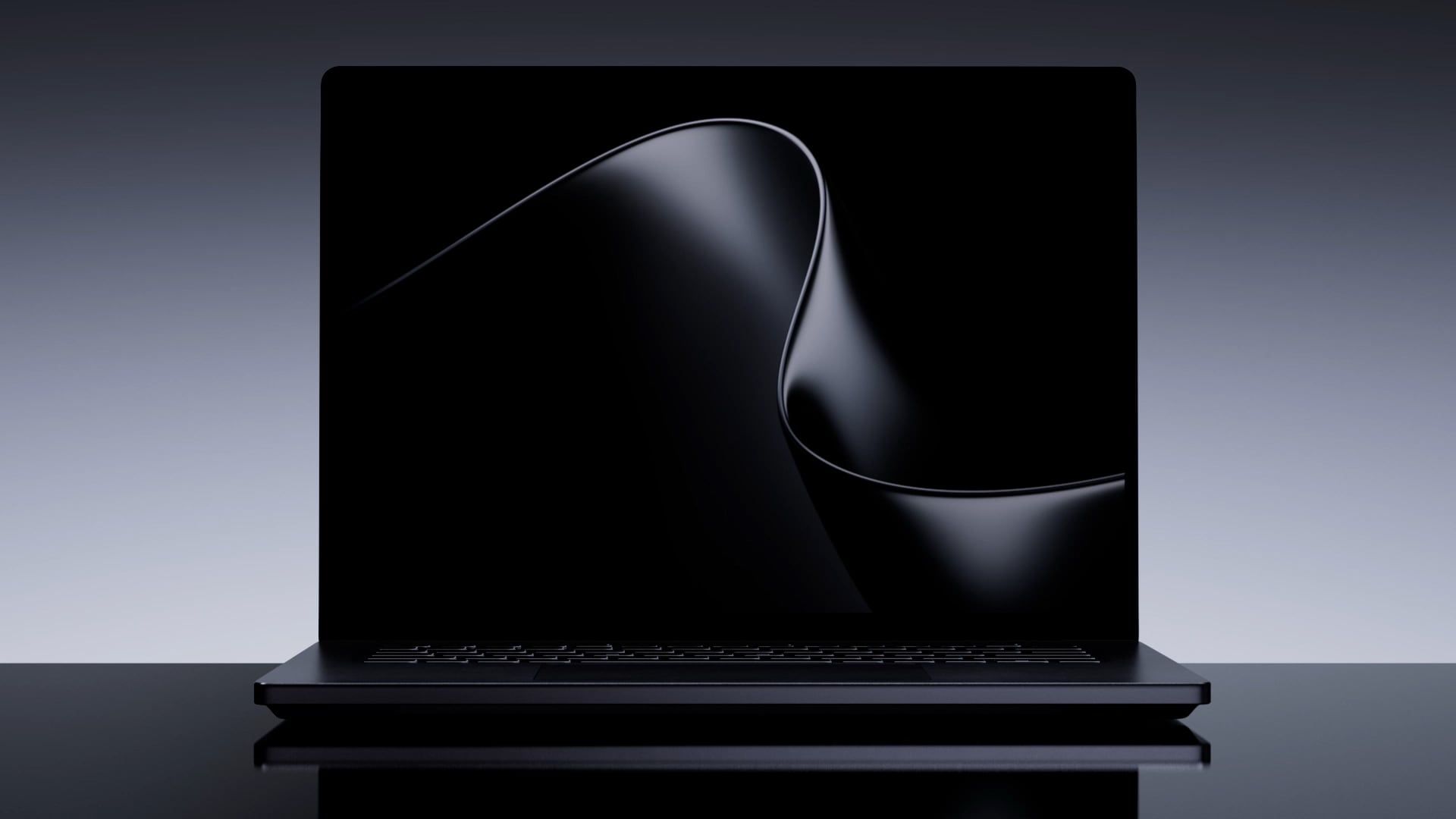
Microsoft today announced launch timing and pricing for the Surface Laptop Ultra it unveiled earlier this year. The 15-inch laptop starts at $2,599, undercutting Apple's $2,999 16-inch MacBook Pro, and targets the same creator and developer market. Microsoft says it is built for "demanding creative, software development, AI, engineering, and 3D workloads."
The new laptop uses an Nvidia RTX Spark chip, which includes an Nvidia Blackwell RTX GPU with up to 6,144 cores and an Nvidia Grace CPU with up to 20 cores. It supports up to 128GB of unified memory and has a new thermal architecture. Because the RTX Spark is Arm-based, the laptop runs Windows on Arm, with x86 apps running through Microsoft's Prism emulation. Microsoft calls it its most powerful notebook to date; its mini-LED display's peak HDR brightness is 25% higher than the M5 MacBook Pro's, and the touchscreen supports gestures and navigation but not pen input.
The laptop is lighter than the 16-inch MacBook Pro, with a large haptic trackpad and upgradeable storage, and it adds magnetic "Magnetic Connect" USB-C charging, which Microsoft calls "the world's first built-in magnetic USB-C charging on a laptop." Microsoft also announced the $5,999 Surface RTX Spark Dev Box, offering up to 1 petaflop of AI performance and support for AI models up to 120B parameters. The Surface Laptop Ultra launches on October 16.
8. SpaceX calls for better coordination in orbit after near-misses with Starlink
Source: Ars Technica
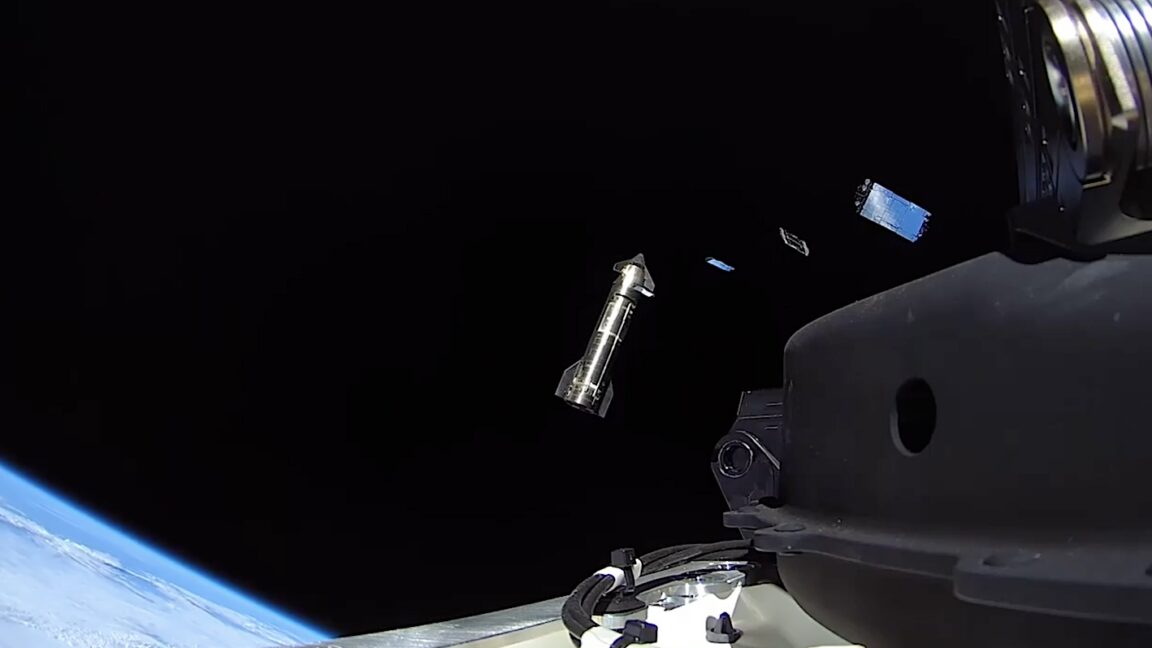
A top SpaceX executive called this week for stronger sharing of position and maneuver information among satellite operators. Michael Nicolls, SpaceX's vice president for Starlink and president of Elon Musk's AI company xAI, used a presentation at the International Astronautical Congress in Turkey to urge improved data-sharing, saying space has plenty of room for more megaconstellations — but only if all operators are willing to share where their satellites are and where they're going.
Nicolls presented several examples of satellites from other operators closely approaching Starlink satellites as they zip around Earth at 5 miles per second, with conjunctions of tens of meters to hundreds of meters. He said the examples did not suggest nefarious intent such as spying or striking a Starlink; instead, the other satellites maneuvered and changed trajectories without their owners informing anyone. "Either they were not publishing their ephemeris to us, or they were not considering the ephemeris of others when they were maneuvering, and these led to conjunctions of tens of meters to hundreds of meters," Nicolls said. "Way too close to comfort."
Starlink now has more than 11,000 satellites, about two-thirds of all active spacecraft in low-Earth orbit. SpaceX has revealed plans to launch up to a million satellites for a new constellation called Starmind to deploy AI computing capacity in low-Earth orbit, while Amazon is in the early stages of launching a network of thousands of satellites. Nicolls said the minimum standard in low-Earth orbit "needs to be that you know where your satellite is, and you know where it's going," and that prediction needs to be reliable.
9. Huawei doubles down on smartphones as EV sales slow
Source: CNBC
BEIJING — Faced with a slowdown in the smartphone and car markets, Huawei's consumer business is choosing to focus on phones with homegrown chips. The Chinese tech giant worked overtime to release its first smartphone using its own "LogicFolding" chip — the Mate 90 series — on October 1, the country's National Day and a public holiday.
Ahead of the event, Huawei executive director Richard Yu told reporters the company aims to recover its overseas market share after US restrictions in 2019 knocked it from a brief first place. Yu said Huawei then shipped more than 240 million smartphones in China and elsewhere, with a goal of 300 million units in 2019. But now Huawei only sells several million smartphones outside China each year, he said, adding the company plans to expand its HarmonyOS operating system overseas in the next one to three years and hopes China's chip manufacturing capacity will one day enable overseas sales of devices with self-developed chips. The media roundtable marked Yu's first time speaking with foreign press since 2019.
Huawei's consumer business — once its largest by revenue — halved to about $34 billion in 2021 from the year before under sanctions, and has since grown to around $51 billion in 2025, or 39% of total revenue, according to CNBC calculations. Its push into smartphones comes as China's phone sales have slumped this year, with double-digit year-on-year declines in August and September, according to Counterpoint Research. Huawei entered EVs by working with several Chinese carmakers, building a business unit with at least $6.7 billion in 2025 revenue; but China's auto market is on track for its worst year since 2021, with sales down more than 20% over roughly the first three quarters.

10. Manus raises over $500 million after acquisition saga; founder Xiao Hong's exit ban lifted
Source: Lianhe Zaobao
Chinese AI company Manus, which went through an acquisition saga, has completed a funding round of more than $500 million (about S$640 million), and founder Xiao Hong has had his exit ban lifted — a "restart" for a company once caught in a US-China tech rivalry, and a sign of Chinese capital markets' enthusiasm for AI.
Manus's parent company, Butterfly Effect, announced the funding on Thursday, October 8, via its official WeChat account. It is one of the largest single rounds ever in China's AI application sector, led by Chinese private equity fund Boyu Capital and veteran USD fund IDG, with existing shareholders Tencent, Sequoia China and ZhenFund following on. The post-money valuation reached $4 billion, making Manus China's most valuable AI agent startup.
Last December, Facebook parent Meta agreed to acquire Manus for $2 billion, but Chinese regulators required the deal to be withdrawn, and state media criticized it as "showering abroad" to evade Chinese regulation; Xiao and chief scientist Ji Yichao were once barred from leaving the country. Sources told Lianhe Zaobao that Manus's overseas headquarters remains in Singapore and that the exit restrictions on both Xiao and Ji have been lifted, with Xiao recently traveling between China and Singapore. Manus also posted 17 openings for domestic and overseas hiring the same day, all based in Beijing.
More News
- Global Express | October 9, 2026 — Former ICC Judge Navi Pillay Wins 2026 Nobel Peace Prize
- Finance Morning | October 9, 2026: PBOC Sets Out RMB Exchange-Rate Stance; A-shares Reverse Higher, Hang Seng Jumps 1.79%
- Sports Express | October 9, 2026 — MLB Proposes 154-Game Season, Best-of-Seven Division Series
- Maple Express | October 9, 2026 — Food Experts Warn of a Tough Winter at the Grocery Store
- Finance Evening (Oct 8): AI Stocks Slide, Canada-U.S. Trade Uncertainty Draws Business Warning
Comments (0)
View More
 -47%
-47%Samsung 9100 PRO 1TB PCIe 5.0 NVMe SSD — 14,700MB/s, Gen5 Flagship for Nearly Half Price! $249.99 CAD (46% Off)
 -15%
-15%Rust-Oleum High Heat Spray Paint (Matte Black, 340g) — Refresh Your BBQ & Wood Stove! $15.30 CAD (15% Off)
 -45%
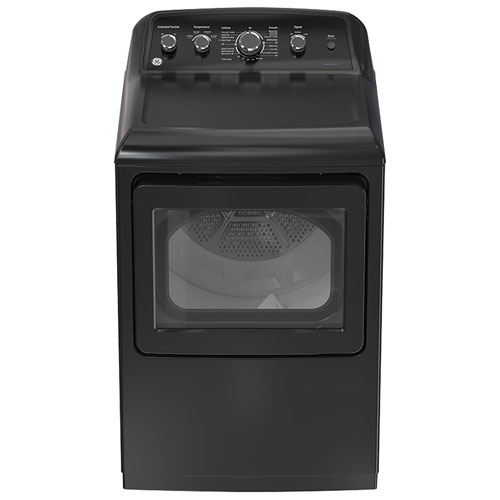
-45%GE 7.2 Cu. Ft. Electric Dryer — Sensor Dry Moisture Sensing! $749.99 CAD (44% Off)
 -52%
-52%Nalgene 32oz Wide Mouth Bottle — The Outdoor Staple, Half Price! $16.99 CAD (51% Off)
 Global Express
Global Express | October 9, 2026 — Former ICC Judge Navi Pillay Wins 2026 Nobel Peace Prize
 Maple Express
Maple Express | October 8, 2026 — Chow Pledges 10,000 Rental Homes Would Break Ground in 2027 if Re-elected
-47%Samsung 9100 PRO 1TB PCIe 5.0 NVMe SSD — 14,700MB/s, Gen5 Flagship for Nearly Half Price! $249.99 CAD (46% Off)
Amazon
-15%Rust-Oleum High Heat Spray Paint (Matte Black, 340g) — Refresh Your BBQ & Wood Stove! $15.30 CAD (15% Off)
Amazon
-45%GE 7.2 Cu. Ft. Electric Dryer — Sensor Dry Moisture Sensing! $749.99 CAD (44% Off)
Best Buy
-52%Nalgene 32oz Wide Mouth Bottle — The Outdoor Staple, Half Price! $16.99 CAD (51% Off)
Amazon
Global ExpressGlobal Express | October 9, 2026 — Former ICC Judge Navi Pillay Wins 2026 Nobel Peace Prize
Maple Express