
Tech Express | October 24, 2026: Kimi K3.1 Pro Hits 55 on AA Benchmark as GLM-5.5 Rumored to Top 60
Oct 24: Kimi K3.1 Pro scores 55 on AA as GLM-5.5 is rumored to top 60; Altman says frontier models stay closed; Yang Yuanqing sees 80% of tokens made at the edge; AMD Zen 6 leaks with up to 24% better per-clock performance; the FCC blocks two HiSilicon-chip devices; iPhone Duo buyers report cracked displays; Apple must allow sideloading in Australia; NASA details the Artemis 3 test flight; a Unitree robot loses a leg mid-flip; WeCom blames a plugin breach.
1. Kimi K3.1 Pro Reaches 55 on AA Benchmark as GLM-5.5 Rumored to Top 60
Source: MyDrivers
Kimi K3.1 Pro, released in the early hours of October 24, has become the strongest performer in this round of Chinese flagship models, scoring 55 on the AA leaderboard to rank fourth, according to a Fast Technology report published today. The model has 2.8 trillion parameters, and its AA score jumped from 44 to 55.
The report says another Chinese model, GLM-5.5, has been tipped to push past 60. The same release wave included DeepSeek V4.1 Flash-1017 and MiniMax-M3.1 Flash, both lightweight Flash models that improved noticeably on their predecessors but, limited by scale, moved from below 40 to around 45 on AA.
Kimi K3.1 Pro still trails Opus 5.5 and Astra by two to three points, with clearer gaps in some sub-categories. Attention now turns to who breaks 60 first: Anthropic's Fable 5.5 and OpenAI's GPT-6.1 Astra are seen as candidates, and the Chinese contender named is Zhipu's GLM-5.5. The article cautions that the leak's reliability is uncertain. GLM-5.3 currently has 740 billion parameters, while GLM-5.5 is said to reach 2.5 to 3 trillion.
2. Altman on Closed Models: Frontier AI Will Not Be Open-Sourced Anytime Soon
Source: MyDrivers
OpenAI CEO Sam Altman addressed the open-versus-closed debate again in a recent interview, saying the United States now has the world's most advanced large models but that OpenAI will not open-source them in the near term, Fast Technology reported on October 23.
His stated reason remains security: open-sourcing the most advanced models now would require rebuilding the entire internet security architecture, and beyond cybersecurity it would also require a biological safety layer.
The report notes this is not the first time Altman has offered that explanation. In the interview he also acknowledged that other teams releasing models of comparable capability at the same level are now not far behind. The article adds that Anthropic previously published a piece criticizing the Chinese GLM-5.3 model.

3. Yang Yuanqing: 80% of Tokens Will Be Generated on Devices and at the Edge
Source: MyDrivers
Lenovo chairman and CEO Yang Yuanqing shared his view of the next phase of AI at an internal leadership development program, saying the industry's computing architecture, ecosystem and device forms will all change profoundly, Fast Technology reported on October 23.
Yang said the old ecosystem was built on chips and operating systems, while the coming one will rest on computing, models and data. As model parameters reach the trillions and token usage keeps expanding, raising AI compute efficiency and cutting token costs will be key to mass adoption. He named computing as Lenovo's strongest area and said the company will focus on three things: product competitiveness, a Token Hub that allocates workloads across models on a unified compute platform, and its full "device-edge-cloud" portfolio.
He predicted that 80% of tokens will eventually be generated on devices and at the edge, and that as personal AI spreads every person will need a home server or personal AI hub. Lenovo's internal token consumption already reaches one trillion per month, he said. IDC's second-quarter 2026 data shows Lenovo topping global x86 server shipments for the first time, with revenue ranked second.

4. AMD Zen 6 Per-Clock Performance Leaks: Up to 24% Ahead of Zen 5
Source: MyDrivers
A Geekbench result for AMD's next-generation Zen 6 architecture has surfaced in the test database, showing per-clock performance up to roughly 24% ahead of Zen 5, Fast Technology reported on October 24. Because the score comes from EPYC 9006 server processors already shipping in volume, it is a useful reference for the next Ryzen desktop platform.
The result comes from the EPYC 9006 "Venice" line. The flagship EPYC 9996, with 256 cores and 512 threads, scored 2,847 single-core and 68,427 multi-core in Geekbench 7.1.0 on a Dell PowerEdge R9815 running Ubuntu 26.04 LTS. It ran at 4.12GHz, its maximum boost clock, with 1GB of L3 and 256MB of L2 cache and a default 600W TDP that can be lowered to 400W.
The raw score is not striking, but the per-clock advantage shows against higher-clocked Zen 5 parts: the 16-core EPYC 4545P boosts to 5.5GHz (5.47GHz measured) and scores 3,064 single-core. Normalized per GHz, Zen 6 is about 24% ahead, meaning a Zen 6 chip just above 4GHz roughly matches a 5.5GHz Zen 5. Community testing points the same way: a Ryzen 7 9700X locked at 4.1GHz scored 2,444 single-core, implying a 24% to 25% peak per-clock lead and a 16.5% average gain. Note that EPYC 9006 uses Zen 6C cores.

5. FCC Uses New Rule for the First Time to Block Two Devices With HiSilicon Chips
Source: Guancha
On October 22 local time, the U.S. Federal Communications Commission said it had blocked two devices carrying HiSilicon chips from entering the U.S. market under rules that took effect on October 13. It was the first time the FCC has used the new rule against specific products.
According to the FCC statement, the two blocked devices are a dashcam and a wireless video transmitter, both using chips made by HiSilicon, Huawei's chip subsidiary. The FCC cited HiSilicon's marketing of the chips as "designed for the surveillance market" with face-recognition algorithms. HiSilicon itself is not on the U.S. Covered List, but its parent Huawei was added on March 12, 2021, and FCC rules treat listed company names as covering subsidiaries and affiliates.
The action rests on rules the FCC adopted on July 22 and put into force on October 13. Under them, a device may fail to obtain the certification needed for U.S. sale if it contains logic-capable hardware components made by listed companies. In a companion Further Notice of Proposed Rulemaking, the FCC floated requiring applicants to submit hardware and software bills of materials. The Semiconductor Industry Association has objected, saying that could expose trade secrets. The FCC previously estimated that banning every component from listed companies could add about $50 million a year in costs for U.S. firms.
6. iPhone Duo Buyers Post Photos of Cracked Inner Displays on Launch Day
Source: Ifeng
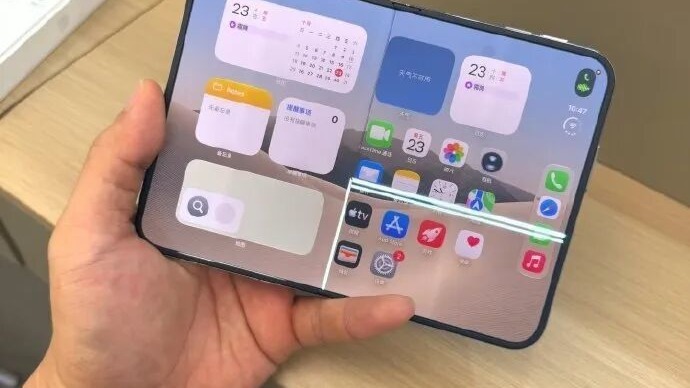
Tech outlet Cult of Mac reported on October 24 that photos of cracked inner displays began circulating on social media on the October 23 launch day of Apple's first foldable iPhone Duo. The cracks mostly run from the fold line toward the center of the screen, with a row of what appear to be dead pixels along the right edge, and the damage patterns look similar.
One Australian owner said the device had been in his hands about six hours with fewer than 20 folds when he felt something odd under the inner hinge while unfolding it for a friend, then heard a clear snap as the screen cracked along the hinge. He said there were no dents or pinch marks on the inner display or outer hinge, and that an Apple Store replaced the unit outright. A user in China described hearing a snap during a normal unfold and finding a black vertical crack about 3cm long at the fold.
The article stresses that these remain scattered user reports, with no official statistics or authoritative teardown, and that the posts are unverified. Apple published official self-repair manuals on launch day. Per Apple's site, out-of-warranty inner-display repair without AppleCare+ is estimated at 7,998 yuan, while the service fee with AppleCare+ is 628 yuan.
7. Australian Court Orders Apple to Open iOS to Sideloading and Rival Stores
Source: MyDrivers
Australia's Federal Court issued relief orders on October 22, with Justice Jonathan Beach directing Apple to open the iPhone to other app stores and let users download apps directly from developer websites and use alternative payment methods, Fast Technology reported on October 24. The changes for Australian Apple account holders must be completed by noon Melbourne time on March 1, 2027, and Apple can apply between February 1 and 15 for an extension to May 3.
The ruling is the latest step in a six-year antitrust case brought by Epic Games, the maker of Fortnite. In August 2025 the court had already found that Apple contravened section 46 of the Competition and Consumer Act 2010 and misused its market power in operating the App Store. The orders require Apple to let developers worldwide distribute, install and update apps for Australian users through third-party marketplaces and developer websites, and to provide the necessary tools and APIs on broadly the same terms as its own store without blocking fees. Apple must also stop forcing in-app purchases, allow third-party payments and in-app links, and take no commission on digital transactions through alternative channels.
Justice Beach said Apple had contravened the law through "an intricate web of terms and technical measures," and ordered Apple to pay 85% of Epic's legal costs from the trial. Fortnite returned to Apple's Australian App Store the same day. Apple said it disagrees with several findings and will seek a stay and appeal.

8. NASA Lays Out Artemis 3 Lander Test Flight Plan
Source: Space
NASA gave its most detailed look yet at the Artemis III moon-lander test flight during an October 23 press conference at Kennedy Space Center, stressing how important the flight is to its lunar plans and how hard it will be to get everything right. Artemis program manager Jeremy Parsons said the agency will launch "three of the most powerful rockets in the world" in what is likely the most complicated launch campaign ever undertaken.
Under the plan, Blue Origin's New Glenn lifts off first, carrying the Blue Moon lander to low Earth orbit. NASA's SLS then launches the four Artemis III astronauts — NASA's Randy Bresnik, Andre Douglas and Frank Rubio, and the European Space Agency's Luca Parmitano — aboard Orion. Orion will be deployed into a highly elliptical orbit ranging from about 18 miles (29 kilometers) to 1,122 miles (1,806 km) before maneuvering to an altitude of about 345 miles (555 km).
On flight day 3 the crew will dock with Blue Moon at about 273 miles (439 km), open the hatch and enter the lander to check environmental control and life support, confirm pressure and test emergency scenarios and dual-vehicle control. Around flight day 6, Starship launches, and on flight day 8 it meets Orion at about 237 miles (381 km) for a shorter demonstration of roughly two hours; the crew will not enter Starship. The nominal mission is 14 days and could run to 17. NASA Administrator Jared Isaacman said the agency is keeping both landers in play for Artemis IV, which aims to land near the lunar south pole in 2028. Artemis III targets next summer, though an internal memo last month said it was about 90 days behind schedule.

9. Unitree H2-X Loses a Leg During Backflip Demo
Source: Guancha
At the 2026 World Physical AI Conference and Unitree Partner Ecosystem Conference in Hangzhou on October 22, a Unitree humanoid robot performing a side backflip lost balance on landing and a mechanical lower leg came off. Video from the scene spread on social platforms and drew widespread attention.
The robot was the H2-X, unveiled by Unitree just the day before. Footage shows a white robot performing kung fu moves on a black mat; it fails to steady itself on the side backflip landing, falls to one side and a lower leg detaches at the joint. In Unitree's official promotional video, the robot performs consecutive flying kicks, rolls over a car and jumps from a platform about 4 meters high.
Notably, at the same conference Unitree founder and CEO Wang Xingxing had just discussed the challenges of moving robots from demos to real applications. He said that with the release of GPT-6, physical AI is showing signs of breaking through, with a breakthrough possible in one to three years. IDC data shows global humanoid robot shipments reached nearly 25,000 units in the first half of 2026, up 432.1% year on year. Unitree closed at 624 yuan per share on October 23, up 20% at the daily limit.
10. WeCom: Accounts Sending Sexual Links Were Hit via Third-Party Plugin
Source: MyDrivers
On the morning of October 24, multiple users reported that verified WeCom (Enterprise WeChat) accounts bearing the logos of Anker Innovations and Nike were sending messages suspected of being sexual solicitation links, Fast Technology reported. Screenshots showed contacts carrying the "Anker Innovations" and "NIKE" enterprise verification badges, with some message cards using identical wording.
WeCom said a small number of accounts sent such messages to customers, and that its security team's initial investigation found a third-party plugin service had been compromised, affecting accounts using that service. WeCom warned that plugins marketed for "multi-account" and "group control" features carry serious security and privacy risks.
WeCom also published a notice on resolutely and continuously cracking down on plugins, saying it will step up identification and handling of tampered clients and attempts to bypass platform security mechanisms. Accounts using such software will face measures under platform rules depending on the severity. It urged companies and users still using plugins to stop immediately and check their accounts for risks.

More News
- Global Express | October 24, 2026: US Intelligence Chief Warns Iran Is Targeting US Personnel More Aggressively
- Sports Express | October 24, 2026: Brewers Edge Rays 3-2 in World Series Opener
- Maple Express | October 24, 2026: White House Shuffles Tariff List on Canadian Goods
- Dow Tumbles 652 Points as Oil Tops $100 and Gold Slips Below $4,000
- Maple Express | Oct 23, 2026: Toronto police search for three children allegedly taken by their mother
Comments (0)
View More
 -34%
Taylor Digital Probe Thermometer — Know When the Roast Is Done Without Opening the Oven, $38
 -26%
Zinus Green Tea Memory Foam Mattress, 10-Inch King — Ships in a Box You Can Carry Alone! $343 CAD (25% Off)
 -21%
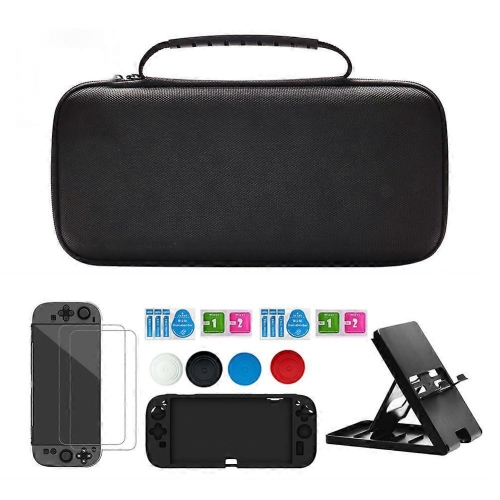
SLOWMOOSE Switch 2 Accessories Kit — Case, Screen Protector, Silicone Shell, Stand and Thumb Grips in One Box! $37.99 CAD (21% Off)
 -41%
UGREEN Revodok Pro 7-in-1 Docking Station — Dual 4K@60Hz, 10Gbps! $47.49 CAD (41% Off)
 Maple Express
 | Oct 23, 2026: Toronto police search for three children allegedly taken by their mother
Tech ExpressTech Express | October 24, 2026: Kimi K3.1 Pro Hits 55 on AA Benchmark as GLM-5.5 Rumored to Top 60
-34%Taylor Digital Probe Thermometer — Know When the Roast Is Done Without Opening the Oven, $38
Amazon
-26%Zinus Green Tea Memory Foam Mattress, 10-Inch King — Ships in a Box You Can Carry Alone! $343 CAD (25% Off)
Amazon
-21%SLOWMOOSE Switch 2 Accessories Kit — Case, Screen Protector, Silicone Shell, Stand and Thumb Grips in One Box! $37.99 CAD (21% Off)
Best Buy
-41%UGREEN Revodok Pro 7-in-1 Docking Station — Dual 4K@60Hz, 10Gbps! $47.49 CAD (41% Off)
Amazon
Maple ExpressMaple Express | Oct 23, 2026: Toronto police search for three children allegedly taken by their mother
Tech Express