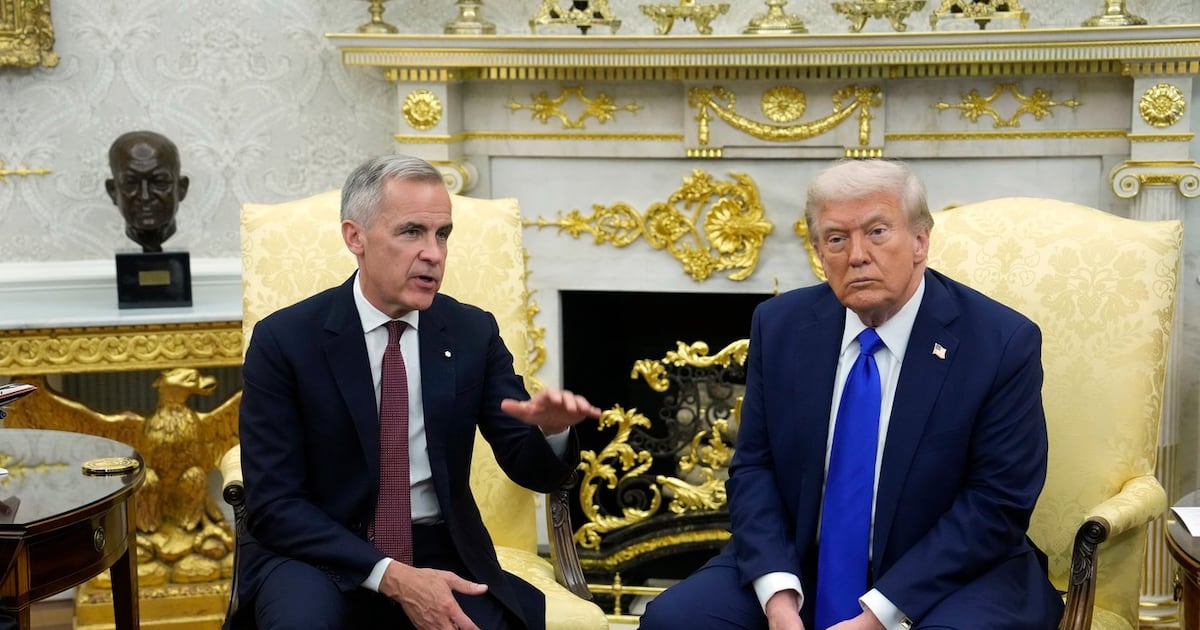
Maple Express | August 24, 2026 Trump Tells Canada to 'Fall in Line' as Carney Rejects Subordination
Today's Maple Express leads with the escalating Canada-U.S. trade war: Trump tells Canada to 'fall in line' as Carney rejects subordination, Doug Ford tells Trump to 'kiss my ass,' and a report warns new tariffs could cost 87,000 jobs. Also: Chow urges Ford to focus on Trump, a downed tree disrupts downtown streetcars, SIU clears a speeding officer, a youth mental health survey, an Essex family seeks a maximum sentence, an Ottawa femicide victim, and border communities brace for fallout.
Source: CP24
1. Trump Tells Canada to 'Fall in Line' as Carney Rejects Subordination
U.S. President Donald Trump told Canadian leaders on Monday to "fall in line" or face consequences that would be "far WORSE" than the tariffs he has already imposed, as Prime Minister Mark Carney accused Washington of trying to subordinate Canada. Trump's warning came on social media as he threatened new 50 per cent tariffs on Canadian vehicles, auto parts and steel.
Carney said the U.S. trade demands had confirmed Canada's fears that Washington was seeking to dismantle its auto industry. Nonetheless, he said Canada remained willing to negotiate, but only if the United States approached the talks as a partnership between sovereign countries. "An attitude at the negotiation table that Canada is a subsidiary of the United States" is "not something we're going to accept," Carney said.
Relations between the two countries have only deteriorated since Carney walked away from trade negotiations late Friday, triggering Trump's threatened 50 per cent tariffs on about US$20 billion worth of Canadian goods. In response, Carney announced dollar-for-dollar retaliation beginning Sept. 8. On Monday, Trump came back with even more tariffs, warning he would impose them on Canada's auto industry beginning next year. "Canada has been ripping off the United States of America for years," Trump wrote, criticizing Canada's "ridiculously high tariffs" on American farmers.
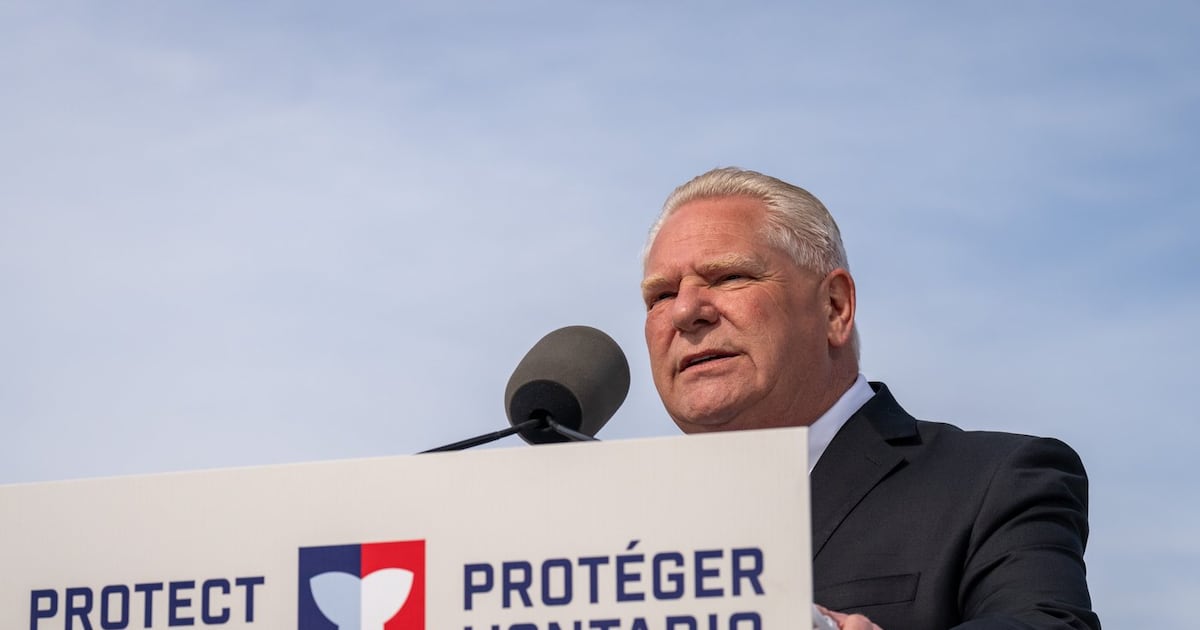
2. Ontario Premier Says Trump Can 'Kiss My Ass' as U.S. President Threatens New Tariffs on Vehicles
Ontario Premier Doug Ford reacted Monday to U.S. President Donald Trump's threat to increase tariffs on cars and trucks next year, saying he can "kiss my ass." Trump responded later in the day, saying it was "lots of bluster" from Ford, adding he is "better known as the less charismatic, intelligent and overall unimpressive brother of the late, great, Rob Ford."
The trade dispute turned into a war of words Monday, after Trump said in a Truth Social post that he would increase tariffs on "all Cars, Trucks, both large and small, Automotive Parts, and Steel" to 50 per cent on New Year's Day. Canada walked away from trade negotiations on Friday ahead of a U.S. deadline. Speaking on CFRA's The Morning Rush, Ford said, "We're going to go at him full steam, and we buy 400 per cent more cars than anyone in the world."
Ford also suggested getting Alberta Premier Danielle Smith "on board" to control oil and gas flowing south, and proposed charging "triple on the oil, triple on the potash, on the uranium, on our metals and our rare earth metals." He called Trump "arrogant" and "cocky," adding "he's going to have a rude awakening." Trump fired back just after 2 p.m., calling Ford "his fluky" and telling the "clowns" to "fall in line." Ford responded, "I don't respond to a dictator like President Trump," calling him "the king of bankruptcies" and "a loser."
3. These Provinces Could See the Most Job Losses With New U.S. Tariffs: Report
Inside a small children's store in Toronto, owner Jill Rochon slaps new price tags on goods recently imported from the U.S. as she chats with her employee of more than six years, Zoe Tilups. As new U.S. tariffs and Canada's proposed "dollar-for-dollar" counter-tariffs raise costs, she may have no choice but to lay off staff. "If I had to let them go, I would have to let them go," she said.
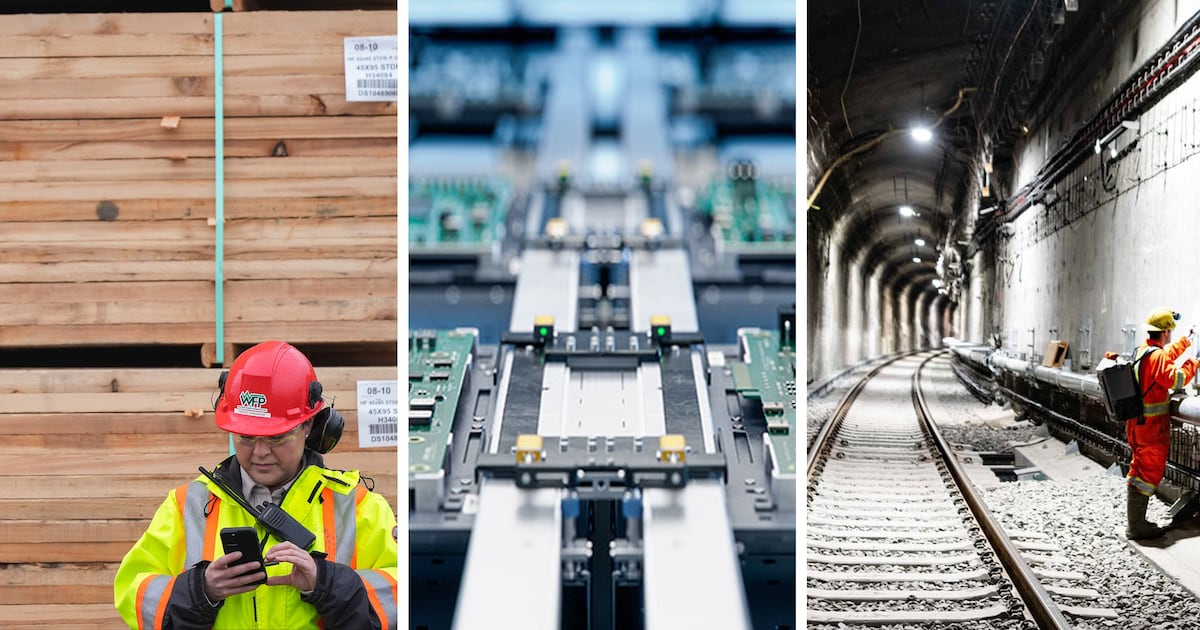
Roughly 87,000 Canadian jobs could be at risk because of the United States' new 50 per cent tariffs, according to an analysis by University of Calgary economics professor Trevor Tombe, who spent hours calculating Statistics Canada's input-output numbers. His analysis estimates about 52,000 jobs are directly at risk, while indirect effects on suppliers and service providers could put another 35,000 at risk.
The hardest-hit provinces are Ontario (36,100), Quebec (18,300) and B.C. (11,200), while the industries facing the highest job losses are machinery, electronics, plastics and rubber. Economist Colin Mang said interprovincial trade means broader slowdowns will produce job losses in places like Alberta, Saskatchewan and the Maritimes. While Prime Minister Mark Carney promised aid for businesses, labour groups such as the Canadian Labour Congress say Ottawa should extend and increase employment insurance, expand work-sharing and add wage subsidies to keep workers employed.
4. Toronto Mayor Says Ford Must Be Focused on Trump and Not Ripping Up Bike Lanes
Toronto Mayor Olivia Chow says Doug Ford's "first job" amid a renewed trade war with the U.S. is to "fight Trump" and not move forward with the removal of bike lanes along three arteries in the city. The Court of Appeal for Ontario released a decision on Aug. 14 clearing the way for the Ford government to remove bike lanes along Bloor Street, Yonge Street and University Avenue.
Ontario Transportation Minister Prabmeet Sarkaria called the decision a "victory for common sense" after a lower court initially ruled that the government's plan violated the Canadian Charter of Rights and Freedoms because it would "put people at increased risk of harm and death." The government has not indicated when it might move forward with the removal.
Asked about the issue Monday, Chow said she wants Ford's focus elsewhere. "I think the premier his first job is to fight trump," she said. "Be 'Captain Canada' as part of team Canada and work with the prime minister closely. Bike lanes are very local, leave it to the local community to decide." On the tariffs, she said they are "going to hurt," but Toronto's economy can withstand the impact, noting the city is on track to create 16,000 new jobs in 2026.

5. Downed Tree Topples Power Lines, Streetcar Wires in Toronto's Downtown Core
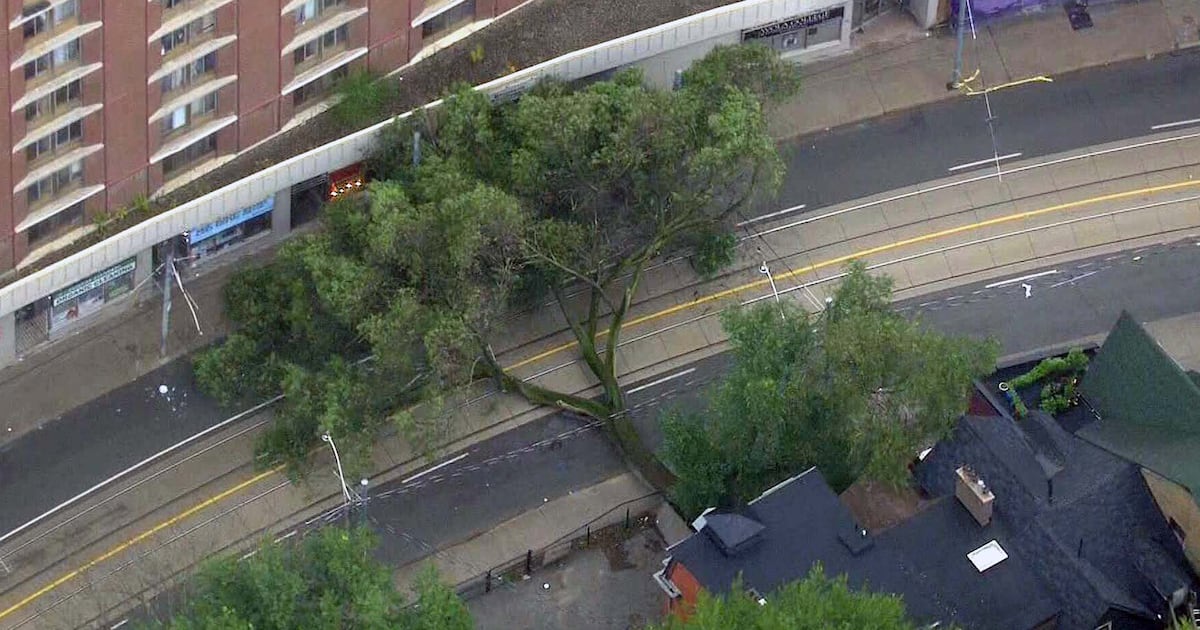
Two streetcar routes were diverted Monday morning due to a downed tree blocking a busy downtown intersection. The downed tree was first reported at around 6:40 a.m. on Dundas Street, near Sherbourne Street.
Toronto Fire said the tree took down both streetcar wires and power lines. The area is closed to traffic and both the 505 Dundas and 506 Carlton streetcar routes are on diversion.
Toronto Hydro has been called in to investigate and repair the issue.
6. Officer's Speeding Did Not Cause Collision That Left Driver Seriously Injured in Toronto: SIU
No charges will be laid against a Toronto police officer who was travelling between 25 and 35 kilometres over the speed limit when he struck a driver who ran a red light in Etobicoke last spring. In a report, SIU director Joseph Martino said there are no reasonable grounds to charge the officer in connection with the collision, which occurred at the intersection of Kipling and Albion roads on April 28, 2026.
According to the report, the officer was travelling between 73 and 85 km/h in a 50 zone in the moments leading up to the crash, which left the civilian driver with serious injuries. The officer had the green light as he approached the intersection and collided with a grey Honda that had passed two vehicles stopped in the right lane.
Martino wrote that had the officer been driving slower, he might have noticed the Honda, but he could not reasonably conclude the officer constituted a danger on the roadway, with no evidence of erratic driving. The report noted the collision "would not have happened" if the civilian driver had stopped at the red light, concluding there is no basis for criminal charges.

7. Ontario Youth Struggling With Mental Health Back to Pre-COVID Level: Survey
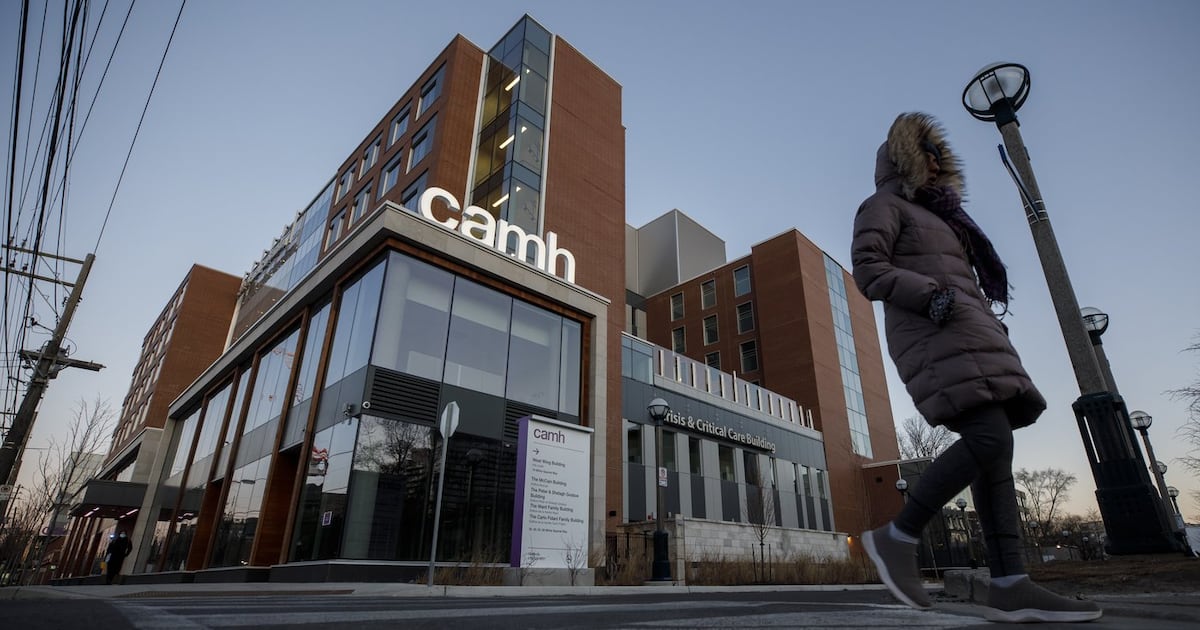
The Centre for Addiction and Mental Health says psychological distress among Ontario youth appears to have decreased since the pandemic, but still remains high. The centre's latest Ontario Student Drug Use and Health Survey found 46 per cent of youth in grades 7 to 12 reported a "moderate to serious level" of psychological distress in 2025, down from 51 per cent in 2023.
Lead investigator Hayley Hamilton says the decrease is "encouraging" but the percentage of students struggling is still significantly higher than it was more than a decade ago. She says the rise over the years could be due to factors such as social media, but could also reflect a decrease in stigma and more willingness to talk about psychological distress.
The 2025 survey, released Monday, also shows fewer students are using alcohol and drugs, and they are waiting longer before trying them. But it revealed a dramatic rise in online gambling, with one in 10 students placing sports bets in 2025 compared to one in 100 in 2017. The survey, conducted every two years since 1977, included 11,108 students in grades 7 to 12 across 42 school boards.
8. 'Our Grief Is Everlasting': Ontario Family Begs Judge for Maximum Sentence
An Essex family is asking a judge for the maximum sentence in the death of their daughter. Christopher Lucas, now 27, was found guilty of second-degree murder in January for the deaths of Juliana Pannunzio, 20, and Christine Crooks, 18.
Crooks was invited to a house party in Fort Erie on Jan. 19, 2021 by Lucas, and she invited Pannunzio, a newfound friend, to join. During a 40-day trial in the fall of 2025, the jury learned Crooks was shot first in the hand, and Pannunzio was killed while trying to help her and call 911, suffering four fatal gunshots to the head and neck.
At a sentencing hearing in Welland Superior Court on Monday, the women's families begged the court for the highest punishment allowable. In Canada, the sentence range for second-degree murder is 10 to 25 years of parole ineligibility. "A father is meant to be a hero, a protector, and a shield," Pannunzio's father Mark told the judge, adding his daughter "met a monster I couldn't keep her safe from." Assistant Crown attorney Jody Ostapiw asked Justice James Ramsey to impose 25 years of parole ineligibility, noting nine of 12 jurors recommended 25 years, while the defence is expected to ask for 18 years.

9. Ottawa Police Identify 27-Year-Old Woman Killed in Alleged Weekend Femicide
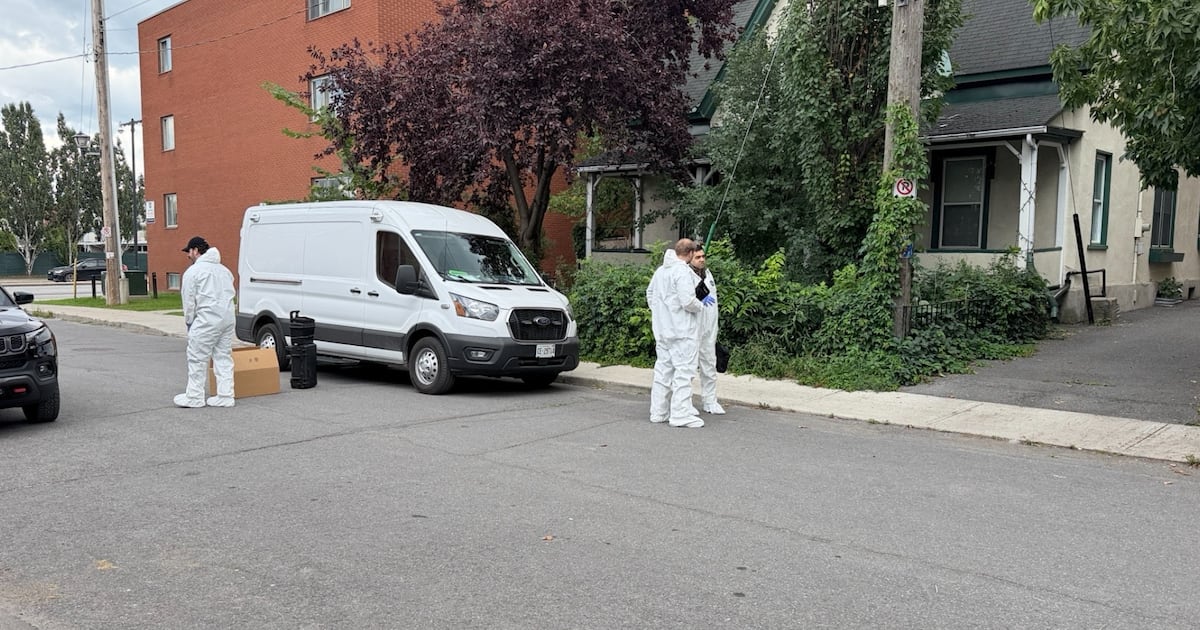
Police have identified a 27-year-old woman as a victim of an alleged femicide in the investigation into the suspicious deaths of two individuals in Ottawa and western Quebec over the weekend. Shortly before 1 a.m. Saturday, Sûreté du Québec officers responded to a single-vehicle collision east of Highway 50 near Papineauville, Que., where one person was located inside with injuries "considered suspicious in nature."
SQ officers later requested assistance from the Ottawa police, who found a body inside a home on Guigues Avenue in Ottawa's Lowertown neighbourhood. On Monday, police identified the deceased as Kesi Fevrier, 27, and Kingsley Nwude, 34, of Ottawa.
The death of Fevrier is being investigated as a femicide, police say, though they did not say what the relationship is between the two individuals. Ottawa police define a femicide as "the killing of women and girls because of their gender." It is the ninth alleged homicide and third femicide in Ottawa so far this year, and police say there is no threat to public safety.
10. Border Communities Brace for More Fallout in Canada-U.S. Tariff Fight
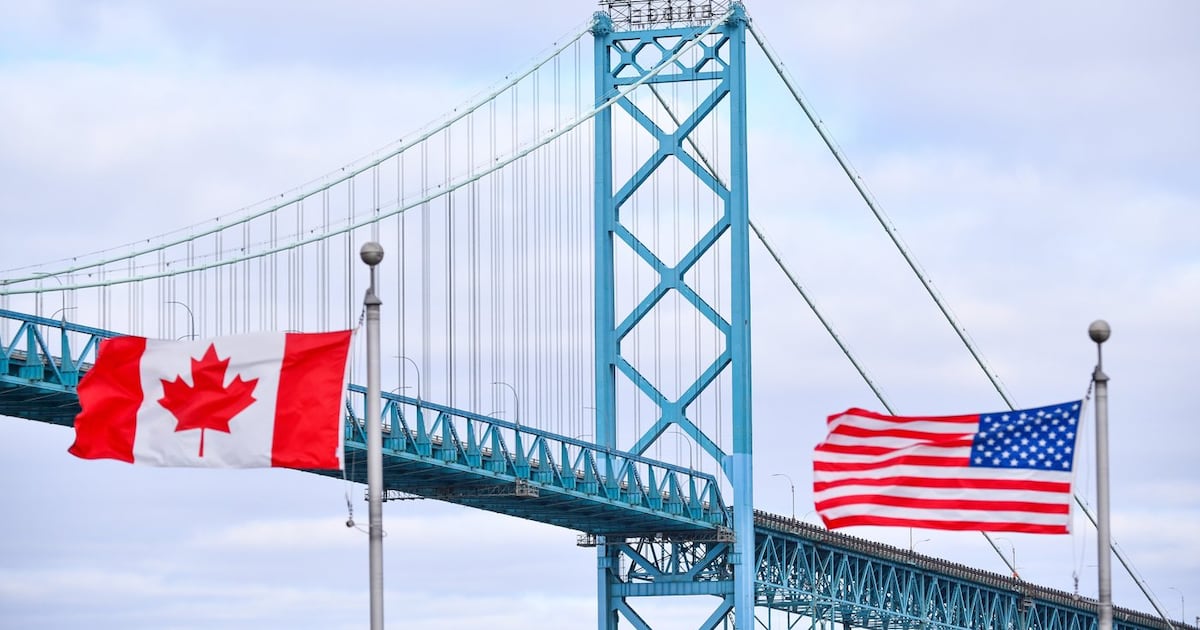
Communities on either side of the Canada-U.S. border braced for further economic fallout Monday after trade talks collapsed and both countries moved deeper into a tariff fight. Sarnia Mayor Mike Bradley, whose city is a major Ontario border city and petrochemical hub, said the dispute would be a "job killer" for his community, a major exporter of plastics targeted by the latest U.S. tariffs.
He backed the federal government's response, but warned the supportive mood in his community could be tested once the full brunt of the tariff fight is felt. "When the pain really starts to unfold with job losses and industries being devastated, I think it's going to be much harder to hold the Canadian public together," he said.
Prime Minister Mark Carney has vowed a dollar-for-dollar response to the 50 per cent U.S. tariffs imposed on roughly $28 billion in Canadian goods following failed trade talks. Tensions escalated again Monday when President Donald Trump threatened 50 per cent tariffs on Canadian automobiles, car parts and steel beginning Jan. 1. Several Democratic governors of U.S. border states spoke against Washington's response, with Michigan Gov. Gretchen Whitmer saying her state was "uniquely impacted," and New York Gov. Kathy Hochul saying the president was "needlessly picking fights" with U.S. allies.
More News
- Global Express | October 9, 2026 — Former ICC Judge Navi Pillay Wins 2026 Nobel Peace Prize
- Finance Morning | October 9, 2026: PBOC Sets Out RMB Exchange-Rate Stance; A-shares Reverse Higher, Hang Seng Jumps 1.79%
- Tech Express | October 9, 2026 — Apple Announces October 13 'Welcome Home' Event Focused on the Smart Home
- Sports Express | October 9, 2026 — MLB Proposes 154-Game Season, Best-of-Seven Division Series
- Maple Express | October 9, 2026 — Food Experts Warn of a Tough Winter at the Grocery Store
Comments (0)
View More
 -32%
-32%Globlazer 82" XXL Cat Tree Tower — 7 Levels for Multiple Cats! $129.99 CAD (32% Off)
 -31%
-31%Herschel Settlement Hip Pack 2L — Leave the Backpack, Carry the Essentials! $34.99 CAD (30% Off)
 -45%
-45%JBL Flip Essential 3 SE Waterproof Bluetooth Speaker — IP67 & 12-Hour Playtime! $99.99 CAD (44% Off)
 -71%
-71%Sunzel Seamless High-Waist Workout Shorts (5") — Under $10, Stock Up! $9.99 CAD (71% Off)
 Maple Express
Maple Express | October 8, 2026 — Chow Pledges 10,000 Rental Homes Would Break Ground in 2027 if Re-elected
 Maple Express
Maple Express | October 9, 2026 — Food Experts Warn of a Tough Winter at the Grocery Store
-32%Globlazer 82" XXL Cat Tree Tower — 7 Levels for Multiple Cats! $129.99 CAD (32% Off)
Amazon
-31%Herschel Settlement Hip Pack 2L — Leave the Backpack, Carry the Essentials! $34.99 CAD (30% Off)
Amazon
-45%JBL Flip Essential 3 SE Waterproof Bluetooth Speaker — IP67 & 12-Hour Playtime! $99.99 CAD (44% Off)
Best Buy
-71%Sunzel Seamless High-Waist Workout Shorts (5") — Under $10, Stock Up! $9.99 CAD (71% Off)
Amazon
Maple ExpressMaple Express | October 8, 2026 — Chow Pledges 10,000 Rental Homes Would Break Ground in 2027 if Re-elected
Maple Express