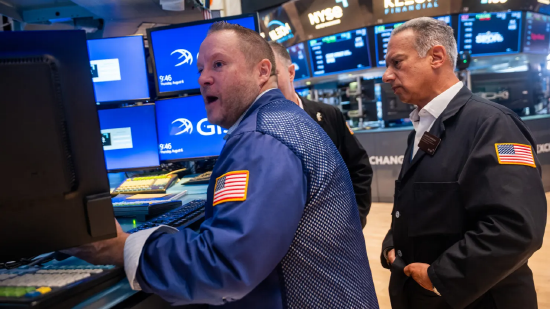
Finance Morning | August 19, 2026: U.S. Treasury Yields Hit 19-Year High, Asia-Pacific Stocks Tumble
U.S. Treasury yields hit a 19-year high, triggering a global bond selloff that sent Asia-Pacific stocks tumbling: A-shares fell with over 5,000 stocks down, the Nikkei slid over 3%, and the KOSPI dropped 5.8% with a circuit breaker. Unitree soared 460% on its STAR Market debut; Xiaomi's Q2 adjusted net profit fell 42.6% YoY; the Hang Seng edged up; UK July CPI rose to 2.9%; and the Philippine peso hit a record low.
📊 Today's Asia Markets
| Index | Close | Change | Change % |
|---|---|---|---|
| Shanghai Composite | 3894.42 | -88.23 | -2.22% |
| Shenzhen Component | 13890.15 | -814.15 | -5.54% |
| ChiNext | 3473.49 | -232.07 | -6.26% |
| Hang Seng Index | 25495.07 | +41.87 | +0.16% |
| Nikkei 225 | 65326.42 | -2134.31 | -3.16% |
| KOSPI | 6471.17 | -398.66 | -5.80% |
| Taiwan Weighted | 44719.35 | -1137.95 | -2.48% |
1. U.S. Treasury Yields Hit 19-Year High, Sparking Global Bond Selloff
The yield on the 30-year U.S. Treasury bond touched 5.33% on Tuesday, its highest level since 2007, while the 10-year yield climbed above 4.7%, near its yearly peak. Long-end rates are the pricing anchor for global risk assets; rising yields tighten liquidity and compress equity valuations, hitting growth sectors especially hard.
More notably, this bond-market turmoil is a global structural shift rather than an isolated U.S. episode. France's 30-year yield hit its highest since 2008, Germany's returned to 2011 levels, and Japan's 30-year yield climbed to its highest since 1999. A systemic rise in global risk-free rates is driving a broad repricing of valuations worldwide.
2. A-Shares Plunge as More Than 5,000 Stocks Fall
Spooked by the U.S. bond selloff, China's A-share market tumbled on Wednesday. The Shanghai Composite fell 2.22%, the Shenzhen Component plunged 5.54%, and the ChiNext index slid 6.26%. Over 5,000 stocks declined and more than 100 hit their daily limit-down, with tech and growth names bearing the brunt of the selloff.
Fund managers attributed the selloff to the surge in long-end Treasury yields, which intensified concerns over stretched tech valuations. Analysts see the bond shock as structural pressure rather than systemic risk, noting that domestic monetary policy remains accommodative and liquidity ample; a retreat in yields could open a window for growth stocks to recover.

3. Unitree Debuts on STAR Market, Soaring 460% on Day One
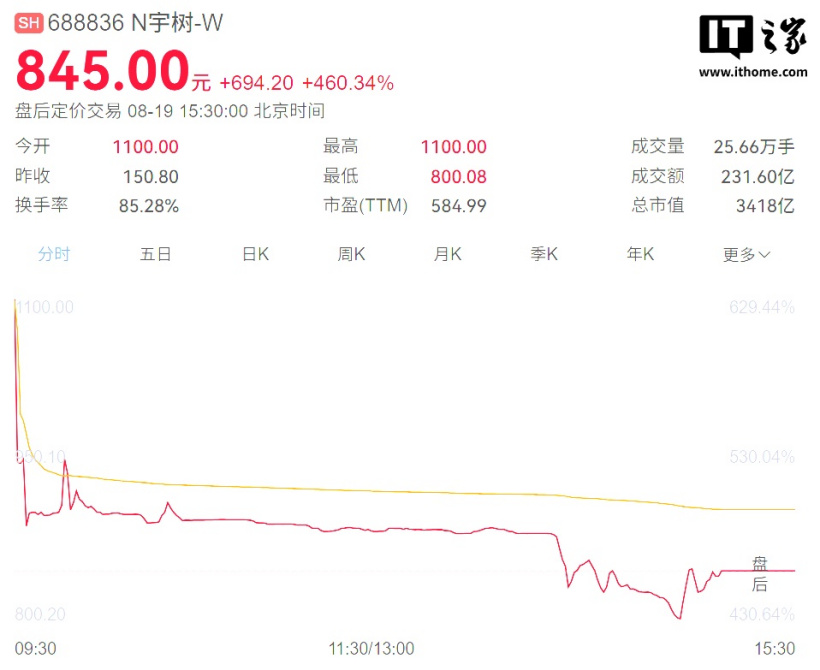
Unitree (688836.SH), China's "first humanoid-robot stock," listed on the STAR Market on August 19. Shares opened at 1,100 yuan, a staggering 629% above the IPO price of 150.80 yuan, briefly lifting its market cap past 440 billion yuan. The stock closed roughly 460% higher, leaving investors who secured one lot with a paper profit of nearly 350,000 yuan.
The debut also drew valuation debate. Only 7.44% of shares were freely tradable, with more than 90% locked up, amplifying the first-day surge. Analysts caution that behind the lofty valuation, investors should watch the pace of commercialization and profitability.
4. Xiaomi Q2 Adjusted Net Profit Drops 42.6% YoY
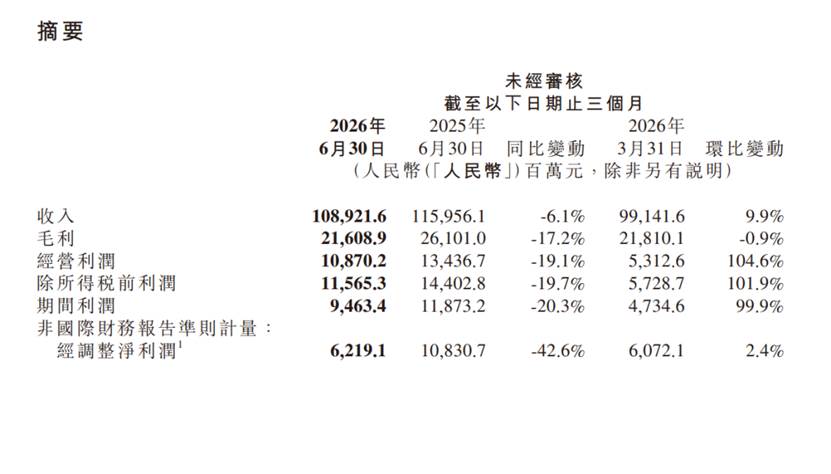
Xiaomi (01810.HK) reported second-quarter revenue of 108.92 billion yuan, down 6.1% year-on-year, with adjusted net profit of 6.22 billion yuan, down 42.6%. Overall gross margin slipped to 19.8%.
Smartphone and IoT segments were pressured by rising memory costs and intensifying competition. Notably, the company disclosed its AI and robotics business for the first time, while its EV business generated roughly 25 billion yuan in revenue but remained in the red. The market is watching whether Xiaomi's auto and AI segments can open a new growth curve.
5. Hang Seng Edges Higher, Showing Resilience
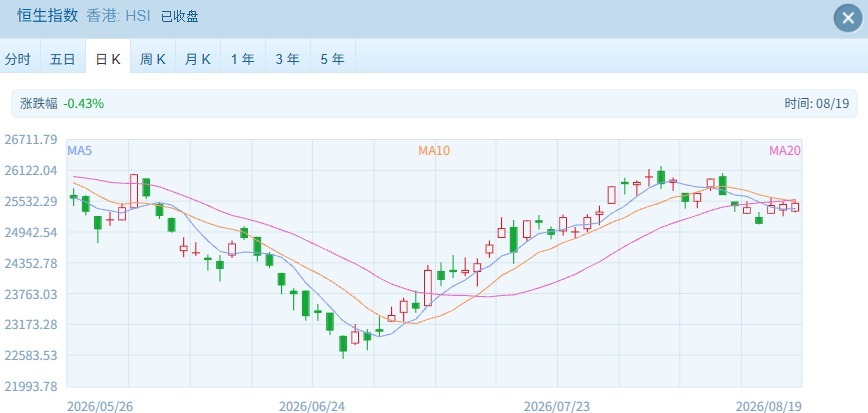
Amid a broad global selloff, Hong Kong markets held up relatively well. The Hang Seng Index inched up 0.16% to 25,495.07, while the Hang Seng Tech Index fell 1.21%. Meituan rose 1.75% on the day.
Analysts say Hong Kong retains its "relative safe-haven" appeal: low valuations, sustained southbound inflows, and policy expectations support defensive and energy names, leaving its decline far smaller than that of Korea and Japan, which are dominated by richly valued tech stocks.
6. Nikkei Drops Over 3% as Bond Selloff Hits Japanese Stocks
Japanese stocks fell for a second straight day, with the Nikkei 225 closing down 3.16% at 65,326.42. Semiconductor names were broadly hit: SoftBank Group slumped about 8%, while memory chip maker Kioxia tumbled more than 14% after a U.S. federal jury found it infringed a patent and ordered it to pay $229 million.
The selloff was driven by bond-market pressure. Japan's 10-year government bond yield rose to its highest since 1996, fueling speculation the Bank of Japan may hike rates, while elevated U.S. yields continued to weigh on richly valued growth stocks.

7. KOSPI Tumbles 5.8%, Triggering Circuit Breaker
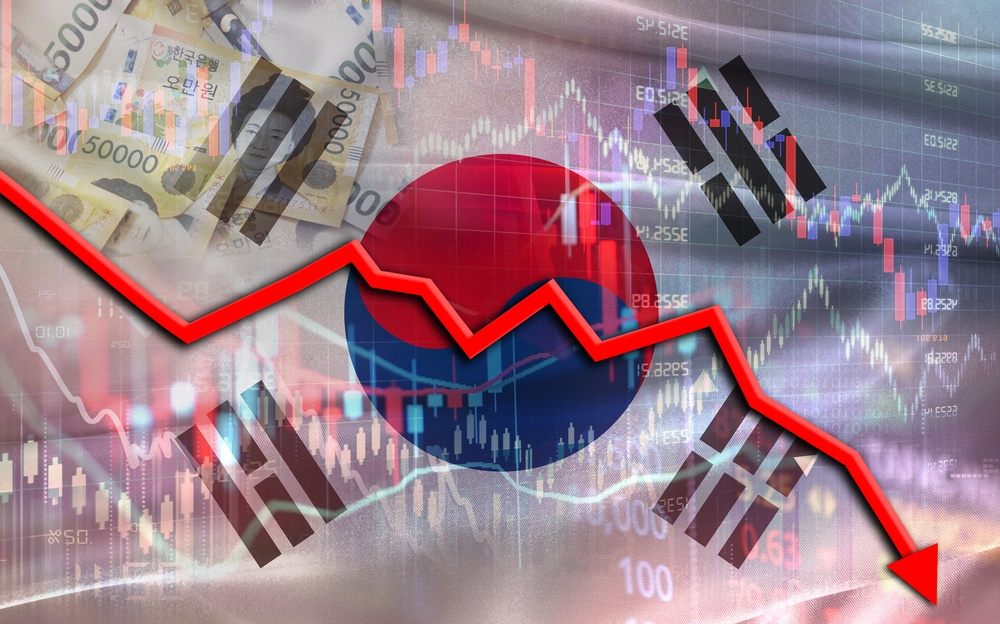
South Korea's KOSPI index closed down 5.80% at 6,471.17, after intraday trading triggered the Sidecar mechanism. Semiconductor and tech heavyweights were hit hardest, with SK Hynix sliding over 9% and Samsung Electronics dropping over 7%.
Memory chips sat at the center of the global selloff. Overnight U.S. stocks fell for a third straight day with the Nasdaq tumbling, damping risk appetite. Combined with high Treasury yields pressuring growth valuations, foreign investors dumped Korean shares while retail and local funds also turned sellers.
8. TSMC CoWoS Capacity Tight, Orders Spill Over to Intel
TSMC's advanced CoWoS packaging capacity remains in short supply, with orders fully booked. According to industry sources, part of the back-end packaging orders have spilled over to Intel's Malaysian facility, which will serve shared key customers, breaking from past ecosystem norms.
The collaboration could help TSMC accelerate its front-end capacity. As AI chip demand explodes, CoWoS capacity scarcity has evolved from a technical bottleneck into a market entry barrier, with delivery schedules pushed back and packaging equipment makers continuing to receive additional orders.
9. UK July CPI Climbs to 2.9%
UK consumer price inflation accelerated to 2.9% year-on-year in July, up from 2.6% in June and in line with market expectations, remaining above the Bank of England's 2% target. Core CPI held steady at 2.6%.
The acceleration was driven mainly by higher energy bills. The renewed pickup in prices has made markets more cautious about BoE rate-cut prospects and pushed sterling higher. The rebound adds to concerns about sticky inflation among major central banks.

10. Philippine Peso Hits Record Low
The Philippine peso fell to a new all-time low against the U.S. dollar on August 19, touching 61.995 per dollar intraday and approaching the 62 level, weaker than the previous record of 61.850 set in July.
Rising oil prices and supply-chain disruptions from Middle East tensions have piled pressure on the energy-import-dependent economy. Analysts warn that a weaker peso could fuel imported inflation and pose a greater challenge to the Bangko Sentral ng Pilipinas.

More News
- Global Express | October 3, 2026 — Flydubai Pilot Attacked Captain With Crash Axe, UAE Says Attempted Terror Attack
- Tech Express | October 3, 2026 — Apple Confirms US iPhone 18 Pro Max Connectivity Fault, Affected Users Must Swap Devices
- Sports Express | October 3, 2026 — Car Rams Crowd of Rugby Fans North of Sydney, Injuring 10
- Maple Express | October 3, 2026 — Man Seriously Injured in Stabbing at Mississauga Bus Terminal Near Square One
- Finance Evening | October 2, 2026 — Nvidia Tops $5.7 Trillion Market Cap; Stellantis Idles Windsor Plant for Three Weeks
Comments (0)
View More
 -41%
-41%Lenovo ThinkPad Hybrid USB-C/USB-A Dock 40AF0135US — Dual 4K, 15 Ports! $205.35 CAD (41% Off)
 -23%
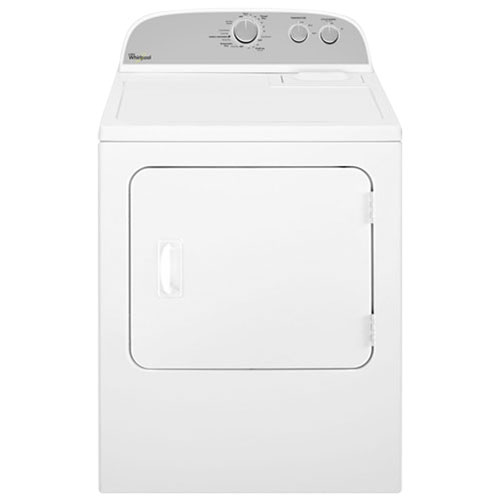
-23%Whirlpool 7 Cu. Ft. Electric Dryer — 11 Drying Cycles & Quick Dry! $699.99 CAD (22% Off)
 -60%
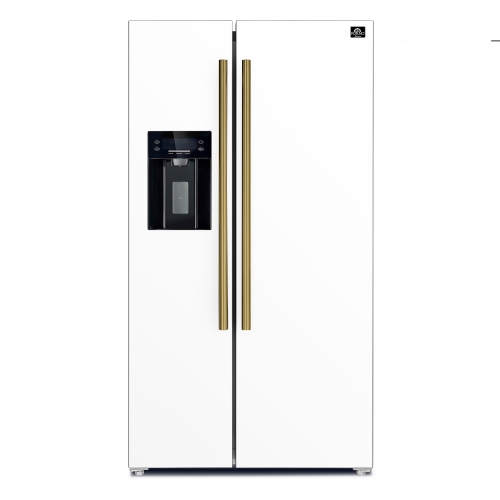
-60%FORNO Espresso Salerno 36-inch Side-by-Side Refrigerator — 20 cu.ft with Ice & Water Dispenser, 60% Off! $1699.00 CAD
 -28%
-28%LEGO DC Batman: The Batman Batmobile 76332 — 330 Pieces, Movie Vehicle! $28.98 CAD (28% Off)
 Finance Evening
Finance Evening | October 2, 2026 — Nvidia Tops $5.7 Trillion Market Cap; Stellantis Idles Windsor Plant for Three Weeks
 Sports Express
Sports Express | October 3, 2026 — Car Rams Crowd of Rugby Fans North of Sydney, Injuring 10
-41%Lenovo ThinkPad Hybrid USB-C/USB-A Dock 40AF0135US — Dual 4K, 15 Ports! $205.35 CAD (41% Off)
Amazon
-23%Whirlpool 7 Cu. Ft. Electric Dryer — 11 Drying Cycles & Quick Dry! $699.99 CAD (22% Off)
Best Buy
-60%FORNO Espresso Salerno 36-inch Side-by-Side Refrigerator — 20 cu.ft with Ice & Water Dispenser, 60% Off! $1699.00 CAD
Best Buy
-28%LEGO DC Batman: The Batman Batmobile 76332 — 330 Pieces, Movie Vehicle! $28.98 CAD (28% Off)
Amazon
Finance EveningFinance Evening | October 2, 2026 — Nvidia Tops $5.7 Trillion Market Cap; Stellantis Idles Windsor Plant for Three Weeks
Sports Express