
Tech Express | July 31, 2026 DeepSeek V4 Flash API Launches with Agent Capabilities Rivaling Pro Version
Today's tech roundup highlights major AI breakthroughs: DeepSeek V4 Flash API launches with unexpected Agent capabilities; Microsoft, Meta, and Samsung report blockbuster earnings fueled by AI demand; US-China robot ban escalates trade tensions; Unitree launches IPO amid trade headwinds; global EV sales hit record highs in Q2.
📰 DeepSeek V4 Flash API Officially Launches, Agent Capabilities Rival V4-Pro
On July 31, DeepSeek officially launched the V4-Flash API for public beta testing. Breaking from the traditional "Pro strong, Flash weak" dichotomy, this update signals a major shift—the Flash version's performance on multiple Agent benchmarks now approaches or even surpasses the V4-Pro preview released three months ago.
According to the official changelog, V4-Flash scored 82.7 on Terminal Bench 2.1, 54.2 on NL2Repo, 76.7 on Cybergym, and 70.3 on Toolathlon. With only 13 billion activated parameters, the model achieves these results purely through post-training optimization—DeepSeek stated the model architecture and size are "identical to the preview, only retrained post-training."
Currently, the public beta is limited to API access only; the app and web versions are not yet updated. DeepSeek-V4-Pro's full release is expected soon. This move positions the "value champion" to expand beyond conversational AI into complex Agent scenarios, intensifying competition with OpenAI and Anthropic.
— 36Kr
📰 Microsoft Q4 Earnings Beat: AI Cloud Revenue Surges, Annual Capex Hits $175B
Microsoft reported Q4 fiscal 2026 revenue of $82.9 billion, up 18% year-over-year. Azure cloud revenue growth exceeded market expectations, with AI-related services contributing over 13 percentage points of growth. Capital expenditures surged 69% year-over-year to $41 billion for the quarter.
Despite market concerns about the sustainability of Big Tech's AI spending, CFO Amy Hood confirmed that capex will continue growing in fiscal 2027. The strong results sent Microsoft shares up more than 8% in after-hours trading, the company's biggest single-day gain in nearly 18 years.
An accounting change related to data center lease treatment adjusted the full-year capex expectation from $190 billion to approximately $175 billion. Analysts stress this is not a real cut—actual investment continues to accelerate.
— CNBC
📰 Zuckerberg Predicts Billions Will Have Personal AI Agents Within Five Years
On Meta's Q2 earnings call on July 29, CEO Mark Zuckerberg made a bold prediction: within five years, "billions of people" will each have a personal AI agent managing their finances, health, relationships, and homes. He positioned this as Meta's core strategic direction.
Zuckerberg cited Brazilian rental company Movida as a model—its WhatsApp agent handles the entire booking flow independently, resolving the vast majority of conversations without human intervention. Unlike Anthropic and OpenAI, which focus on coding and enterprise agents, Meta is betting on consumer-facing products that "just work out of the box."
The Verge noted that Google has already entered the personal AI agent space with Gemini Spark, but Zuckerberg clearly aims to leverage Meta's massive social platform user base across WhatsApp, Instagram, and Facebook to dominate this trillion-dollar market.

📰 US FCC Bans Foreign Humanoid Robot Imports, China Threatens Retaliation
The US Federal Communications Commission this week announced a ban on imports of foreign-made humanoid and quadruped robots, citing national security and data privacy risks. The ban directly targets Chinese robotics firms including Unitree, Agibot, and UBTech, which dominate global markets.
China's Ministry of Commerce swiftly responded, labeling the move "unilateral bullying" and "market distortion," demanding immediate revocation or warning of "resolute retaliation to safeguard legitimate rights." The statement said the decision "severely damages" bilateral economic and trade relations.
Analysts see this as the latest front in the US-China tech decoupling, extending beyond chips and 5G into robotics. The timing is particularly sensitive—Unitree is simultaneously launching its Shanghai IPO, with US trade restrictions listed as a major risk factor in its prospectus.
— CNBC
📰 Samsung Chip Profit Soars 250-Fold as AI Memory Shortages May Last Until 2028
Samsung Electronics reported Q2 2026 operating profit of 89.5 trillion won (approximately $62 billion) for its chip division, a roughly 250-fold increase year-over-year. Combined with rival SK Hynix, the two South Korean giants generated 150 trillion won ($104 billion) in quarterly operating profit, accounting for 80% of the global memory chip market.
AI-driven demand for HBM (High Bandwidth Memory) and enterprise SSDs is the primary driver. Samsung warned that AI-induced memory shortages will worsen and likely extend through at least 2028, meaning supply bottlenecks for GPU makers like Nvidia and AMD won't ease anytime soon.
This explains why Microsoft, Meta, and others are maintaining massive AI capital expenditure—chip supply is severely constrained, capacity expansion takes years, and early supply commitments are becoming a critical competitive advantage. Samsung also broke its quarterly revenue record at 171.5 trillion won.
— CNBC
📰 Unitree Launches $620 Million STAR Market IPO at $6.2 Billion Valuation
Chinese robotics star Unitree officially launched its IPO on Shanghai's STAR Market on July 31, aiming to raise 4.2 billion yuan ($620 million) at an implied valuation of 42 billion yuan ($6.2 billion). The offline subscription date is set for August 10. The company is globally known for its B2 quadruped robot dog and H1 humanoid robot, holding over 60% of the global consumer-grade quadruped robot market.
However, the IPO launch coincides with the US FCC's ban on foreign humanoid robot imports, casting a shadow over Unitree's overseas prospects. The company's prospectus already lists US trade restrictions as a significant risk factor.
Despite this, Unitree's domestic growth remains strong. China's Ministry of Industry and Information Technology has designated humanoid robots as a strategic emerging industry, with the domestic market expected to exceed 100 billion yuan by 2027. This IPO is considered a key bellwether for the robotics sector.

📰 Toronto's Terminal Raises $20M Series A to Build Fleet Data Infrastructure
Y Combinator graduate Terminal, based in Toronto, announced a $20 million USD Series A round. The startup positions itself as the telematics data infrastructure for commercial fleets, providing a unified API layer to manage and analyze vehicle data across diverse fleet operations.
CEO Raghav Midha said Toronto is the ideal headquarters—offering top-tier engineering and commercial talent with direct flights to every major city in the US and Canada. He expects Terminal to become the "default telematics data infrastructure for the commercial fleet economy" within the next one to two years.
The funding will expand the engineering team and accelerate US market entry. Terminal currently processes two terabytes of data per week, serving customers across logistics, delivery, and mobility services.

— BetaKit
📰 IEA: Global EV Sales Hit Q2 Record, 50 Countries Set New Highs
The International Energy Agency's latest report shows global EV sales jumped 35% quarter-over-quarter in Q2 2026, with 50 countries setting quarterly records. The IEA attributes this surge to the oil crisis driving consumer shifts, alongside new supportive policies in Europe, Latin America, and Southeast Asia.
The IEA now expects EVs to account for 29% of total global car sales in 2026, with annual sales reaching 23 million units. The US is a notable exception—Q2 EV sales dropped 25%, with market share falling to 7%, starkly contrasting with the acceleration seen in other major markets.
China and Europe continue to lead the global electrification push. Chinese brands like BYD have achieved breakthroughs in ultra-fast charging technology, with five-minute charging emerging as a key differentiator driving consumer adoption.

— Electrek
📰 Elon Musk's xAI Tries to Sue Its Way Out of Grok Content Liability
Elon Musk's xAI is attempting to use legal arguments to shield Grok from responsibility over its generated content. Ars Technica reports that xAI argued in court that Grok users alone should be liable for harmful outputs, and that Grok deserves an exemption from nudification app bans due to its "near-perfect" detection of harmful content.
More strikingly, xAI claims Grok's image and video generation process is protected under the First Amendment as free speech. Legal experts question this reasoning, noting that equating AI-generated content with human speech represents a significant leap in legal logic.
This case arrives as global AI regulation accelerates, and its outcome could set important boundaries for AI-generated content liability. If courts accept xAI's arguments, it could open a legal "safe harbor" door for AI companies.

More News
- Immigration | September 14, 2026 Canadian citizenship certificate backlog tops 136,000 as wait times near 3 years
- Global Express | September 14, 2026 Iran War Escalates as Oil Prices Near Four-Month High
- Finance Morning: Asia Tech Stocks Fall on AI Slowdown Fears; South Korea Launches Night Trading
- Tech Express | September 14, 2026 Apple Rolls Out iOS 27 Tonight
- Sports Express | September 14, 2026 Vikings Beat Packers 39-22 in Historic NFL Scorigami
Comments (0)
View More
 -27%
-27%TP-Link UE306 USB 3.0 to Gigabit Ethernet Adapter — Foldable & Plug-and-Play! $13.99 CAD (26% Off)
 -46%
-46%GE SmartWater MWF Refrigerator Water Filter — Certified Original Replacement, Clean Water Every Pour! $54.99 CAD (45% Off)
 -15%
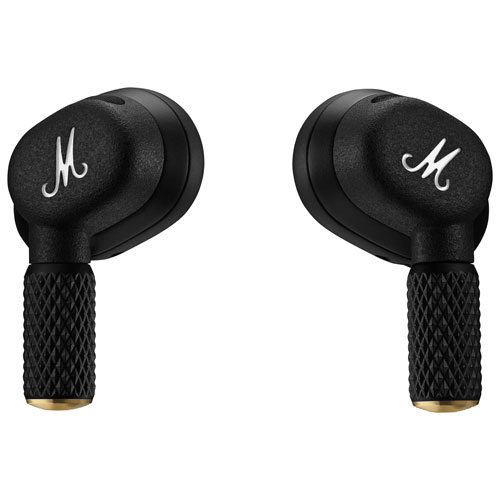
-15%Marshall Motif II ANC True Wireless Earbuds — Signature Sound, 30H Battery! $229.99 CAD (15% Off)
 -22%
-22%GE 4.9 Cu. Ft. Top Load Washer & 7.2 Cu. Ft. Gas Dryer — Big-Capacity Laundry Pair! $2049.98 CAD (21% Off)
 Immigration
Immigration | September 14, 2026 Canadian citizenship certificate backlog tops 136,000 as wait times near 3 years
 Global Express
Global Express | September 14, 2026 Iran War Escalates as Oil Prices Near Four-Month High
-27%TP-Link UE306 USB 3.0 to Gigabit Ethernet Adapter — Foldable & Plug-and-Play! $13.99 CAD (26% Off)
Amazon
-46%GE SmartWater MWF Refrigerator Water Filter — Certified Original Replacement, Clean Water Every Pour! $54.99 CAD (45% Off)
Best Buy
-15%Marshall Motif II ANC True Wireless Earbuds — Signature Sound, 30H Battery! $229.99 CAD (15% Off)
Best Buy
-22%GE 4.9 Cu. Ft. Top Load Washer & 7.2 Cu. Ft. Gas Dryer — Big-Capacity Laundry Pair! $2049.98 CAD (21% Off)
Best Buy
ImmigrationImmigration | September 14, 2026 Canadian citizenship certificate backlog tops 136,000 as wait times near 3 years
Global Express