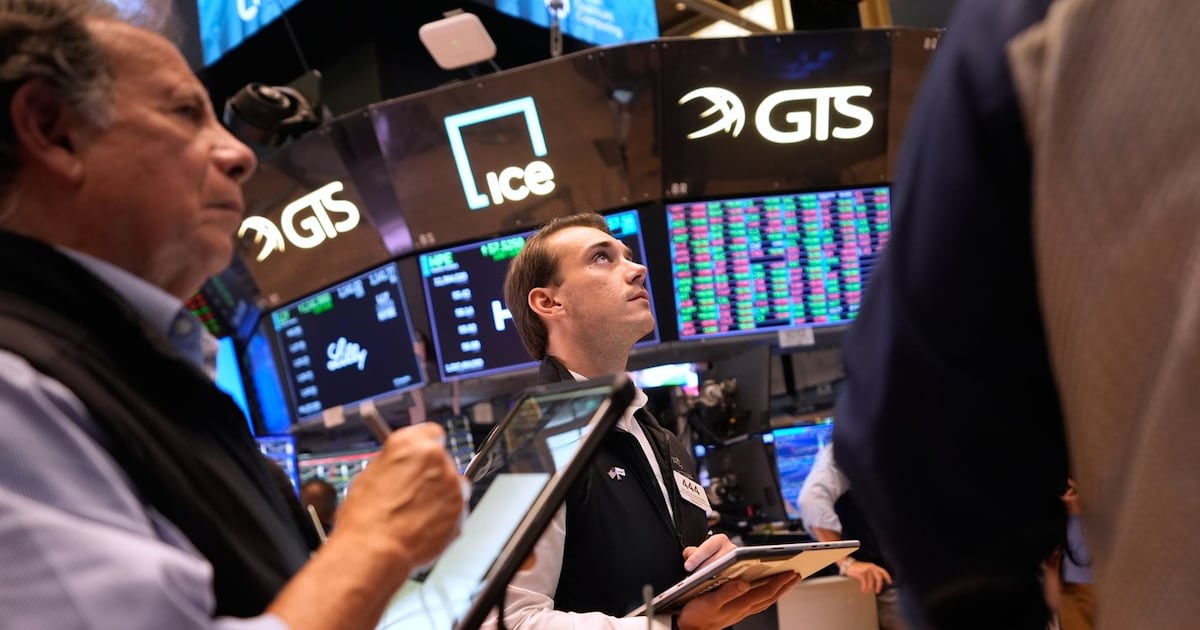
Finance Morning: Asian Shares Mostly Higher as BOJ Hikes to 31-Year High, Yuan Tops 6.7
Asian shares mostly rose on Sept 18. The Bank of Japan hiked 25 bps to 1.25%, a 31-year high, with the Nikkei 225 up 1.38% to 65,018.95 and South Korea's Kospi up 2.66%. Chinese stocks closed higher, with over 4,200 shares advancing. Both the onshore and offshore yuan broke through 6.7, their strongest since January 2023. The NFRA appointed Cai Dong to its Party Committee; HSBC is scrapping child-education benefits for some Hong Kong staff; a new financial-marketing rule takes effect on Sept 30.
📊 Today's Asian Markets
| Index | Close | Change | Change % |
|---|---|---|---|
| Shanghai Composite | 3,911.87 | +20.27 | +0.52% |
| Shenzhen Component | 13,640.87 | +186.17 | +1.38% |
| ChiNext | 3,372.68 | +74.37 | +2.25% |
| Hang Seng | 24,750.78 | +36.98 | +0.15% |
| Nikkei 225 | 65,018.95 | +882.70 | +1.38% |
| KOSPI | 6,894.23 | +178.82 | +2.66% |
| Taiwan Weighted | 47,180.75 | +1,331.85 | +2.90% |
Asian Shares Mostly Higher as Oil Prices Retreat
Source: BNN Bloomberg
Asian shares mostly rose Friday, getting a lift from a rally on Wall Street as well as declining oil prices, while European benchmarks slipped in early trading. France's CAC 40 shed 0.6% to 8,136.51, Germany's DAX slipped 0.5% to 25,577.02, and Britain's FTSE 100 dipped 0.8% to 10,730.39. U.S. shares were set to drift higher, with Dow futures up 0.2% to 52,299.00 and S&P 500 futures up 0.3% to 7,729.50.
In Asia, Japan's benchmark Nikkei 225 gained 1.4% to finish at 65,018.95 after the Bank of Japan raised its benchmark interest rate to 1.25% from 1.0%, a 31-year high. South Korea's Kospi jumped 2.7% to 6,894.23, Australia's S&P/ASX 200 was little changed, Hong Kong's Hang Seng edged up 0.6% to 24,750.78, and the Shanghai Composite added 0.9% to 3,911.87.
In currency trading, the U.S. dollar rose to 157.73 Japanese yen from 155.95 yen, and the euro cost $1.1486. Oil extended its decline, with Brent down 2.15% to $102.57 a barrel and U.S. crude down 1.92% to $99.95 a barrel. The Federal Reserve on Wednesday raised its key rate by a quarter of a percentage point — its first hike in more than three years — and signaled it may raise once more this year.
Chinese Stocks Close Higher, Over 4,200 Shares Advance
Source: Sina Finance
Chinese stocks closed higher on Friday, with the three major indexes all gaining and more than 4,200 shares advancing across the market. The ChiNext Index rose 2.25% and the STAR Market Composite gained over 3.2%. Combined turnover on the Shanghai and Shenzhen bourses reached 2.08 trillion yuan, up 254 billion yuan from the previous session.
New and recently listed shares were strong, with Shengu Group surging more than 290% at one point intraday. Xihua Technology notched a fourth straight limit-up, while Makuang, Hai'an Group and Tengxin Precision also hit their daily limits. Shilianhang posted a third consecutive limit-up, and both Greenland Holdings and China Vanke closed limit-up.
By sector, storage chips, GPU-concept stocks and semiconductors led gains, real estate rallied in the afternoon, while communication equipment, computer hardware, energy equipment, electronic components and precious metals advanced. Coal, autos, oil & gas and banks were among the few sectors that declined.
NFRA Welcomes New Party Committee Member Cai Dong
Source: Sina Finance
The official leadership page of China's National Financial Regulatory Administration (NFRA) shows that Cai Dong has been appointed a member of the administration's Party Committee. He previously served as a Standing Committee member and executive vice governor of Jilin Province, marking another adjustment to the NFRA's leadership.
Public records show Cai Dong was born in October 1968 and holds a doctorate in economics, having spent a long career in the financial system. He began at ICBC, where he held posts including deputy general manager of the accounting and settlement department and of the settlement and cash management department, later serving as general manager of the e-banking department and as president and Party secretary of the Tianjin branch. In July 2016 he became a vice president and Party Committee member of China Development Bank, and in April 2019 executive director, vice president and Party Committee member of Agricultural Bank of China. In October 2019 he moved to local government as a Party member and vice governor of Jilin Province, and in June 2022 became a Standing Committee member and executive vice governor.
With his appointment, the NFRA Party Committee now comprises Party secretary and administrator Ding Xiangqun; Party Committee member Cai Dong; Party Committee members and vice administrators Xiao Yuanqi, Cong Lin and Fu Wanjun; and Party Committee member and head of the discipline inspection group Yang Guorui, alongside chief risk officer Xiang Dong and chief counsel Wang Shengbang. Ding Xiangqun became the NFRA's Party secretary in May and was appointed its administrator by the State Council in June.
Commentary: Leaving Fake Finance 'Influencers' Nowhere to Hide
Source: China News Service
An editorial published by China News Service on Sept 18 warns that finance 'influencers' on social media use highly inflammatory language while running what amounts to a harvesting operation behind the scenes. Douyin recently disclosed that in the third quarter it handled more than 45,000 pieces of violating content and over 1,000 violating accounts, and revoked the 'financial planner' certification of 6,888 users. Since December last year, platforms including Douyin, WeChat Channels and Xiaohongshu have issued finance-ecosystem conventions setting standards for account qualifications, content management and marketing.
The commentary notes that finance-related violations are hidden, varied and fast-evolving: some forge brokerage qualifications, seals and research reports; some pose as ordinary investors sharing 'investment experience' to lure traffic; some disguise stock tips as acrostic poems to evade algorithms; and others simply switch platforms after being banned. Some black- and gray-market groups have even formed industrial chains around financial-account certification.
Notably, a regulation jointly issued by the People's Bank of China and seven other departments — the Measures for the Administration of Online Marketing of Financial Products — takes effect on Sept 30. It requires third-party internet platforms to strengthen verification of the qualifications of entities producing financial-product marketing and related content, and to display the name of their financial or professional qualification materials on the home pages of financial-marketing accounts.
HSBC Scraps Child-Education Benefits for Some Hong Kong Staff
Source: Sina Finance
HSBC will scrap child-education benefits for some Hong Kong employees, according to Bloomberg. The report, citing an internal memo sent to Hong Kong staff by HSBC's Asia and Middle East co-CEOs David Liao and Surendra Rosha, said employees at band three and managing directors who already receive the benefit will keep it, but new hires and staff transferred to Hong Kong at the same grades will no longer be eligible.
An HSBC spokesperson confirmed the memo's contents, saying in an emailed statement: 'We focus on providing fair and competitive rewards for our people. HSBC Hong Kong employees enjoy a comprehensive and market-aligned total reward package.' Hong Kong is HSBC Holdings' largest market and the group's only major operating centre that offers the child-education allowance to mid-level staff and above. The benefit covers 95% of tuition, up to HK$220,000 a year per child in primary school and HK$300,000 a year per child in secondary school.
Bank of Japan Hikes to 31-Year High
Source: 21st Century Business Herald
The Bank of Japan decided on Sept 18, by a 7-2 vote, to raise its target rate by 25 basis points, from 1.00% to 1.25% — the highest level in 31 years, since 1995 — matching market expectations. It marks a faster pace for the BOJ, which had broadly raised rates once every six months since ending negative rates in March 2024; the three-month gap since its June meeting is the shortest since 1990.
The BOJ said Japan's financial conditions remain accommodative and that it will weigh Middle East developments, AI demand and exchange-rate effects on the economy and prices, stressing it will keep raising rates in line with economic, price and financial conditions. It voiced clear vigilance over inflation, saying upward pressure is beginning to feed into consumer prices and that underlying inflation risks exceeding its 2% target.
After the hike, the dollar quickly rose about 60 pips against the yen, extending its daily gain to 0.5%. Markets expect the yen to weaken further in the near term, trading in a 155-160 range over the coming month. Even after the move, the BOJ's policy rate remains well below other major central banks: the Fed's latest range is 3.75%-4.00%, and the ECB raised its key rate to 2.5% last week.
Korean Stocks Surge as Memory-Chip Giants Rally
Source: 10jqka
During Asian trading, South Korea's Kospi rose more than 2%, with the two memory-chip giants rallying — SK Hynix gained over 4% and Samsung Electronics over 3%. Japan's Nikkei 225 rose nearly 1%, led by electronics and metals shares, with SoftBank Group up more than 5%. South Korea's finance ministry said the Fed's rate hike has limited impact on the Korean market, and that it will act if bond-market volatility becomes excessive.
On the news front, comments by Nvidia CEO Jensen Huang on the 17th boosted optimism about the semiconductor sector. He said that as AI spreads further into healthcare, manufacturing, financial services and other industries, the company's chip sales next year will be double this year's.
Meanwhile, tight supplies of semiconductor components have yet to ease. According to South Korean tech outlet ETNEWS, lead times for some key components of semiconductor manufacturing equipment have more than doubled. One deposition-equipment executive said parts that once arrived in four months now take 10 months, while a laser-processing equipment maker sourcing key parts from Japan faces lead times of up to 40 months.
Nikkei Closes Up 1.38% as Rate Hike Brings Relief
Source: Kyodo News
Tokyo stocks rose again on Sept 18, with the Nikkei index ending at 65,018.95, up 882.70 points, or 1.38%, reclaiming the 65,000 mark after about a week. Buying dominated as relief spread after the Bank of Japan finalized its rate hike as expected, while an overnight advance on Wall Street was also supportive.
The broader TOPIX index, however, fell 3.05 points to 4,091.14, down 0.07%, on trading volume of 2.86228 billion shares. Two BOJ policy board members opposed the hike, spurring a view that the pace of increases will not accelerate, and bank shares — previously buoyed by expectations of wider interest margins — turned lower.
Overnight U.S. stocks advanced broadly, helped by falling long-term interest rates and declining crude-oil futures. The move spilled over into Tokyo, lifting semiconductor names with heavy Nikkei weighting, including Advantest and Tokyo Electron.

Onshore and Offshore Yuan Both Break Through 6.7
Source: Sina Finance
China's central parity rate for the yuan against the dollar was set at 6.7521 on Sept 18, 59 pips stronger than the previous fixing and the eighth consecutive daily strengthening. On the day, both the onshore and offshore yuan broke through the 6.7 mark against the dollar, hitting their highest levels since January 2023. As of press time, the onshore yuan stood at 6.6972 and the offshore yuan at 6.6947.
Ming Ming, chief economist at CITIC Securities, said the pricing anchor for the yuan has shifted to trade over the course of this year, with strong exports and released settlement demand providing solid support while the impact of rate differentials has weakened relatively. He noted that although the Fed hiked by 25 basis points in September as expected and signaled hawkishness, driving a sizable rise in the dollar index, the yuan remained steady and even broke 6.7 on Sept 18.
Wang Qing, chief macro analyst at Golden Credit Rating, said the yuan's strength on the day may stem from two direct factors: the dollar index retreating after spiking once the Fed's hike took effect, and the central parity continuing to be set toward the stronger side recently. The industry expects the yuan to stay stable-to-firm in the near term, trending 'up first, then steady' for the full year.
Bank of England Holds Rates Steady Again
Source: China Financial Information Network
According to a Xinhua Finance report from London, the Bank of England announced on Sept 17 that it would keep its benchmark rate unchanged at 3.75%, its sixth consecutive hold at that level, in line with market expectations.
Although UK inflation rose to 3.1% in August, core and services inflation remained stable with no clear rise. The UK labor market continued to weaken, with employee wage growth slowing — the main reason the BOE kept rates on hold and maintained its wait-and-see stance.
At the same time, the impact of rising energy prices should not be overlooked. After increases in July, UK household energy bills are set to rise further in October, with the effects eventually showing up at the consumer end. Markets already expect the BOE has room for at least one 25-basis-point hike before year-end.
More News
- Global Express | September 18, 2026 — Pakistan Mosque Attack Kills at Least 16
- Tech Express | September 18, 2026 — Claude Now Leads About a Quarter of Anthropic's AI Research Work
- Sports Express | September 18, 2026 Allen's five TDs power Bills past Lions in new stadium debut
- Maple Express | September 18, 2026: Carney tells EU Parliament Canada welcomes 'ambition' to be first associate member
- Finance Evening | Fed Hikes for First Time in Three Years; Stocks and Bonds Rally as Nvidia Eyes Doubled Chip Sales
Comments (0)
View More
 -29%
-29%Finish Quantum Ultimate Dishwasher Pods, 72 Tabs — No Pre-Rinse Needed! $19.97 CAD (29% Off)
 -56%
-56%JBL Vibe Beam True Wireless Earbuds — 32 Hours of Playtime! $44.98 CAD (55% Off)
 -18%
-18%BOBOVR S3 Pro — 10,000mAh Hot-Swap Battery & Cooling Fan for Meta Quest 3/3S! $139.99 CAD (17% Off)
 -36%
-36%LEGO Minecraft Woodland Mansion Fighting Ring 21272 — 491 Pieces, 6 Figures! $41.72 CAD (36% Off)
 Maple Express
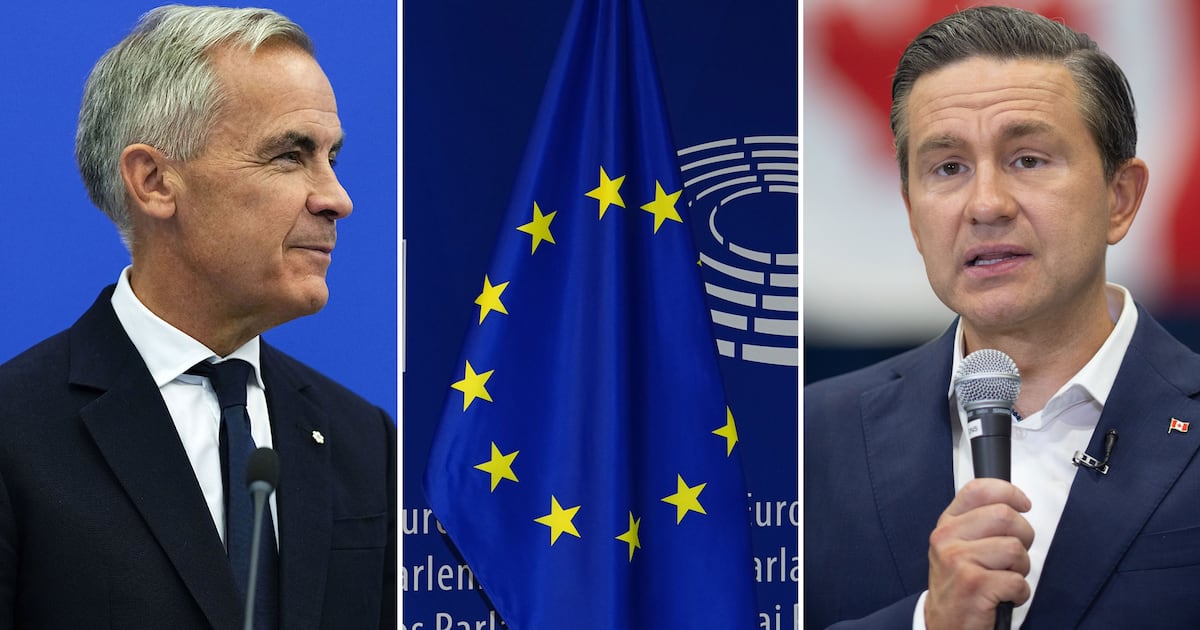
Maple Express | September 18, 2026: Carney tells EU Parliament Canada welcomes 'ambition' to be first associate member
 Tech Express
Tech Express | September 18, 2026 — Claude Now Leads About a Quarter of Anthropic's AI Research Work
-29%Finish Quantum Ultimate Dishwasher Pods, 72 Tabs — No Pre-Rinse Needed! $19.97 CAD (29% Off)
Amazon
-56%JBL Vibe Beam True Wireless Earbuds — 32 Hours of Playtime! $44.98 CAD (55% Off)
Amazon
-18%BOBOVR S3 Pro — 10,000mAh Hot-Swap Battery & Cooling Fan for Meta Quest 3/3S! $139.99 CAD (17% Off)
Best Buy
-36%LEGO Minecraft Woodland Mansion Fighting Ring 21272 — 491 Pieces, 6 Figures! $41.72 CAD (36% Off)
Amazon
Maple ExpressMaple Express | September 18, 2026: Carney tells EU Parliament Canada welcomes 'ambition' to be first associate member
Tech Express