
Tech Express | September 18, 2026 — Claude Now Leads About a Quarter of Anthropic's AI Research Work
Today's Tech Express: Anthropic says Claude now leads 26% of its AI research tasks, up from under 1% in February; Google launches CC, a shared AI agent for families; OpenAI quietly adds renminbi support. Also: a CAS GAA transistor hitting 3nm-class performance on DUV; Nebius raising GPU rents up to 21%; the iPhone 18 Pro going on sale; Samsung's Galaxy Z Fold 8 sales up about 10%; NASA's moon crater; Huawei's Peerium; and Manus doubling its valuation to $4 billion.
1. Claude Now Leads About a Quarter of Anthropic's AI Research Work
Source: MyDrivers
On September 17, Anthropic disclosed internal statistics on research automation. As of August this year, Claude was already leading 26% of the company's AI research tasks, up from less than 1% in February — a striking pace of growth.
Anthropic uses a six-level automation framework to assess AI involvement, defining Level AL4 as "AI-led," in which humans give only high-level goals while AI completes most of the workflow under human supervision. More than 90% of research work now reaches human-AI collaboration or above, but no research task is fully autonomous (AL5): AI never operates without human oversight.
Inside the company, about 30,000 Claude-driven AI agents work in parallel on research and engineering, assigning tasks to one another and cross-checking each other's work, generating more than 1 billion decisions in August alone. More than 80% of the code merged into Anthropic's repositories is now generated by Claude, and these agents also take part in iterating the next generation of Claude models — what the industry calls recursive self-improvement.
2. Google Launches "CC," a Shared AI Agent for Families
Source: Ars Technica
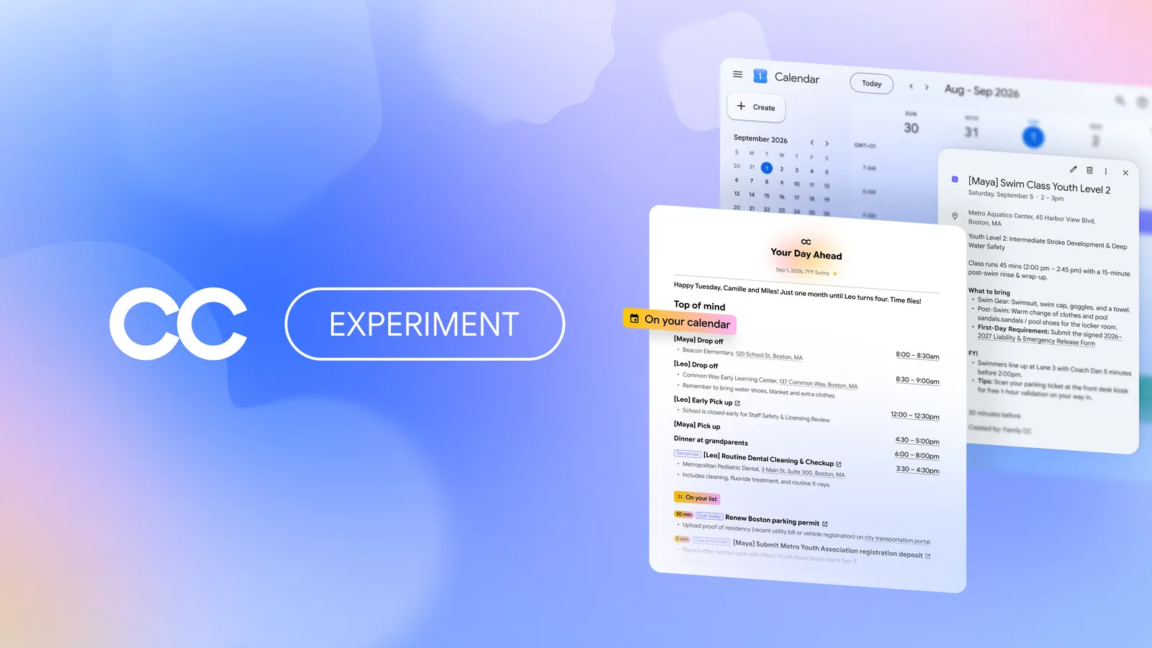
Google has launched an experimental AI agent called CC in Google Labs, aiming to extend personalization to the whole family. CC can serve up to six family members and is an evolution of something Google announced in 2025 — the original CC eventually became Gemini's Daily Brief.
CC has its own Google account, and each family member can choose whether to interact with it. For privacy, CC only sees your emails if you explicitly share them — for example, you can mark certain addresses, such as school scheduling emails, as always available. You can also send content to CC via email or Google Chat, or have it monitor a shared Google Drive folder for invitations, documents and other material.
One of CC's main functions is a shared "Your Day Ahead" email sent each morning to all registered users, pulling together the day's events and updates on previous tasks; it can also add items to shared calendars, remind you about tasks, and create documents accessible to all CC users. Google says each CC instance runs on an isolated cloud instance, powered by Antigravity and its latest Gemini models — currently Gemini 3.8 Flash. Users can join a waitlist now; the feature is only compatible with personal Gmail accounts for people 18 and older.
3. OpenAI Quietly Adds Renminbi Payment Support
Source: MyDrivers
OpenAI's official payment page was updated today to add support for the Chinese yuan (RMB), something it had not offered before.
Analysts note that adding a currency alone does not mean much yet; what matters next is whether cards, credit cards or channels such as WeChat Pay and Alipay will be supported. OpenAI, Anthropic, Google and Meta all use risk controls to limit use in China, so even developers who buy their services may face throttling, downgraded performance or even account bans.
Another possibility is that, if the change is not a coincidence, it may hint at an easing between China and the US on AI, since AI is set to be a major topic at next week's talks, spanning everything from chips to large models. If OpenAI can eventually make compliant payment for GPT model services possible, it would be good news for developers in China.

4. Chinese Academy of Sciences Touts GAA Transistor That Could Reach 3nm-Class Performance on DUV
Source: MyDrivers
The Chinese Academy of Sciences has unveiled a new gate-all-around (GAA) transistor architecture that achieves an on/off ratio of more than 500,000 on DUV lithography, theoretically unlocking 3nm-equivalent performance.
Unlike traditional FinFETs, a GAA transistor wraps its gate around the current channel on all sides for more precise control. The CAS transistor's ratio above 500,000 means the current when on is 500,000 times that when off, showing excellent electrical control — and critically, the transistors are reportedly made with DUV lithography.
DUV lithography's resolution is not enough to directly pattern 3nm-class circuits, normally reaching only the 7nm level through multi-patterning and immersion DUV. The new architecture works around this by relaxing transistor spacing while maintaining performance, opening a theoretical window to 3nm-equivalent performance on the DUV path. The report cautions, however, that chipmaking has three stages — front-end (FEOL), middle-of-line (MEOL) and back-end (BEOL) — and the new transistor only solves the FEOL bottleneck, while MEOL metal interconnects and BEOL wiring do not benefit, which remains the key test of whether the path can truly work.

5. Nvidia-Backed Nebius Raises GPU Rental Prices by Up to 21%
Source: MyDrivers
Dutch AI compute lessor Nebius will raise its on-demand GPU prices across the board starting October 1, 2026. Rents for Nvidia's H100, H200, B200 and B300 will rise 17%, 20%, 19% and 21% respectively, with the B300 going from $7.85 per hour to $9.50 per hour.
Notably, the increase covers the entire lineup, with the H100 launched in 2022 also up 17%. Older cards rising rather than falling directly rebuts the depreciation argument that "GPUs are obsolete in two or three years." It is Nebius's second price hike in months: in May it raised on-demand capacity prices by an average of 29% and preemptible capacity by 51%; AMD EPYC Genoa CPUs will rise 25% and memory services about 41%.
Nebius's confidence comes from results: second-quarter 2026 revenue reached $582 million, up 454% year over year, with AI cloud revenue of $575 million, up 514%. Its customers include Meta and Microsoft, and Nvidia disclosed in July that it holds about 9.3%, or 22.26 million shares. CoreWeave, another Nvidia-backed firm, also raised prices across the board by about 25% in July.

6. iPhone 18 Pro Goes on Sale Today, Long Lines at Apple Stores
Source: MyDrivers
The iPhone 18 Pro series went on sale today, starting at 9,999 yuan. Users who pre-ordered through Apple's website can receive their phones as early as today, and Apple Store retail locations opened for first-day sales at the same time.
Queues outside Apple Stores for launch-day pickups have become a familiar scene each year, and this year is no exception. Photos shared by users in many cities show stores setting up barriers to keep order early in the morning, with large crowds of first buyers waiting to collect their devices.
Buyers heading to physical stores today need to complete a reservation in advance; customers without a reservation order cannot buy directly at the store. According to Apple's website, iPhone 18 Pro and iPhone 18 Pro Max are currently out of stock at the Apple Store in Zhengzhou.

7. Before iPhone Duo Ships, Samsung's Galaxy Z Fold 8 Sales Jump
Source: MyDrivers
After Apple unveiled its first foldable phone, the iPhone Duo, sales of rival Samsung's new Galaxy Z Fold 8 rose sharply. Data shows Galaxy Z Fold 8 sales in South Korea rose about 10% from the previous week.
Local analysts attribute the shift mainly to the Apple foldable's price and its wait of more than a month — the iPhone Duo has not yet gone on sale and will not ship until late October. On price, the Galaxy Z Fold 8 starts at $1,899 in the US versus $1,999 for the iPhone Duo; in South Korea, the two phones at the same capacity differ by more than 1 million won, about $723. On hardware, the iPhone Duo weighs 254 grams and is 11.3mm thick when folded, versus 201 grams and 9.7mm for the Galaxy Z Fold 8.
Research firm Counterpoint Research previously forecast that, spurred by the iPhone Duo launch, the global foldable phone market will grow 24% this year and 37% next year, with cumulative shipments expected to top 100 million units this year — the first time above 100 million since foldables arrived in 2019.

8. NASA Spacecraft Finds a 'Once-in-a-Century' New Crater on the Moon
Source: Space.com
NASA's Lunar Reconnaissance Orbiter (LRO) has found a newly formed lunar crater, giving scientists a rare glimpse of the immediate aftermath of an impact. Named McGetchin, the crater formed sometime between April 11 and May 22, 2024, when an asteroid or comet fragment struck the moon.
Measuring about 222 meters across and roughly 43 meters deep, McGetchin is the largest newly formed impact crater identified by LRO and the largest newly formed crater ever found in the solar system. An impact capable of producing a crater this size is expected to occur on the moon only about once every century, making McGetchin an exceptionally rare real-time discovery.
The findings appear in two studies published September 16 in the journal Science Advances: one led by Mark Robinson of Intuitive Machines, describing the crater itself and the vast amount of material thrown out by the impact; the other examining the broader region altered around it. LRO has observed the moon for more than 17 years, giving researchers images and measurements before and after the impact. The Diviner instrument also detected a roughly 7-kilometer-wide "cold spot" around the crater, about 8 to 9 kelvins colder than the surrounding surface during the lunar night. Researcher Powell said that understanding how impacts change the surface is important for interpreting lunar geology and for future landed missions.

9. Huawei Says It Has Broken the von Neumann Single-Machine Architecture With 'Peerium'
Source: MyDrivers
Huawei has officially announced that it has broken the traditional von Neumann single-machine architecture, unveiling a new computing system for the AI era named Peerium. Its core capability is to integrate millions of independent processors into a single supercomputer with unified performance scheduling, breaking past the performance ceiling of compute clusters.
According to Huawei's technical lead, Peerium is based on nested parallel logic and, through unified memory addressing and equal interconnection of all nodes, achieves high-performance, lossless scaling at the scale of millions of processors, and introduces a Nested BSP programming model. Huawei also unveiled the core interconnect technology supporting it, called Lingqu, a high-speed interconnect bus built entirely on open protocols that can freely scale to connect CPUs, NPUs, memory, SSDs, network cards and switches.
The first commercial product built on Peerium, the Atlas 950 supernode, has already landed, and a large-scale Atlas 950 compute cluster with 256,000 cards has entered deployment, while the next-generation Atlas 960 system based on NPO technology is now in testing.

10. After Splitting From Meta, Manus Valuation Doubles to $4 Billion
Source: Guancha
Bloomberg reported on September 17 that Manus is seeking to complete a $500 million funding round that would push its valuation to $4 billion, double the $2 billion it had when Meta moved to acquire it. If the deal closes, Manus would become China's most valuable AI agent startup, paving the way for a later Hong Kong listing. People familiar with the matter said the round is still underway and terms could still change, with the identity of the new investors as yet unknown. Manus's existing investors include Tencent, HSG and ZhenFund.
The path has been eventful: last December, Meta announced it would acquire Manus for more than $2 billion, when Manus's annual recurring revenue had already topped $100 million. In February, members of the Manus team moved to Meta's Singapore office. But in April, China's National Development and Reform Commission said its foreign investment security review office had decided to prohibit the foreign acquisition of the Manus project, ordering the parties to unwind it. In May, Manus and Meta were reported to have completed a business split and stopped sharing data; after notifying some users in August that their data would be deleted, Manus announced on September 1 that it had resumed independent operations.
Bloomberg reported in July that Manus's founding team and existing investors including Tencent, HSG and ZhenFund had bought back their shares from Meta at a $2 billion valuation, with Tencent acquiring the stake held by US venture firm Benchmark to become Manus's largest outside investor. Now, as a new funding round surfaces, its valuation target is once again heading toward $4 billion.
More News
- Global Express | September 18, 2026 — Pakistan Mosque Attack Kills at Least 16
- Finance Morning: Asian Shares Mostly Higher as BOJ Hikes to 31-Year High, Yuan Tops 6.7
- Sports Express | September 18, 2026 Allen's five TDs power Bills past Lions in new stadium debut
- Maple Express | September 18, 2026: Carney tells EU Parliament Canada welcomes 'ambition' to be first associate member
- Finance Evening | Fed Hikes for First Time in Three Years; Stocks and Bonds Rally as Nvidia Eyes Doubled Chip Sales
Comments (0)
View More
 -56%
-56%JBL Vibe Beam True Wireless Earbuds — 32 Hours of Playtime! $44.98 CAD (55% Off)
 -51%
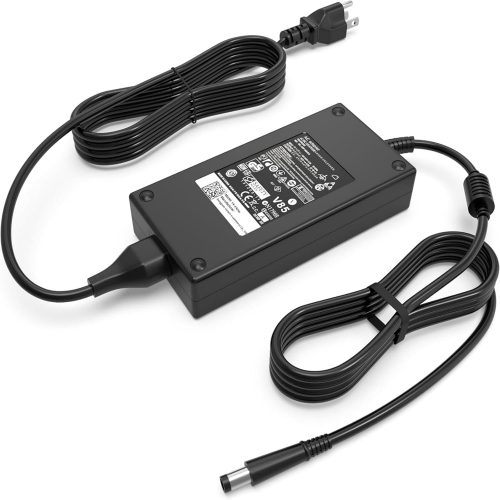
-51%DOLAER 240W Laptop Charger for Dell Alienware — One Adapter for the Whole 15/17/M Series! $29.99 CAD (50% Off)
 -31%
-31%LEGO Minecraft Zombie Dungeon — A Spawning Chamber That Drops Fresh Zombies! $27.97 CAD (30% Off)
 -22%
-22%Owala FreeSip 24oz Insulated Bottle — Sip or Swig, Cold for 24H! $33.00 CAD (21% Off)
Tech ExpressTech Express | September 18, 2026 — Claude Now Leads About a Quarter of Anthropic's AI Research Work
 Maple Express
Maple Express Noon | September 17, 2026 - 911 service restored across the GTA after widespread overnight outage
-56%JBL Vibe Beam True Wireless Earbuds — 32 Hours of Playtime! $44.98 CAD (55% Off)
Amazon
-51%DOLAER 240W Laptop Charger for Dell Alienware — One Adapter for the Whole 15/17/M Series! $29.99 CAD (50% Off)
Best Buy
-31%LEGO Minecraft Zombie Dungeon — A Spawning Chamber That Drops Fresh Zombies! $27.97 CAD (30% Off)
Amazon
-22%Owala FreeSip 24oz Insulated Bottle — Sip or Swig, Cold for 24H! $33.00 CAD (21% Off)
Amazon
Tech ExpressTech Express | September 18, 2026 — Claude Now Leads About a Quarter of Anthropic's AI Research Work
Maple Express