
Tech Express | July 19, 2026 Moonshot AI Unveils World's Largest Open-Source Model Kimi K3
A packed week in tech: Moonshot AI releases the world largest open-source model Kimi K3 with 2.8T parameters and eyes a Hong Kong IPO; Google Gemini 3.5 Pro delay costs Alphabet nearly $200B; Xi Jinping launches WAICO global AI alliance at WAIC; global AI chip stocks plunge into bear market; plus Microsoft Frontier Company, Tencent X-AI Memory Glasses, SpaceX Starship Flight 13, and more.
Tech Express | July 19, 2026 Moonshot AI Unveils World's Largest Open-Source Model Kimi K3
📰 Moonshot AI Releases Kimi K3, The World's Largest Open-Source Model with 2.8T Parameters, Eyes Hong Kong IPO
On July 17, Chinese AI startup Moonshot AI officially released its Kimi K3 open-source large language model with 2.8 trillion parameters, making it the largest open-source model globally. In the Code Arena programming benchmark, Kimi K3 surpassed Anthropic's Claude Fable 5 and OpenAI's GPT-5.6, sending shockwaves through the global AI community. CEO Yang Zhilin called it a "new frontier of intelligence," marking China's entry into the top tier of open-source AI.
Simultaneously, Moonshot AI has notified investors of a corporate restructuring plan in preparation for a Hong Kong IPO, potentially completing its listing within six months. If successful, Moonshot AI would become the first unicorn in China's LLM sector to go public. The timing is significant amid escalating US-China AI competition: Kimi K3's release directly triggered a selloff in US AI chip stocks, as investors worry that Chinese open-source models will accelerate AI commoditization and dampen demand for premium hardware.
At WAIC 2026, Moonshot AI also unveiled its next-generation Kimi K2.5 technical roadmap, featuring the MuonClip optimizer, linear attention mechanisms, and an Agent Swarm multi-agent collaboration architecture. This roadmap demonstrates deep investment in fundamental research rather than merely following established paths.
— Forbes
📰 Google's Gemini 3.5 Pro Delayed, Alphabet Erases Nearly $200 Billion in Market Value
On July 16, Bloomberg reported that Google's flagship AI model Gemini 3.5 Pro has been delayed by several months after its coding capabilities fell short of internal benchmarks. Originally slated for a June release (teased by CEO Sundar Pichai at the May I/O conference), the delay was triggered by disappointing results in code generation tests. Alphabet shares plunged approximately 4.4% on the news, wiping out nearly $200 billion in market value in a single day.
The delay comes as competitors OpenAI and Anthropic continue rolling out next-generation models. Reports indicate Gemini 3.5 Pro significantly lagged behind OpenAI's Codex and Anthropic's Claude Fable 5 in programming benchmarks, forcing Google to re-optimize the model architecture. Analysts warn that the delay not only impacts Google Cloud's AI product competitiveness but could also shake market confidence in Google's AI leadership position.
Alphabet's stock continued to face pressure in subsequent sessions, marking one of its steepest declines in two years. This event resonated with the broader global AI chip selloff, highlighting deep market concerns about whether massive AI capital expenditure will deliver expected returns.
📰 Xi Jinping Launches Global AI Alliance WAICO at WAIC, Calls for Shared Governance
On July 17, Chinese President Xi Jinping delivered a keynote speech at the opening ceremony of the World AI Conference (WAIC 2026) in Shanghai, formally launching the "World AI Cooperation Organization" (WAICO). The initiative calls for a global shared AI governance framework and expanded access to AI technologies for developing nations. UN Secretary-General António Guterres, Thai Prime Minister Anutin Charnvirakul, and other world leaders attended.
WAICO is positioned as a developing-nation-led multilateral AI governance body, with founding members including Pakistan, Indonesia, Malaysia, Brazil, and Russia. Analysts believe Beijing will use the platform to influence global AI regulatory standards, creating competition with US-led AI governance frameworks. In his speech, Xi emphasized that "AI should not become a privilege of wealthy nations and wealthy people," proposing three pillars: technology sharing, capacity building, and standards coordination.
The move comes against the backdrop of continued US restrictions on semiconductor exports to China. In May, the US Commerce Department confirmed it would limit shipments of critical semiconductors to subsidiaries of Chinese companies. WAICO's establishment is seen as a significant step in China's bid for influence over global AI governance.

📰 Global AI Chip Stocks Plunge, Philadelphia Semiconductor Index Enters Bear Market
On July 17, global semiconductor stocks experienced a massive selloff, with the Philadelphia Semiconductor Index (SOX) — tracking the 25 largest US chip firms — dropping 9.5% from a month earlier and entering a technical bear market. Nvidia, AMD, Broadcom, Intel, and Micron all declined, with synchronized drops across Asian and European markets, triggering widespread doubts about the sustainability of the AI chip investment boom.
Market analysts identified multiple triggers: Moonshot AI's Kimi K3 open-source release weakened the premium hardware demand thesis; TSMC and Netflix earnings calls failed to deliver sufficient AI growth narratives; and more investors began to view AI infrastructure as "overbought." Fortune reported that investors are reassessing valuation logic for the AI semiconductor sector.
Although some investors bought the dip on Friday, stabilizing chip stocks somewhat, analysts warned that the supply-demand dynamics for AI chips are shifting. More open-source models are lowering the barrier for top-tier GPU dependency, which could pose structural headwinds to long-term growth for companies like Nvidia.
— Fortune
📰 Tencent WorkBuddy and Liweike Launch World's First X-AI Memory Glasses
During WAIC 2026, Tencent Cloud WorkBuddy and Liweike Technology announced a strategic ecosystem partnership and unveiled the first X-AI Memory Glasses powered by WorkBuddy. The device runs on Liweike's proprietary Wake-AI 3.0 system with the WakeeMemory real-world memory architecture, capable of automatically capturing in-person meetings, conversations, business trips, and other real-world scenarios and converting them into structured AI office tasks.
The X-AI Memory Glasses bridge the "real-world perception → memory consolidation → office execution" loop: conversations are automatically transcribed into meeting notes, tasks are generated and routed to the WorkBuddy platform, enabling document drafting, PPT generation, calendar scheduling, and cross-system workflows. This represents a critical step for AI agents transitioning from purely online interactions to integrated offline scenarios.
Liweike stated that the X-AI Memory Glasses are the first strategic co-creation product in the WorkBuddy hardware ecosystem, with plans to expand into more enterprise scenarios. The partnership marks an acceleration in Tencent Cloud's AI office hardware ecosystem strategy.
📰 Microsoft Launches Frontier Company with $2.5B Investment, Deploying 6,000 Engineers On-Site
On July 16, Microsoft officially launched Microsoft Frontier Company, a new AI engineering services subsidiary backed by a $2.5 billion investment that will embed 6,000 engineers directly within enterprise customer environments to help design, deploy, and optimize AI systems. The business aims to solve the "last mile" problem of enterprise AI adoption by providing customized AI system implementation services.
Frontier Company's distinctive model is its "embedded engineering" approach — engineers work directly within client environments, co-building AI solutions with customer teams while providing guaranteed IP protection. Early clients include 3M's Global Business Services team, where Frontier engineers are helping automate customer order management systems.
This move reflects Microsoft's aggressive expansion in enterprise AI services. As more companies seek AI transformation but lack internal technical capabilities, on-site AI engineering services are becoming a rapidly growing market. The $2.5 billion commitment also demonstrates Microsoft's long-term conviction in this space.
— Reuters
📰 Canada's AI Data Center Boom Sparks Nationwide Resident Opposition
Canada is experiencing an AI data center construction boom, but the trend is triggering strong pushback from local communities across the country. The Canadian Press reports that from Ottawa to Quebec, multiple communities are organizing protests, concerned that the massive electricity consumption and water usage of mega data centers will cause irreversible damage to local environments and residents' quality of life.
AI data centers typically require hundreds of megawatts of power and substantial cooling water, competing directly with residential utility needs in many Canadian regions. Environmental groups point out that some proposed data centers plan to use natural gas power generation, which would significantly increase carbon emissions — contradicting Canada's climate commitments.
Federal and provincial governments face a dilemma: developing AI infrastructure to maintain national competitiveness while balancing community concerns and environmental promises. There is currently no unified national standard for data center site selection and environmental assessment, with project approval timelines varying significantly across jurisdictions.
📰 SpaceX Starship Flight 13 Targets July 20 Launch, Will Deploy V3 Starlink Satellites for First Time
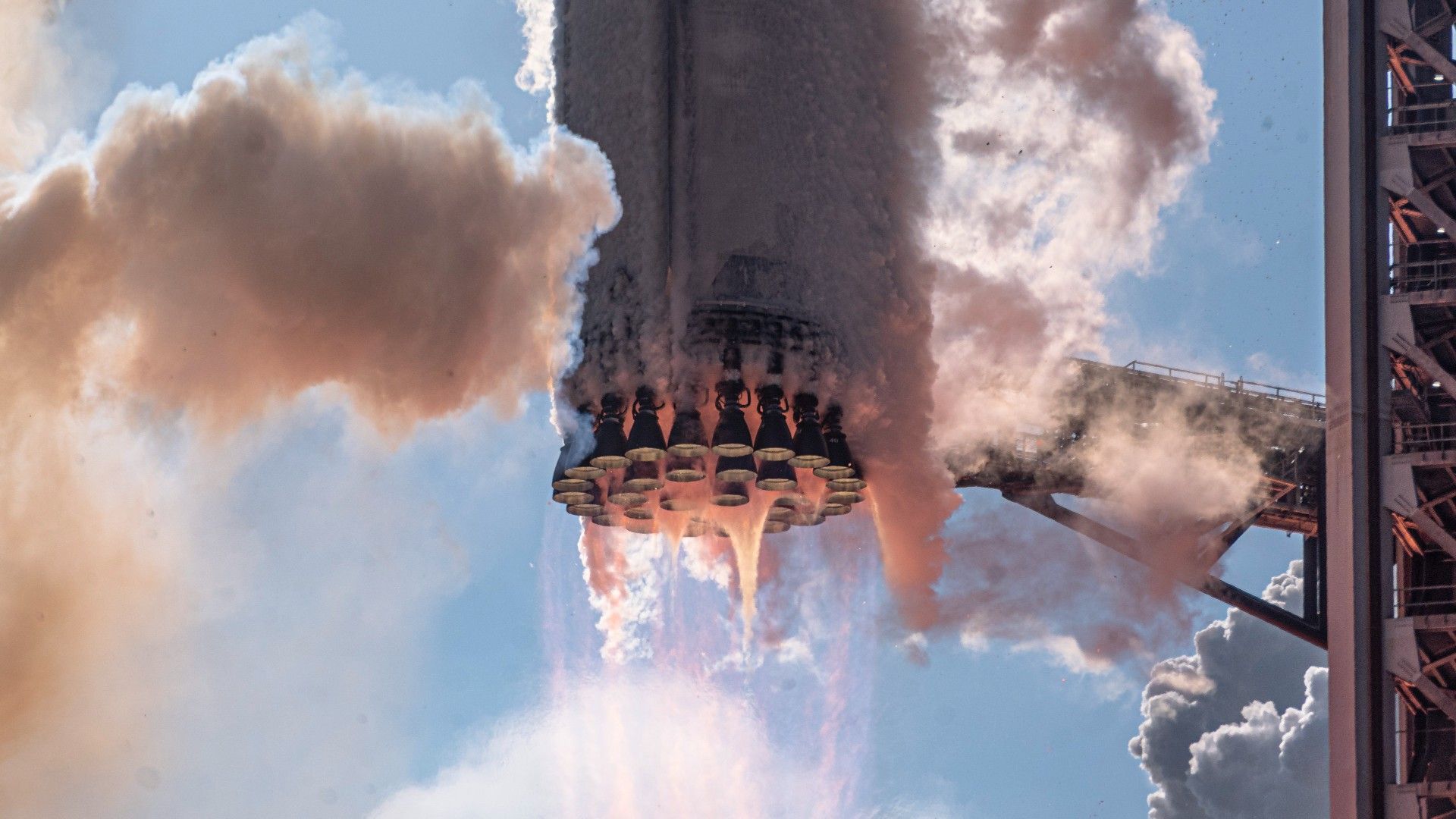
SpaceX's Starship Super Heavy rocket has completed stacking for its 13th flight test (Flight 13), targeting liftoff at 6:45 PM EDT on July 20. This mission carries historic significance: Starship will carry 20 V3 Starlink satellites into orbit for the first time. These next-generation satellites will deploy solar arrays and antennas, attempting to connect with ground stations in South Africa and the broader Starlink constellation via high-capacity laser links.
V3 Starlink satellites represent SpaceX's most advanced Starlink iteration to date, featuring higher-capacity laser communication systems and improved phased-array antennas. Starship's massive payload capacity enables deployment of multiple V3 satellites in a single launch, dramatically reducing constellation deployment costs. This marks a critical step in Starship's transition from testing to commercial operations.
Flight 13 uses the Starship-Super Heavy V3 configuration, standing 124.4 meters tall with a 9-meter diameter — the largest rocket ever built by humanity. The 90-minute launch window allows for backup scheduling in case of weather or technical delays.
📰 Over-the-Air Vehicle Technology Poses Growing Cybersecurity Risks
CNBC reports that the automotive industry's increasing reliance on OTA (Over-the-Air) update technology is raising widespread concerns among cybersecurity analysts. As modern vehicles increasingly resemble "computers on wheels," the software-defined vehicle trend has dramatically expanded the attack surface for hackers. Analysts note that while OTA technology enables convenient remote fixes and feature updates, it also opens potential intrusion channels for malicious actors.
Recent years have seen multiple automotive cybersecurity incidents, including proof-of-concept attacks demonstrating remote control of vehicle acceleration, braking, and steering systems. As vehicle connectivity increases — V2X communication, autonomous driving sensors, cloud connections — the potential attack vectors are multiplying rapidly. Industry experts are calling for automakers to implement stricter security protocols on OTA channels, including end-to-end encryption, secure boot, and intrusion detection systems.
Global regulators are accelerating automotive cybersecurity standards. The UNECE has issued WP.29 automotive cybersecurity regulations requiring manufacturers to establish Cybersecurity Management Systems (CSMS), though enforcement and progress vary widely across regions.
— CNBC
📰 Pan Jianwei Wins Mendeleev International Prize in Basic Sciences, Quantum Communication Receives Highest Recognition
On July 17, Chinese Academy of Sciences academician and University of Science and Technology of China professor Pan Jianwei received the third UNESCO-Russia Mendeleev International Prize in the Basic Sciences at a ceremony at UNESCO headquarters in Paris, becoming the first Chinese scientist to receive this honor. The citation recognized his pioneering contributions to large-scale secure quantum communications and scalable quantum computation.
Pan's team developed the "Micius" quantum science experimental satellite, successfully achieving quantum key distribution and quantum teleportation across thousands of kilometers — a milestone in global quantum communications. His team also built the "Jiuzhang" series of photonic quantum computers, successfully demonstrating quantum computational advantage. These achievements mark the transition of global quantum networks from theory to reality.
UNESCO stated that Pan's work has laid a solid foundation for building secure and efficient quantum information infrastructure, with profound implications for the global information security landscape. China is currently advancing its quantum communication backbone network, with additional quantum satellite planning and deployment following the success of Micius.
More News
- Immigration | October 26, 2026 Express Entry's new scoring takes effect November 3: high-wage job offers worth up to 100 points
- Global Express | October 26, 2026 - Serbia's Vucic Concedes Defeat, Ending 14 Years in Power
- Finance Morning | October 26, 2026 — Shanghai Edges Up 0.19% as Banks and Oil Lead, Asia Mostly Lower
- Tech Express | October 26, 2026 - Huawei's Kirin Chips Return to Public View as Mate 90 Lights Up Landmarks
- Sports Express | October 26, 2026: Seahawks Hand Chiefs First Loss of Season
Comments (0)
View More
 -28%
-28%LEGO Creator 3-in-1 Fierce Dinosaur 31379 — One Set, Three Dinosaurs! $18.03 CAD (28% Off)
 -44%
-44%Utopia Bedding Twin Fitted Sheets, 6-Pack — All-Around Elastic Stays Put! $47.72 CAD (43% Off)
 -31%
-31%Samsung 990 EVO Plus 2TB NVMe SSD — 7,250MB/s Reads, PS5-Ready! $549.99 CAD (30% Off)
 -42%
-42%🎉 史新低!Utopia Bedding Down Alternative Comforter (Twin XL) — Box-Stitched, Machine Washable! $34.51 CAD (42% Off)
 Tech Express
Tech Express | October 26, 2026 - Huawei's Kirin Chips Return to Public View as Mate 90 Lights Up Landmarks
 Global Express
Global Express | October 26, 2026 - Serbia's Vucic Concedes Defeat, Ending 14 Years in Power
-28%LEGO Creator 3-in-1 Fierce Dinosaur 31379 — One Set, Three Dinosaurs! $18.03 CAD (28% Off)
Amazon
-44%Utopia Bedding Twin Fitted Sheets, 6-Pack — All-Around Elastic Stays Put! $47.72 CAD (43% Off)
Amazon
-31%Samsung 990 EVO Plus 2TB NVMe SSD — 7,250MB/s Reads, PS5-Ready! $549.99 CAD (30% Off)
Amazon
-42%🎉 史新低!Utopia Bedding Down Alternative Comforter (Twin XL) — Box-Stitched, Machine Washable! $34.51 CAD (42% Off)
Amazon
Tech ExpressTech Express | October 26, 2026 - Huawei's Kirin Chips Return to Public View as Mate 90 Lights Up Landmarks
Global Express