
Tech Express | October 26, 2026 - Huawei's Kirin Chips Return to Public View as Mate 90 Lights Up Landmarks
October 26 tech brief: Huawei promotes Kirin chips openly after six years as Mate 90 ads hit city landmarks; CXMT reportedly rejects Apple's price push; Chinese models take all top five spots in OpenRouter usage; r/opensource bans AI projects; half of 352 chambers of commerce say China leads in AI; Google's privacy policy adds a Gmail and Photos ad exception; Xiaomi's sensor 3 sells at 49 yuan; SparkLink 3.0 launched; XPeng YOYO wins an L4 licence; Britain funds an $81M debris mission.
Sources: Mydrivers, Sina News, Gizmodo, DW, TechSpot, Fox News
1. Huawei's Kirin chips go public again after six years as Mate 90 lights up landmarks
Huawei's Kirin chip family can finally be promoted openly again after a gap of six years, Mydrivers reported on October 26. Marketing panels carrying the Kirin logo have recently appeared on outdoor screens in major shopping districts across China, and CCTV publicly praised the Mate 90 series built on the company's in-house processor.
Huawei brought Kirin back with the Kirin 9000S in 2023, but for a long stretch afterwards the company kept promotion of the chip low-key, without large-scale public display. That posture has now changed completely, the report said.
The report attributes the shift to two things: Huawei has built a self-controlled chip path that is not constrained from outside, and the domestic supply chain - from design and advanced manufacturing to packaging and testing - has been localized end to end. The public appearance of the Kirin brand is more than a marketing unblocking for one company, it said; it is a signal that China's semiconductor chain has become self-reliant.
2. CXMT turns down Apple's push for lower memory prices
China's DRAM maker CXMT has rejected Apple's pricing request, Sina News reported on October 26, a rare seller's stance while non-memory suppliers keep discounting to win long-term contracts with the iPhone maker.
Tech outlet Wccftech reported that Apple wanted prices below those offered by Micron, Samsung and SK Hynix, and was turned down. The more straightforward explanation offered in the report is capacity allocation: CXMT's output is already oversubscribed, so Chinese customers come first. On the product side, the LPDDR6 memory used in Xiaomi's in-house XRING 03 chip comes from CXMT.
Analysts cited in the report say capacity is CXMT's only bottleneck, with the company expected to add 100,000 DRAM wafers per month within a year, still short of queued domestic demand; research firm Yole believes meeting China's DRAM needs could take a decade. The report also notes that rising memory prices are hitting devices: global PC shipments fell 21% in the third quarter, with a 27% drop forecast for the fourth.
3. DeepSeek tops weekly model usage as Chinese AI takes all top five spots
Global AI model usage reached 188 trillion tokens in the week of October 19-25, up 14.63% from the previous week, according to the latest estimates from model aggregation platform OpenRouter, as reported by Mydrivers.
Chinese models accounted for 93.54 trillion tokens, up 18.14% week over week, while US models logged 22.47 trillion tokens. US usage grew faster at 29.44%, but the scale gap remains large, and Chinese models have now outpaced US models for 26 consecutive weeks.
The leaderboard marked a milestone: all five top-ranked models were Chinese, with no overseas flagship product in the top five. The number one model, V4.1-Flash-1017, drew 33.6 trillion tokens in a single week, a jump of 801%.
4. r/opensource bans AI projects outright
The moderators of Reddit's r/opensource have declared that AI is incompatible with the community, Gizmodo reported on October 25. Under the new rules, a project that uses AI, is made by AI, or is intended for AI is no longer welcome.
"Tokens are cheap, and we don't care how many you spent to make your amazing project," moderator Wolvereness wrote in a Saturday post. The rules also bar human-written model context protocols (MCPs) and similar AI-adjacent projects, along with posts from non-English speakers, projects less than a year old, and accounts less than a year old.
Reaction in the community leaned toward acceptance, but with plenty of exceptions. Those unhappy with the change have moved to r/TrueOpenSource, created the day before; Wolvereness offered a shout-out to its creator and said they hoped it would be "a great refuge" for those affected. The report noted that earlier this month Linus Torvalds said he used Claude Code to write code for the Linux kernel.
5. Half of surveyed chambers of commerce say China leads in AI
Half of the chambers of commerce surveyed in a poll covering 113 countries say China leads the global AI race, versus 38% who pick the United States, DW's Chinese service reported. The results, released on Friday, October 23, were published by the International Chamber of Commerce in Berlin.
Even in North America, 49% of respondents said China is ahead and only 31% chose the US. The ICC also found that 32% of chambers now see widespread AI use across industries, up from just 12% in 2024.
About 90% expect AI to raise productivity, while one in two expects it to cut office and administrative jobs. Seventy percent named geopolitical tensions, including the wars in Ukraine and the Middle East, as among the biggest economic challenges.
6. Google's privacy policy now leaves a door open for ads built on Gmail and Photos data
Google's updated privacy policy, which took effect on October 16, keeps the line that it does not show personalized ads based on content in Drive, Gmail or Photos - but adds a qualifier: unless you choose to make data from these services available to other Google services that support personalized ads, TechSpot reported on October 25.
A separate new passage says Search may process data users let it access to personalize content, including ads. The exception mostly concerns Personal Intelligence, an opt-in feature that lets Gemini and AI Mode in Search draw context from apps such as Gmail and Photos. It launched for paying subscribers in January and reached all US users in March.
Google says ads will not be based directly on an inbox or photo library, but its support page says AI Mode may use summaries, excerpts and inferences from connected apps, and that this information may be used to show ads. Advertisers still cannot access those apps, and sensitive categories such as health, religion and sexual orientation remain off limits. Users can opt out by disconnecting Gmail and Photos under Connected Content Apps.
7. Xiaomi's door and window sensor 3 goes on sale for 49 yuan with three-year battery life
Xiaomi's Door and Window Sensor 3, previously a crowdfunding item, went on open sale on October 26 at 49 yuan, just 5 yuan above its 44 yuan crowdfunding price, Mydrivers reported.
The new model swaps the previous Hall sensor for a tunnel magnetoresistance sensor, which Xiaomi says responds faster and uses less power. Battery life rises from one year to three, based on 30 opens and closes a day, and the CR2032 cell triggers a low-battery notification in the Mi Home app.
New software features include daily open counts and open/closed duration tracking. Paired with a Bluetooth Mesh gateway, users can check status and history remotely, and get an alert if a door stays open for a minute. It works with Xiaomi's HyperOS Connect for automations such as turning on lights when a door opens. One caveat: this generation drops the light sensor.
8. SparkLink 3.0 standard released with a push into AI, passive links and millimeter wave
The SparkLink 3.0 standard, 15 recommended national standards and a technical requirements blueprint for short-range and embodied intelligence were released at the CEIC2026 summit in Shenzhen on October 22, Mydrivers reported on October 25.
Shi Jinglin, chairman of the International SparkLink Alliance, said version 1.0 defined the communication architecture, 2.0 connected communication, positioning, sensing and networking end to end, and 3.0 targets all-scenario intelligent IoT with continued work on AI, passive and millimeter-wave links. Work on 3.0 began in August 2025; three standards, including lossless audio, are published, with two more, including drone operation identification, heading for review.
Zhi Hao, COO of Shanghai HiSilicon, said SparkLink SLE 3.0 will improve speed, coverage and interference resistance, with a technology roadmap co-authored by more than 60 industry and academic units. Officials from the industry ministry and Shenzhen's market regulator attended the release ceremony.
9. XPeng's YOYO wins L4 robotaxi demonstration licence
XPeng said its robotaxi business, XPENG YOYO, has been approved for L4 autonomous driving demonstration operations, Mydrivers reported on October 26, moving the company from technical exploration toward commercial deployment of what it calls physical AI.
The service was named and launched as a ride-hailing mini-program on October 8, 2026, with beta testing in parts of Guangzhou. Its first robotaxi is based on the flagship GX SUV, carrying four in-house Turing AI chips for 3,000 TOPS of onboard compute - which XPeng calls the highest in the industry - and a second-generation VLA vision-language-action model.
Unlike Baidu's Apollo Go and Pony.ai, which rely on lidar and high-definition maps, YOYO uses a pure vision approach without either. XPeng announced its robotaxi strategy in November 2025 and rolled out its first factory-built robotaxi in Guangzhou on May 18, 2026.
10. Britain bets $81 million on robotic claws to grab dead satellites
Britain is building a spacecraft with robotic claws that can seize defunct satellites and drag them down to burn up in the atmosphere, Fox News reported on October 25. The UK is putting roughly $81 million behind the project, with launch targeted for 2029 from the SaxaVord spaceport in Scotland's Shetland Islands.
The UK Space Agency selected aerospace company ClearSpace UK for the mission, part of Britain's Active Debris Removal programme. Its first job is to remove two defunct UK-registered satellites from low Earth orbit by 2032. Success would show that one spacecraft can capture and dispose of multiple dead satellites instead of being sacrificed after a single cleanup.
The difficulty is that objects in low Earth orbit travel at roughly 17,000 mph or faster, and some dead satellites tumble. After capture, the spacecraft lowers the satellite's orbit and releases it, letting atmospheric drag pull it into a fiery reentry; the cleanup craft itself is designed to be refuellable and reusable. The European Space Agency's debris statistics, updated October 14, 2026, count about 47,140 regularly tracked objects in orbit, and a piece of debris just one centimetre across carries enough energy to disable a spacecraft.
More News
- Global Express | October 26, 2026 - Serbia's Vucic Concedes Defeat, Ending 14 Years in Power
- Finance Morning | October 26, 2026 — Shanghai Edges Up 0.19% as Banks and Oil Lead, Asia Mostly Lower
- Sports Express | October 26, 2026: Seahawks Hand Chiefs First Loss of Season
- Maple Express | October 26, 2026: Ontario votes today as Toronto's mayoral race stays tight
- Maple Express | Oct. 25, 2026: Chow and Bradford make final pitch on eve of Toronto mayoral vote
Comments (0)
View More
 -51%
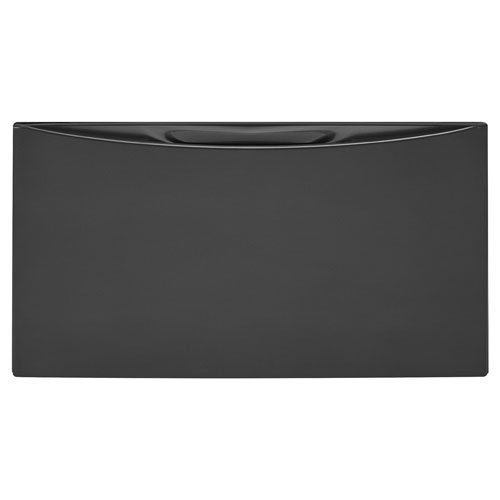
Electrolux 27" Laundry Pedestal — 3.0 Cu.Ft. Storage Drawer! $149.99 CAD (50% Off)
 -31%
LEGO Minecraft Zombie Dungeon 21587 — Spinning Mob Spawner and a Rockfall Trap! $27.97 CAD (30% Off)
 0
Worth Buying: LG Ultrafine 32UN650K-W 32" 4K UHD IPS Monitor — 95% DCI-P3 and HDR10 for Work and Photo Editing
 -28%
LEGO DC Batman: The Batman Batmobile 76332 — 330 Pieces, With a Golden Coin Hidden Under the Hood! $28.98 CAD (28% Off)
 Maple Express
 | October 25, 2026: B.C. Conservatives win majority government, Eby steps down
Tech ExpressTech Express | October 26, 2026 - Huawei's Kirin Chips Return to Public View as Mate 90 Lights Up Landmarks
-51%Electrolux 27" Laundry Pedestal — 3.0 Cu.Ft. Storage Drawer! $149.99 CAD (50% Off)
Best Buy
-31%LEGO Minecraft Zombie Dungeon 21587 — Spinning Mob Spawner and a Rockfall Trap! $27.97 CAD (30% Off)
Amazon
0Worth Buying: LG Ultrafine 32UN650K-W 32" 4K UHD IPS Monitor — 95% DCI-P3 and HDR10 for Work and Photo Editing
Amazon
-28%LEGO DC Batman: The Batman Batmobile 76332 — 330 Pieces, With a Golden Coin Hidden Under the Hood! $28.98 CAD (28% Off)
Amazon
Maple ExpressMaple Express | October 25, 2026: B.C. Conservatives win majority government, Eby steps down
Tech Express