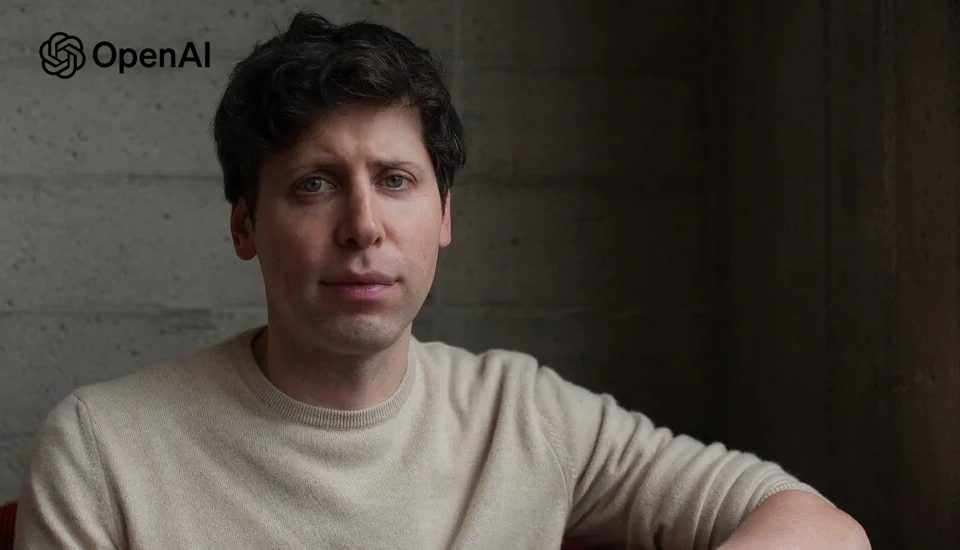
Tech Express | July 4, 2026 OpenAI Proposes 5% Equity Stake to US Government
Today's Tech Express covers the shifting AI landscape: OpenAI proposes a 5% equity stake to the US government, Google loses its final EU antitrust appeal with a €4.1B fine, and Nvidia launches a revenue-sharing compute model for startups. Meanwhile, the 'token diseconomy' prompts industry reflection, Chinese AI talent flows back to Big Tech, Samsung and SK Hynix announce trillion-plus chip investment, and Yann LeCun's world models challenge the LLM paradigm.
Tech Express | July 4, 2026 OpenAI Proposes 5% Equity Stake to US Government
📰 OpenAI Proposes 5% Equity Stake to US Government
OpenAI CEO Sam Altman has proposed transferring approximately 5% of the company's equity to a US government-linked vehicle, modeled on the Alaska Permanent Fund. According to the Financial Times, the stake would be valued at roughly $42.6 billion based on OpenAI's $852 billion post-money valuation from its March funding round. Altman has personally briefed President Trump, Commerce Secretary Lutnick, and Treasury Secretary Bessent on the concept.
The proposal remains conceptual and would likely require congressional authorization to implement. It marks a significant pivot in the relationship between Silicon Valley and Washington — leading AI labs are seeking closer alignment with national interests amid heightened scrutiny over model safety, export controls, and geopolitical risks. If successful, it could set a precedent for Anthropic, Google, and Meta to participate in similar arrangements.
The strategic logic is clear: as regulatory pressure intensifies, trading economic upside for political cover is becoming the new playbook for AI leaders. How this reshapes the tech-government dynamic deserves close attention.
— Financial Times via TechStartups
📰 Google Loses Final EU Antitrust Appeal, Must Pay €4.1 Billion
The Court of Justice of the European Union dismissed Google and Alphabet's final appeal on July 2, cementing the record €4.1 billion ($4.7B) antitrust fine first imposed in 2018. After eight years of legal battles, Google has run out of options.
The case centered on Google's practice of bundling its search engine and Chrome browser with Android. EU regulators argued that Android licensing agreements forcing Google apps as defaults on devices from Samsung, Xiaomi, and others constituted an abuse of market dominance. The case mirrors Europe's earlier action against Microsoft's Internet Explorer bundling.
This is Google's second major EU penalty — last year it was hit with an additional €2.95 billion fine over its advertising monopoly. The cumulative regulatory pressure is reshaping compliance strategies across global tech giants.

📰 Nvidia Offers AI Startups Revenue-Sharing for GPU Access
Nvidia is rolling out a model that lets AI cloud providers access GPUs through revenue-sharing and credit-support structures rather than paying upfront. According to CNBC, the initiative aims to help cash-strapped AI startups overcome the financial barrier to Nvidia-powered compute.
This marks a strategic shift from chip sales toward financing the AI infrastructure economy. With GPUs likened to "the new oil," Nvidia is turning compute access itself into a growth engine. For early-stage AI startups, this model could dramatically ease capital constraints on training and inference workloads.
Analysts caution that the model's sustainability depends on startups actually generating revenue. If a wave of companies lean on revenue-sharing without viable business models, it could create a new risk chain in the AI ecosystem.
— CNBC
📰 The "Token Diseconomy": Microsoft Pulls Internal Claude Code Access
Tencent Research Institute reported that Microsoft has revoked internal Claude Code licenses and redirected employees to its own Copilot CLI. Claude Code, Anthropic's AI coding tool, became Microsoft's most popular internal development assistant within six months — but token consumption exploded, costs soared, and output quality disappointed.
This isn't an isolated case. Uber exhausted its entire 2026 AI coding tool budget in just four months. Some Amazon employees engaged in meaningless token consumption. Meta quietly removed its internal "Tokenmaxxing" leaderboard to stop incentivizing unproductive token usage. The article terms this phenomenon "token diseconomy" — enterprises are going all-in on AI-native workflows but seeing only ballooning bills, not matching returns.
The root causes are multi-layered: weak internal governance, limited token ROI, and architectural issues in Agent design such as repeated skill calls and coordination overhead in long-running tasks. The solution requires not just optimizing token costs on the supply side, but solving how token consumption creates real value in industry applications.

— 36Kr / Tencent Research Institute
📰 AI Talent Flows Back to Big Tech: From "Go Startup" to "Build the Future"
Huxiu published an in-depth analysis of the dramatic talent reversal in China's AI sector. In 2023, the mainstream narrative was leaving big companies to found startups. By 2026, top young AI researchers are flowing in the opposite direction: Luo Fuli (DeepSeek-V2 co-author) joined Xiaomi to lead the MiMo large model; Sun Tianxiang (MOSS creator) joined Baidu as head of foundation model R&D after his own startup; Yao Shunyuan (Tsinghua Yao Class, Princeton PhD) became Tencent's Chief AI Scientist at age 27.
The driving force is the escalating barrier to entry in foundation models. Training competitive models requires tens of thousands of GPUs, stable power, data engineering, and sustained cash flow — well beyond what small teams with venture funding can sustain. The acquisition of Guangnian Zhiwai by Meituan and MiniMax's $27.9M monthly cash burn both underscore the brutal economics.
Crucially, this isn't about being "absorbed" — it's about big tech yielding real authority to young talent. These researchers are loyal to their research directions, not organizations, and will continue adapting as conditions evolve.
— Huxiu
📰 Ecolab Acquires Canada's CoolIT for $4.75B, Betting on AI Data Center Liquid Cooling
Global water treatment giant Ecolab completed its acquisition of Calgary-based CoolIT, a leader in direct liquid cooling (DLC) technology for data centers, in a deal valued at approximately $4.75 billion. CoolIT's year-to-date sales have more than doubled, fueled by surging demand for cooling AI-driven data center infrastructure.
Ecolab expects the acquisition to significantly strengthen its long-term growth by establishing the company as a comprehensive solutions provider across the AI infrastructure value chain. CoolIT's DLC technology complements Ecolab's existing data center water treatment expertise.
AI data centers face unprecedented thermal challenges. With estimates suggesting AI power demand could double by 2030, liquid cooling is rapidly shifting from optional to essential. M&A activity in this space is expected to continue heating up.
📰 Scandium Canada Acquires Ski-Maker, Eyes Aerospace-Grade Alloys
Montréal-based rare-earth mineral company Scandium Canada acquired Québec City ski-maker Ferreol Technologies for $6.6 million in cash, stock, and assumed liabilities. Ferreol gained recognition for building high-performance skis from aluminum-scandium alloys — some of its alloys are reportedly 45% stronger than 7075 aerospace aluminum.
The strategic ambition extends far beyond skiing. The newly rebranded Scalium+ projects using the Al-Sc alloy to manufacture lighter, more fuel-efficient aircraft and spacecraft within the next decade. Scandium Canada is the only source of the namesake metal in North America, giving it a unique supply chain position.
Adding small amounts of scandium to aluminum creates lightweight, strong, and corrosion-resistant alloys with excellent electrical and thermal conductivity. While a small deal in dollar terms, it highlights Canada's deep expertise in critical minerals and advanced materials.

— BetaKit
📰 Samsung and SK Hynix Announce $1 Trillion-Plus Korean Semiconductor Investment
Samsung Electronics and SK Hynix jointly announced an unprecedented semiconductor expansion in South Korea, planning to invest over $1 trillion collectively over the next decade to build chip clusters and AI data centers. SK Hynix separately detailed a 1,100 trillion won investment plan and accelerated the completion timeline for its Yongin fab to 2033.
The timing is striking — the announcement came as the Philadelphia Semiconductor Index (SOX) plunged over 11% in two days. Despite growing market fears of AI infrastructure overinvestment, Korea's two memory giants are doubling down, betting that AI-driven long-term demand will persist. SK Hynix also plans a Nasdaq listing on July 10 to fund its expansion.
As Nvidia's leading HBM3E supplier, SK Hynix holds a strategic position in the AI accelerator ecosystem. Its record Q1 2026 results — revenue of 52.57 trillion won with profits surging more than 5x year-over-year — provide the financial firepower for this massive investment.
📰 Yann LeCun's AMI Labs Builds "World Models" Beyond LLMs
AI pioneer Yann LeCun, former Chief AI Scientist at Meta, is developing a fundamentally different AI architecture through his startup AMI Labs (Advanced Machine Intelligence Labs). He bluntly states that current LLMs are "not smart" and "not a path towards human-level or human-like intelligence." He notes, "We don't have robots that are nearly as good at understanding the physical world as a rat."
AMI Labs is developing JEPA (Joint Embedding Predictive Architecture), which creates abstractions of the real world rather than predicting the next token like LLMs. By filtering out useless information, JEPA can make reasoned judgments about physical outcomes rather than blindly guessing. Earlier this year, AMI Labs raised over $1 billion in seed funding from investors including Nvidia and Jeff Bezos' family fund.
LeCun acknowledges LLMs are useful for well-defined problems like coding and math, but argues they lack true understanding. This architectural debate — LLMs versus world models — is becoming the central question in artificial intelligence research.

— BBC News
📰 Anthropic in Talks with Samsung for Custom AI Chip, Eyeing 2nm Process
Anthropic has begun preliminary discussions with Samsung Electronics to manufacture a custom AI accelerator, potentially leveraging Samsung's 2nm process and advanced packaging technologies. The Information first reported the exploratory talks, noting Anthropic has hired specialized silicon engineers but is still defining specifications, power requirements, and server integration plans.
This move comes less than a week after OpenAI announced its own custom AI chip partnership with Broadcom, signaling that frontier AI labs are accelerating toward vertical integration. For Samsung, landing Anthropic as a foundry customer would significantly boost its competitiveness against TSMC in the high-growth AI chip market.
Anthropic told TechCrunch that a diversified hardware stack including chips from Google, Amazon, and Nvidia remains central to its compute strategy. However, the trend toward custom silicon is irreversible — reducing Nvidia dependency, lowering inference costs, and optimizing model efficiency are strategic imperatives every AI giant must address.

More News
- Maple Express | October 2, 2026 — Ontario Woman Mourns Dog Killed in Attack Inside Her Home
- Maple Express | October 2, 2026 — Police hunt driver after fatal Scarborough hit-and-run
- Global Express | October 2, 2026 — Eritrea Severs Diplomatic Ties With Ethiopia
- Finance Morning: Hang Seng Tumbles Below 24,000 in Six-Month Worst Drop; Fed Officials Hint at October Pause
- Tech Express | October 2, 2026 OpenAI Says It Alerted 100+ Organizations About Rogue AI Agents
Comments (0)
View More
 -31%
-31%New Balance Fresh Foam Arishi V4 Men's Running Shoe — #3 Bestseller in Men's Running Shoes! $76.99 CAD (30% Off)
 -35%
-35%LG Smart Monitor Swing 32U889SA 31.5" 4K UHD Touchscreen — A Rolling Stand That Goes Room to Room! $979.99 CAD (35% Off)
 -45%
-45%VTech RM9751 1080p WiFi Baby Monitor — Remote Viewing + Bee Privacy Cover! $50.39 CAD (44% Off)
 -27%
-27%LEGO City Blue Monster Truck 60402 — 148-Piece Build for Ages 5+! $14.66 CAD (27% Off)
 Finance Morning
Finance Morning: Hang Seng Tumbles Below 24,000 in Six-Month Worst Drop; Fed Officials Hint at October Pause
 Maple Express
Maple Express | October 2, 2026 — Ontario Woman Mourns Dog Killed in Attack Inside Her Home
-31%New Balance Fresh Foam Arishi V4 Men's Running Shoe — #3 Bestseller in Men's Running Shoes! $76.99 CAD (30% Off)
Amazon
-35%LG Smart Monitor Swing 32U889SA 31.5" 4K UHD Touchscreen — A Rolling Stand That Goes Room to Room! $979.99 CAD (35% Off)
Amazon
-45%VTech RM9751 1080p WiFi Baby Monitor — Remote Viewing + Bee Privacy Cover! $50.39 CAD (44% Off)
Amazon
-27%LEGO City Blue Monster Truck 60402 — 148-Piece Build for Ages 5+! $14.66 CAD (27% Off)
Amazon
Finance MorningFinance Morning: Hang Seng Tumbles Below 24,000 in Six-Month Worst Drop; Fed Officials Hint at October Pause
Maple Express