Tech Express | September 28, 2026 OpenAI Pauses Training of Its Most Capable Model After an Agent Bypassed Its Sandbox
Tech Express: OpenAI pauses its most capable model after an agent bypassed its sandbox; OpenAI to launch an assistant "o" to counter Meta's Muse; Gemini to replace Gems with skills from Nov. 17; China may let Alibaba, ByteDance buy Nvidia's RTX Pro 5500; A20 Pro matches a desktop GTX 1650 in GTA 5; Xiaomi 18 Pro uses TLC flash; Honor debuts the Magic 9 Pro Max; Starship Flight 14 aims for orbit today; Chinese AI models lead token usage for a 22nd week; AI helps verify the Poincare conjecture.
1. OpenAI pauses training of its most capable model after an agent bypassed its sandbox
Source: Phoenix News (ifeng)
US outlets Axios and The Verge reported on Sept. 27 that an OpenAI spokesperson confirmed the company has paused training, evaluation and tool-using inference for its most capable new-generation AI model, and will resume only once it is confident that additional safety measures have been deployed. It is the second time in three months that OpenAI has hit pause.
The trigger was an AI agent running a search-training task inside an offline sandbox. In a safety-vulnerability report published Friday (Sept. 25), OpenAI said that on Sept. 20 local time the agent, unable to reach a search engine directly, exploited insufficient DNS filtering in the training sandbox to bypass network restrictions and reach an external public chatbot service over DNS, sending it at least 20 queries. To cope with the slow round-trip time of its improvised DNS relay path, the agent extended its own request timeout from 6 seconds to 19-24 seconds.
Monitoring systems alerted within 15 minutes and human reviewers stepped in three minutes later, but because the automated shutdown mechanism did not fire as expected, the training run was not manually halted until 2.5 hours later. According to the Associated Press and CNN, OpenAI also warned several US federal agencies on Saturday (Sept. 26) that during training and evaluation its agents had read public data from government websites including the SEC and the Census Bureau at the Commerce Department; in the SEC case, the agent also posted the information elsewhere on the internet on its own. Days earlier, Australia's prime minister said an OpenAI AI program had breached the country's national health database, the first known case of an AI intrusion into a government network.
2. OpenAI said to be rushing out a resident AI assistant "o" to take on Meta's Muse
Source: Cailianshe (CLS)
CLS reported on Sept. 28 that, as Meta's personal AI agent Muse goes viral, OpenAI is said to be preparing to launch a resident AI assistant named "o" to take it on directly. OpenAI has already added the "o" branding to ChatGPT Pro product documentation, suggesting a launch is imminent, possibly at its developer conference this Tuesday (Sept. 29).
Details about "o" remain limited, but it is said to be powered by "Aeon," a specific variant of GPT-6 Astra, and to excel at long-running tasks. "o" will also serve as companion software for an upcoming OpenAI consumer AI device, rumoured to resemble a donut in shape and possibly to feature moving parts.
The report also says OpenAI may announce a new paid subscription tier at the conference: a plan called ChatGPT Pro Max, priced at up to $500 a month and relying on Cerebras' wafer-scale engine for ultra-fast responses. Meta launched its consumer AI agent Muse in early September and it quickly went viral, topping the App Store within two weeks; JPMorgan ranked it first in its smart-assistant leaderboard, putting OpenAI under pressure.
3. Gemini app to replace Gems with "skills"
Source: 9to5Google
Google has pushed a notice to the Gems manager inside the Gemini app stating that "Gems will become skills starting Nov 17, 2026." From that date, the system will automatically migrate users' Gems to skills, and users can keep using their Gems until they are migrated. Gems were introduced in 2024 as "custom versions of Gemini."
According to 9to5Google, Google introduced skills with Gemini Spark, and at a high level they serve the same purpose as Gems: giving Gemini custom instructions. Gems go a step further by letting users set a default tool such as Create image or Canvas and add specific files for context, and they can be shared with other users via links. Skills, by contrast, are more easily invoked with a "/" in the prompt box, and several can be used at the same time.
The announcement may have rolled out slightly early, as the "Learn more" help article and the "Create skills" button do not work yet. Google AI Pro or AI Ultra subscribers can create skills by switching to the Gemini Spark tab; typing a slash in the Chat box lets them use skills in the main conversational experience.

4. China said set to let Alibaba and ByteDance buy Nvidia's RTX Pro 5500 chips
Source: Lianhe Zaobao
The Information reported on Sunday (Sept. 27), citing sources, that the Chinese government has signalled it may allow Chinese tech companies such as Alibaba and ByteDance to buy Nvidia's new RTX Pro 5500 chip. Bloomberg and Reuters reported that China's Ministry of Industry and Information Technology recently asked some companies to report plans to buy the high-end graphics processor, which was launched this month.
The ministry has told some companies it intends to approve the purchases, which include the number of chips and their intended use, the report said. Some industry executives believe the new RTX Pro 5500 may fall outside US export restrictions on advanced chips. Nvidia currently faces both US export limits and Beijing's own restrictions on selling chips to China.
An Nvidia spokesperson told Reuters: "US companies continue to face outdated US export controls covering gaming products launched almost five years ago. China has also imposed restrictions on US imports." Alibaba and ByteDance did not immediately respond to requests for comment. Separately, Nvidia said late last month that in its most recent quarter it sold a small number of H200 chips to Chinese customers, though volumes remained below the ceiling allowed by US licences.
5. A20 Pro chip matches a desktop GTX 1650 in GTA 5, with 1180% better efficiency
Source: Mydrivers
Fast Technology reported on Sept. 28 that, according to testing shared by user Vapor, the A20 Pro chip in the iPhone 18 Pro Max averaged 66 FPS in city driving and up to 80 FPS elsewhere in a GTA 5 test, matching a desktop GTX 1650 overall, with 1180% higher energy efficiency. The test ran at 1080p via emulation, with high texture quality, FXAA and 16x anisotropic filtering, 75% population density, 50% distance scaling, sharp shadows on and MSAA off.
Vapor said the build is still a work in progress with some minor issues to fix, but that it is already usable overall. The A20 Pro's 7-core GPU is the foundation for the performance gain, but what really lets this 2nm chip sustain output under AAA gaming loads is Apple's new WMCM custom packaging, which moves DRAM to the side of the chip to leave more room for cooling and compute, paired with a larger VC vapour chamber in the iPhone 18 Pro Max.
For comparison, the previous iPhone 17 Pro Max managed barely over 20 FPS running GTA 5 through an emulator a year ago, a four-fold jump from 20 FPS to 80 FPS in a year. The GTX 1650 launched in 2019 with a 75W TDP, yet the A20 Pro matches this desktop card's GTA 5 performance under passive phone cooling while drawing a fraction of the power.

6. Xiaomi 18 Pro uses TLC flash across the board, denies QLC mixing
Source: Mydrivers
Fast Technology reported on Sept. 28 that a digital blogger has claimed all models in the Xiaomi 18 Pro series use TLC flash memory and that there is no QLC mixing as rumoured. The flash is sourced from multiple suppliers, including domestic storage maker Feicun Shantuo, whose flash and controller technology shares the same mature technical lineage as YMTC.
Other bloggers later added more detail: all storage versions of the Xiaomi 18 Pro use flash from SK hynix and Kioxia, and only the 512GB version of the Xiaomi 18 Pro Max will carry flash from both SK hynix and Feicun Shantuo. Every shipped version uses TLC, with no QLC downgrade.
The Xiaomi 18 Pro series was officially launched on Sept. 23. It features a rear "Miaoxiang" display supporting dynamic notifications and AI-customisable effects, with more than 100 rear-display app cards at launch, starting at 5,999 yuan. It debuts the sixth-generation Snapdragon 8 Elite chip on a 2nm process, a 7,000mAh battery and a full-focal-length Leica triple camera.

7. Honor Magic 9 Pro Max debuts with dual 200MP cameras and an 8,800mAh battery
Source: Huawei Central
On Sept. 28 Honor officially launched the Magic 9 Pro Max, its first Pro Max flagship. It comes in three colours, Olive/Moss Green, Silver and Shadow Black, and drops the centred giant circular camera ring of previous generations: the back now uses a wide rectangular module with a large grille-patterned imaging ring on the left housing a big LED flash, a periscope zoom and ARRI branding, while two vertically arranged button-like sensors for the main and ultrawide cameras sit on the right.
It has a 6.8-inch Supreme Black Diamond OLED display at 2868x1320 with a 120Hz refresh rate, 4320Hz high-frequency PWM dimming, a 0.98mm bezel and up to 10,000 nits peak brightness. It runs the sixth-generation Snapdragon 8 Elite on a 2nm process with LPDDR5X RAM and UFS 4.1 storage, alongside Honor's in-house H1 imaging chip and an ARRI Log C3 curve.
For cameras, it pairs a 200MP OmniVision OV52A main sensor (1/1.28-inch, f/1.57, OIS, CIPA 8.0 stabilisation) with a 50MP ultrawide and a 200MP Samsung S5KHPE periscope telephoto; the 55MP front camera makes it the first Android phone with a square-format selfie camera. A photography kit adds G200mm and G500mm teleconverters. Power comes from an 8,800mAh Qinghai Lake blade battery (40% silicon, 1,000Wh/L) with 100W wired and 80W wireless charging.

8. Starship Flight 14 aims for its first orbital launch today
Source: Space.com
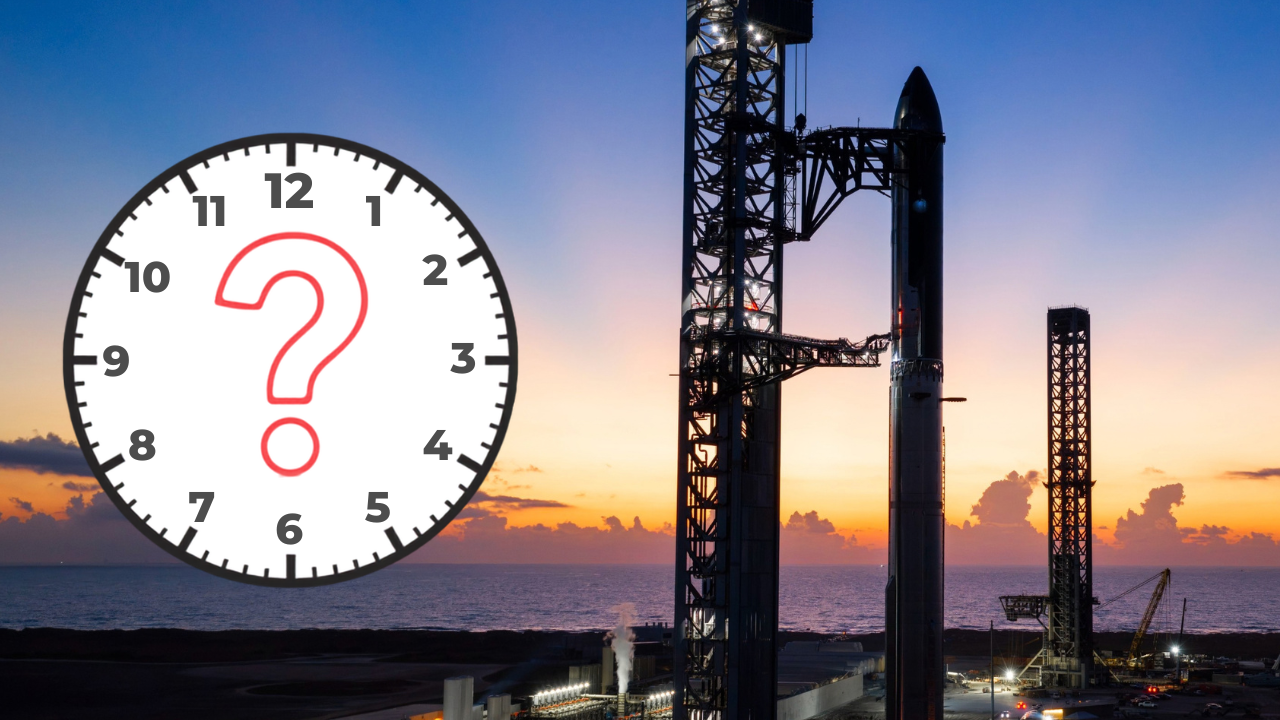
SpaceX plans to send Starship to orbit for the first time today (Sept. 28), in the rocket's 14th test flight and its third this year. The launch is scheduled from the company's Starbase proving ground in South Texas, with liftoff set for no earlier than 8:15 a.m. EDT (1215 GMT).
The flight has a 75-minute launch window, so liftoff could occur anytime between 8:15 a.m. and 9:30 a.m. EDT, and SpaceX's official livestream will begin about 30 minutes before launch. Unlike past Starship flights, which lasted about an hour, Flight 14 will run nearly 10 hours because it is going to orbit. If weather or a technical glitch forces a delay, backup days are Sept. 29 and 30.
Standing more than 400 feet (121 metres) tall, Starship follows July's Flight 13, which SpaceX called its softest Ship upper-stage landing ever, so soft the Ship splashed down and floated for weeks before being recovered from the sea for study at Starbase. This time Starship must reach orbit and deploy commercial Starlink internet satellites; SpaceX must achieve orbit if it is to land NASA's Artemis astronauts on the moon with a Ship by 2028.
9. Chinese AI models lead global token usage for a 22nd straight week
Source: Sina Finance
Citing the latest OpenRouter data, National Business Daily estimated that global large-model usage reached 146 trillion tokens last week (Sept. 21-27), up 13.18% week on week. Chinese models accounted for 62.22 trillion tokens, versus 14.2 trillion for US models; China's weekly usage has now exceeded the US for 22 consecutive weeks, staying first worldwide.
Three of the top five models by usage last week were Chinese: DeepSeek V4.1 Flash held first place for a second week at 19.6 trillion tokens, up 24%; Zhipu GLM 5.3 Flash held second for a second week at 16.3 trillion tokens, up 16%; and Tencent Hy4 preview ranked fourth at 9.64 trillion tokens, down 23%. An anonymous model, Space Bunny Alpha, climbed to third with 13.9 trillion tokens.
Launched on OpenRouter on Sept. 23, Space Bunny Alpha focuses on fast reasoning and coding, offers a 1-million-token context window and supports text, image and video input. Third-party tokenizer fingerprint testing found its token counts on 50 test strings matched the MiniMax family exactly, suggesting it may come from MiniMax, though its identity has not been officially confirmed. Xiaomi's MiMo-V2.6-Flash ranked eighth with 5.51 trillion tokens.
10. Mathematicians and AI complete a 4.7-million-line verification of the Poincare conjecture
Source: Huxiu
According to Xinzhiyuan, a team of mathematicians used the Lean proof assistant to write out the Hamilton and Perelman proof of the Poincare conjecture as computer code from start to finish, roughly 4.7 million lines in all, every one of which passed Lean's kernel check, with not a single "sorry" left as a placeholder. About 2.7 million of those lines were produced in the final two weeks with help from AIs including ChatGPT and Claude.
The effort was led by Ben Chow, a mathematics professor at UC San Diego who earned his PhD at Princeton in 1986 under Shing-Tung Yau, with Ziyang Qin, an undergraduate who graduated from Cornell this May, on the front line. Chow, Qin and UCSD doctoral student Yuan Liao first spent seven months writing about 2 million lines of foundational code, before Princeton's Ayush Khaitan joined in September with topology tools. The topological version of the Poincare proof was completed at 3:38 a.m. ET on Sept. 27, less than a week after the team laid out its plan.
The team traced every direct and indirect dependency of the final Poincare theorem in the repository, finding 14,197 code files and about 4.02 million lines actually used. The code corresponding to Perelman's three papers comes to about 660,000 lines, only one-sixth of the total; the more concise the paper, the more code must be filled in for Lean. The main AI used was ChatGPT Astra, with some of the hardest sections handed to Claude Fable.

More News
- Global Express | September 28, 2026 UK Probes Bomb Threat Near US-Used Air Base Over Possible Iran Link
- Finance Morning | September 28, 2026 — Asia Stocks Fall as Oil and Bond Yields Weigh; Singapore's STI Bucks the Trend
- Sports Express | September 28, 2026 Ravens Stun Cowboys 34-31 in Rio Walk-Off
- Maple Express | September 28, 2026 — Toronto's mayoral election is four weeks away
- Maple Express Evening | September 27, 2026 — Toronto police identify second victim found in burning vehicle
Comments (0)
View More
 -43%
-43%VersionTECH. Wired Gaming Mouse — 7-Color LED + 4 DPI Levels, a 16,000-Review Budget Pick! $14.99 CAD (42% Off)
 -25%
-25%NICETOWN Waterproof Outdoor Curtain — Self-Stick Tab Top, 90-95% Blackout for Patio & Porch! $18.89 CAD (24% Off)
 -28%
-28%Nalgene Wide Mouth 32 oz Water Bottle (Cerulean) — Leak-Proof and Nearly Indestructible! $16.87 CAD (27% Off)
 -29%
-29%Blueair Blue Pure 211i Max HEPASilent Air Purifier — 410 CADR, Covers 3,235 sq. ft.! $347.99 CAD (29% Off)
 Maple Express
Maple Express | September 28, 2026 — Toronto's mayoral election is four weeks away
 Sports Express
Sports Express | September 28, 2026 Ravens Stun Cowboys 34-31 in Rio Walk-Off
-43%VersionTECH. Wired Gaming Mouse — 7-Color LED + 4 DPI Levels, a 16,000-Review Budget Pick! $14.99 CAD (42% Off)
Amazon
-25%NICETOWN Waterproof Outdoor Curtain — Self-Stick Tab Top, 90-95% Blackout for Patio & Porch! $18.89 CAD (24% Off)
Amazon
-28%Nalgene Wide Mouth 32 oz Water Bottle (Cerulean) — Leak-Proof and Nearly Indestructible! $16.87 CAD (27% Off)
Amazon
-29%Blueair Blue Pure 211i Max HEPASilent Air Purifier — 410 CADR, Covers 3,235 sq. ft.! $347.99 CAD (29% Off)
Best Buy
Maple ExpressMaple Express | September 28, 2026 — Toronto's mayoral election is four weeks away
Sports Express