
Finance Evening | October 5, 2026 — Report: Over Half of Canada's Non-Homeowners Have Given Up on Buying; SpaceX Hits Highest Close Since June
Tonight's Finance Evening: 56% of Canada's non-homeowners have given up on buying a home, the highest share among 22 countries; Canada's main index edged higher Monday while SpaceX climbed over 7% on a bullish Morgan Stanley call; KPMG sees a Bank of Canada hike this year; China closed 670 banks in 2025; Aramco says rebuilding oil stockpiles could take two years; and Canada's retaliatory tariffs may raise winter heating costs.
📊 North American Markets Today
| Index | Close | Change | % Change |
|---|---|---|---|
| S&P 500 | 7,773.95 | +51.23 | +0.66% |
| Nasdaq | 27,477.31 | +286.45 | +1.05% |
| Dow Jones | 51,267.90 | +90.94 | +0.18% |
| Toronto TSX | 35,518.55 | +15.90 | +0.04% |
| USD/CAD | 1.4255 | +0.0010 | +0.07% |
| WTI Crude | 89.30 | -0.13 | -0.15% |
| Gold | 4,167.60 | +10.80 | +0.26% |
🌎 Canada / North American Economy
Report: More than half of Canada's non-homeowners have given up on buying, the highest share globally
Source: Canadian Mortgage Professional
More than half of non-homeowners in Canada do not expect to ever own a home, according to the new "Home at What Cost?" report from Habitat for Humanity International, which surveyed 30,758 people across 22 countries between April 10 and June 30. Canada's 56% share is the highest level of homeownership pessimism among the 22 countries surveyed, well above the 23% global average and higher than the United States (42%), the United Kingdom (50%) and Australia (52%).
The report says 66% of Canadians made at least one financial sacrifice over the past year to cover housing costs, citing homes that are too expensive (54%), income that is too low (50%) and insufficient down-payment savings (41%) as the main barriers. Some 81% agreed that rising costs make homeownership increasingly difficult. The strain extends far beyond rent and mortgage payments: over the past year, 36% of Canadians spent less on food, 25% drew from savings or emergency funds and 40% cut social spending; 44% said a single setback, such as a job loss or unforeseen expense, could put their housing at risk.
Pedro Barata, president and CEO of Habitat for Humanity Canada, said the findings signal a systemic failure. "Canada's housing crisis has become an opportunity crisis," he said. "When people are sacrificing food, savings, and peace of mind to afford housing, they can never get ahead." The report adds that the strain is sharpest among younger Canadians: nearly two-thirds (64%) of Gen Z and Millennial respondents said housing costs make starting a family difficult, and 46% cite their housing situation as a primary source of stress, against a global average of 35%. A separate national survey conducted by Abacus Data for the Canadian Home Builders' Association found that 89% of non-homeowners aged 18 to 29 still want to own a home someday, but only 29% of non-homeowners overall are confident they ever will.
Toronto stocks edge higher Monday, U.S. markets also gain
Source: The Canadian Press
Canada's main stock index edged slightly higher on Monday, helped by gains in technology stocks, while U.S. markets were also positive. The S&P/TSX composite index was up 15.90 points at 35,518.55.
In New York, the Dow Jones industrial average was up 90.94 points at 51,267.90, the S&P 500 index was up 51.23 points at 7,773.95, and the Nasdaq composite was up 286.45 points at 27,477.31. The Canadian dollar traded for 70.16 cents US compared with 70.20 cents US on Friday. The November crude oil contract was down US$1.68 at US$89.43 per barrel, and the December gold contract was down US$5.50 at US$4,156.80 an ounce. This report by The Canadian Press was first published Oct. 5, 2026.
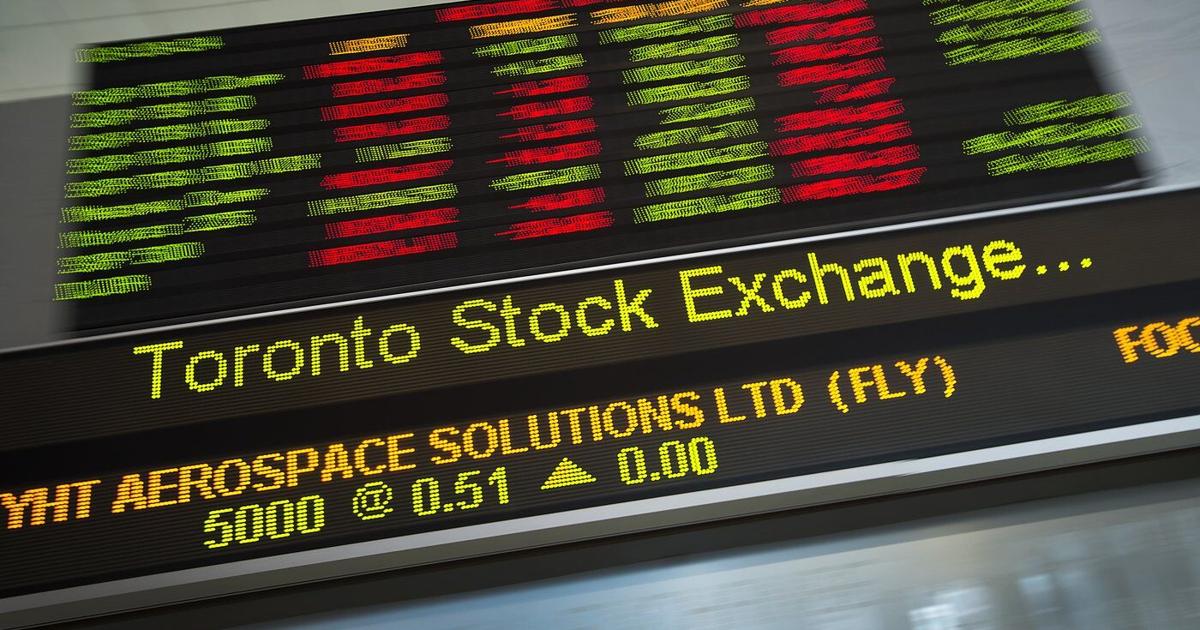
Alberta's population grew more than anywhere else in Canada, at the slowest pace since 2021
Source: CBC
Alberta's population continues to grow faster than almost all of Canada. Statistics Canada estimates that more than 5.1 million people lived in Alberta as of July 1, up nearly 76,500 people, or about 1.5%, from a year earlier. No jurisdiction added as many people over the year, and only Nunavut and the Yukon, places with much smaller populations, grew at a greater rate.
"We're still a destination, and I think that speaks to economic opportunities," said Jenny Godley, a professor in the University of Calgary's anthropology and archaeology department. "Hopefully it also speaks to the openness of Alberta as a place for people to come and work and live and have their families." The data also shows that while Alberta's population has boomed for several years, the growth is calming down: the estimated growth rate from 2025 to 2026 was the slowest since 2021, amid the height of the COVID-19 pandemic. Natural increase stayed level, and several thousand fewer Canadians migrated from other provinces, even as tens of thousands from B.C. and Ontario flocked to Alberta.
The federal government's new immigration policies are also a factor. Ottawa has capped permanent resident admissions at 380,000 a year until 2028, and non-permanent resident admissions at 385,000 this year. StatsCan data suggests more than 50,000 immigrants landed in Alberta in the past year, which is still high historically but roughly 8,000 fewer than the year before and the fewest since the pandemic started. The province also reported a net loss of almost 8,000 non-permanent residents, driven almost entirely by international students leaving. Juliana Rodriguez, spokesperson for Finance Minister Jason Nixon, told CBC News in an emailed statement that the province plans to keep pressing Ottawa for "a more sustainable" immigration approach.

🇺🇸 U.S. Markets
Morgan Stanley turns bullish; SpaceX closes at highest since June
Source: Yahoo Finance
SpaceX shares jumped on Monday, closing up more than 7% in their highest close since June. The move followed a note from Morgan Stanley's Adam Jonas, titled "SPCX $159: Cheap and Getting Cheaper," in which he reiterated an Outperform rating and a $300 price target and said investors only have a few weeks to "catch" an opportunity to buy ahead of some big milestones.
"We think that over the next few weeks (ahead of Starship Flight 15), investors can take advantage of a unique opportunity to buy shares that look unusually cheap," Jonas said. SpaceX just conducted a successful test during Flight 14, in which Starship reached low Earth orbit for the first time and deployed Starlink satellites. Jonas also expects developments over the next few months will help investors better appreciate the role SpaceX plays in AI efforts and chipmaking, "potentially unlocking earnings growth and multiple expansion for the stock."
Jonas noted that few investors understand how difficult the SpaceX challenge is, claiming that barely any of his clients own the stock. He appears to be going with a sum-of-the-parts analysis, in which investors fully value the Space & Connectivity units but not the AI opportunity, which includes compute deals and chipmaking. He wrote that future AI product releases, Starship progress and additional neocloud contracts showing continued pricing around $30-50/watt are all "upside-skewed catalysts" that can push the stock closer to his $300-per-share price target.

Lucid's Q3 deliveries fall 6.7% as the EV maker cuts production
Source: CNBC
Lucid Group reported a 6.7% decrease in year-over-year vehicle deliveries during the third quarter, after the embattled all-electric vehicle maker cut production to better align with slower customer demand. The U.S. automaker, which is heavily backed by Saudi Arabia's Public Investment Fund, said Monday it delivered 3,806 EVs and produced 2,954 vehicles from July through September, compared with deliveries of 4,078 EVs on production of 3,891 vehicles in the year-ago quarter.
Deliveries through the first three quarters are 3.4% higher than a year earlier, while production has climbed 33%. Lucid's highest quarterly production of nearly 7,900 units occurred in last year's fourth quarter, followed by 5,500 in this year's first quarter. Shares of Lucid closed up less than 1% on Monday at $4.17 and are off more than 60% this year.
The third quarter was the first since Lucid cut production at its Arizona plant from two shifts to one under new CEO Silvio Napoli, who started leading the automaker in June. The turnaround plan includes identifying $1.4 billion in cash-flow improvement opportunities this year, including roughly $600 million to $800 million in vehicle inventory, $500 million in capital expenditures and $200 million in operating expenses. Lucid said it would report third-quarter results on Nov. 9 after markets close.

The American consumer is souring; what to watch this week
Source: Yahoo Finance
The U.S. consumer mood is souring. Consumer confidence plunged in September to its lowest reading since 2014, with The Conference Board's index falling to 81.9 from 88.6 the prior month. Meanwhile, the U.S. added just 29,000 jobs in September, far below the 90,000 expected, as the unemployment rate ticked up to 4.2%. Average hourly earnings rose an anemic 0.1% from August and are up 3% year over year, a level likely below the current rate of inflation.
Economists say the weak jobs print will keep the Federal Reserve on hold in October; odds of a 25-basis-point hike at the October FOMC meeting have pulled back to roughly 20%, per CME data. CPI data due Oct. 14 is likely to be the key swing factor. JPMorgan chief U.S. economist Michael Feroli wrote, "It would now take a very strong CPI to make the October meeting live," and said he continues to look for another hike at the December FOMC meeting.
Rick Rieder, BlackRock's chief investment officer of global fixed income, said employment is now the "weak sister of data releases for the Fed," next to inflation, but that condition won't be permanent and the underlying trends for both will bear watching. The report also noted that overall consumer spending has mostly held up in recent months, powered by a muscular stock market that has magnified household wealth.

🏦 Macro & Central Banks
KPMG: Bond markets demand 'credibility' and could push the Bank of Canada to hike this year
Source: Financial Post
The Bank of Canada is going to have to "feed the beast" that is the bond market with one rate hike before the year is out, says KPMG Canada. The firm has changed its call for no rate hikes in the near term to a 25-basis-point increase at the Dec. 9 meeting that would take the benchmark lending rate to 2.5%, where it would remain for the foreseeable future, chief economist Ali Jaffery wrote in a note. He said the bond market is "demanding that policy become more credible," whether that credibility is monetary, fiscal or otherwise.
Jaffery said that normally job reports and several consumer price index reports would rule on rates, but oil prices are now in the "driver's seat," so bond investors are demanding more than talk. He also said it could prove harder for the Bank of Canada to resist the rise in U.S. interest rates, because the widening spread devalues the Canadian dollar and could speed up inflation.
Karl Schamotta, chief market strategist at Corpay, said yields are tracking oil prices "far more closely" than inflation, suggesting investors believe central bank reaction functions have shifted, with policymakers now responding more to oil benchmarks than to core price measures. The report noted that Jaffery joins several economists who have recently changed their rate outlook; Scotiabank, UBS, Manulife and Oxford Economics are now predicting a hike at the Bank of Canada's Oct. 28 meeting.
China shuts hundreds of banks as Beijing moves to shore up its financial system
Source: CNBC
China is accelerating its consolidation of smaller, mostly rural banks in a bid to shore up its financial system, amid ongoing concerns over an economic slowdown. Beijing's policy-led consolidation saw a record 670 lenders closed in 2025, about one-quarter of banks in the country, as authorities ramped up mergers and dissolutions to create fewer, larger and better-capitalized institutions, according to Fitch Ratings analysis.
Fitch said small and rural commercial banks "remain the weakest part of the system" in China, flagging their "poor asset quality, low capitalization and governance shortcomings," especially in less developed regions. The return on assets among rural banks fell to 0.45% in the first half, down from 0.56% in 2021, while nonperforming loans rose to 2.8%, ahead of the 1.5% sector average, with greater exposure to smaller companies, property developers and local government funding vehicles.
The consolidation push is aimed at boosting oversight, curbing regulatory arbitrage and improving transparency, Fitch said, noting that stress at smaller lenders is unlikely to lead to systemwide contagion given their largely localized operations and limited interbank exposure. The move comes as China's economy shows strain: GDP grew 4.3% in the second quarter, its slowest pace since 2022, while industrial profits came in at 4.2% annually in August, their weakest pace this year.

🛢️ Commodities & Currencies
Saudi Aramco chief says replenishing global oil stockpiles could take two years
Source: CNBC
The chief executive of Saudi Aramco said Monday it could take up to two years to rebuild global oil inventories, warning that the squeeze on supplies could yet get worse as the U.S.-Iran war drags on. Speaking at the Energy Intelligence conference in London, CEO Amin Nasser said pressure at both ends of the barrel will intensify until the strategically vital Strait of Hormuz fully reopens and confidence returns to energy markets.
"Even then, replenishing inventories while meeting demand could take up to two years," Nasser said. His comments come shortly after G7 governments agreed on Friday to release 100 million barrels of diesel and crude from emergency reserves. Nasser said nearly 3 billion barrels of oil supply had been lost since the U.S. and Israel launched military strikes on Iran in late February, while 1 billion barrels had been released from stocks; most of the draw came from commercial inventories, and the CEO of the world's largest oil company said the remaining 6 billion or so in storage is "not practically available."
Oil prices were mixed on Monday as Middle East crude exports rose, with flows through both the Strait of Hormuz and Saudi Arabia's key East-West pipeline reportedly trending higher. Brent crude futures with December expiry traded 0.7% higher at $102.92 per barrel, while U.S. West Texas Intermediate futures with November expiry stood 0.4% lower at $90.76 per barrel.

💰 Personal Finance & Consumer
How Canada's retaliatory tariffs could drive up your winter heating costs
Source: National Post
The past week brought a new escalation in the trade war: new U.S. import restrictions on $1 billion in Canadian goods, fresh pain for Canadian steel workers, and more fiery rhetoric from the White House. Last Monday, hundreds of Stelco workers in Ontario learned of looming layoffs and a plan to halt operations at the Hamilton Works plant, while President Donald Trump announced a $15 billion mega-steel plant project for Iowa, touting hundreds of new jobs. "These are your 232 tariffs, the steel tariffs, at work," U.S. Commerce Secretary Howard Lutnick said during the announcement.
The tariffs have rippled into the heating, ventilation, air conditioning and refrigeration (HVACR) industry. In 2025, Canada responded to the U.S. Section 232 tariffs with a retaliatory set of tariffs that hit U.S.-origin gas furnaces, and the Canadian industry won relief in June after campaigning for it. But after Washington introduced Section 338 tariffs on hundreds of Canadian imports in August, Ottawa imposed new retaliatory tariffs that are raising prices on HVACR equipment and components shipped into Canada, and the impact is now close to universal.
Martin Luymes, vice president of government and stakeholder relations at the Heating, Refrigeration and Air Conditioning Institute of Canada (HRAI), said air conditioning products, heat pumps and a variety of refrigeration components are all within scope, at tariff levels ranging from 15% to 50%. Because Canada imports more HVACR equipment from the U.S. than it exports, Luymes said Ottawa's retaliatory tariffs are hitting Canada's side harder than the original U.S. tariffs. Hyman, executive director of ClimateCare Canada, anticipates sticker shock for consumers this winter without a policy change. "If your furnace dies this winter, you need to replace it this winter. You can't wait a couple of years to replace it," he said.
More News
- Maple Express | October 5, 2026 — Six presumed dead after Hamilton air ambulance crash
- Immigration | October 5, 2026 Carney Signals Canada May Resume Immigration Growth as Next Levels Plan Looms
- Global Express | October 5, 2026: Japan Summons US Ambassador Over Okinawa Killing Case
- Finance Morning | Asia Stocks Rally Broadly as Hang Seng Reclaims 24,000; Nikkei Tops 70,000
- Tech Express | October 5, 2026 — Google Pauses Open Source Bug Bounty Program After Surge in AI Submissions
Comments (0)
View More
 0
0Fancy Feast Wet Cat Food Bundle — 24 Petites Trays + 12 Florentine Cans, $37.72 CAD
 -63%
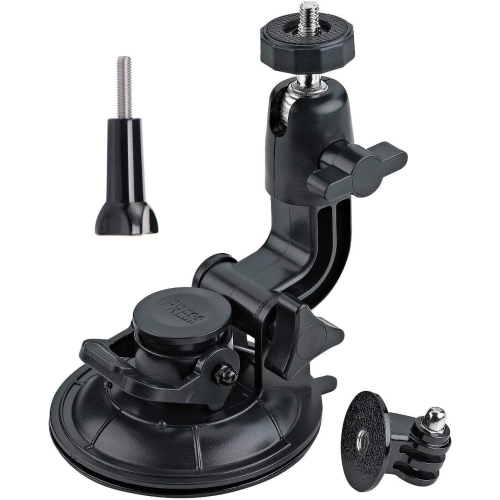
-63%DOLAER 360° Rotating Suction Cup Mount — Universal Car & Windshield Mount with Tripod Adapter + Screw for GoPro & Action Cams! $18.99 CAD (63% Off)
 -11%
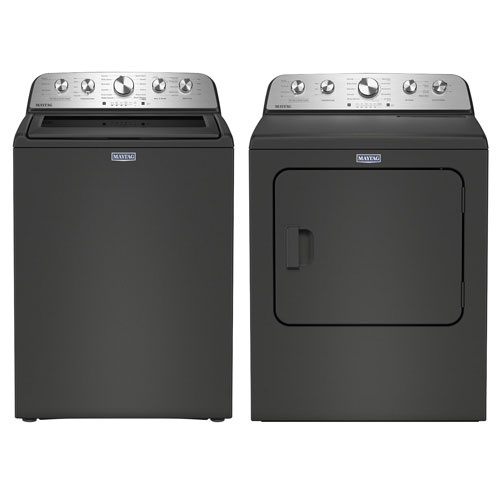
-11%Maytag 5.5 Cu. Ft. High-Efficiency Top Load Washer & Pet Pro 7.0 Cu. Ft. Electric Steam Dryer — Volcano Black! $1,799.98 CAD (10% Off)
 -36%
-36%Remington Damage Protection Hair Dryer 1875W — 3X Less Heat Damage for Healthier Hair! $25.65 CAD (36% Off)
Finance EveningFinance Evening | October 5, 2026 — Report: Over Half of Canada's Non-Homeowners Have Given Up on Buying; SpaceX Hits Highest Close Since June
 Tech Express
Tech Express | October 5, 2026 — Google Pauses Open Source Bug Bounty Program After Surge in AI Submissions
0Fancy Feast Wet Cat Food Bundle — 24 Petites Trays + 12 Florentine Cans, $37.72 CAD
Amazon
-63%DOLAER 360° Rotating Suction Cup Mount — Universal Car & Windshield Mount with Tripod Adapter + Screw for GoPro & Action Cams! $18.99 CAD (63% Off)
Best Buy
-11%Maytag 5.5 Cu. Ft. High-Efficiency Top Load Washer & Pet Pro 7.0 Cu. Ft. Electric Steam Dryer — Volcano Black! $1,799.98 CAD (10% Off)
Best Buy
-36%Remington Damage Protection Hair Dryer 1875W — 3X Less Heat Damage for Healthier Hair! $25.65 CAD (36% Off)
Amazon
Finance EveningFinance Evening | October 5, 2026 — Report: Over Half of Canada's Non-Homeowners Have Given Up on Buying; SpaceX Hits Highest Close Since June
Tech Express