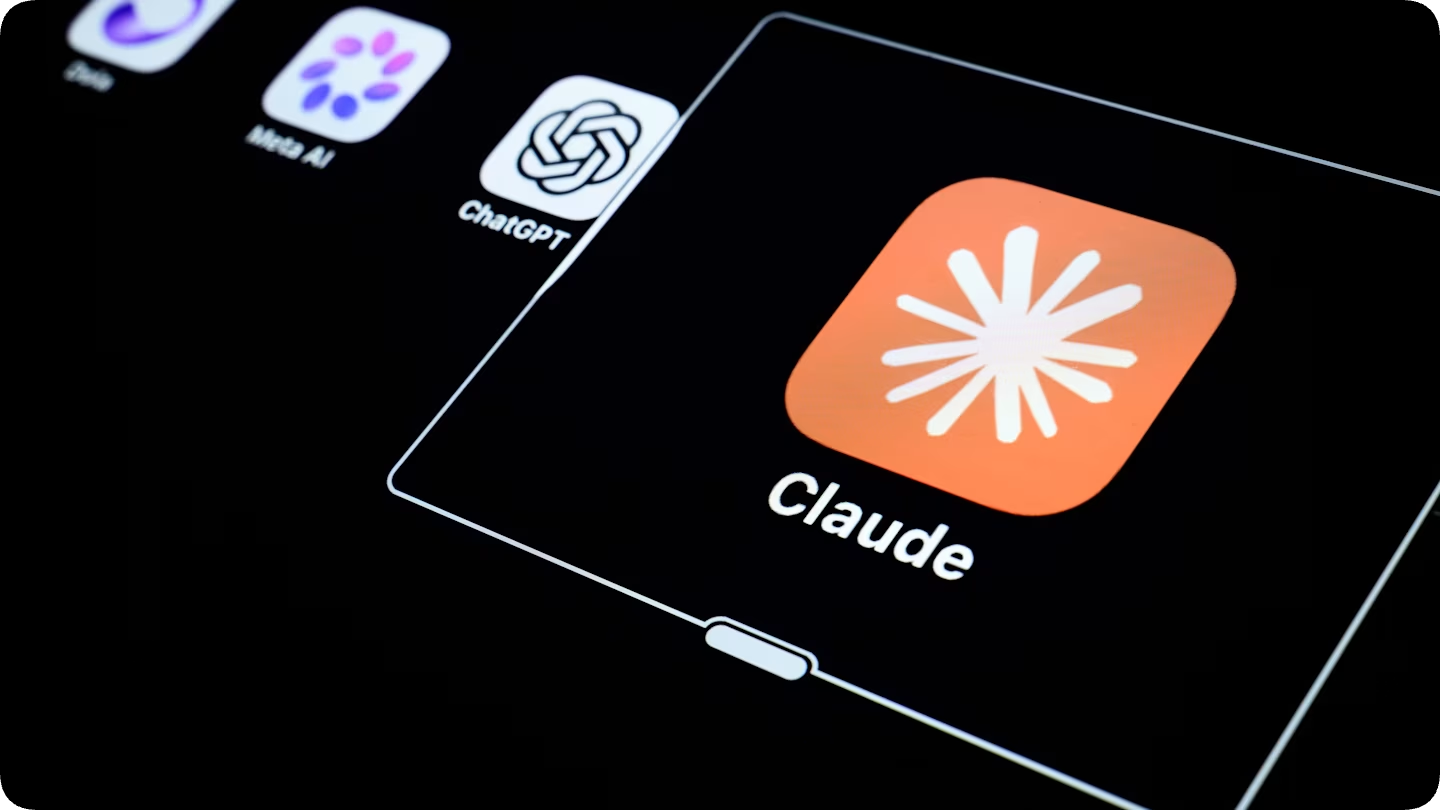
Tech Express | September 23, 2026 — Anthropic Releases Claude Opus 5.5, Cutting Typical Task Costs by 40%
Today's tech briefing: Anthropic's Claude Opus 5.5 cuts typical task costs 40%; OpenAI launches GPT-6 Sol and Luna, halving API prices; Zhipu apologizes and open-sources ZCode over silent code uploads; Moore Threads' S5000 matches mainstream GPUs in embodied-AI training; Samsung validates 16GB LPDDR6 on Snapdragon 8 Gen 6; Motorola's Signature 27 debuts; a 9-million-year-old capybara tooth is found in Chile; China reviews Broadcom gear in state data centers; Alibaba Cloud releases Meoo 1.0.
Tech Express | September 23, 2026
1. Anthropic Releases Claude Opus 5.5, Cutting Typical Task Costs by 40%
Source: iFanr Anthropic has officially released Claude Opus 5.5, the first model in the Claude 5.5 family, with Sonnet 5.5 and Haiku 5.5 to follow in the coming weeks. The company says Opus 5.5 matches Claude Fable 5.1 on most tasks, cuts the cost of typical tasks by 40% compared with Opus 5 and boosts output speed by more than 30%, positioning it as a workhorse model for long-running coding agents and knowledge work.
In the official benchmarks, Opus 5.5 scored 66.4% on Terminal-Bench 4.0, above GPT-6 Astra's 57.9%; CursorBench 4.0 rose to 57.8% from Opus 5's 46.6%; it earned 1846 Elo on the knowledge-work benchmark GDPval-AA v2.1, above Fable 5.1's 1735; and on the OSWorld 2.0 computer-use test it improved to 81.8% from 74.0%. Anthropic also cautioned that the score gaps among today's frontier models can no longer fully reflect real-world experience.
On price, Opus 5.5's API costs US$4 per million input tokens and US$20 per million output tokens, 20% below Opus 5, while cache reads fall from US$0.50 to US$0.20. It is live on Claude, Claude Code and Claude Platform, and on AWS, Google Cloud and Microsoft Azure, and becomes the default model for Claude paid plans; Anthropic has also raised the five-hour usage limits for Pro, Max and Team plans by 20%.
2. OpenAI Releases GPT-6 Sol and Luna, Cutting API Prices by 50%
Source: iFanr On September 22, OpenAI released GPT-6 Sol and GPT-6 Luna, bringing some of GPT-6 Astra's advances in professional work, factual accuracy, coding and computer use down to two faster, cheaper models. The company says that, compared with the promotional price of GPT-5.6, the API prices of both new models are cut by 50%.
On price, GPT-6 Sol costs US$2 per million input tokens and US$10 per million output tokens, while GPT-6 Luna costs US$0.1 and US$0.5 respectively. Internal tests show GPT-6 Sol makes about half as many factual errors as its predecessor; on DeepSWE 1.1, Sol scores up to 68.8% and Luna 66.6%.
Both models are available to Plus, Pro, Business, Enterprise and Edu users in ChatGPT Work and Codex; Free and Go users can use Luna in the desktop app. Their API model names are gpt-6-sol and gpt-6-luna.

3. Zhipu's AI Coding Tool ZCode Accused of Silently Uploading User Code; Firm Apologizes and Open-Sources in 48 Hours
Source: Huxiu Zhipu's AI coding tool ZCode has been accused of automatically encrypting and uploading users' code. According to the report, a 313MB encrypted package had failed to upload 564 times and was still queuing to retry, while a plaintext manifest alongside it listed more than 40,000 files, over 80% of them in the .git directory; the encryption public key is issued temporarily by the server and the private key is never sent down, so users cannot see what was uploaded.
After the incident surfaced, Zhipu completed an apology, fixes, open-sourcing and dual audits within 48 hours: it apologized on the afternoon of September 18, shipped v3.14.0 to fix the data path on September 19, announced zero-retention on its MaaS platform on September 20, and on September 21 open-sourced the entire ZCode project on GitHub while publishing two third-party audit conclusions from CAICT and NSFOCUS. A letter disclosed by Chengming Technology showed the scope covered 6 workspaces, 34,549 files and about 425MB, including full source code, complete version-control history, database administrator passwords and cloud platform access keys.
The market reaction was severe nonetheless: on September 21, Zhipu's shares fell as much as 5.58% at the open before recovering to close at HK$794 after the open-sourcing landed; some enterprise customers blocked ZCode outright, and nearly 400 developers joined a rights-protection group. In addition, the client's network requests point to zcode.z.ai, whose contracting entity is registered in Singapore, while the Chinese user agreement names Beijing Zhipu Huazhang as the signatory; Chengming Technology's letter demands a written reply by October 10.

4. Chinese GPU Maker Moore Threads' S5000 Matches Mainstream Rivals in Embodied-AI Training, Hitting a 92% Real-Robot Success Rate
Source: Mydrivers On September 23, at the "MUSA Open-Source Tech Salon: RLinf × MUSA Meetup" hosted by Moore Threads, the company published measured results for its MTT S5000 in embodied-intelligence reinforcement-learning training. Under controlled variables of 248 parallel environments with the same recipe and random seed, the S5000's training curve closely matched that of mainstream international GPUs, with a stepwise correlation coefficient of r=0.976.
In real-robot LIBERO-Spatial evaluations, the success rates of policies trained on the two sets of hardware were aligned. Yu Chao, head of the open-source RLinf framework and an assistant professor at Tsinghua University's Shenzhen International Graduate School, said RLinf's official CI has integrated the MTT S5000 since version 0.3, and all code must pass automated verification on domestic compute before being merged into the main branch.
On engineering, Moore Threads made three changes to per-step time, cutting the whole step from 2549 seconds to 1888 seconds, a 26% reduction, and compressing GPU idle time from 18.5% to 3.1%; operator-level benchmarks show the S5000's GEMM and attention performance reach 1.6 to 2 times that of mainstream international GPUs. A "policy self-evolving data flywheel" based on π0.5 raised a dual-arm robot's real-robot success rate for GPU assembly from about 20% to a steady 92%, cutting fine-manipulation time by 39.5%.

5. Samsung Completes 16GB LPDDR6 Validation on Snapdragon 8 Gen 6 Platform at 10.7Gbps
Source: Mydrivers On September 23, Samsung Electronics announced it was the first to successfully validate 16GB LPDDR6 memory on Qualcomm's Snapdragon 8 Elite Extreme Gen 6 mobile platform, reaching an I/O speed of 10.7Gbps, with a single chip's memory bandwidth of up to 114GB/s and power efficiency improved by up to 21% over the previous LPDDR5X.
Samsung said that as on-device AI moves from single-point features to multimodal interaction and long-running AI agents, the efficiency of moving data between memory and processor has become a new bottleneck. LPDDR6 lifts bandwidth to 114GB/s by increasing per-pin I/O speed and expanding the I/O architecture; on power it adds dynamic voltage and frequency scaling (DVFS) and a dynamic efficiency mode (DEM), which together improve energy efficiency by up to 21% over LPDDR5X; on reliability it employs a per-row activation count (PRAC) mechanism to manage data-disturbance risk.
Notably, domestic Chinese suppliers are already ahead on LPDDR6: ChangXin Memory Technologies has become the first in the world to put LPDDR6 into mass commercial production, debuting in the Xiaomi 18 Fold at a peak rate of 12800Mbps, paired with the domestically developed XRING O3 chip, with a base rate of 10667Mbps when running with the SoC and memory bandwidth of up to 113.8GB/s.

6. Motorola's Signature 27 Debuts, First to Feature Snapdragon 8 Elite Extreme Gen 6
Source: Mydrivers On September 23, at the Snapdragon Summit, Motorola's flagship Signature 27 made its official debut, with a full launch due later this year. The phone is among the first to feature Qualcomm's Snapdragon 8 Elite Extreme Gen 6, which the company calls the fastest flagship in Motorola's history.
Built on the powerful Snapdragon platform, the Signature 27 brings strong on-device AI, fast-responding gaming and faster download speeds. To fully unleash the chip, it uses Motorola's ArcticMesh cooling system, combining a new thermal paste, liquid metal, copper mesh and a redesigned 3D vapor chamber, with a cooling area 40% larger than the previous generation to sustain high performance under load.
Motorola also offers up to seven years of OS upgrades. The Signature 27 comes with Google Gemini built in, turning ideas such as planning a trip, booking dinner or finding event tickets into action; Motorola also partnered with the Danish audio-visual brand Bang & Olufsen, founded in 1925, to jointly tune the phone's audio.

7. Apple's Foldable iPhone Duo Said to Suffer Low Yields as Hinge Production Hits a Bottleneck
Source: Mydrivers On September 23, the blogger Dingjiao Digital said that Apple's first foldable, the iPhone Duo, though already announced, still faces thorny issues before its full launch: its contract manufacturer has asked Apple to choose between yield and output. The blogger hinted that the iPhone Duo's yields are low, and that while the manufacturer could raise capacity, that would increase good and defective units alike, forcing Apple to absorb the cost of defective units — something Apple does not want.
That means the iPhone Duo's yields are unlikely to improve much in the short term, and tight first-batch supply is likely to persist. Analyst Jeff Pu noted that the iPhone Duo's hinge production has hit a bottleneck. The hinge is not a conventional single-metal pivot but a multi-layer composite structure, in which each layer's stress distribution is optimized through AI-algorithm simulation, and the most complex titanium-alloy parts are made with 3D printing.
Per the officially announced plan, the iPhone Duo opens for pre-order on October 16 and goes on sale on October 23. With tight capacity and strong buzz, scalper-channel markups look all but certain, and the pre-order window at 8 p.m. on October 16 is likely to be a test of speed. On price, the iPhone Duo's 256GB version costs 15,999 yuan, and the top 2TB version 26,499 yuan.

8. Nearly 9-Million-Year-Old Capybara Tooth Found in Chile's Atacama Desert
Source: BBC Wildlife Magazine Researchers have identified a fossilized capybara tooth dating back almost nine million years in northern Chile's Atacama Desert, the oldest record of capybaras in coastal Chile. Published in Scientific Reports, the findings challenge the long-standing view that the Atacama has remained continuously dry for around 40 million years, adding to evidence that parts of the region experienced significant environmental change over geological timescales.
The tooth was found at El Morro, a fossil-rich site within the Bahía Inglesa Formation, where the surrounding sediments were deposited in a shallow marine environment between 7 and 10 million years ago. Lead author Priscilla Martinez, a doctoral student at the University of Arizona, said: "Finding a capybara tooth in a marine deposit in what today is one of the driest regions on Earth is just freakish." Capybaras are the world's largest living rodents and are closely associated with freshwater.
The study suggests capybaras may have dispersed not by crossing the high, arid Andes but along low-elevation environments around the northern edge of South America. Freshwater fish and gavial fossils in the same deposits, plus phytoliths revealing vegetation clues, all point to a late Miocene climate very different from today — analysis shows the landscape supported palms and other flowering plants, in stark contrast to the sparse vegetation across the Atacama now.

9. Ahead of Xi-Trump Meeting, China Said to Review Broadcom Switch Use in State Data Centers
Source: Lianhe Zaobao The Financial Times reported on September 23, citing people familiar with the matter, that Chinese authorities are reviewing the use of hardware from U.S. semiconductor giant Broadcom in government-backed data centers, in a bid to support domestic manufacturers and reduce reliance on foreign AI infrastructure. Reuters republished the report that afternoon. The news emerged as Chinese President Xi Jinping and U.S. President Donald Trump are set to meet again in Washington.
According to the report, the State-owned Assets Supervision and Administration Commission (SASAC), which oversees state-owned enterprises, has spent recent weeks investigating the deployment of Broadcom switches in state data centers. The probe found that Broadcom switches may account for as much as 90% of the switching equipment used in those data centers.
Based on those preliminary findings, SASAC may issue informal guidance asking state data centers to cut back on Broadcom switches. The move is part of Beijing's push to adopt domestic chips and expand the use of Chinese-made semiconductors and AI technology in the public sector. Broadcom, U.S. chip giant Nvidia and China's Huawei all sell high-end switches in the Chinese market; while Nvidia's products are already barred from government-backed data centers, Broadcom switches remain widely used there.

10. Alibaba Cloud Releases Meoo 1.0, Letting Firms Build Apps With a Single Sentence
Source: Mydrivers On September 23, Alibaba Cloud's AI application platform Meoo released version 1.0 at the 2026 Apsara Conference. Users can simply describe their needs to Meoo in everyday language to build web pages, mini-programs and mobile apps and publish them live with one click, without handling the front end, back end, database or server themselves.
The biggest change in version 1.0 is that Meoo is no longer just a tool that must be opened separately, the report said: the whole "build apps, configure services, publish live" capability is now opened up so enterprises can plug it into their own products. Meoo product lead Zhou Hengmin said firms can call on any single capability as needed or embed the entire set into their products; Meoo OpenAPI serves enterprises and platforms, with the depth of integration selectable on demand.
To tackle the difficulty of enterprises building apps with AI that cannot connect to existing systems, Meoo 1.0 adds four capabilities: easy integration, allowing existing projects to be imported directly and reusing a company's original account and identity system; stable operation, with multiple apps sharing one business foundation and test and production environments separated; safe launch, with an automatic pre-release "security check"; and flexible scaling, allowing single-item capacity expansion on demand.

More News
- AI Weekly | OpenAI and Anthropic Launch a Price War as Trump Rebrands AI 'Super Intelligence'
- Global Express | September 23, 2026 Trump Meets Venezuela's Interim President in First Face-to-Face Since Maduro Seized
- Finance Morning: Musk Calls Shanghai Gigafactory a 'Gem'; Chinese Property Stocks Rally
- Sports Express | September 23, 2026 -- Raptors, Kawhi Leonard Complete Two-Year, $115M Extension
- Maple Express | September 23, 2026: Sentencing hearing begins for Kenneth Law in Ontario assisted-suicide case
Comments (0)
View More
 -56%
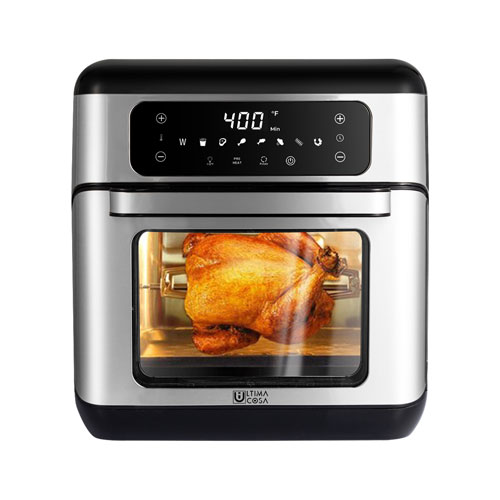
-56%Ultima Cosa 10L Digital Air Fryer Oven — 10.6-Quart Capacity with 8 One-Touch Presets! $119.99 CAD (56% Off)
 -31%
-31%Bentgo Kids 2-in-1 Backpack & Insulated Lunch Bag — Backpack and Lunch Bag in One! $44.99 CAD (31% Off)
 -67%
-67%Amazon Fire TV Stick 4K Select — Turn Any TV Into a 4K Smart TV! $24.99 CAD (67% Off)
 -20%
-20%Purina Pro Plan Weight Management Wet Cat Food 24-Pack — Real Protein, Vet Recommended! $40.42 CAD (19% Off)
 Maple Express
Maple Express | September 22, 2026 Bodies found in burning vehicles at opposite ends of Toronto
 Finance Evening
Finance Evening | September 22, 2026 AMD Tops $1 Trillion; Toronto Stocks Hit Two-Week High
-56%Ultima Cosa 10L Digital Air Fryer Oven — 10.6-Quart Capacity with 8 One-Touch Presets! $119.99 CAD (56% Off)
Best Buy
-31%Bentgo Kids 2-in-1 Backpack & Insulated Lunch Bag — Backpack and Lunch Bag in One! $44.99 CAD (31% Off)
Amazon
-67%Amazon Fire TV Stick 4K Select — Turn Any TV Into a 4K Smart TV! $24.99 CAD (67% Off)
Amazon
-20%Purina Pro Plan Weight Management Wet Cat Food 24-Pack — Real Protein, Vet Recommended! $40.42 CAD (19% Off)
Amazon
Maple ExpressMaple Express | September 22, 2026 Bodies found in burning vehicles at opposite ends of Toronto
Finance Evening