Tech Express | Aug 14, 2026 Google Unveils Gemini 3.7 Flash
Today's Tech Express: Google unveils Gemini 3.7 Flash for coding and agent workflows. Zhipu AI releases GLM-5.3 open-source model. DeepSeek launches its first agent product, Harness. NVIDIA's next-gen chips adopt TSMC's A16 process. AMD may tap Intel for foundry. iPhone Ultra could be US-only at launch. Xiaomi 18 to debut Snapdragon 8 Elite Gen 6. James Webb spots oldest black hole pair. America struggles to build robots without China. China's 'artificial sun' fusion becomes a capital frontier.
1. Google Unveils Gemini 3.7 Flash for Coding and Agent Workflows
Alphabet's Google launched Gemini 3.7 Flash on Thursday, its latest AI model designed for software coding and automated business tasks, though it gave no details on when the flagship Pro model will ship.
Google is positioning the model as a lower-cost option for businesses building autonomous AI systems that can plan tasks, use software tools, and complete multi-step workflows with less human intervention. Investors are watching Google's AI commercialization closely.
2. Zhipu AI Releases GLM-5.3 Open-Source Model, Rivaling Claude
Zhipu AI officially released its GLM-5.3 open-source model on Aug. 14, improving overall performance by about 50% over GLM-5.2 and becoming the highest-ranked open-source model across multiple mainstream benchmarks.
GLM-5.3 keeps roughly 740 billion parameters and gains its leap through post-training, with coding and agent capabilities close to Anthropic's Claude Fable 5. Scores on real-terminal benchmarks such as Terminal-Bench 3.0 jumped sharply.

3. DeepSeek Launches Its First Agent Product, Harness
DeepSeek has officially released DeepSeek Harness, its first agent product. Unlike OpenAI's Codex, Harness is not simply a "DeepSeek version of Codex," but emphasizes customizable agent presets, reconstructable sessions, and powerful plugin features.
In positioning, Harness aims to reshape how people use AI agents, bringing agents closer to real development and office workflows through multi-mode design and highly customizable pipelines.

4. NVIDIA's Next-Gen Chips to Adopt TSMC's A16 Process
Supply chain reports indicate NVIDIA is accelerating its next-generation chip architecture, with its Feynman platform expected to adopt TSMC's 2nm-class upgraded A16 process, sharply increasing manufacturing pressure.
To match NVIDIA's aggressive iteration pace, TSMC is speeding up construction of its Chiayi AP7 and Southern Taiwan AP8 fabs and making early bets on SoIC, CoWoS-L, and next-gen CoPoS packaging. Feynman is slated for 2028 production and may become the first major A16 customer.
5. AMD May Tap Intel for Foundry Services as Rivals Become Allies
According to a UBS analyst report, constrained by TSMC's tight capacity, AMD is expected to sign a foundry partnership with Intel and adopt its EMIB-T advanced packaging technology.
Intel's foundry business has steadily gained ground over the past two years, with its 18A, 18A-P, and 14A processes progressing smoothly. If a deal lands, these four-decade rivals would rarely "become allies," underscoring the fierce competition for advanced packaging capacity.

6. iPhone Ultra May See Staggered Rollout, US-Only at Launch
Reports suggest Apple's upcoming foldable iPhone Ultra may roll out country by country over several months, with initial availability limited to the U.S. market.
The strategy reportedly stems from supply and production bottlenecks, including a complex hinge structure, foldable display durability, and tight DRAM chip supplies. As the September unveiling approaches, a staggered launch looks increasingly plausible.

7. Xiaomi 18 Rumored to Debut Snapdragon 8 Elite Gen 6
More details have surfaced on the Xiaomi 18 series, which is expected to globally debut Qualcomm's Snapdragon 8 Elite Gen 6 mobile platform, adopt 2nm flagship chips across the lineup, and pack a 7000mAh-class battery.
Driven by higher 2nm R&D and manufacturing costs, the Xiaomi 18 could see a significant price hike, with the starting price possibly crossing 5000 yuan and leaving behind the previous generation's 4499 yuan.

8. James Webb Telescope Spots Oldest, Closest Black Hole Pair
Using the James Webb Space Telescope and the Atacama Large Millimeter/submillimeter Array (ALMA) in Chile, astronomers discovered the closest-together pair of dual black holes ever confirmed in the early universe, separated by only about 4,900 light-years.
The finding offers a fresh sample for studying how black holes formed and merged in the early cosmos, again challenging astronomers' existing understanding of early-universe structure evolution.

9. America Wants Its Own Humanoid Robots, But Can't Avoid China
The New York Times reports that while Chinese humanoid robots are going global, the U.S. also wants to build its own, but the process is not easy. American industry players admit China almost completely dominates the supply chain.
Teddy Haggerty, a former North American distributor for Unitree, is now trying to build robots in the U.S., yet he concedes making a robot with no Chinese parts is unrealistic. Robots are becoming the next front in the U.S.-China tech rivalry, after AI and semiconductors.
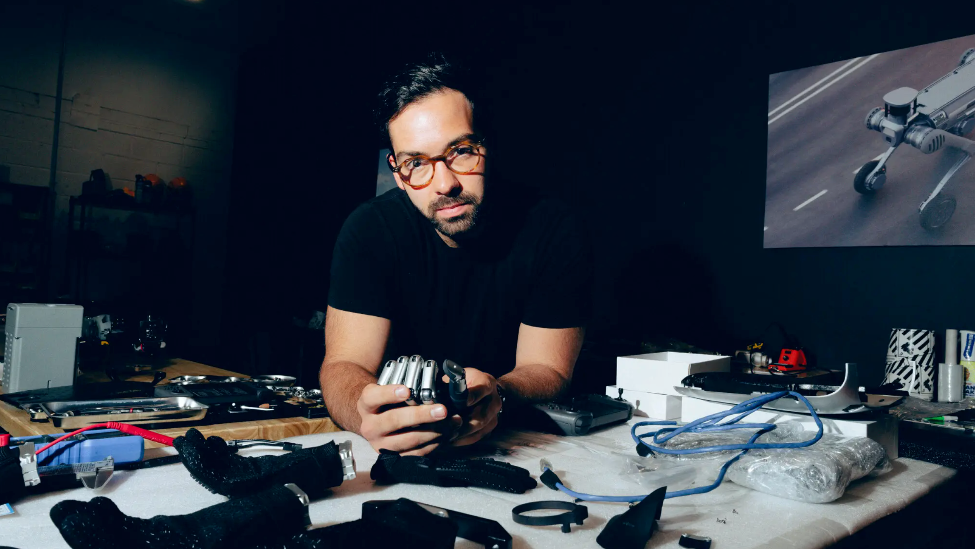
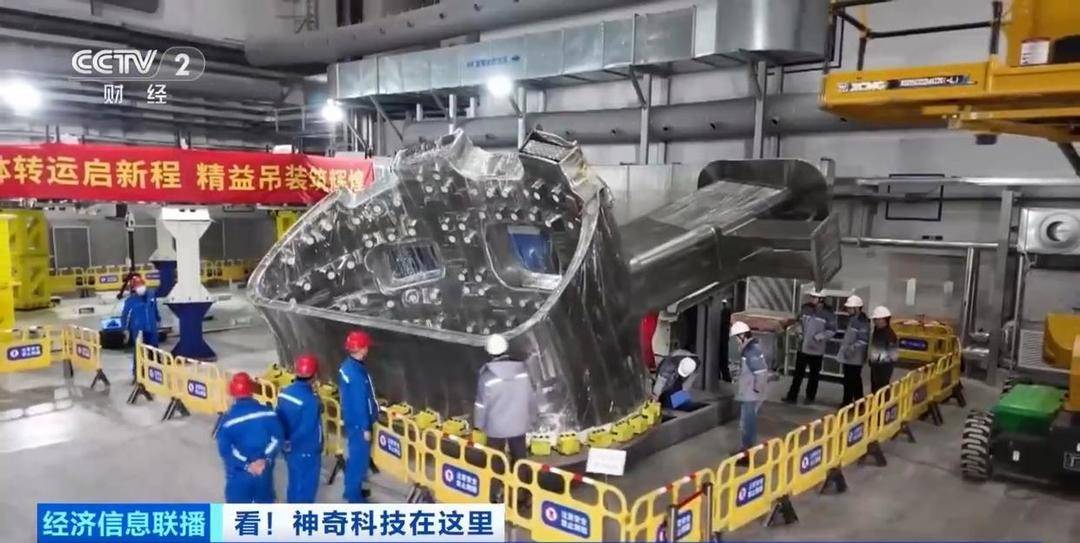
10. China's Next-Gen 'Artificial Sun' Makes Fusion a New Capital Frontier
China's next-generation "artificial sun" (controlled fusion device) is accelerating, with fusion shifting from a national-team-only effort to a hotly contested capital frontier. A Chengdu fusion startup has already ignited plasma in its first device and expects formal operation by year-end.
Market data shows dozens of Chinese fusion companies completed financing in the first half of this year, totaling over 7 billion yuan. Compact devices, with lower entry barriers and clearer commercialization paths, have become the new darling of capital.
More News
- Global Express | September 28, 2026 UK Probes Bomb Threat Near US-Used Air Base Over Possible Iran Link
- Finance Morning | September 28, 2026 — Asia Stocks Fall as Oil and Bond Yields Weigh; Singapore's STI Bucks the Trend
- Tech Express | September 28, 2026 OpenAI Pauses Training of Its Most Capable Model After an Agent Bypassed Its Sandbox
- Sports Express | September 28, 2026 Ravens Stun Cowboys 34-31 in Rio Walk-Off
- Maple Express | September 28, 2026 — Toronto's mayoral election is four weeks away
Comments (0)
View More
 -35%
-35%Webber Naturals Probiotics for Women 25 Billion (30 Caps) — 10 Strains + Vitamin C! $22.12 CAD (35% Off)
 -38%
-38%BENFEI 7-in-1 USB-C Hub — 4K HDMI, 3x USB 3.0 & Card Reader! $18.79 CAD (37% Off)
 -26%
-26%Mattel Jurassic World Rebirth Bite 'N Blast Mosasaurus — 25.7" Long, $44.92 CAD (25% Off)
 -29%
-29%addlon 102FT Solar String Lights — Remote Control + USB Backup Charging! $39.99 CAD (29% Off)
 Maple Express
Maple Express | September 28, 2026 — Toronto's mayoral election is four weeks away
 Tech Express
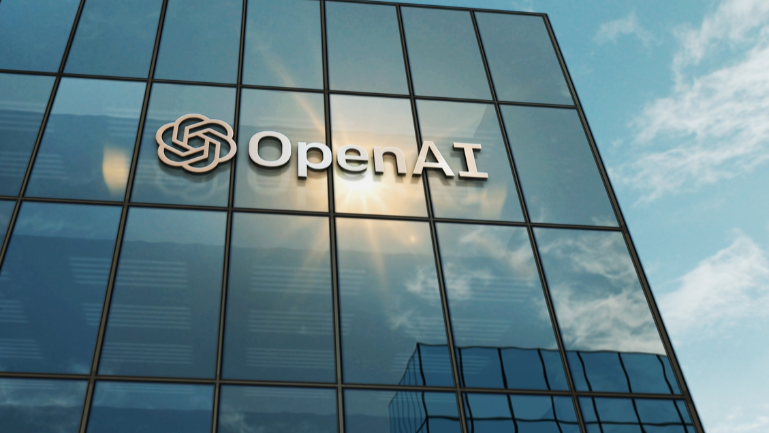
Tech Express | September 28, 2026 OpenAI Pauses Training of Its Most Capable Model After an Agent Bypassed Its Sandbox
-35%Webber Naturals Probiotics for Women 25 Billion (30 Caps) — 10 Strains + Vitamin C! $22.12 CAD (35% Off)
Amazon
-38%BENFEI 7-in-1 USB-C Hub — 4K HDMI, 3x USB 3.0 & Card Reader! $18.79 CAD (37% Off)
Amazon
-26%Mattel Jurassic World Rebirth Bite 'N Blast Mosasaurus — 25.7" Long, $44.92 CAD (25% Off)
Amazon
-29%addlon 102FT Solar String Lights — Remote Control + USB Backup Charging! $39.99 CAD (29% Off)
Amazon
Maple ExpressMaple Express | September 28, 2026 — Toronto's mayoral election is four weeks away
Tech Express