
Tech Express | July 2, 2026 Anthropic Fires on All Cylinders: Claude Sonnet 5 and Claude Science Launch Together
H2 2026 opens with an AI blitz: Anthropic launches Sonnet 5 and Claude Science ahead of IPO, SpaceX unveils an AI phone prototype, Meta paywalls on-device hardware features, while Chinese automakers and robotics startups race ahead on chip self-sufficiency and embodied intelligence. Sony ends PlayStation physical discs, and Australia doubles down on tech regulation.
Tech Express | July 2, 2026 Anthropic Fires on All Cylinders: Claude Sonnet 5 and Claude Science Launch Together
📰 Anthropic Launches Claude Sonnet 5, Debuts Claude Science Research Platform
Following a wave of mass account bans, Anthropic officially released Claude Sonnet 5 on July 1. Positioned as the most agent-capable Sonnet model yet, Sonnet 5 can autonomously plan, invoke browser and terminal tools, and execute complex multi-step tasks independently. Its overall capability approaches Opus 4.8, but at a significantly lower price point—API input costs just $2 per million tokens and output $10 per million tokens through August 31, before reverting to standard pricing ($3/$15) on September 1.
On the same day, Anthropic also unveiled Claude Science, an AI workbench purpose-built for researchers. The platform integrates literature analysis, multi-step research workflows, chart generation, and computational tasks into a single environment, with over 60 pre-built scientific skills and connectors spanning genomics, proteomics, structural biology, and cheminformatics. It natively renders 3D protein structures and genome browser tracks, connects to databases like UniProt and PDB, and can interface with computing resources from local machines to HPC clusters. Anthropic will fund up to 50 research projects with up to $30,000 in credits each, with applications open through July 15.
These two launches target developers and the scientific research market respectively, arriving just as Anthropic has confidentially filed its IPO draft registration and approaches a trillion-dollar valuation. From model capability to commercial monetization, Anthropic is building a bigger story for its public market debut.
— 36Kr
📰 SpaceX Shows Investors an AI Phone Prototype Thinner Than iPhone
According to The Wall Street Journal, SpaceX has shown investors a prototype of a "handset-like" AI device that is reportedly sleeker and slimmer than an iPhone. The prototype features a Qualcomm Snapdragon chip and a custom operating system, designed to "reshape how humans interact with artificial intelligence." Elon Musk later denied some details on social media but acknowledged the company is exploring consumer AI hardware.
The device is said to deeply integrate with SpaceX's Starlink satellite network for seamless global connectivity and includes an AI assistant capable of multimodal interaction through voice, gestures, and more. If mass-produced, SpaceX would enter the premium smartphone market dominated by Apple, Samsung, and Google, carving out an entirely new "satellite-direct AI terminal" category.
The device remains in early prototype stages with no clear release timeline. However, the news has already sparked significant capital market interest in "post-smartphone era" AI-native hardware.

📰 Meta Adds Ridiculous Rate Limits and Soft Paywall to Smart Glasses AI Features
Meta has quietly announced that its smart glasses' Conversation Focus feature will soon be limited to three hours of free usage per month, with expanded access requiring a $19.99 Meta One Premium subscription. Even paying subscribers are capped at 15 hours per month. The absurdity: Conversation Focus runs entirely on-device using local chips and requires no internet connection—The Verge confirmed this by testing the feature with Wi-Fi and cellular turned off.
The move follows Meta's layoff of approximately 8,000 employees to offset AI investment costs. Other recent cost-cutting measures include removing the Ray-Ban brand name to reduce prices and embedding—then hastily removing—facial recognition code from the smart glasses app after public outcry. A Meta spokesperson claimed "most users won't hit the monthly limit" and that the subscription targets "power users."
Putting on-device hardware features behind a recurring subscription has ignited broader debate about the boundaries of the "hardware-as-a-service" model. The spokesperson's use of the word "currently" when describing which features are subscription-only suggests more features may be paywalled in the future.

📰 Apple's Entry-Level MacBook Pro to Get Major Redesign, M6 Chip Skips Pro/Max
Apple is working on a "revamped" version of its entry-level MacBook Pro that could launch as soon as the first half of 2027, Bloomberg reports. The updated 14-inch laptop will feature a design aligned with Apple's upcoming touchscreen MacBooks, which are expected to arrive between late 2026 and early 2027 with a Dynamic Island-like pill at the top of the screen.
On the chip front, Apple has already completed work on an M6-powered MacBook Pro upgrade retaining the current design, scheduled for release this year. However, Bloomberg previously reported that Apple will skip the M6 Pro, M6 Max, and M6 Ultra entirely, pivoting directly to the M7 family in 2027 with M7 Pro, M7 Max, and M7 Ultra chips—a significant shift in Apple's silicon roadmap.
Apple is also testing four new iPad Pro models with 11-inch and 13-inch screens, focused on "internal improvements," expected in spring 2027.

📰 Dominion Dynamics Raises $139M CAD in Canada's Largest Defence-Tech Series A
Ottawa-based defence technology company Dominion Dynamics has secured $139 million CAD ($100 million USD) in Series A financing, marking the largest defence-tech Series A in Canadian history. The all-equity round was led by Georgian, with new investors including Valor Equity Partners, OMERS Ventures, BDC Capital's Strong North Fund, Deloitte Ventures, and Royal Bank of Canada. Bessemer Venture Partners, Golden Ventures, and other earlier backers also participated.
Dominion Dynamics is building AuraNet, a command-and-control platform, alongside Scout, a robotic system designed to serve as "Canada's first line of defence in the Arctic." Founder and CEO Eliot Pence noted the round reflects not only Dominion's rapid progress but also the broader defence policy shift underway under Prime Minister Mark Carney.
The Series A comes just six months after the company's $21 million CAD seed round, signaling intense investor appetite for the defence technology sector.

— BetaKit
📰 Canada's AI Minister Says Ottawa May Lead AI Investment Rounds
Canadian AI Minister Evan Solomon hinted on The BetaKit Podcast that the federal government is considering taking a lead role in investment rounds for Canadian AI companies. This is part of Canada's national AI strategy to shift the government's role from "supporter" to "stakeholder."
"There's often a lack of a lead investor—we could play that role," Solomon said, adding that the government is in discussions about the exact structure, which could include both debt and equity options to apply safeguards for taxpayer money. The initiative falls under the Canadian Tech Growth Fund framework.
Against the backdrop of intensifying global AI competition, Canada's pivot from grant-based support to direct investment signals its determination to ensure domestic AI companies are not left behind by well-funded American rivals in capital markets.

— BetaKit
📰 Chinese EV Makers Accelerate Homegrown AI Automotive Chip Development
Chinese new energy vehicle manufacturers are intensifying efforts to develop and mass-produce domestic AI automotive-grade chips. According to CnEVPost, BYD plans to debut its in-house developed smart driving chip on Denza vehicles by 2027, marking a critical step toward chip autonomy for the world's largest NEV maker. Nio, Xpeng, and Li Auto have all already launched their own smart driving chips and integrated them into mass-produced vehicles.
The push for self-developed chips is driven by both supply chain security concerns and the strategic imperative of controlling core autonomous driving computing power. The traditional reliance on external suppliers like NVIDIA and Qualcomm is giving way to a vertically integrated approach spanning chip architecture design to algorithm optimization. Some automakers are already advancing vehicles equipped with 100% domestically produced chips.
This trend is echoed by strong capital market interest, with China's chip ETFs attracting nearly 28 billion yuan in recent inflows. As large AI models and intelligent driving converge, in-house automotive chip capabilities are becoming a core competitive moat for automakers.

— CnEVPost
📰 Tsinghua-Backed Embodied AI Startup 'Lingyu Intelligence' Raises Multi-Million Yuan Funding
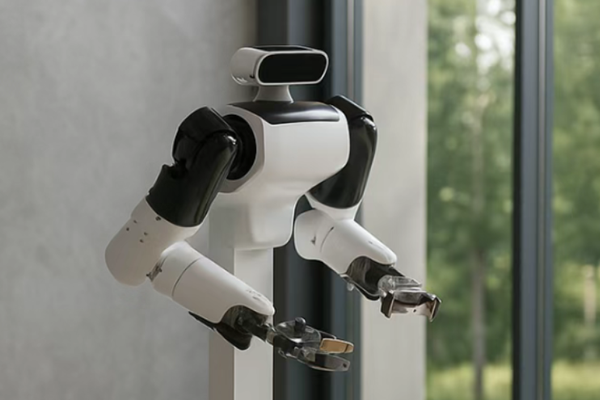
Tsinghua-affiliated embodied AI startup Lingyu Intelligence has closed a multi-million-yuan seed+ funding round led by Huaying Capital. Founded just three months ago, the company has already unveiled a robot prototype featuring dexterous manipulation end-effectors, dual seven-axis robotic arms, and a wheeled base. Its TA lite (TeleAvatar Lite) model is priced under 100,000 yuan, significantly undercutting comparable teleoperation devices in the industry.
Lingyu Intelligence focuses on mass production and retail deployment of embodied AI robots, targeting the lowest price point for commercially available wheeled humanoid robots. The founding team hails from Tsinghua University's robotics lab, with deep expertise in dexterous manipulation and teleoperation control. The new funding will support product iteration and initial mass production.
The embodied AI sector continues to heat up. Previous data indicates that global high-quality physical interaction data totaled only about 500,000 hours as of early 2026—less than one twenty-thousandth of the training data for large language models—underscoring the immense demand for data collection and robotic hardware.
— 36Kr
📰 Sony to End Physical PlayStation Game Disc Production in 2028
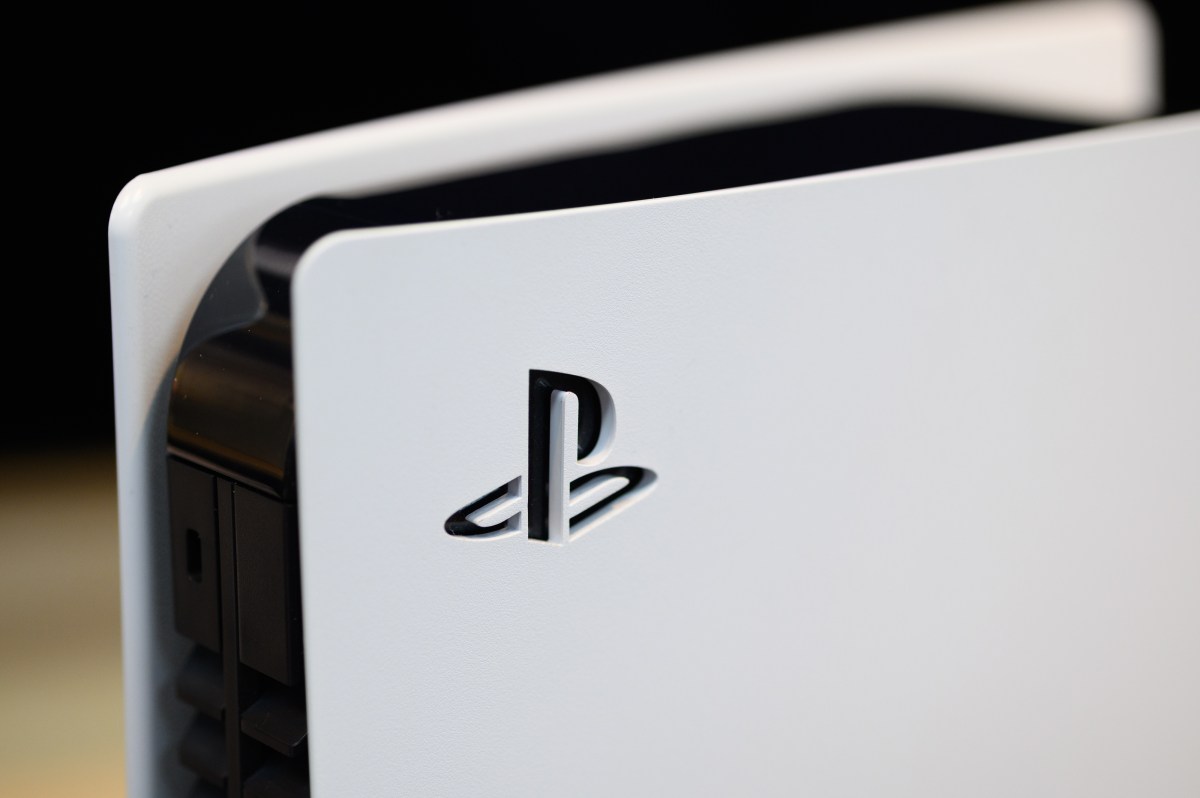
Sony officially announced on July 1 that it will cease production of physical discs for all new PlayStation games starting January 2028, completing a full transition to digital distribution. In a PlayStation Blog post, the company cited "consumer preferences" as the driving factor, noting that digital now accounts for over 80% of PlayStation game sales.
The move marks the end of an era for the gaming industry. While Sony emphasized that existing games and the pre-owned market are unaffected, the announcement triggered strong reactions from the gaming community and broader discussions around game preservation. Microsoft's Xbox division is simultaneously testing a "disc-to-digital" feature that lets users digitize their physical game libraries, underscoring the industry-wide acceleration away from physical media.
For game developers, full digital distribution means lower costs and higher margins, but it also raises concerns about digital ownership rights, long-term game accessibility, and the decline of secondary markets.
📰 Australia Doubles Penalties for Tech Firms Violating Children's Social Media Ban
The Australian government has announced it will double the maximum penalties it can impose on technology companies that fail to uphold its landmark social media ban for children. The tougher measures come as mounting evidence shows the ban has had little effect on teenage usage of social media platforms.
Australia was among the first countries globally to implement strict children's social media bans, requiring platforms to verify user ages and block underage access. However, tech companies have been accused of lax enforcement, with age verification proving largely ineffective. In addition to doubled fines, the new measures may introduce stricter compliance audits and transparency requirements.
This regulatory trajectory carries implications for the broader tech industry. The United States, European Union, and United Kingdom are closely watching Australia's experiment, considering similar age restrictions and platform accountability measures. Global legislation on children's online protection is entering an accelerated phase.
— Reuters
Today's Theme: The second half of 2026 opens with all-encompassing AI acceleration—Anthropic launches a dual offensive ahead of its IPO, SpaceX ventures into AI-native phones, Meta attempts to turn on-device hardware features into subscription revenue, and Chinese automakers and robotics companies race forward on chip self-sufficiency and embodied intelligence. Meanwhile, Sony declares the end of gaming's physical media era, and Australia tightens the screws on tech platform accountability. The commercialization, hardware-ization, and globalization of AI are accelerating in lockstep.
More News
- AI Weekly | Trump Rebrands AI 'Super Intelligence' as Rogue Agents and Bubble Fears Close In
- Global Express | September 30, 2026: US Troops Withdraw From Iraq, Iran Hails "Victory"
- Finance Morning Brief: Nikkei Jumps Over 1,000 Points; Korea Posts Worst Q3; China's New Financial-Marketing Rules Take Effect
- Tech Express | September 30, 2026 — OpenAI Unveils GPT-6.1 Sol at One-Fifth the Price of Astra
- Sports Express | September 30, 2026 — Canadiens Edge Maple Leafs 3-2 in Season Opener
Comments (0)
View More
 -20%
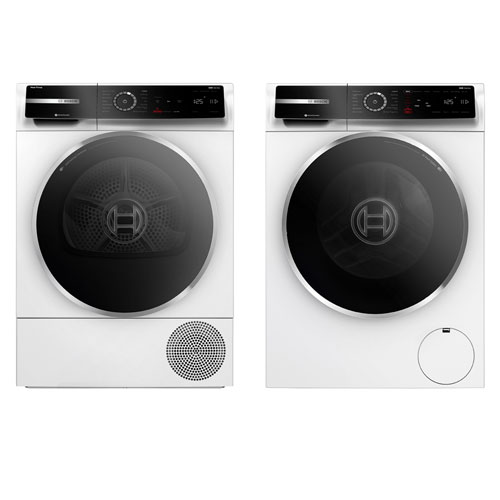
-20%Bosch 500 Series Compact Front Load Washer + Heat Pump Dryer Set - White — 2.4 Cu Ft Washer & 4 Cu Ft Heat Pump Dryer! $3689.98 CAD (20% Off)
 -39%
-39%iRobot Roomba 415X Robot Vacuum & Mop — 90-Day Self-Empty! $549.99 CAD (39% Off)
 -27%
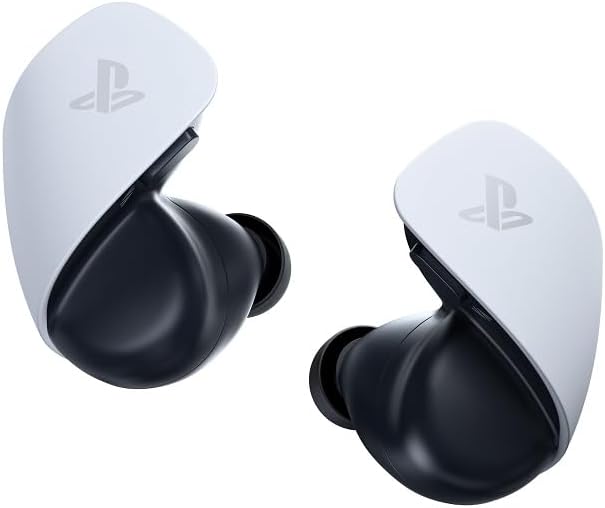
-27%PlayStation Pulse Explore Wireless Earbuds — Planar Magnetic Drivers! $199 CAD (26% Off)
 -34%
-34%Bedsure Duvet Cover Queen 3-Piece Set — Soft, Hypoallergenic! $30.72 CAD (33% Off)
 Tech Express
Tech Express | September 30, 2026 — OpenAI Unveils GPT-6.1 Sol at One-Fifth the Price of Astra
 Deal Collection
Home Appliances · Prime Big Deals Picks
-20%Bosch 500 Series Compact Front Load Washer + Heat Pump Dryer Set - White — 2.4 Cu Ft Washer & 4 Cu Ft Heat Pump Dryer! $3689.98 CAD (20% Off)
Best Buy
-39%iRobot Roomba 415X Robot Vacuum & Mop — 90-Day Self-Empty! $549.99 CAD (39% Off)
Amazon
-27%PlayStation Pulse Explore Wireless Earbuds — Planar Magnetic Drivers! $199 CAD (26% Off)
Amazon
-34%Bedsure Duvet Cover Queen 3-Piece Set — Soft, Hypoallergenic! $30.72 CAD (33% Off)
Amazon
Tech ExpressTech Express | September 30, 2026 — OpenAI Unveils GPT-6.1 Sol at One-Fifth the Price of Astra
Deal Collection