Finance Weekly | Oil Above $100 and Central Banks Turn Hawkish: The Global Easing Cycle Hits Pause
Inflation returned as the week's theme: the Fed held rates and Powell said he will stay on the board, the Bank of Canada is poised to hike on Wednesday, and the ECB looks set to stand pat amid France's bond turmoil. Brent neared $115 and AI stocks shed $3 trillion before earnings. In China, the PBOC trimmed MLF rollovers but still injected liquidity, the Southern regional power market began formal operation, and 2025 wage data showed a K-shaped structure.
This Week in Finance
The world's markets spoke one language this week: inflation is back. The Federal Reserve held rates for a third straight meeting, while Chair Jerome Powell made a personnel move of his own. The Bank of Canada is widely expected on Wednesday to raise rates for the first time since 2022, with traders pricing at least four hikes over the next year. The ECB looks set to stand pat as France's 10-year yield trades above 5%. Brent crude is near $115, linking inflation, rate hikes and government borrowing costs into one chain, while AI stocks have shed $3 trillion in market value ahead of a packed earnings week. China tells a different story: the central bank trimmed its MLF injection but still delivered net medium-term liquidity, the Southern regional power market began formal operation, and 2025 wage data revealed a K-shaped structure. Here are ten stories that connect the week.
1. The Fed: Powell Chooses to Stay
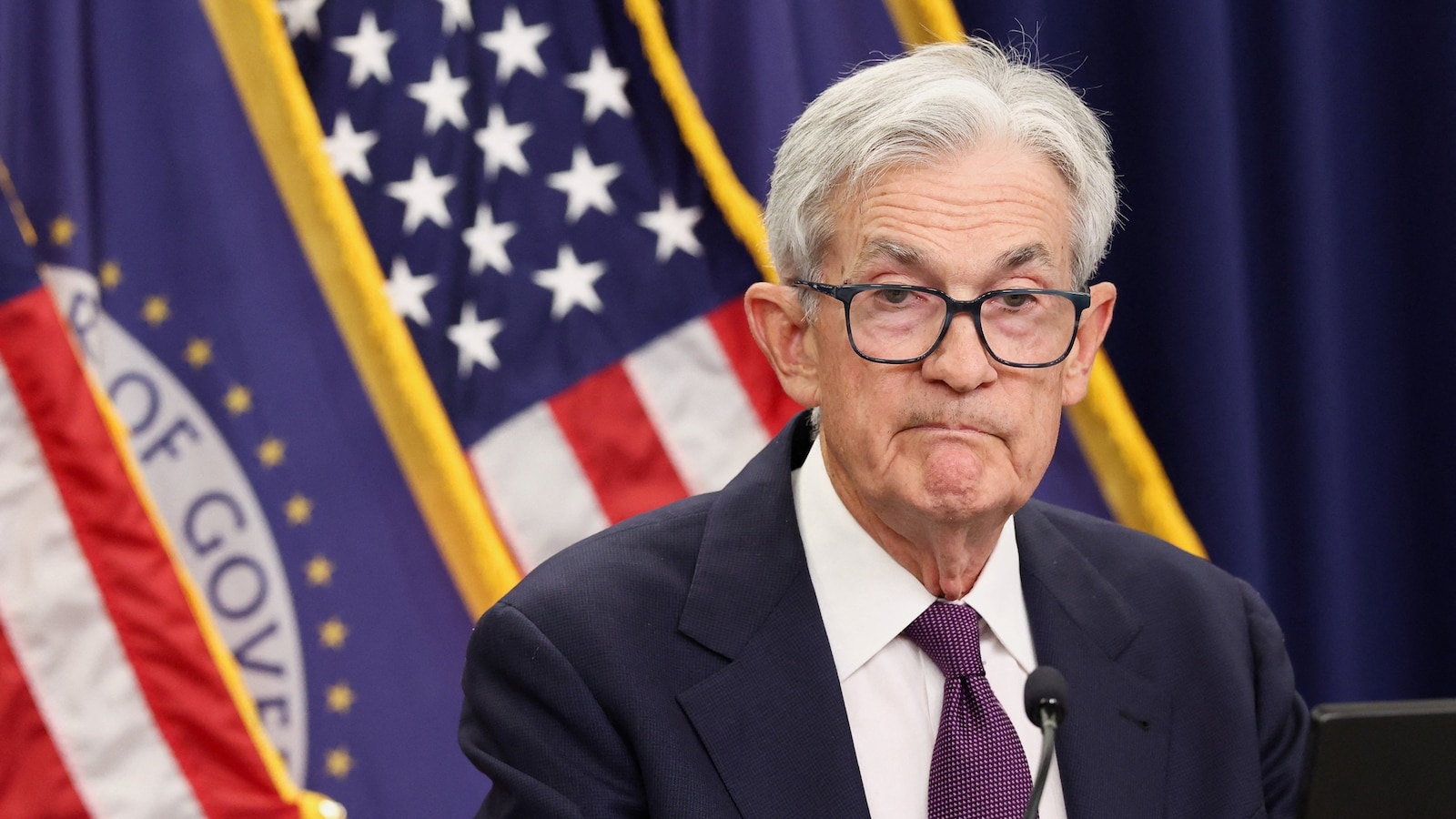
Source: ABC News
The Federal Reserve held interest rates steady for a third consecutive meeting, leaving the benchmark rate at 3.5% to 3.75%. Earlier in 2026 the central bank had cut rates by a quarter point three times in a row. The surprise was not the decision but Powell's announcement at his press conference: when his term as chair expires next month, he will not leave the Fed's board of governors.
The trigger was the criminal investigation into the central bank's office renovation. The Justice Department moved last week to drop the probe and asked the Fed's inspector general to take it over. "I've said I won't leave the board until this investigation is well and truly over with transparency and finality, and I stand by it," Powell said. He noted he had planned to retire at the end of his term until a series of legal actions by the Trump administration changed his mind. He could remain on the board until 2028.
The implications land directly on the Fed's personnel puzzle. The Senate Banking Committee approved the nomination of Kevin Warsh as chair on a 13-11 party-line vote, but Powell staying means that even with Warsh in the chair's office, one of the 12 board votes still belongs to the outgoing chair. Powell said his concern is "the series of legal attacks on the Fed, which threaten our ability to conduct monetary policy without considering political factors."
The lone dissenting vote came from Stephen Miran, who wanted a quarter-point cut. The Iran war has pushed oil higher, and slowing growth alongside sticky inflation raises the specter of stagflation: cutting could reignite prices, hiking could crush growth. Powell's remaining vote adds one more variable to that debate.
2. Bank of Canada: The Wednesday Nail-Biter
Source: The Globe and Mail
The Bank of Canada announces its rate decision on Wednesday, and markets increasingly believe it will be a hike — the first since 2022. Traders have pushed the odds above 80% and are pricing at least four hikes over roughly the next year.
The case for hiking comes down to inflation. Headline inflation rose to 3.1% in September, driven largely by gasoline prices after the Middle East oil-supply shock. Governor Tiff Macklem appeared to tip his hand last weekend, saying inflation for 2026 was tracking "quite a bit higher" than the bank's July forecast of 2.5%, and wondering aloud whether inflation is "likely to come back down toward our target on its own." The bank then entered its customary communications blackout.
The opposition is just as loud. The job market has stalled, wage growth is slowing, GDP forecasts are declining, the national housing market is in a five-year recession, and the trade war with the United States remains a potent threat. "We aren't yet sure that ANY rate hikes will be warranted in the coming year, so moving early could be a step that the bank comes to regret," CIBC chief economist Avery Shenfeld wrote. Most core inflation measures sit at 2% or lower, and 110,000 jobs were lost in August and September combined.
The bank's own model forecasts just 0.7% real GDP growth this year and 1.8% next year. If the market is right about a hiking path, variable-rate mortgages, business borrowing and consumer demand would all feel the squeeze. Worse, Trump has threatened to double tariffs on Canadian autos and steel to 50% in about two months — tightening monetary policy while growth is already stalling is a genuine gamble.
3. Trump Cancels Some Canada Tariffs
Source: NBC News
The Trump administration said Friday it had granted tariff exemptions on some Canadian imports, including 50% duties on some agricultural items. Those duties were applied after Canada withdrew from trade negotiations in late August. A White House document confirmed the action but said the administration would also add tariffs to "certain valves, carpets, waste products" and other items to offset the revenue.
The timing is telling. Less than two weeks before the Nov. 3 midterm election, polls show Democrats have a solid chance to win majorities in both chambers. The news was first announced by Republican Senator Susan Collins of Maine, who faces a tough re-election fight. She said on social media she had secured exemptions for Maine's agricultural industries, including blueberry, potato, apple and seaweed producers, as well as plastic boxes, crates, packing materials, refrigeration equipment, sealing and labeling machinery, film and foil.
It amounts to an implicit acknowledgment that Trump's signature trade policy is hurting Republican candidates. Democratic challenger Troy Jackson responded sharply: "Trump's trade wars have made life harder and more expensive for Mainers. Susan Collins enabled this chaos... now wants credit for bringing a cup of water to put out the fire."
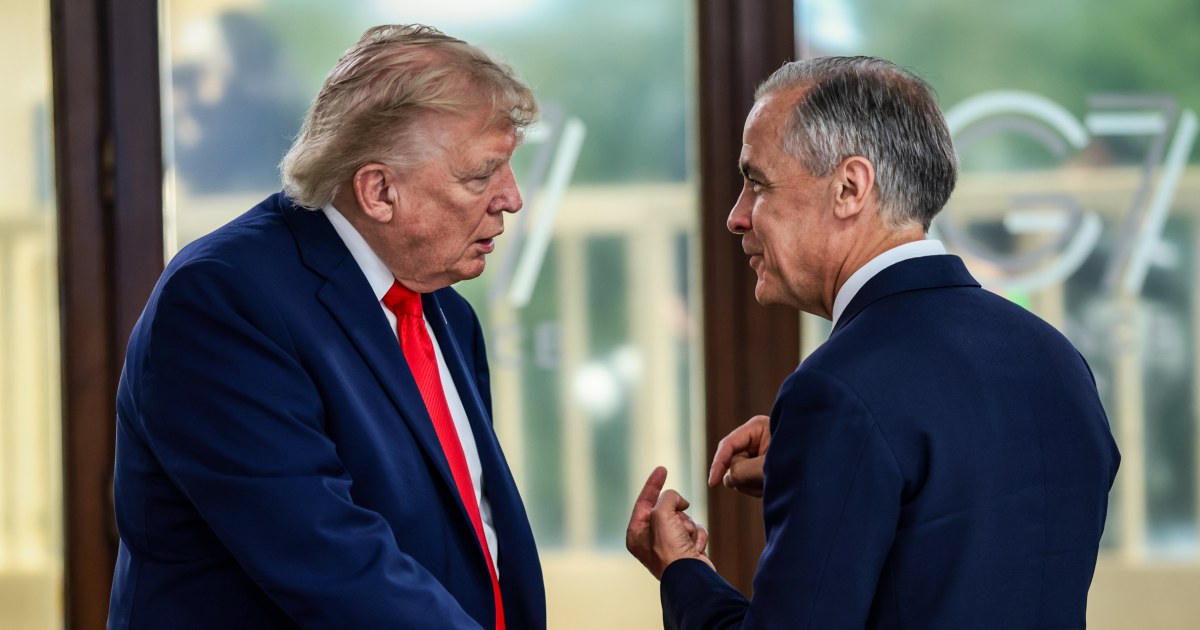
For Canada this is a limited thaw, not a pivot. The exemptions center on agriculture and packaging equipment; autos, steel and aluminum are untouched. Notably, Prime Minister Mark Carney is set next week to reach a historic agreement with the European Union on Canada becoming the bloc's first-ever "associate member" at a summit in Montreal — Ottawa is shifting its trade center of gravity away from its southern neighbor.
4. Central Bank Super Week: The Fed's Silence and AI's Earnings Test
Source: 21st Century Business Herald
Next week carries the year's densest information flow: the Fed, the Bank of Canada, the ECB, and the central banks of Japan, New Zealand and Thailand all meet, while roughly a third of the S&P 500 reports. Capital spending guidance from Alphabet, Microsoft and Amazon — the three AI hyperscalers — will draw the closest scrutiny.
The Fed announces its decision next week, and markets broadly expect a hold. LSEG data put the probability of a quarter-point hike at this meeting at just 10%, but a December move is seen as likely, and markets have fully priced two hikes before April. ING economist James Knightley noted that heavyweights including Jefferson, Bowman and Waller may hike again but see no urgent need now.
Data follows immediately: third-quarter GDP and the September PCE price index, the Fed's preferred inflation gauge, arrive the day after the decision, along with September durable goods orders, October consumer confidence, September new home sales and weekly jobless claims. For the AI trade, the real test is not rates but hyperscaler capex — patience with "spend now, profit later" has been wearing thin.
Commodities are already voting. WTI front-month futures rose 4.29% on the week to $103.27 a barrel and Brent gained 6.24% to $116.72. Tensions in the Gulf are escalating, with reports that the US and Israel are preparing to resume strikes on Iran. Energy is lifting inflation expectations and reinforcing the higher-for-longer rate view: COMEX gold fell 4.05% on the week to $3,991.10 an ounce and silver dropped 5.76%. As one market participant put it, heightened inflation fears mean major central banks cannot ease as quickly as they would like.
5. Oil at a Five-Month High and AI's $3 Trillion Rout
Source: Asia Financial
Brent crude traded near $115 a barrel on Friday, a five-month high, lifted by speculation of further US and Israeli attacks after the midterm vote. Asian markets closed mixed as tech firms clawed back some of the week's losses, while European bourses mostly fell.
The transmission chain from triple-digit oil is now clear: energy drives inflation, inflation forces central banks to hike, and hikes push government borrowing costs to multi-decade highs. At the same time, AI-linked shares remain under pressure over rich valuations and doubts about returns on infrastructure spending, with spiraling servicing costs adding a new worry.
Earnings season offered a brutal footnote: Meta and chip-equipment maker Lam Research both beat forecasts, yet their shares dived. "Even positive news is being ignored," said FOREX.com's Fawad Razaqzada. "Strong results are no longer enough if the outlook fails to match an already demanding valuation. Investors are becoming much less forgiving."
Money is looking for exits beyond AI. The Dow rose this week while the Nasdaq and S&P 500 fell. Seoul shed more than 2% at the open before closing higher, and SK Hynix rebounded more than 4% on Friday after its US shares fell more than 8% on Thursday. The yen's strength came from another direction: strong Japanese inflation data boosted bets on another Bank of Japan hike. Haven demand and tightening are being priced at the same time.
6. China's Central Bank: The "Precision" Turn Behind the 700 Billion MLF
Source: Cailianshe
On Oct. 23 the People's Bank of China announced it would conduct 700 billion yuan of one-year medium-term lending facility (MLF) operations on Oct. 26. With 900 billion yuan of MLF maturing this month, that means a 200 billion yuan contraction in rollovers — after a 200 billion yuan increase last month. The first reaction was to ask whether policy is tightening, but the details say otherwise.
Dong Ximiao, chief researcher at Zhaolian, notes that once outright reverse repos are included, medium-term liquidity in October is still a net injection of about 200 billion yuan. The weighted average DR007 rate is around 1.3179%, below the policy rate, and DR001 has stayed under 1.30% since Oct. 10 — evidence of ample liquidity. Trimming MLF in this environment is not draining water; it is a shift from aggregate easing toward targeted adjustment and better tenor management.
Wang Qing, chief macro analyst at Orient Jin Cheng, offers three reasons: outright reverse repos in both tenors were already increased by 400 billion yuan this month; government bond issuance has been moderate, so a smaller MLF does not threaten it; and post-holiday liquidity is loose, so the trim helps guide short-term money-market rates modestly higher. Medium-term liquidity has now been a net injection for four consecutive months, at 200 billion yuan, flat with last month.
More important is the shift in the policy framework. Governor Pan Gongsheng has said the central bank will study switching the main open-market operation tenor to overnight — the interbank overnight repo rate has in practice become the target rate, while the main operation tenor remains seven days. With outright reverse repos as the main medium-term channel, MLF retaining flexibility at the one-year tenor and the overnight rate moving to the front, a new framework is taking shape.
7. Average Wages Across 31 Provinces: The Structure Behind the Numbers
Source: Sina Finance
The National Bureau of Statistics' China Statistical Yearbook 2026 published 2025 wage data for 31 provinces. Nationally, average annual wages in urban non-private units were 129,441 yuan, up 4.3% in nominal terms and 4.2% in real terms; private units averaged 71,590 yuan, up 3.0% nominal and 2.9% real. The gap of nearly 58,000 yuan between the two is itself a structural map.
Provincial distribution is highly concentrated. In non-private units, 12 provinces exceeded 120,000 yuan: Shanghai, Beijing, Tibet, Tianjin, Guangdong, Zhejiang, Jiangsu, Qinghai, Ningxia, Chongqing, Hainan and Xinjiang. Shanghai and Beijing lead by a wide margin, reflecting high urbanization, headquarters economies and concentrated new industries and modern services. In private units, eight provinces topped 70,000 yuan: Shanghai, Beijing, Guangdong, Tibet, Zhejiang, Jiangsu, Tianjin and Fujian.
Industry gaps are wider still. The top three non-private sectors remain information transmission, software and IT services (248,752 yuan), finance (211,164 yuan) and scientific research and technical services (182,064 yuan). Mining is worth noting: it does not make the national top three, but leads in resource-rich provinces in the northwest and northeast. MyCOS data show mining engineering graduates of the class of 2025 earned an average 7,448 yuan a month, up 1,790 yuan over five years — a 32% gain, the largest among high-paying undergraduate majors.
The policy message is a K-shaped structure: pay premiums in new industries are widening, while traditional services and the private sector grow slowly. Nominal growth of 3.0% in private units leaves just 2.9% after inflation, offering limited support for consumption. When the market debates weak domestic demand, the wage distribution explains more than the average — a rising average does not mean most wallets are getting thicker.
8. China's First Regional Power Market Begins Formal Operation
Source: Sina Finance
On Oct. 24 the Southern Regional Power Market moved into formal operation, becoming China's first regional electricity market to do so. Guangdong, Guangxi, Yunnan, Guizhou and Hainan can now move power across regional boundaries flexibly — a key step in building a unified national electricity market.
The market began continuous settlement trials in June 2025. Its core purpose is to break down provincial barriers: with medium- and long-term contracts as the base, spot markets as the guide and ancillary services as the balancer, all types of market participants in the five provinces bid on the same platform. Coal, hydro, nuclear, wind and solar all clear and price under unified rules, and transmission rights across grid regions are allocated by auction.
Yunnan is the most convincing case. A pioneer in bringing a high share of clean energy into spot markets, Yunnan has 91% clean-energy installed capacity. Since the trial began, participant categories have expanded from three to six and registered entities have passed 100,000, with cumulative day-ahead and real-time clearing each exceeding 400 billion kWh. Under its "water, fire, wind, solar" joint bidding mechanism, Yunnan sent more than 1.1 billion kWh to East China and Zhejiang across regions, and its 2025 west-to-east power transmission reached a record 174.5 billion kWh.
Supporting mechanisms are falling into place: Yunnan completed China's first free transfer of green certificates for existing conventional hydropower, 303 million certificates equivalent to 300 billion kWh of green power, benefiting 76,000 companies. Its "Lai Tao Dian" retail power marketplace has traded 1.2 trillion kWh cumulatively; new-type storage capacity ranked first in the China Southern Power Grid area in 2025; and virtual power plants aggregate 2.32 million kW of flexible resources. The next step for power-market reform is turning provincial barriers into price signals — which will decide whether the math works for giant renewable bases.
9. France's Bond Storm: A 5% Ten-Year and the ECB's Dilemma
Source: Newswav (Euronews)
The ECB meets next Thursday and is widely expected to leave rates unchanged — partly because rising government bond yields are already pushing up borrowing costs across the eurozone. The eye of the storm is Paris: France's 10-year yield traded above 5% on Friday after reaching that level on Wednesday for the first time since 2002. The spread over German 10-year bonds is above 170 basis points.
The long end and credit markets are flashing warnings together. The 30-year yield is 5.5%, with a 184 basis point spread to German 30-year debt. The cost of five-year credit default swaps climbed above 100 basis points on Thursday for the first time since October 2012, during the eurozone sovereign debt crisis. Next year's budget includes 43 billion euros of spending cuts and revenue measures, but the government has no majority to pass it. Moody's kept France at Aa3 on Friday evening with a negative outlook; S&P and Fitch rate it one notch lower.
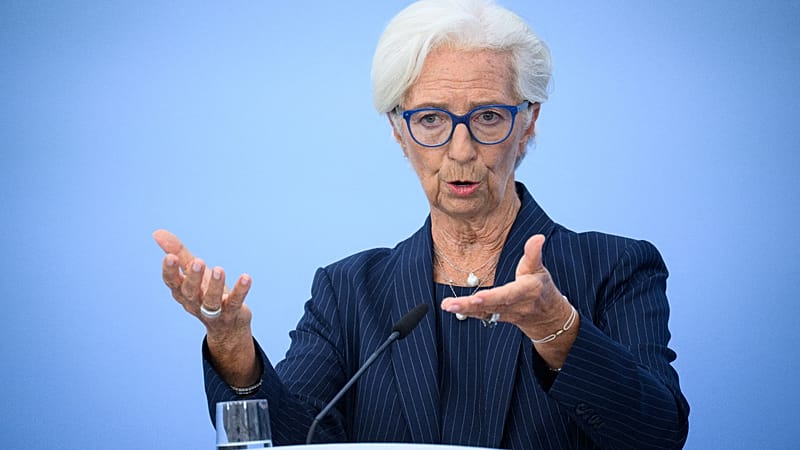
The ECB's stance is clear. President Christine Lagarde said during the IMF and World Bank meetings that "the primary and first solution lies at home in France. And it has to do with fiscal policies." Banque de France governor Emmanuel Moulin went further last Friday, saying the conditions for ECB intervention were not met because there was no financial fragmentation in the eurozone — but both spoke before the 10-year yield broke 5%.
Carsten Brzeski, global head of macro at ING, estimates the rise in German yields since September is equivalent to a 25 basis point hike for growth and inflation, and "for France, it's closer to a 50 basis point hike," adding that "the bond market has taken over the ECB's job." He expects the ECB to wait for December staff forecasts. As for tools, TPI has never been used since its creation in 2022, and OMT requires a bailout program first. France's debt is 119.1% of GDP and debt servicing costs are expected to rise by more than 10 billion euros in 2027 versus this year. The bar for intervention remains high — and inside that bar sits a budget France must pass itself.
10. SK Hynix Pulls a $150 Billion IPO
Source: Yahoo Finance
South Korea's memory giant SK Hynix said Friday it had shelved plans to list its flash-memory unit Solidigm in the US, citing "market conditions and share price trends." According to industry estimates cited by The Wall Street Journal, Solidigm had aimed to raise $10 billion to $15 billion at a valuation of up to $150 billion — it would have been one of the largest tech IPOs ever.
The answer is in SK Hynix's own stock. In July the company raised $26.5 billion in the biggest US listing ever by a foreign company, pricing shares at $149. The stock rose on Friday but remains below that price, about a third below its September record. Memory and storage stocks have shed $1.3 trillion in market value from their 2026 records, with SK Hynix accounting for about $489 billion and Micron about $411 billion; 58 of the 59 chip stocks in a Yahoo Finance basket are down in October.
The contradiction is that fundamentals remain strong: AI data-center demand has memory makers booking record profits, and executives see shortages lasting into 2028. Yet stocks are pricing a cycle top — the chip sector has lost $3 trillion this month. Solidigm is not alone: Australian data-center operator Firmus Grid canceled its IPO, AirTrunk delayed its Singapore listing to next year, and OpenAI is seeking a $1.25 trillion valuation in funding talks, down from $1.4 trillion.
This is the week's most memorable signal: when industry boom and share prices diverge this far, the financing window closes before the earnings do. SK Hynix's $149 offer price has become a near-term ceiling, and Sandisk's earnings on Thursday are the sector's next test. For Asian tech financing, the 2026 IPO party is cooling — and cooling rarely starts with bad news.
More News
- Global Express | October 25, 2026: France Arrests More Than 1,300 as Protests Spread Across Europe
- Tech Express | October 25, 2026 — MiniMax H3 Tops SuperCLUE's Image-to-Video Leaderboard
- Sports Express | October 25, 2026 — Brewers Rally From 0-4 Down to Take 2-0 World Series Lead
- Maple Express | October 25, 2026 — B.C. Conservatives win majority as Eby resigns
- Maple Express | October 24, 2026 | Toronto police name person of interest in search for missing mother and three children
Comments (0)
View More
 -33%
OneBeat 6 Ft Flat-Plug Power Bar — 3 Outlets + 4 USB (2 USB-C), Cruise Approved! $18.98 CAD (32% Off)
 -21%
Scrubbing Bubbles Fresh Brush Toilet Kit — Flush the Pad, Never Touch It, $16.72 CAD (20% Off + 15% Coupon)
 -39%
Samsung 27" FHD IPS Monitor LS27F320 — 120Hz and 5ms, #1 in Computer Monitors! $129.99 CAD (38% Off)
 -64%
STAEDTLER Mars Lumograph Sketching Set — 6 Pencils + Eraser + Sharpener, 63% Off! $13.99 CAD
 Maple Express
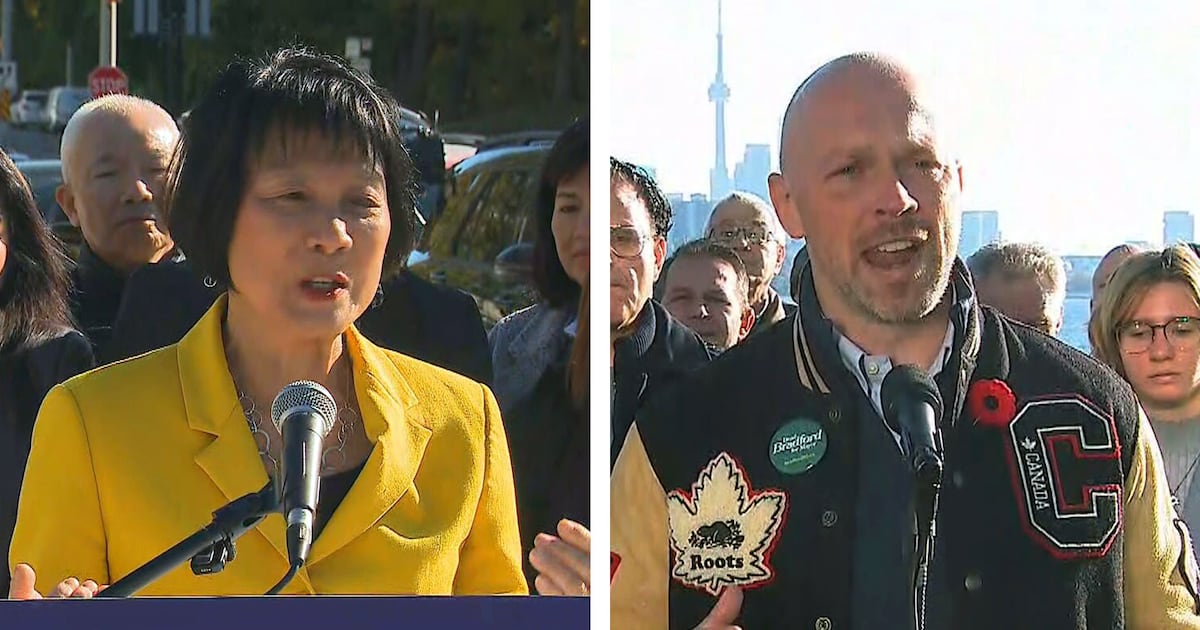
 | October 24, 2026 — Two Days Out, Toronto Mayor's Race 'Neck and Neck'
 Tech Express
 | October 25, 2026 — MiniMax H3 Tops SuperCLUE's Image-to-Video Leaderboard
-33%OneBeat 6 Ft Flat-Plug Power Bar — 3 Outlets + 4 USB (2 USB-C), Cruise Approved! $18.98 CAD (32% Off)
Amazon
-21%Scrubbing Bubbles Fresh Brush Toilet Kit — Flush the Pad, Never Touch It, $16.72 CAD (20% Off + 15% Coupon)
Amazon
-39%Samsung 27" FHD IPS Monitor LS27F320 — 120Hz and 5ms, #1 in Computer Monitors! $129.99 CAD (38% Off)
Amazon
-64%STAEDTLER Mars Lumograph Sketching Set — 6 Pencils + Eraser + Sharpener, 63% Off! $13.99 CAD
Amazon
Maple ExpressMaple Express | October 24, 2026 — Two Days Out, Toronto Mayor's Race 'Neck and Neck'
Tech Express