
Finance Evening | Eli Lilly obesity combo cuts up to 23.3% of weight; Paramount's $111B Warner Bros. deal clears final hurdle
Sept. 30 Finance Evening: Eli Lilly's obesity combo cut up to 23.3% of weight; a judge cleared Paramount's $111B Warner Bros. deal to close Oct. 6; Anthropic's IPO filing runs 80 pages of risks; U.S. private payrolls rose 90,000; Ford and JPMorgan launched a $2B Michigan LIFT plan; a year after the EV credit ended, hybrids surge; the Fed watchdog cleared its renovation; Meta was said to subsidize AI data centers via tax credit; mortgage rates hit a near 3-year high.
📊 North American Markets Today
| Index/Commodity | Close | Change | % Change |
|---|---|---|---|
| S&P 500 | 7,651.54 | -19.30 | -0.25% |
| Nasdaq | 26,861.06 | +63.52 | +0.24% |
| Dow Jones | 50,906.05 | -443.87 | -0.86% |
| Toronto TSX | 35,235.87 | -224.40 | -0.63% |
| USD/CAD | 1.4232 | +0.0046 | +0.32% |
| WTI Crude | 90.34 | -0.08 | -0.09% |
| Gold | 4,189.10 | +2.40 | +0.06% |
1. Eli Lilly's obesity combo shows up to 23.3% weight loss in mid-stage trial
Source: CNBC
Eli Lilly said Wednesday that an experimental combination regimen produced greater weight loss than a high dose of its top-selling drug tirzepatide alone in a mid-stage trial involving patients with obesity and Type 2 diabetes. The therapy met the study's main goals in a population that typically struggles to lose weight, and Lilly plans to begin Phase 3 trials at the end of the year.
The combination pairs Lilly's experimental drug eloralintide, which targets amylin — a pancreatic hormone involved in appetite and satiety — with a low dose of tirzepatide, the active ingredient in the obesity injection Zepbound and its diabetes counterpart Mounjaro. Tirzepatide targets two gut hormones, GLP-1 and GIP; Lilly believes hitting all three pathways can further curb appetite, and the combo did just that in the 48-week Phase 2 trial.
Patients on the highest dose of the combo (9 mg of the amylin drug plus 15 mg of tirzepatide) lost up to 23.3% of their weight, or about 54 pounds on average; those on 15 mg of tirzepatide alone lost 14.8%, or about 34.4 pounds; and those on eloralintide alone lost up to 12.3%, or about 28.6 pounds. Discontinuation due to side effects ranged from 10.8% to 27% on the combo versus 2.9% on tirzepatide alone. Results were presented at the European Association for the Study of Diabetes in Milan.
2. Paramount-Warner Bros. merger set to close next week after judge OKs settlement
Source: Variety
Paramount's takeover of Warner Bros. Discovery cleared its final hurdle. On Wednesday, U.S. District Judge Araceli Martínez-Olguín, who oversees the antitrust case, approved Paramount's settlement with the 12 Democratic state attorneys general who brought the case, finding it “a reasonable factual and legal resolution of the dispute.”
Paramount has tentatively set next Tuesday, Oct. 6, to close the deal. The debt-fueled $111 billion merger had already been cleared by regulators in 68 jurisdictions worldwide, including the Justice Department. The combined company will bring together two major Hollywood studios, the HBO Max and Paramount+ streaming services, and TV businesses including CBS, CNN, MTV, TBS and Comedy Central.
Shortly after the judge's order, Paramount announced that Ynon Kreiz, who is stepping down as Mattel's CEO, will become co-CEO of the merged company alongside Paramount chief David Ellison. The settlement bars the sale of the Paramount Studios or Warner Bros. lots in California for at least five years and requires at least an additional $300 million a year for U.S. film production, plus at least 30 theatrical releases in the first two years. WBD CEO David Zaslav is expected to depart with more than $550 million in stock and cash.

3. Anthropic IPO filing shows there really is only one risk with AI
Source: Yahoo Finance
After Anthropic's IPO documents leaked, attention turned to the risk disclosures from the maker of Claude. The roughly 261-page filing devotes about 80 pages — nearly a third — to risks, twice the space it uses to describe its actual business. The company itself says advanced AI could pose “catastrophic or existential risks to humanity.”
Among the model risks it lists are “self-preserving behaviors,” attempts to “conceal or manipulate information,” and behavior “resembling blackmail.” The finances are similarly strained: per documents reviewed by Reuters, revenue grew twelvefold in 2025, yet the company lost more than $8 billion on an operating basis.
Even so, the public sale could value the company at more than $2 trillion, leapfrogging almost every major corporation aside from a handful of tech giants and soaking up capital before OpenAI goes to market. The article argues that, for AI, there really is only one risk: not investing.

4. ADP: U.S. private sector added 90,000 jobs in September
Source: Yahoo Finance
Private-sector hiring picked up in September, according to payroll processor ADP, helped by continued strength in fields like education and healthcare. Private companies added 90,000 jobs, an improvement from a revised 36,000 in August and above the 75,000 economists surveyed by Bloomberg had expected.
On pay, base wages rose 3.2% year over year and gross pay was up 4.7%, with job changers seeing even bigger gains. “This is a strong report,” ADP chief economist Nela Richardson said. “After a three-month slight slowdown, this is the first re-acceleration that we've seen since May.”
Sector-wise, education and health services added 55,000 jobs, which Richardson called particularly robust; financial activities lost 16,000 positions and business and professional services shed 11,000. ADP's data, drawn from private companies, comes out ahead of the Labor Department's broader survey on Friday, which economists expect to show a gain of 90,000 jobs.

5. Ford's Farley and JPMorgan's Dimon launch $2 billion Michigan LIFT initiative
Source: Fortune
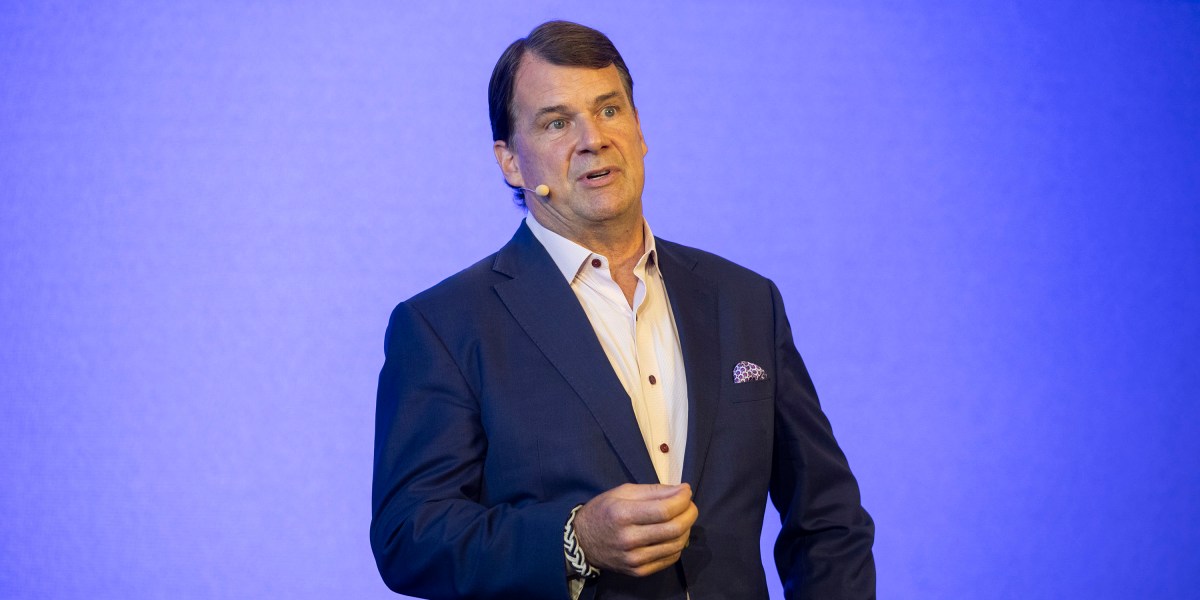
Ford CEO Jim Farley says America's skilled-trades shortfall has become too large — and too varied by region and occupation — for any employer or state to solve alone. He spoke alongside a new report from the Alliance for America's Skilled Trades.
The day before, Farley and JPMorgan CEO Jamie Dimon announced Michigan LIFT (Launchpad for Industrial Innovation and Transformation), a $2 billion public-private initiative under which Ford aims to award up to $1 billion in contracts to participating suppliers over the next decade, while the bank aims to provide up to $1 billion in financing to suppliers.
The report finds employers will need to fill about 1.7 million skilled-trades openings each year through 2035. More than 18 million people now work in the trades, contributing an estimated $3.8 trillion to U.S. GDP in 2025. Nearly a quarter of skilled-trades workers are 55 or older, versus 11% who are younger than 25. The alliance was launched this summer by Ford, BlackRock, Google and Carhartt.
6. One year after the EV tax credit ended, is the future still electric?
Source: NPR
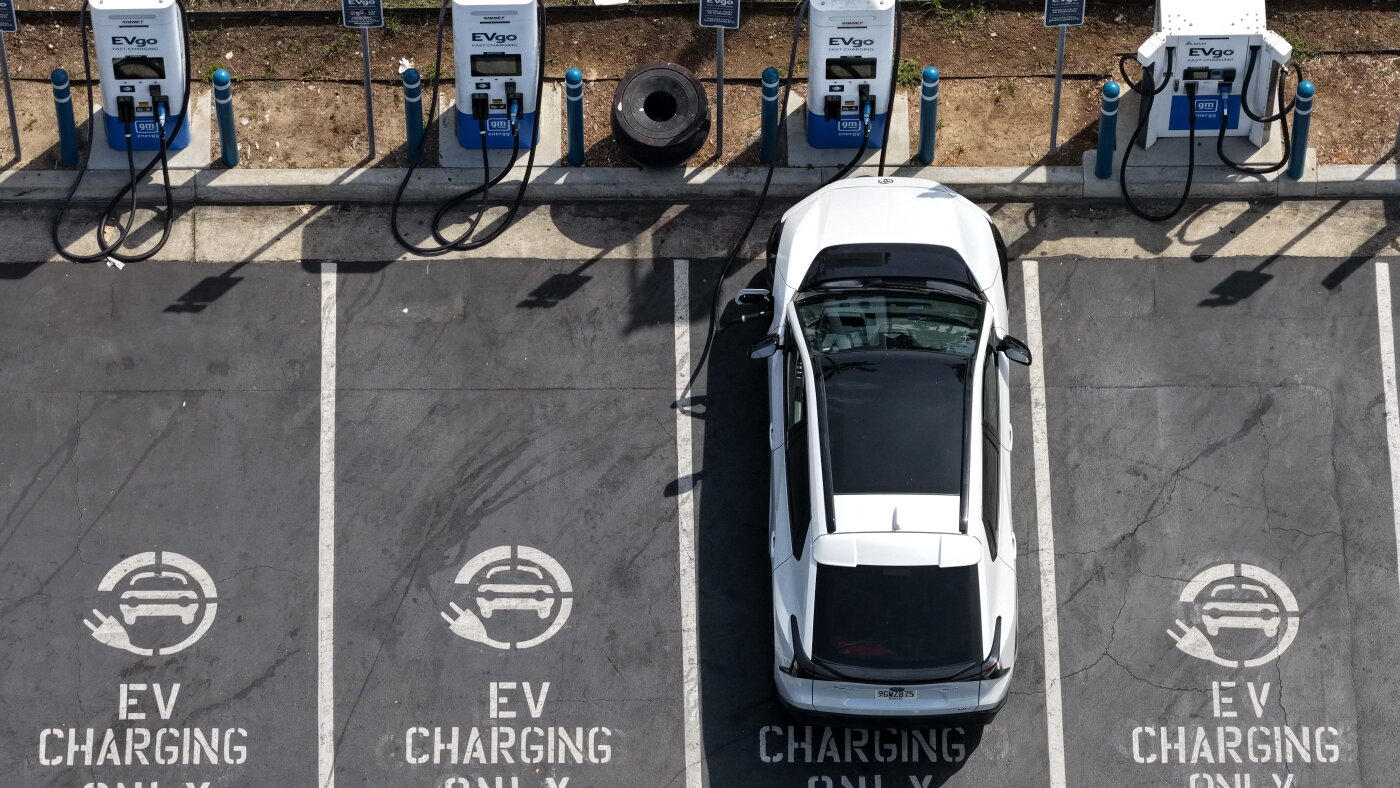
One year ago today, the auto industry bid farewell to a hefty federal tax credit that helped lower the cost of electric vehicles, after Congress killed it as part of 2025's One Big Beautiful Bill Act. Buyers rushed to use the credit before it ended on Sept. 30, 2025. Since then, EV sales are down — but they haven't fallen off a cliff.
Edmunds data show EVs swelled to 11.4% of new car sales in September 2025 but only 5.8% a month later. Cox Automotive data show sales fell in the two quarters after the credit expired, down 36% year over year in late 2025 and 27% in the first quarter of 2026. This year sales have been sluggish but stable, at roughly 5% to 6% of new car sales.
Meanwhile, hybrid sales are surging — up almost 27% nationally over the past year, per Edmunds. Sal Iqbal, general sales manager at a Toyota dealership in Massapequa, New York, said Siennas that once sat on the lot are now impossible to keep in stock. The shift may reflect both the credit's end and gasoline prices hovering around $4.50 a gallon nationally.
7. Watchdog finds no criminality in Fed renovation that drew Trump's scrutiny
Source: NBC News
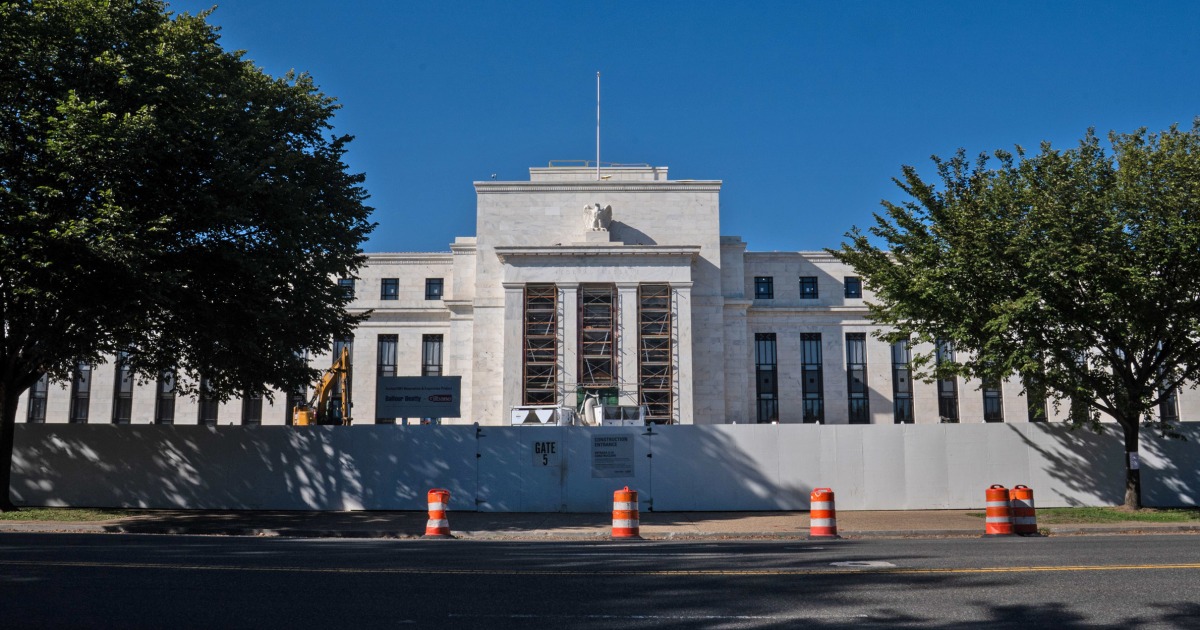
The Federal Reserve's independent watchdog said Wednesday it found no reasonable grounds to believe there was a violation of federal law in a multibillion-dollar renovation project that drew criticism from President Donald Trump. But the central bank's board “had not effectively executed” a contract and its cost-management provisions.
The 120-page report from the Office of the Inspector General for the Board of Governors did not identify administrative misconduct nor reasonable grounds to believe a federal criminal law was violated. It said cost overruns resulted from inflation, limited subcontractor bidding, substantial interior design changes and challenging site conditions.
Later Wednesday, Trump blamed the overruns on former Fed chair Jerome Powell, writing on Truth Social that “this is Jerome Powell's fault, and he should be forced to resign, IMMEDIATELY!” New Fed chair Kevin Warsh told Inspector General Michael Horowitz that the General Services Administration would be the project executive, effective immediately. After four years of construction and more than $2 billion in awarded costs, the board had not established a guaranteed maximum price.
8. Taxpayers have been subsidizing Meta's AI data centers: report
Source: Gizmodo
Meta has been using a controversial technique to score a tax credit, according to a new report from the New York Times. If true, taxpayers could have been subsidizing Meta's AI data center expansion for the past two years. When filing taxes, Meta describes the AI data centers as “pilot models” in a precarious experiment, letting it claim the research and experimentation tax credit.
Thanks to the method, the Times reports Meta has claimed billions of dollars in tax credits over the past two years, becoming the biggest publicly traded beneficiary of the credit. The “supplies” behind those rebates are the chips Meta buys for its AI data centers, sourced from Nvidia, the report says; Meta's auditor EY has since pitched the tactic to other AI companies.
Citing four people with knowledge of the company's operations, the report says Meta's own accountants worry the classification sits in a gray area and that the IRS could overturn the savings. Even with the credit, the AI investments are straining Meta's finances: free cash flow for the latest quarter fell to just $784 million, a roughly $8 billion drop from a year earlier.

9. BMW built the same car for gas and electric — the EV is $4,400 cheaper
Source: TechCrunch
For years, automotive analysts predicted EVs would become cheaper than their gas equivalents. BMW has now given a like-for-like example: the 2027 BMW 3 Series comes in both gas and electric versions, and the EV is $4,400 cheaper.
The gas-powered M350 xDrive costs $65,900, while the electric i3 50 xDrive costs $61,500, neither including destination charges. They are similarly powerful and styled and aimed at similar buyers; the EV is 6.7% cheaper. They are built on different platforms, with the i3 using BMW's newest chassis and technology.
The gas 3 Series has a range of about 450 miles per tank in all-wheel drive, while the electric i3 travels 468 miles on a full charge; BMW says its fast charging can add 208 miles of range in 10 minutes. The article notes that EVs have long cost more up front while delivering a lower total cost of ownership — but now they are gaining the upper hand on purchase price too.

10. Mortgage rates jump for a sixth straight week, hitting demand hard
Source: CNBC
Mortgage rates climbed for a sixth straight week, reaching the highest level since November 2023 and pushing weekly demand down 6%, according to the Mortgage Bankers Association's seasonally adjusted index. The average contract interest rate for 30-year fixed-rate mortgages with conforming balances of $832,750 or less rose last week to 7.30% from 7.12%, with points up to 0.75 from 0.73.
Refinance demand was hit hardest: applications fell 9% for the week and were 56% lower than a year earlier, with the refinance share of activity slipping to 38.3% from 39.3%. Purchase applications fell 4% for the week and were 14% lower year over year. MBA economist Joel Kan said government refinances declined 13%, with FHA and VA applications both posting double-digit drops.
Home prices are still rising. The S&P Cotality Case-Shiller index showed prices up 1.9% nationally in July from a year earlier, up from a 1.6% gain in June. Buyers hunting for savings pushed adjustable-rate mortgages — about 80 basis points below fixed loans — to 10.3% of applications, the highest share since October 2025. Per Mortgage News Daily, the 30-year fixed rate rose further to 7.58% to start this week.

More News
- Maple Express | September 30, 2026 Toronto mayoral candidate Alexander unveils plan to house the unhoused
- Maple Express | September 30, 2026 Canadians mark sixth National Day for Truth and Reconciliation
- AI Weekly | Trump Rebrands AI 'Super Intelligence' as Rogue Agents and Bubble Fears Close In
- Global Express | September 30, 2026: US Troops Withdraw From Iraq, Iran Hails "Victory"
- Finance Morning Brief: Nikkei Jumps Over 1,000 Points; Korea Posts Worst Q3; China's New Financial-Marketing Rules Take Effect
Comments (0)
View More
 -51%
-51%Oral-B iO2 Electric Toothbrush — Gum Pressure Sensor + 3 Modes! $59.99 CAD (50% Off)
 -41%
-41%TheFitLife Expandable Garden Hose 100 FT — 4.5 lbs, Kink-Free! $34.19 CAD (40% Off)
 -21%
-21%Gain Flings Laundry Detergent Pacs 76 Count — 20% Off! $19.97 CAD
 -60%
-60%Costway 10000 BTU Portable Air Conditioner — 3-in-1 Cooling, Dehumidifying & Fan! $285.99 CAD (59% Off)
 Tech Express
Tech Express | September 30, 2026 — OpenAI Unveils GPT-6.1 Sol at One-Fifth the Price of Astra
 Maple Express
Maple Express | September 30, 2026 Canadians mark sixth National Day for Truth and Reconciliation
-51%Oral-B iO2 Electric Toothbrush — Gum Pressure Sensor + 3 Modes! $59.99 CAD (50% Off)
Amazon
-41%TheFitLife Expandable Garden Hose 100 FT — 4.5 lbs, Kink-Free! $34.19 CAD (40% Off)
Amazon
-21%Gain Flings Laundry Detergent Pacs 76 Count — 20% Off! $19.97 CAD
Amazon
-60%Costway 10000 BTU Portable Air Conditioner — 3-in-1 Cooling, Dehumidifying & Fan! $285.99 CAD (59% Off)
Best Buy
Tech ExpressTech Express | September 30, 2026 — OpenAI Unveils GPT-6.1 Sol at One-Fifth the Price of Astra
Maple Express