Finance Morning: 10-Year U.S. Treasury Yield Tops 5% to Highest Since 2007
Asian stocks were mostly lower Tuesday: the Shanghai Composite fell 0.61%, the Hang Seng slipped 0.56%, the KOSPI dropped 0.85% and Taiwan's benchmark lost 1.46%, while the Nikkei was nearly flat. The 10-year U.S. Treasury yield rose to 5.02%, its highest since 2007, as markets priced a 90% chance of a Fed rate hike this week. U.S. semiconductor shares led losses overnight. China released August credit data, and South Korea launched after-hours trading.
📊 Today's Asia Market
| Index | Close | Change | Change % |
|---|---|---|---|
| SSE Composite | 3864.28 | -23.83 | -0.61% |
| Shenzhen Component | 13287.97 | -183.33 | -1.36% |
| ChiNext | 3247.92 | -37.66 | -1.15% |
| Hang Seng | 24667.24 | -138.36 | -0.56% |
| Nikkei 225 | 63484.10 | -8.89 | -0.01% |
| KOSPI | 6627.26 | -57.11 | -0.85% |
| Taiwan Weighted | 45511.49 | -673.41 | -1.46% |
10-Year U.S. Treasury Yield Tops 5%, Highest Since 2007
Source: Sina Finance
The 10-year U.S. Treasury yield kept climbing. On the 14th it broke 5% in intraday trading for the first time since October 2023, and on the 15th it rose further to 5.02%, the highest since 2007, Xinhua Finance reported. The yield has gained roughly 100 basis points since late February, including about 35 basis points since August 25, in an accelerating climb.
The surge has moved in lockstep with oil prices. Light sweet crude for October delivery on the New York Mercantile Exchange has risen from just above $80 a barrel in late August to above $100 a barrel. U.S. August CPI data showed inflation remains elevated, and inflation worries plus a possible Fed rate hike this week have pushed both short- and long-term yields higher.
CME FedWatch data on the afternoon of the 14th showed the probability of a 25-basis-point hike at this week's Fed meeting has risen above 90%, versus only about 33% a month ago. Analysts note the 10-year yield is closely tied to mortgage, auto loan and credit card rates, so breaching 5% will have a significant impact.
Can a Fed Hike Save Stocks? Wall Street Bets on a Counterintuitive Script
Source: Jin10
According to CME FedWatch, markets see a 90% chance the Fed will raise the upper bound of the federal funds rate from 3.75% to 4% on Wednesday. Rate-hike expectations have firmed since last month, after Fed Chair Kevin Warsh struck a hawkish anti-inflation tone at Jackson Hole in August, and hot inflation data plus rising oil prices pushed bets on a 25-basis-point hike this week higher.
Traditionally, a hike is bad for stocks: higher borrowing costs raise corporate financing pressure and lower the discounted value of future earnings. This time, however, the market's focus has shifted from short-term rates to long-term Treasury yields. On Monday the 10-year yield touched 5% for the first time since 2023, and major U.S. indexes fell across the board.
Several market watchers argue stocks could actually benefit if a hike reinforces the Fed's inflation-fighting credibility and pushes long-term yields lower. Macro Risk Advisors CEO Dean Curnutt, by contrast, expects an 8% to 10% pullback in the S&P 500 and possibly a second wave of declines in December.
UK Gilt Yields Hit New Highs, 10-Year Reaches 5.42%
Source: Sina Finance
British government bond yields hit new highs amid a global bond selloff. Xinhua Finance reported from London on the 15th that the 10-year gilt yield reached 5.42%, the highest since the 2008 financial crisis, while the 30-year yield reached 5.94%, the highest since 1998.
The hard-to-resolve situation in the Middle East is driving global energy prices higher and fueling inflation, pushing up bond yields across developed countries including the UK. Rising yields add difficulty to the UK's autumn budget due next month; with little room to raise taxes further, higher yields will lift government spending and add further pressure on the public finances.
U.S. Chip Stocks Tumble, Philadelphia Semiconductor Index Down Nearly 6%
Source: Eastmoney
On September 14, European and U.S. stocks mostly closed lower, with U.S. tech and semiconductor shares leading the decline and the Philadelphia Semiconductor Index falling nearly 6%. The S&P 500 slipped 0.48% to 7619.98, the Nasdaq fell 0.56% to 26186.41, and the Dow Jones Industrial Average lost 0.29% to 52421.2.
Semiconductor shares fell across the board: TSMC dropped 3.41%, AMD 4.4%, Broadcom 4.77%, Intel 5.59%, ASML 7.25% and Arm 9.74%. Worries about another Fed hike, plus tech giants' calls to slow AI development, weighed on growth stocks.
According to CME FedWatch, the probability of the Fed keeping rates unchanged in September is 7.6%, while the odds of a cumulative 25-basis-point hike are 92.4%. U.S. Treasuries faced another heavy selloff, with the 10-year yield breaking above 5%. Rate strategists at Citi, Goldman Sachs and JPMorgan all now expect a hike this week.
China's August Credit Data: Total Social Financing at 464.8 Trillion Yuan
Source: Xinhua Daily
Financial data released by the People's Bank of China on September 14 showed total social financing outstanding reached 464.8 trillion yuan at the end of August, up 7.2% year on year, while broad money supply M2 rose 7.5% to 356.81 trillion yuan. Tian Xuan, dean of Peking University's Guanghua School of Management, said both indicators are growing above 7% and are broadly in line with nominal economic growth.
In the first eight months, net corporate bond financing reached 2.79 trillion yuan, up 1.23 trillion yuan year on year; government bond net financing was 8.77 trillion yuan; and domestic equity financing by non-financial firms was 470 billion yuan, up 203.1 billion yuan. Bonds and equities now account for more than 50% of the increase in total social financing, clearly exceeding loans and up nearly 20 percentage points from five years ago.
Under structural monetary policy tools, credit is flowing more toward new growth drivers such as technology innovation and green transition. In August, the weighted average rate on newly issued corporate loans was slightly below 3%, about 0.2 percentage point lower than a year earlier, while the rate on new personal housing loans was about 3.1%, unchanged from a year earlier.
CATL Slumps 6% to a One-Year Low
Source: Sina Finance
On the afternoon of September 15, battery giant CATL extended its decline to more than 6%, with its share price at 316.36 yuan, a one-year low. From its record high set on May 7, 2026, the stock has fallen more than 32%, and its combined A- and H-share market value has slipped below 1.5 trillion yuan.
In Hong Kong, CATL also fell more than 6% to 513 Hong Kong dollars, its lowest since March 10 this year.
COFCO Fortune Starts IPO Tutoring, Eyes A-Share Listing
Source: Sina Finance
According to the China Securities Regulatory Commission website, COFCO Fortune Co., Ltd. has completed its tutoring filing with the Shanghai bureau, with CSC Financial as its sponsor. COFCO Fortune is the core operator of COFCO Group's grain, oil and food segment, with registered capital of about 3.095 billion yuan. Its edible oil market share ranks among the industry's top four, and its 2022 revenue exceeded 500 billion yuan.
The Fortune brand was once listed on the Hong Kong main board via China Agri-Industries Holdings in 2007, before being privatized and delisted in 2020. In 2021 the company signed a tutoring agreement with CICC, and in February 2023 it completed a 21 billion yuan strategic financing round, bringing in investors including the National Social Security Fund, COSCO Shipping and Temasek.
The road to listing has not been smooth. A tutoring report disclosed in July 2026 showed intensive management reshuffles and a long-standing vacancy of two independent directors. Former chairman Xu Guanghong has since resigned and was replaced by Ye Huiqing, COFCO Group's chief accountant, moves seen by the market as a signal of accelerating its capital-market push.
Hong Kong Midday: Hang Seng Down 0.23%, Tech Index Up 0.76%
Source: Sina Finance
On September 15, Hong Kong's three main indexes were mixed. At midday, the Hang Seng Index was down 0.23% at 24859.45, the Hang Seng Tech Index rose 0.76%, and the HSCEI fell 0.15%. Internet shares were mostly higher, with NetEase up more than 3% and Tencent and Alibaba up over 2%, while Lenovo slipped more than 1%.
Chip stocks led gains, with Montage Technology up 7%. Lithium battery stocks weakened, with CATL down more than 3%, and gold stocks were soft, with Tongguan Gold down over 3%.
Weighed by Middle East tensions pushing oil higher and the 10-year U.S. Treasury yield breaking 5% intraday, the U.S. dollar index rose to around 99.5, and spot gold briefly fell below $4,300. Markets now price about an 87% chance of a 25-basis-point Fed hike this week.
Japan, South Korea Stocks Rebound; SoftBank Jumps Over 5%
Source: 21st Century Business Herald
On September 15, Japanese and South Korean stocks opened lower before rallying. As of 8:40 Beijing time, the Nikkei 225 turned positive, rising 0.41%, while South Korea's KOSPI reversed losses to approach 6,700. Among heavyweights, SK Hynix and Samsung Electronics turned higher, up 0.24% and 0.3% respectively.
SoftBank Group rose more than 5% after plunging over 10% the previous day; Kioxia gained more than 3% after falling over 6% the prior day, while Tokyo Electron and Advantest edged lower. According to Cailian Press, Japanese memory-chip maker Kioxia Holdings is considering a U.S. listing via American depositary receipts, aiming to raise at least $10 billion.
South Korea Enters the 8 P.M. Close Era
Source: Sina
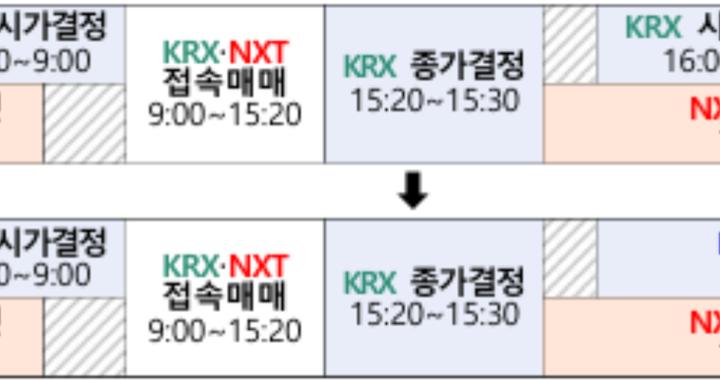
South Korea's stock market has officially entered the era of an 8 p.m. close. Under a Korea Exchange announcement, after the regular session ends at 3:30 p.m. local time on Monday, investors can keep trading in a newly created after-hours market until 8 p.m.
After the regular session (9 a.m. to 3:30 p.m.), there is a 30-minute after-hours fixed-price session, followed by after-hours trading from 4 p.m. to 8 p.m. The Korea Exchange's after-hours market covers about 2,400 stocks on the Kospi and Kosdaq, including short selling, but ETFs and ETNs are excluded for now.
To manage liquidity pressure, only limit orders are allowed, not market orders. Korean regulators hope to attract more foreign capital, though retail investors still dominate after-hours trading so far. The exchange plans to launch pre-market trading in 2027 and eventually move toward 24-hour trading.
More News
- Global Express | September 15, 2026 Saudi-Led Coalition Vows 'Firm' Response to Houthi Strikes as Yemen Fighting Escalates
- Tech Express | Sep 15, 2026 Apple Releases iOS 27 with 50 New Features
- Sports Express | Sep 15, 2026 Kawhi Leonard Trade Official, Returns to Raptors
- Maple Express | September 15, 2026 Teenage Boy Killed in North York Shooting
- Finance Evening | Carney Pitches Canada at Toronto Summit; Treasury Yields Near 5% Rattle Tech Stocks
Comments (0)
View More
 -46%
-46%GE SmartWater MWF Refrigerator Water Filter — Certified Original Replacement, Clean Water Every Pour! $54.99 CAD (45% Off)
 -47%
-47%LONGVACATION 20" Luggage Set (3-Piece) — Carry-On + Duffel + Toiletry, YKK Zipper & TSA Lock! $119.99 CAD (47% Off)
 -43%
-43%VersionTECH. Ergonomic Gaming Mouse — 7-Color LED, 4 DPI! $14.99 CAD (42% Off)
 -25%
-25%LEGO Classic Large Creative Brick Box 10698 — 790 Pieces with Storage! $56.98 CAD (24% Off)
 Finance Evening
Finance Evening | Carney Pitches Canada at Toronto Summit; Treasury Yields Near 5% Rattle Tech Stocks
Finance MorningFinance Morning: 10-Year U.S. Treasury Yield Tops 5% to Highest Since 2007
-46%GE SmartWater MWF Refrigerator Water Filter — Certified Original Replacement, Clean Water Every Pour! $54.99 CAD (45% Off)
Best Buy
-47%LONGVACATION 20" Luggage Set (3-Piece) — Carry-On + Duffel + Toiletry, YKK Zipper & TSA Lock! $119.99 CAD (47% Off)
Amazon
-43%VersionTECH. Ergonomic Gaming Mouse — 7-Color LED, 4 DPI! $14.99 CAD (42% Off)
Amazon
-25%LEGO Classic Large Creative Brick Box 10698 — 790 Pieces with Storage! $56.98 CAD (24% Off)
Amazon
Finance EveningFinance Evening | Carney Pitches Canada at Toronto Summit; Treasury Yields Near 5% Rattle Tech Stocks
Finance Morning