
Tech Express | August 20, 2026 ChatGPT Recovers After Global Outage Lasting About an Hour
Tech Express today: ChatGPT recovered after a ~1-hour global outage. Meta launched a Mac AI app. Amazon made Alexa+ free on Fire TV. LG Display unveiled FLiPP maskless OLED. Intel's next two CPUs reportedly add TSMC 2nm, squeezing AMD. Samsung confirmed an Aug 27 Galaxy event (likely S26 FE). iPhone 18 Pro gets three design updates. NASA abandoned the Swift rescue. China completed its first rocket land recovery (Zhuque-3). Xiaomi's new CyberOne robot debuted at WRC.
1. ChatGPT Recovers After Global Outage Lasting About an Hour
Source: BleepingComputer / The Standard
ChatGPT experienced a major outage starting around 8 PM ET on Wednesday, August 19, leaving users worldwide unable to sign in, create accounts, or load chats, including previous conversations. Affected users saw endless loading animations in the sidebar and "too many concurrent requests" errors when sending messages, while new signups and logins on chatgpt.com also failed. The disruption hit users across the globe, including the US and Europe.
The outage also affected OpenAI's coding platform, Codex, with as many as 12 API endpoints listed with issues on the company's status page. OpenAI acknowledged the login problems and said it was "working on implementing a mitigation." According to The Standard, OpenAI later confirmed all services were fully restored; the official status page now reads "fully operational."
2. Meta Launches Mac App for Its AI Chatbot With Window Sharing and Dictation
Source: The Verge
Meta announced on Wednesday, August 19, a new Mac app dedicated to its AI chatbot. Users can share their window with Meta AI, which can provide suggestions, answer questions, or create content based on what's on screen. The app also supports dictation across all apps on the Mac.
The launch comes as Meta positions its chatbot as a productivity-focused assistant competing with desktop apps from Google Gemini, OpenAI ChatGPT, and Anthropic Claude. The new app also brings new capabilities for businesses and creators: across web, mobile, and Mac, it can work directly with Instagram and Facebook accounts, Meta ad campaigns, and Google Workspace. Meta says the AI can analyze a post's reach, likes, shares, and saves to suggest what to post next, pull information to create decks, docs, and spreadsheets, and handle recurring tasks like weekly performance updates.

Original: https://www.theverge.com/tech/982270/meta-ai-mac-app
3. Amazon Makes Alexa+ Free on Fire TV in the US, No Prime Required
Source: TechCrunch
On Wednesday, Amazon said its AI assistant Alexa+ will roll out to all compatible Fire TV devices in the US for free, whether or not the customer has a Prime subscription. Previously, Alexa+ cost $19.99 per month for non-Prime members. The update brings conversational search, smart home controls, and AI-powered recommendations, and users will be upgraded automatically — no app download or subscription signup needed.
Compatible devices include all current-generation Fire TV Sticks, the Fire TV Cube, Amazon Ember smart TVs, and other TVs with Alexa+ built in, including models from Hisense and Panasonic. The move follows an industrywide push to put AI on more consumer electronics: Google brought Gemini to Google TV earlier this year, and Roku upgraded its voice assistant with AI last year. Amazon says Alexa+ customers now have nearly twice as many conversations on Fire TV as they did with the original Alexa.

4. LG Display Unveils FLiPP Maskless OLED Technology: 1.6x Brightness, 2.4x Longer Lifespan
Source: Wccftech
LG Display announced FLiPP (FMM-Less Innovative Pixel Patterning), a new OLED manufacturing technology, on August 20. Compared with the traditional FMM (Fine Metal Mask) technique used to produce RGB OLED displays, the new process is based on photolithography: RGB materials are coated sequentially and precisely positioned, then a precision ultraviolet light removes unnecessary areas during pixel patterning.
LG says large metal masks can sag under their own weight, causing alignment problems and color-mixing defects, and FMMs must be produced for different panel sizes and resolutions, adding complexity and cost. With FLiPP, the aperture ratio of OLED pixels can increase by about 55% under identical conditions, enabling 1.6x higher brightness, 2.4x longer lifespan, and 13% lower power consumption. The technology is being showcased at IMID 2026 in Busan, but LG Display has not announced any specific commercial products or a timeline.

Original: https://wccftech.com/lg-display-introduces-flipp-oled-technology/
5. Intel's Next Two CPU Generations Reportedly Double Down on TSMC 2nm, Squeezing AMD
Source: Wccftech
According to recent reports, Intel's next two processor generations — Nova Lake and Razor Lake — will both leverage TSMC's 2nm fabrication process at least partially, putting AMD at a disadvantage in securing marginal capacity within TSMC's increasingly constrained fabs. Nova Lake is expected to start mass production around January 2027; while initially believed to rely entirely on Intel's own 18A process, recent reports suggest production may be split between 18A and TSMC's N2P.
Razor Lake is expected to split production between Intel's in-house process and TSMC's N2X, a high-performance extension of the N2 platform targeting high-frequency CPUs, AI, and HPC, with technology shifting from FinFET to nanosheet. Reports also say Nova Lake will introduce bLLC (Big Last-Level Cache) to compete with AMD's X3D chips, with top-tier 52-core models featuring up to 288MB of cache and 28-core variants featuring 144MB. Analysts note that by maintaining or even increasing its TSMC allocation, Intel can prevent AMD from securing more server CPU capacity — while also suggesting Intel's 18A process is not yet ready to carry the full burden.

6. Samsung Confirms August 27 Galaxy Event, Likely for the Galaxy S26 FE
Source: 9to5Google
Samsung confirmed on August 19 that it will hold a "Galaxy Event August 2026" on August 27 to introduce "the newest addition to the Galaxy S26 family." The virtual-only event starts at 8am ET / 5am PT and will be livestreamed on YouTube. Samsung says the new device is "purposefully designed to bring many Galaxy S26 experiences from camera to AI, along with the latest One UI."
The new phone is widely expected to be the Galaxy S26 FE. The budget-oriented device is expected to adopt an updated design to match the rest of the series, though leaked specs suggest it will be virtually unchanged from last year's Galaxy S25 FE. A promo image that Samsung says was at least partially AI-generated hints at an updated camera module and the light-green color seen in leaks. The event could also bring the debut of the Galaxy Tab S12 and some upcoming Galaxy Buds.

Original: https://9to5google.com/2026/08/19/samsung-august-event-galaxy-s26-family/
7. iPhone 18 Pro: Three New Design Updates — Unified Colors, Smaller Dynamic Island, Dark Cherry
Source: 9to5Mac
According to 9to5Mac's roundup of rumors, the iPhone 18 Pro and Pro Max launching next month will bring three design changes. First, unified rear glass and aluminum colors: Weibo leaker Instant Digital says the redesigned back glass minimizes the color difference between the glass and the aluminum back panel for a seamless, unified look, addressing the polarizing two-tone design of the iPhone 17 Pro.
Second, a smaller Dynamic Island: rumors say the new cutout will be about 35% smaller, with some Face ID components reportedly moved under the display — though not all, so Apple is not yet moving to a hole-punch design. Third, new colors: at least Dark Cherry, Silver, and Light Blue are expected, with Dark Cherry described as a mix of burgundy, coffee, and deep purple and likely to be the marketing highlight; whether Space Gray/Black returns this year remains a subject of conflicting reports.

Original: https://9to5mac.com/2026/08/19/iphone-18-pro-three-new-design-updates-are-coming-this-year/
8. NASA Calls Off Mission to Rescue Swift Gamma-Ray Observatory
Source: Ars Technica
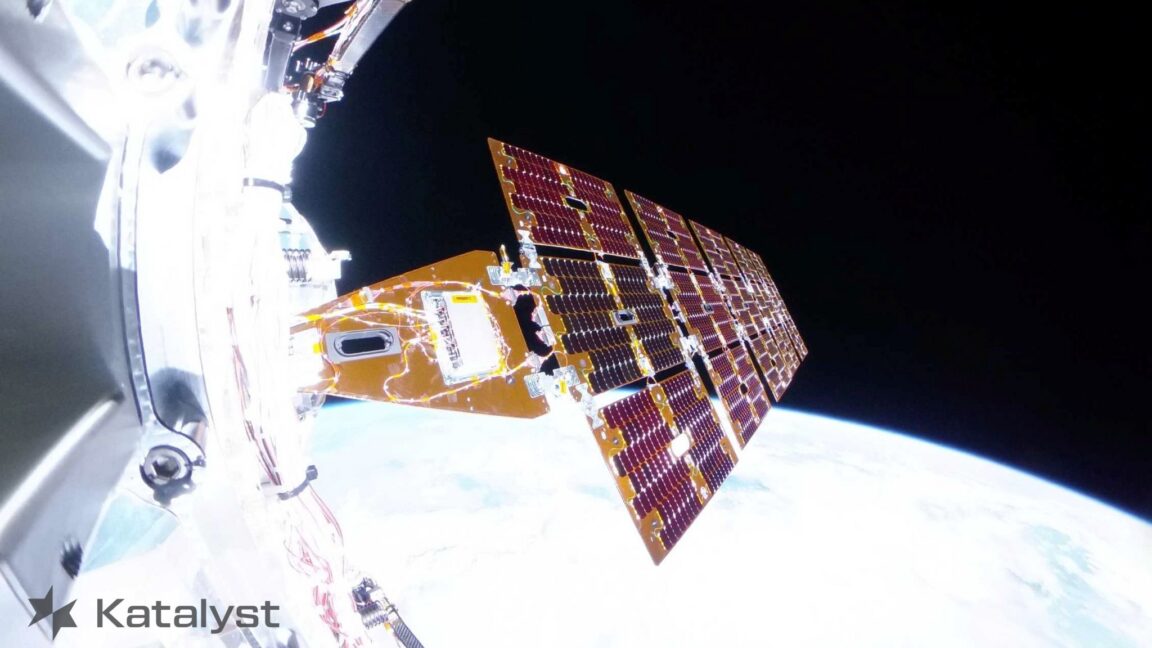
NASA and Katalyst Space Technologies announced Wednesday they are giving up on a robotic mission to rescue the Swift gamma-ray telescope before it falls out of orbit. The rescue satellite, named Link, launched July 3 and is about the size of a refrigerator, with two solar arrays and three xenon-fueled electric thrusters. It was designed to capture Swift with three robotic arms and boost it into a safer, higher orbit.
Katalyst said "ongoing attitude control issues" will prevent Link from completing the rescue. The spacecraft is still alive, and the company will make the most of its remaining capacity, which may still allow a demonstration of the close-in navigation system. In late July, Link suddenly spun out of control: two of its three reaction wheels stopped working, and there were also issues with the cold gas thrusters. NASA awarded Katalyst a $30 million contract less than a year ago, and Katalyst built the satellite in nine months. "This is not the outcome we were working toward, but it does not change why this mission was worth attempting," said NASA Administrator Jared Isaacman. Without a rescue, the nearly 22-year-old Swift mission is expected to reenter the atmosphere later this year.
Original: https://arstechnica.com/space/2026/08/nasa-calls-off-mission-to-rescue-swift-gamma-ray-observatory/
9. China Completes Its First Rocket Land Recovery as Zhuque-3 Booster Lands Precisely
Source: Kuai Technology (via Sina Tech)
On August 19, the Zhuque-3 (ZQ-3) Y2 launch vehicle lifted off from the Dongfeng Commercial Aerospace Innovation Pilot Zone, and its first stage successfully completed a land recovery as programmed. It is China's first successful recovery of a reusable launch vehicle first stage using landing legs — the country's first controlled land recovery of a rocket booster, marking a major milestone in reusable rocket technology.
The Zhuque-3 is a next-generation, low-cost, high-capacity, high-frequency reusable liquid oxygen-methane launch vehicle approved by the China National Space Administration. The rocket is 66.1 meters long, and its first stage is powered by nine Tianque-12A liquid oxygen-methane engines with thrust adjustable from 40% to 110%, enabling vertical recovery and reuse after orbital launches. The mission also validated several technical breakthroughs, including a simplified landing propulsion scheme and upgraded safety control strategies. Yonhap noted the success made up for the failed recovery test of the ZQ-3 Y1 last December, and the achievement drew attention from foreign media including space.com and Reuters.

Original: https://news.mydrivers.com/1/1144/1144925.htm
10. Xiaomi's New "CyberOne" Humanoid Robot Debuts at World Robot Conference: 1.7m, 66 Degrees of Freedom
Source: China.com
At the 2026 World Robot Conference, which opened August 19 in Beijing (running August 19-23), Xiaomi's next-generation humanoid robot "CyberOne" (Tieda) made its first public appearance. The robot stands about 1.70 meters tall, weighs 66 kg, and has 66 degrees of freedom across its body — half of them in the hands. It is currently at the prototype stage. At the "Embodied Garden" booth, it interacted with visitors in real time, scattering flower petals, shaking hands, fist-bumping, and making heart gestures, all driven by a large model for autonomous understanding and decision-making.
Compared with the 2022 original (1.77m, 52 kg, 21 joint degrees of freedom), the new CyberOne represents a generational leap, with more than three times the degrees of freedom and breakthroughs in fine hand manipulation and embodied AI. The robot has reportedly been "interning" at Xiaomi's automobile super-factory for four months, raising its self-tapping screw installation success rate from 90.2% to 98% — just one percentage point below the 99% standard of skilled workers. Xiaomi Group President Lu Weibing has said Xiaomi will not build robots independently but will coordinate with its "human-car-home" ecosystem. Xiaomi plans small-scale commercial deployment by the end of 2026, with consumer pricing at the 10,000-yuan level targeted after 2030.
Original: https://news.china.com/socialgd/10000169/20260820/49687317.html
More News
- Global Express | October 4, 2026 — Houthis Claim Strike on Saudi Aramco Site as Yemen Fighting Escalates
- Finance Weekly | Weak U.S. Jobs Cool October Rate Bets as Eurozone Inflation Hits a Three-Year High
- Tech Express | October 4, 2026 — Apple Offers Free Replacements for Affected iPhone 18 Pro Max Units
- Sports Express | October 4, 2026 — Rasmussen's Near No-Hitter Lifts Rays Past Yankees 1-0
- Maple Express | October 4, 2026 — Debris From Missing Ontario Air Ambulance Found Off U.S. Coast; Six Still Missing
Comments (0)
View More
 -20%
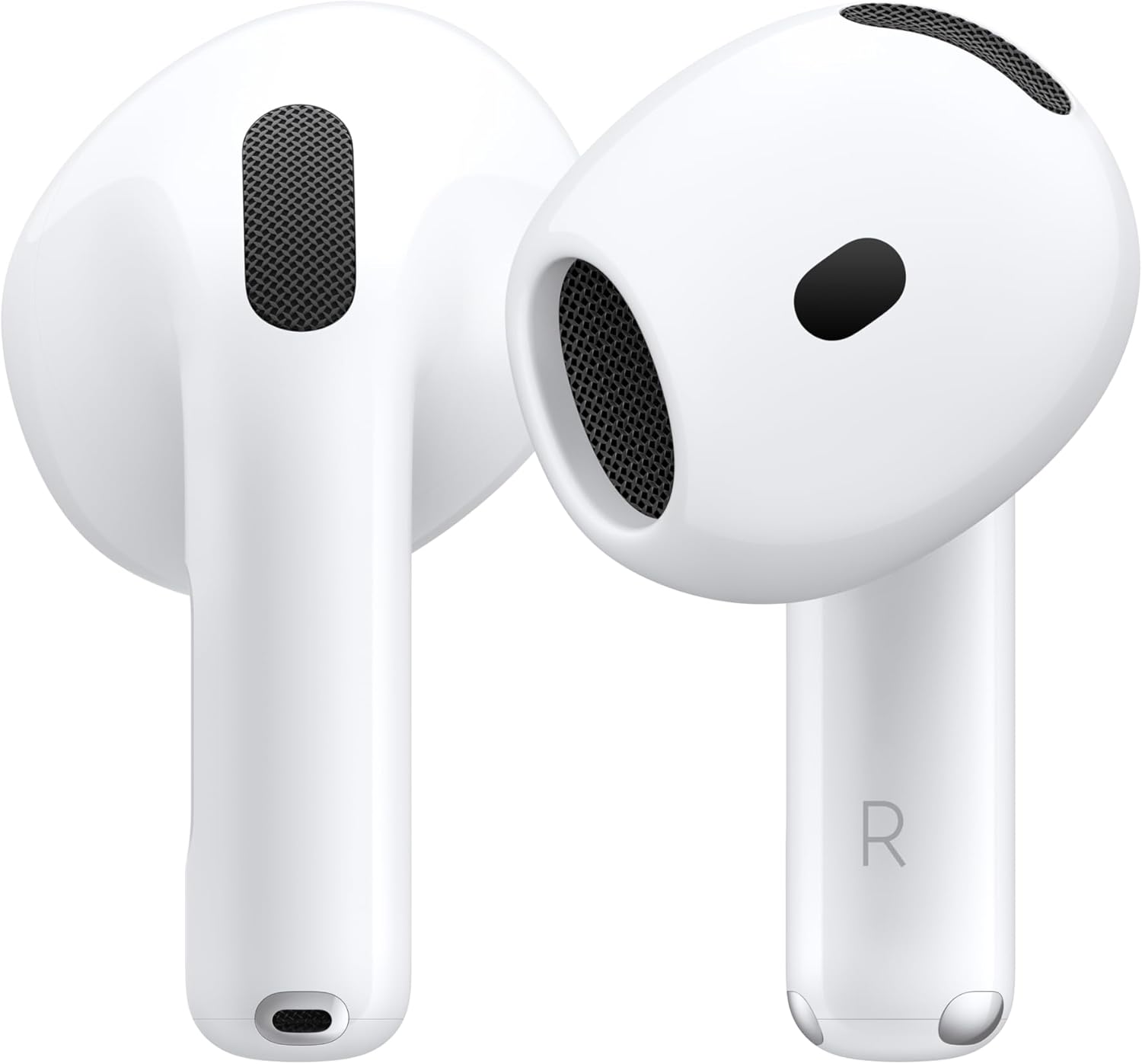
-20%Apple AirPods 4 Wireless Earbuds — H2 Chip, 30-Hour Battery, Spatial Audio! $144 CAD (20% Off)
 -38%
-38%Crayola Twistable Colored Pencils 50ct — Twist to Colour, No Sharpening Needed! $24.19 CAD (38% Off)
 -26%
-26%Breville Espresso Cleaning Tablets, 8 Count — Deep-Clean Your Machine! $14.98 CAD (25% Off)
-23%Apple AirPods 4 with Active Noise Cancellation — H2 Chip & USB-C Case! $194 CAD (22% Off)
 Global Express
Global Express | October 4, 2026 — Houthis Claim Strike on Saudi Aramco Site as Yemen Fighting Escalates
 Sports Express
Sports Express | October 4, 2026 — Rasmussen's Near No-Hitter Lifts Rays Past Yankees 1-0
-20%Apple AirPods 4 Wireless Earbuds — H2 Chip, 30-Hour Battery, Spatial Audio! $144 CAD (20% Off)
Amazon
-38%Crayola Twistable Colored Pencils 50ct — Twist to Colour, No Sharpening Needed! $24.19 CAD (38% Off)
Amazon
-26%Breville Espresso Cleaning Tablets, 8 Count — Deep-Clean Your Machine! $14.98 CAD (25% Off)
Amazon
-23%Apple AirPods 4 with Active Noise Cancellation — H2 Chip & USB-C Case! $194 CAD (22% Off)
Amazon
Global ExpressGlobal Express | October 4, 2026 — Houthis Claim Strike on Saudi Aramco Site as Yemen Fighting Escalates
Sports Express