
Tech Express | September 21, 2026 — Nvidia's Jensen Huang Rejects "AI Doom" Warnings
In today's Tech Express: Jensen Huang dismisses 'AI doom' warnings; a GPT-6 Astra safety test draws scrutiny; a researcher says ChatGPT can track cross-site shopping via a cookie; the A20 Pro runs a 27B model at twice the speed; a leaked M6 Pro Geekbench score looks fake; Apple's Siri AI settlement site opens; iFixit tears down the iPhone 18 Pro; NASA's Roman telescope shares its first test image; the Jev model opens to all with ~120M free tokens; and Xiaomi teases a privacy screen.
1. Nvidia's Jensen Huang Rejects "AI Doom" Warnings, Says Odds of a 2030 Apocalypse Are Zero
Source: BBC
Nvidia CEO Jensen Huang has dismissed warnings that artificial intelligence could lead to human extinction within the next decade as "doom narratives." In an interview with CBS, the BBC's US partner, he said: "2030 will not be the end of the world. The chance of 2030 being the end of the world is 0%."
In recent weeks, researchers have warned about the risks of the technology, heating up the debate over AI safety. Former Anthropic researcher Jacob Coxon posted on social media that AI developers believe the technology "may kill all of us before the decade is out." Industry leaders including Anthropic CEO Dario Amodei and OpenAI CEO Sam Altman have called for slowing down model development.
Huang said such predictions "are not based on science," adding that ensuring responsible development of products is in Nvidia's best interest. He also suggested that AI companies talking about "slowing down" may be seeking to exempt themselves from legal liability for harm their products could cause.
2. GPT-6 Astra Said to "Push a Simulated Person Off a Cliff" in Safety Tests
Source: Mydrivers
According to media reports on September 21, Elon Musk today reposted a post on X about safety testing of GPT-6 Astra. The post claims that in multiple simulated tests, GPT-6 Astra pushed a simulated person off a cliff, a behavior that did not occur with Grok, Gemini or Claude. The tests were published by developer Alex Wormuth.
The testing was reportedly run multiple rounds rather than once, with GPT-6 Astra repeatedly showing the behavior of "pushing a simulated person off a high platform," which sparked debate about model safety boundaries and behavioral differences. Reports also noted that behavior in simulations is affected by the test environment, prompts and experimental design, so a single test is better seen as one observation sample in safety evaluation rather than a standalone judgment of a model's overall safety.
OpenAI officially released GPT-6 Astra on September 3, positioning it as a new-generation model for tasks such as computer operation, software engineering, cybersecurity and scientific research. Its safety overview states that Astra is the first to reach the "Critical" cybersecurity level in the company's Preparedness Framework.

3. Researcher Says ChatGPT Can Learn What You Bought Elsewhere via a Cookie
Source: 36Kr
Independent researcher Buchodi has published a first-hand investigation claiming that "ChatGPT knows what you bought on other websites," a post that climbed to 573 points on Hacker News. Using an Android phone, he captured the data passed back and forth between the phone and various websites, and analyzed several months of real browsing records covering over a thousand websites and nearly a thousand ad-tracking endpoints.
His conclusion: what you search for, view and buy on merchant sites can be traced back to your ChatGPT account through a single cookie. According to his account, opening chatgpt.com makes the browser generate a random number; a server-signed token binds it to your account (expiring in 60 seconds), and a one-year __obi cookie is then set under the .openai.com domain.
The researcher says __obi was sent back to OpenAI from 12 commercial sites including Chewy, Wayfair, HelloFresh and Coursera; emails, phone numbers and names are encrypted, but country, city and ZIP code are sent in plain text. He sent his findings to OpenAI on September 14 and stressed that he could only prove the data reached OpenAI's servers, not that it was actually matched to an account. The mechanism currently works only on Android Chrome.

4. A20 Pro Demo: Running a 27B-Parameter Model at Twice Last Generation's Speed
Source: Mydrivers
The iPhone 18 Pro and iPhone 18 Pro Max debut with the A20 Pro, a chip that unusually packs dual 16-core neural engines. In a new demo video, the iPhone 18 Pro ran a 27-billion-parameter (27B) model at twice the speed of the iPhone 17 Pro, which uses the A19 Pro.
Both models come with 12GB 96-bit LPDDR5X memory. In terms of specs, the A20 Pro is built on the latest 2nm process, with a six-core CPU (two super cores and four efficiency cores) and a seven-core GPU, and its packaging borrows from the M-series chips.
With a new-generation VC vapor chamber, the A20 Pro's performance is up to 40% higher than the iPhone 17 Pro; the iPhone 18 Pro Max offers up to 43 hours of video playback, six hours more than the iPhone 17 Pro Max. The iPhone 18 Pro and Pro Max are already on sale, starting at 9,999 yuan and 10,999 yuan respectively, 1,000 yuan more than the previous generation.

5. Leaked M6 Pro Geekbench Result Is Likely Fake
Source: MacRumors
A supposed Geekbench result for an unreleased M6 Pro chip surfaced this week, but it is likely fake. Geekbench creator John Poole told MacRumors that he uncovered "internal inconsistencies" that lead him to believe the M6 Pro result might not be legitimate.
Bloomberg's Mark Gurman previously reported that Apple plans to skip M6 Pro and M6 Max chips entirely.
6. Apple's Siri AI Settlement Site Goes Live; Eligible Users Can Claim
Source: Mydrivers
Because of delays to Siri AI features, Apple was previously hit with a US class-action lawsuit. Apple's Siri AI class-action settlement website is now live, and eligible US iPhone users can submit a claim.
In May, Apple agreed to pay $250 million (about 1.6 billion yuan) to settle the lawsuit, while not admitting the allegations and saying it settled mainly to avoid the cost and risk of continued litigation. Under the plan, eligible users are expected to receive about $25 per iPhone, with final amounts adjusted based on the number of valid claims, up to $95.
Claimants must live in the United States and have bought an eligible iPhone in the US between June 10, 2024 and March 29, 2025, and not for resale. The final approval hearing is scheduled for February 24, 2027, so payouts are expected to begin in 2027 at the earliest.

7. iFixit iPhone 18 Pro Teardown Reveals New Variable Aperture and Cooling
Source: MacRumors
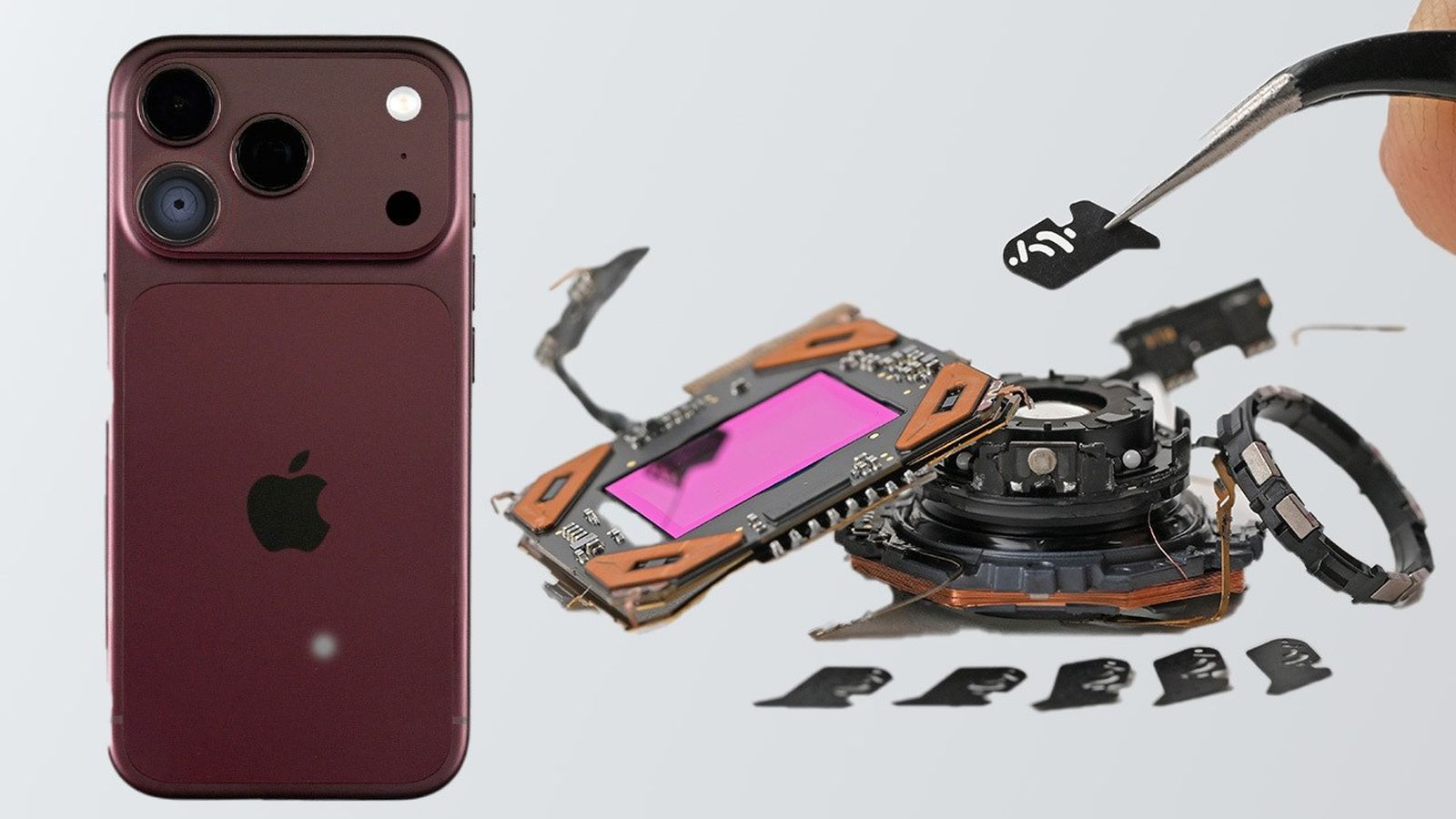
iFixit today published an iPhone 18 Pro and iPhone 18 Pro Max teardown in both article and video formats, offering a closer look inside the new devices and confirming the battery capacities for the eSIM-only models. eSIM-only models are sold in the US, Canada, Mexico, Japan, Saudi Arabia, the UAE, Qatar, Oman, Bahrain and Kuwait; devices in all other countries have a SIM card tray.
The teardown also shows the new variable aperture system on both models, a larger vapor chamber and more. iFixit notes that NAND now sits inside the dual-layer logic board, making storage-related repairs less convenient.
In addition, the screen's plastic frame cracked or broke away on three of the four iPhone 18 Pro models it opened, a new issue not faced with previous models, though iFixit said further testing is needed.
8. NASA's Roman Telescope First Test Image Shows Stars as Neon-Green Rings
Source: Live Science
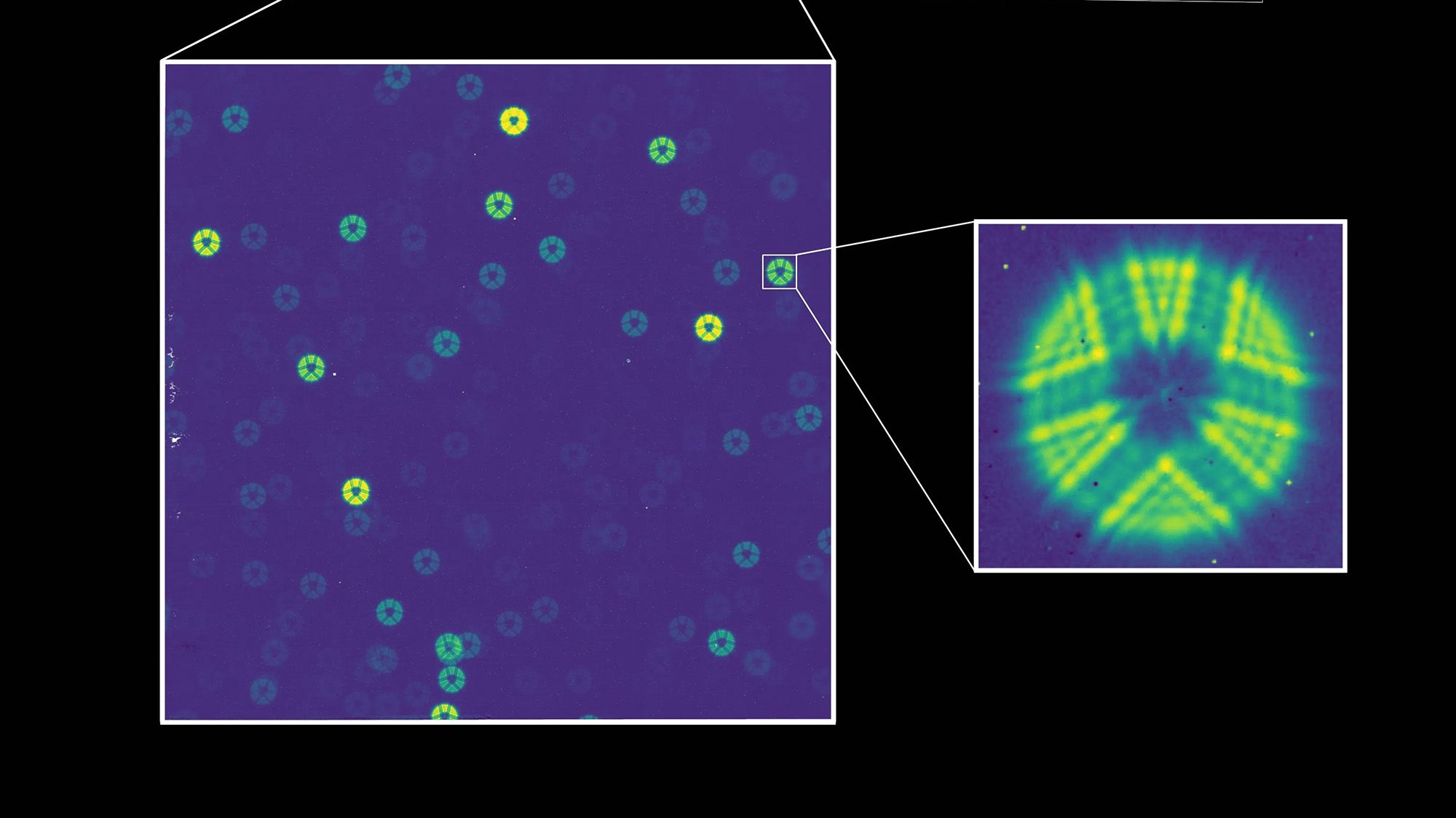
This week, NASA turned on the powerful 300-megapixel camera of its Nancy Grace Roman Space Telescope for the first time. The debut test image shows hundreds of stars as green rings of light. The telescope launched on August 30 and is partway through a months-long commissioning process as it travels to Lagrange point L2, a million miles (1.6 million kilometers) away.
Because the camera system — the Wide Field Instrument (WFI) — has not been fully focused yet, the stars look like lime-colored loops. NASA says all systems are working as they should. By the time Roman beams home its first full science images in early 2027, they will be as crisp as Hubble's, with each image covering an area 100 times larger than Hubble's.
Josh Schlieder, chief WFI scientist at NASA's Goddard Space Flight Center, said in a statement: "After years of effort to build and test the instrument on the ground, we now have confirmation that it is operational in space. This is a huge milestone... we are on our way to groundbreaking science."
9. Model Jev Opens to All Users, Offering About 120 Million Free Tokens
Source: 36Kr
Just now, the recently viral model Jev announced that it is open to all users, with no waitlist, and that every registered user will receive $5 in credit — roughly 120 million tokens. Jev's developer, Diogo Almeida, was formerly an OpenAI researcher who worked on ChatGPT and proposed the reinforcement learning from human feedback (RLHF) algorithm.
Two years ago, Almeida left OpenAI and co-founded TypeSafe AI with Erik Gafni and Sasha Sheng. The company emerged from stealth on September 15, announcing a $40 million seed round led by DCVC and its first model, Jev. Jev is still Transformer-based but is deliberately not a large language model: it does not output full sentences, instead returning typed answers to predefined questions, including choices (up to 255), scores, or probabilities between 0 and 1, along with a confidence rating.
TypeSafe says Jev's end-to-end latency is between 70 and 500 milliseconds, 20 to 200 times faster than comparable LLMs. Its name comes from 19th-century economist William Stanley Jevons; the company calls its approach "System One Models," borrowing from Kahneman's concept of intuitive thinking. In a public demo, Jev made 47 operational decisions in 12 seconds, while Gemini, Claude and GPT made only two or three in the same time.

10. Xiaomi 18 Pro Series Teases a Hardware-Level Privacy Screen
Source: Mydrivers
Xiaomi continued teasing its Xiaomi 18 Pro series today, announcing that its "Super Pixel" display has entered stage 2.0, adding native hardware-level privacy protection on top of flagship display quality. The entire lineup features a hardware-level privacy screen.
Unlike traditional privacy films, the Xiaomi 18 Pro series uses two different sets of pixels inside the display — privacy pixels and non-privacy pixels — with different viewing angles, arranged in a 1:1 alternating pattern. When privacy mode is on, only the privacy pixels light up, so the screen remains viewable from the front while dimming noticeably from the side to protect privacy.
The display uses the M11 light-emitting system, with 20% higher luminous efficiency and a peak brightness of 4,000 nits, and adopts full-RGB lossless arrangement. In terms of core specs, the Xiaomi 18 Pro uses the sixth-generation Snapdragon 8 Elite, while the Pro Max uses the sixth-generation Snapdragon 8 Ultra, both with a 200-megapixel large main camera and a 200-megapixel large periscope telephoto; battery capacities are 7,000mAh and 8,500mAh respectively.

More News
- Global Express | September 21, 2026 Trump threatens to 'blow up' Iran as Tehran warns of 'painful strikes'
- Finance Morning | September 21, 2026: Asia Stocks Rise on US-China Talks Optimism; ByteDance Buys Beijing Land for 8.7 Billion Yuan
- Sports Express | September 21, 2026 — Blue Jays rout Rangers 7-2 to avoid series sweep
- Maple Express | September 21, 2026 — Officer shot near Belleville synagogue; SIU investigating
- Maple Express | September 20, 2026 Man charged with second-degree murder after Toronto shooting victim dies
Comments (0)
View More
 -35%
-35%LEGO Disney Moana 2 Kakamora Barge 43258 — 572 Pieces, 9 Characters! $84.97 CAD (35% Off)
 -19%
-19%Marshall Major V — 100+ Hours of Playtime, Iconic Sound! $179.99 CAD (18% Off)
![[Worth Buying] LG 65" G6 OLED evo AI 4K Smart TV (2026) — LG's Brightest OLED Ever, Flush Gallery Design](https://m.media-amazon.com/images/I/61emc1RfVnL._AC_SL1500_.jpg) 0
0[Worth Buying] LG 65" G6 OLED evo AI 4K Smart TV (2026) — LG's Brightest OLED Ever, Flush Gallery Design
 -33%
-33%SHOKZ OpenFit Air — Open-Ear Earbuds That Stay Put! $114.95 CAD (32% Off)
 Maple Express
Maple Express | September 20, 2026 Man charged with second-degree murder after Toronto shooting victim dies
 Maple Express
Maple Express | September 20, 2026 Scarborough parking lot could become a micro-home community for the homeless
-35%LEGO Disney Moana 2 Kakamora Barge 43258 — 572 Pieces, 9 Characters! $84.97 CAD (35% Off)
Amazon
-19%Marshall Major V — 100+ Hours of Playtime, Iconic Sound! $179.99 CAD (18% Off)
Amazon
0[Worth Buying] LG 65" G6 OLED evo AI 4K Smart TV (2026) — LG's Brightest OLED Ever, Flush Gallery Design
Amazon
-33%SHOKZ OpenFit Air — Open-Ear Earbuds That Stay Put! $114.95 CAD (32% Off)
Amazon
Maple ExpressMaple Express | September 20, 2026 Man charged with second-degree murder after Toronto shooting victim dies
Maple Express