Finance Weekly | A Global Rate-Hike Wave Returns: Fed's First Hike Since 2023, BOJ at a 31-Year High
The week's keyword was hikes: the Fed raised rates for the first time since 2023, the Bank of Japan lifted its policy rate to a 31-year high of 1.25%, and the ECB hiked last week. With the Middle East war unresolved, oil topped $100 and the 10-year Treasury yield broke 5%, as a bond-market tinderbox and AI-bubble fears pressured global stocks. China's August fiscal spending contracted faster, its eight-month deficit at 5.5 trillion yuan, while Canada could balance its budget a year early.
The word of the week in global markets was "hikes." The U.S. Federal Reserve defied White House pressure and delivered its first rate increase since 2023; the Bank of Japan lifted its policy rate to 1.25%, a roughly 31-year high; and the European Central Bank raised rates just last week. With the Middle East conflict showing no resolution, Brent crude broke above $100 a barrel, pushing U.S. borrowing costs to the highest since 2007 and sending the 10-year Treasury yield back above 5%. With a bond-market tinderbox and AI-bubble fears colliding, global equities are under pressure. China's fiscal spending contracted faster in August, taking the eight-month deficit to 5.5 trillion yuan, while Canada, buoyed by firmer GDP and oil revenues, now expects to balance its operating budget a year early and is courting investors beyond the United States.
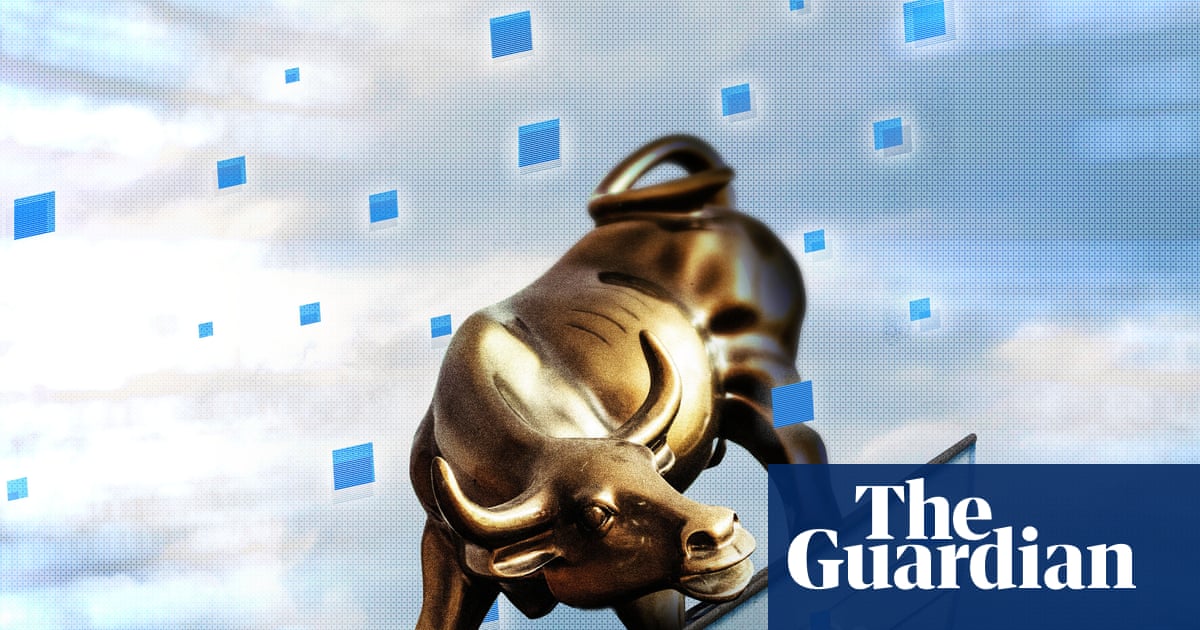
1. Are global stock markets heading for a crash? The bond-market tinderbox is flashing red
Source: The Guardian
At the height of the summer, the mood in the world's financial capitals was optimistic: powered by the AI revolution, U.S. stocks rallied to fresh all-time highs as investors bet a multitrillion-dollar investment spree would overshadow the shock of the Iran war. But as September wears on, the warning lights are flashing red — the Middle East conflict is intensifying with no sign of resolution, the AI arms race faces a slowdown, and tinderbox conditions in the government debt market have thrown markets back into turmoil. Over the past week, U.S. government borrowing costs climbed to the highest since 2007, with knock-on effects for households, businesses and other governments; Trump's tax and spending plans have driven Washington's debt above $40 trillion, and investors fear the war is igniting higher inflation.
The data are just as stark. With global oil prices above $100 a barrel stoking heavy selling in bonds, the S&P 500 sits about 3% below its record high and the "Magnificent Seven" tech stocks are worth more than $20 trillion combined. Albert Edwards, a senior analyst at Société Générale, warned of "febrile times," saying the key worry is how the oil "shock" ripples through the global economy and whether it forces sharply higher rates. The CAPE valuation ratio has risen to almost 41 points — more than double its long-term average of about 17 and approaching the record 44.19 points of December 1999, just before the dotcom crash.
Central banks have pivoted in unison: the Fed delivered its first hike since 2023 this week, the Bank of England is expected to raise four times by the end of next year, the ECB hiked last week, and the Bank of Japan lifted its policy rate to a 31-year high on Friday. Deutsche Bank's Jim Reid calculates that a U.S. recession has historically followed about three to 3.5 years after the first rate rise. The deeper worry is that AI — the market's main hope of redemption — could prove a dud: Fathom Consulting estimates that for the AI boom to turn a profit, AI-related sales would need to rise by $600bn to $800bn within two years, and it puts a 30% chance on the AI bubble popping next year. A Jefferies call on "AI Extinction Warnings" drew more than 1,000 registered investors.
Risk alert: if the AI narrative fails, richly valued tech stocks and elevated bond yields could feed a negative loop. This year, South Korea's retail traders bought AI chip stocks on margin, doubling the blue-chip Kospi before a wave of margin calls hit; Goldman Sachs says about 1.2 million South Korean retail investors were caught — echoing the margin-buying of 1929 and the dotcom bubble of 2000.
2. Can Kevin Warsh calm the U.S. economy?
Source: The Guardian
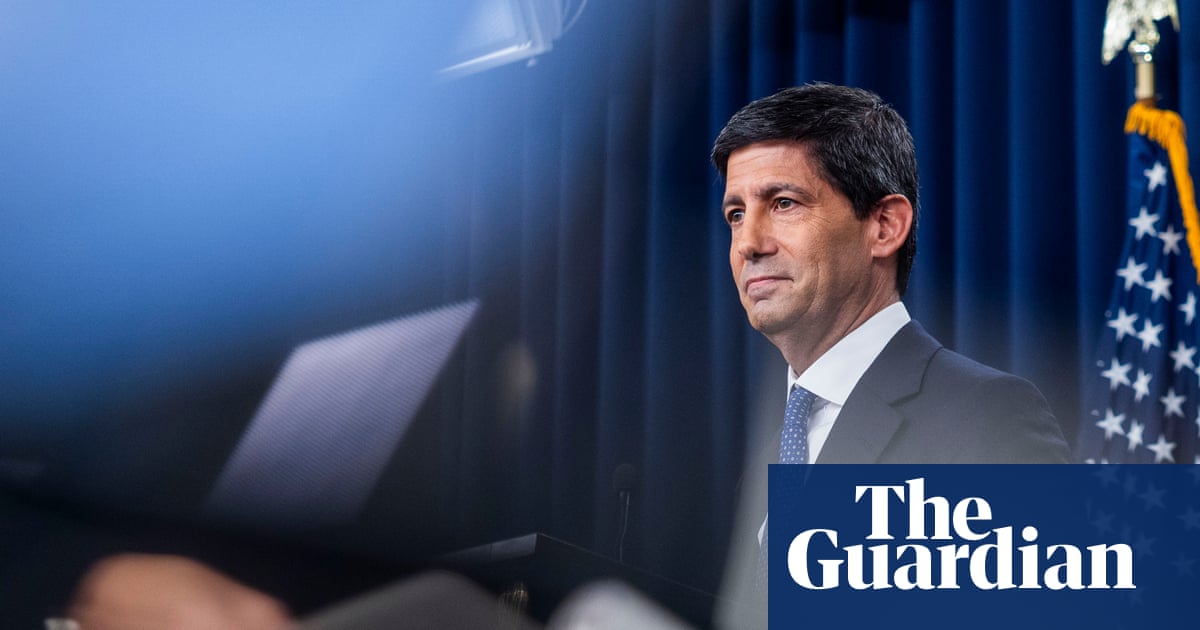
Fed Chair Kevin Warsh presided over a unanimous decision on September 16 to raise interest rates — the first increase in three years. At the prior meeting he had refused to give any indication of how he would tame stubborn inflation, unsettling markets; this time he told the post-meeting press conference: "Today's action starts to show that we're serious about this," with "this" meaning inflation above the Fed's 2% target for more than five years.
The timing is sensitive: it comes just weeks before elections that will determine whether Republicans keep control of Congress. White House economic adviser Kevin Hassett hinted on Fox that if you want an independent Fed, one thing it does is "stay out of the way of elections." Trump had threatened to "STOP TRADING WITH COUNTRIES WITH WHICH WE HAVE A DEFICIT" unless the Fed cut rates. After the hike he went ballistic on social media: "Interest Rates in the United States should be 1%, or less, because we are the Best Credit in the World," again demanding to "LOWER THE INTEREST RATES … AND FAST!" This year's budget deficit is set to exceed $2 trillion.
Markets reacted relatively calmly: the S&P 500 took a nosedive on Wednesday afternoon but closed about 0.4% lower, as investors priced in another hike in December and two more in 2027; the 10-year Treasury yield rose sharply, again surpassing 5%. For now, at least, investors appear to have bought the idea that monetary policy will stay comparatively sane regardless of what the administration does.
Analysts say investors should stay on their toes: a rational president would thank Warsh for his hawkishness, because had the Fed held — or, worse, cut rates as demanded — the bloodbath in the Treasury market would have been gruesome. The real issue is the tension between the Fed's decision and almost every other administration initiative, from sweeping tariffs to the war in Iran.
3. Goldman Sachs blames weak consumer sentiment on 'lower happiness'
Source: CNBC
The disconnect between consumer sentiment and economic data has long puzzled economists. This week Goldman Sachs offered an unconventional explanation: a decline in happiness. The University of Michigan's consumer sentiment index hit record lows this year, falling 13% year over year in September and almost 8% from August alone. Goldman economist Joseph Briggs told clients the downward pressure may stem from broader pessimism in society.
"Low reported economic sentiment likely reflects a more fundamental, downbeat assessment of the state of the world rather than the economy," Briggs wrote. He acknowledged inflation is likely also hurting confidence, but argued that "lower happiness" at large partly explains the persistent gap between sentiment and performance measures such as GDP growth or the stock market.
Briggs cited the University of Chicago's General Social Survey: the share of respondents feeling "very happy" fell to 23% in 2024 from 31% in 2016, while those reporting "not too happy" rose from 13% to 20%, with overall happiness falling more sharply than financial satisfaction. Michigan survey director Joanne Hsu told CNBC the downtrend mirrors decreasing happiness and declining trust in public institutions; Briggs found lower trust caused a "disproportionate amount" of the decline in net happiness.
Outlook: because sentiment is tied to non-economic variables, readings may not improve even if the economy keeps chugging along. Briggs concludes consumer sentiment may become a less useful predictor of economic dynamics — a signal that policymakers and investors relying on it need to recalibrate.

4. China's fiscal pullback deepens as August spending slumps
Source: Yahoo Finance (Bloomberg)
China's public expenditure declined at a quicker rate in August, indicating the government is still withdrawing fiscal support even as growth momentum cools. A measure of broad budget spending fell 6.7% last month from a year earlier, faster than July's 4.4% drop, while broad revenue rose 2.9%, according to Bloomberg calculations based on Ministry of Finance data released on Friday. As a result, the fiscal deficit shrank by a fifth in August, taking the eight-month shortfall to 5.5 trillion yuan ($821 billion).
The deepening pullback in government spending partly explains the persistence of weak domestic demand in August, when consumption growth almost ground to a halt and investment continued to slump. Policymakers are closely watching the economy in the coming weeks as they assess whether additional stimulus is needed to hit the annual growth target of 4.5%–5%.
So far, officials have focused on using existing budget allocations faster rather than rolling out fresh measures. State-owned policy banks have begun deploying funding from a program that can unlock 800 billion yuan, mainly for 2026 infrastructure. Miao Yanliang, chief economist at China International Capital Corp, estimates that government bonds slated for issue but still unsold this year are equivalent to about 1.1% of China's GDP; he said authorities should be able to meet this year's growth target with spending financed by that borrowing.
Risk alert: with consumption and investment both weak and fiscal support actively stepping back, achieving the growth target will depend increasingly on the pace of policy-bank lending and bond issuance; whether stimulus is stepped up in the fourth quarter is worth watching.

5. Tsinghua economist Ju Jiandong: overseas RMB bonds to achieve a 'three-way rebalancing'
Source: China Daily
Ju Jiandong, a chair professor at Tsinghua University's PBC School of Finance, told the 2026 Tsinghua PBCSF Chief Economists Forum in Beijing on Saturday that China-U.S. trade imbalances largely reflect the two countries' differing roles in the global economy rather than Chinese subsidies, exchange rates or other policy distortions. Decades of international specialization, he said, made China a manufacturing center and the U.S. a financial center, naturally producing a Chinese trade surplus and a U.S. deficit.
Ju said China's economy faces three structural imbalances: an external one (a manufacturing surplus already large and still growing); a domestic one (insufficient demand that cannot fully absorb output); and a central-local fiscal one (the center retains fiscal capacity while local governments face tighter constraints and heavier debt). Traditional external adjustment may not work, he warned: relying on renminbi appreciation or trade measures to narrow the surplus could weaken export competitiveness and pressure manufacturing jobs, while the effect on the surplus remains uncertain and the underlying structural surplus might persist.
He proposed internationalizing renminbi-denominated government bonds to achieve a "three-way rebalancing": the central government would issue 10 trillion yuan ($1.49 trillion) of such bonds overseas, raising external liabilities by the same amount. The proceeds would be allocated three ways — 2 trillion yuan to raise the average monthly per-capita pension for urban and rural residents to 1,000 yuan; 4 trillion yuan to buy local government debt and support local fiscal spending and investment; and the remaining 4 trillion yuan for additional central government investment. He added that overseas issuance could also accelerate renminbi internationalization and supply safe assets to global investors.
Outlook: Ju stressed that rebalancing will require long-term structural reform, and that no single policy can simultaneously serve the interests of China and the international community, urban and rural residents, and central and local governments.

6. Commentary: why China is a 'stabilizer' amid global economic challenges
Source: CGTN
Zhou Mi, a senior research fellow at the Chinese Academy of International Trade and Economic Cooperation under the Ministry of Commerce, wrote in CGTN that over the past three decades of globalization, a misdesigned policy or structural defect could trigger a region-wide or even global crisis — the 1997-98 Southeast Asian financial crisis and the 2008 global financial crisis being two serious cases in which China played an important role.
When the 1997 crisis broke out, China was not yet a WTO member. After the Thai baht collapsed amid speculative trading and the shock spread from trade to financial markets and real estate, most Southeast Asian countries chose to depreciate further, while China promised not to devalue the renminbi to defend its economy. Zhou wrote that China kept its word, changing investors' expectations and preventing a further depreciation race, so foreign investors gradually regained confidence — even though China's economy was then relatively small, it shouldered the responsibility of supporting the region's resilience.
In the 2008 crisis, U.S. failure to manage financial risks shook real economic activity and financial markets, with the demand side hit hardest. By then, China had become the world's leading manufacturer and exporter after joining the WTO. Rather than using traditional strengths in textiles, garments and footwear to grab a larger share, Zhou wrote, China made 4 trillion yuan (over $597 billion) of joint public-private investments in new sectors including renewable energy, telecommunications and maritime equipment — freeing up space for other developing countries and building sustainable capacity to tackle climate change, with solar panels, lithium batteries and wind turbines becoming popular in its foreign trade.
The article concluded that China's philosophy is to stand with its friends, rooted in lessons learned over 5,000 years and embodied in initiatives such as the Belt and Road Initiative and disaster-relief cooperation mechanisms — that it is safer to fight potential crises through cooperation than by building walls.
7. Canada's finances: firmer GDP and oil revenues may bring budget balance a year early
Source: CityNews
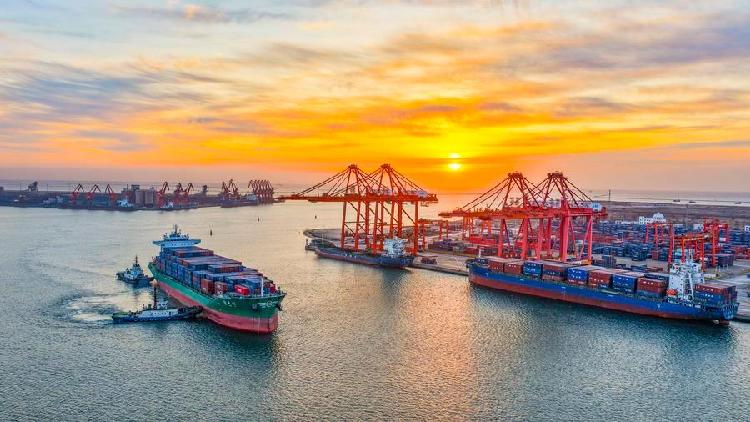
Heading into this week's fall sitting of Parliament, Ottawa likely finds itself in a better fiscal position, thanks to some rosier economic results. One headline from the Canada Investment Summit that flew under the radar: Prime Minister Mark Carney's announcement that the federal government is on track to balance its operating budget a year ahead of schedule. Since taking office in 2025, Carney has reoriented the budget framework toward capital investment to address Canada's long-standing productivity shortfalls; the Liberals have also outlined $60 billion in spending to trim over five years, partly by downsizing the public service.
Carney had promised to balance operating spending within three years so the government would borrow only for capital formation like infrastructure. This week he said that milestone will be hit next year rather than in fiscal 2028 as first promised. John Fragos, a spokesman for Finance Minister François-Philippe Champagne, said a "persisting commitment to fiscal prudence, discipline and spending efficiency" moved up balancing the operating budget by a whole year.
Some experts, however, argue the improvement owes more to the economy than to fiscal prudence. Desjardins deputy chief economist Randall Bartlett noted federal revenues rose 10% year over year from April to June, versus the spring update's roughly 3.5% full-year forecast, helped by solid consumer spending and robust corporate profits — plus global oil prices holding higher for longer. Ottawa turned some of that windfall into a break for motorists via a spring pause on the federal fuel excise tax, which Champagne extended into 2027 this month.
Bartlett estimates Ottawa has announced more than $100 billion in spending over the next 10 years since the spring update, including public money for a proposed oil pipeline from Alberta to the B.C. coast. He said those two countervailing forces should leave the overall deficit trajectory fairly stable and could suppress the debt-to-GDP ratio when the fall budget is published. A new "productivity mega-deduction" tax measure announced at the summit is expected to cost $36 billion over five years.

8. Nunavut and Ottawa look past the United States
Source: Nunatsiaq News
As a longtime partner becomes less reliable, Ottawa, the Government of Nunavut (GN) and Nunavut Tunngavik Inc. (NTI) are showing signs of working around their neighbour to the south. Nunavut Premier John Main was in Toronto's financial district on Monday, pitching the territory's planned major infrastructure projects to global financiers at the first-ever Canada Investment Summit.
Nunavut wants money for four projects: the Grays Bay road and port, the Kivalliq Hydro-Fibre Link, a hydroelectric generator for Iqaluit, and a deepsea port in Qikiqtarjuaq. In a Wednesday statement, Main said: "Nunavut has so much to offer global investors as a territory rich in natural resources and a strong environmental framework for certainty." Meanwhile, former premier P.J. Akeeagok now sits on the Advisory Committee on Canada-U.S. Economic Relations; when a Nunatsiaq News reporter asked about his committee work, he said little about tariffs or trade and instead promoted the four Arctic nation-building projects.
The Nunavut event coincided with Ottawa's first Canada Investment Summit in Toronto. Prime Minister Mark Carney said Canada is trying to attract $1 trillion in investment over the next five years — to put that in perspective, Canada's GDP is about $2.5 trillion. Building big things quickly has been a hallmark of Carney's government since 2025 and is central to his plan to reduce Canada's reliance on U.S. trade.
What stands out is the speed: on Wednesday came news that the European Union wants Canada to become its first "associate member" — a twist no one saw a week earlier. That it surfaced so quickly says a lot about how fast Canada and Europe are responding to Trump's unpredictability; for Nunavut, going to Toronto to attract investors was a smart, bold move.

9. EU fuel prices hit records; diesel margins may not peak until October
Source: Euronews
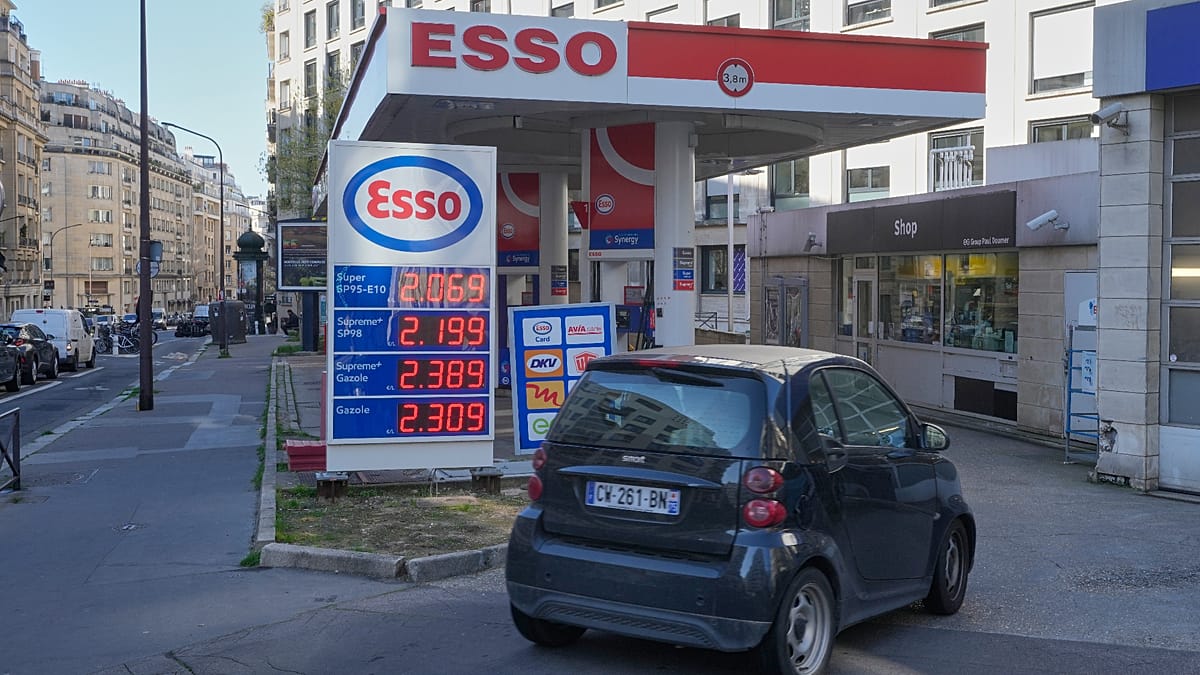
According to European Commission data going back more than two decades, filling up has never cost more on average across the EU. At the latest average prices, it costs about €103 to fill a 50-litre tank with petrol and €108 with diesel. Retail fuel prices have surged since the Middle East conflict broke out, adding to inflationary pressures — Eurozone energy inflation rose to 14.3% in August from 10.3% in July, per the ECB.
The figures are stark: as of 14 September, a litre of petrol cost a weighted EU average of €2.063 and diesel €2.159, both the highest readings in the Commission's series since 2005. Petrol's previous peak was in 2022, while diesel last approached its current level in April. Prices varied widely: petrol was cheapest in Malta (€1.34/litre) and most expensive in Denmark (€2.56); diesel ranged from €1.21 in Malta to €2.51 in Finland.
Crude is not the only driver. Brent crude rose above $126 a barrel at the height of the conflict and was trading above $104 for next-month delivery on Friday, versus about $72 before the war; Saudi Aramco told at least two European refiners they would receive no oil under long-term contracts in October. Refining costs and margins have also risen sharply — ECB experts told Euronews that petrol margins appear to have peaked, while diesel margins are not expected to top out until October. Since the start of 2026, the weighted EU average petrol price has risen about 29% and diesel almost 40%.
The ECB's September 10 monetary policy statement warned that renewed disruption of energy supplies could push energy prices higher for longer. Experts said the key to bringing prices down would be a cessation of the Middle East war, a normalisation of flows through the Strait of Hormuz, and a restoration of global refining activity.
10. Bank of Japan set to hike to 1.25%, a roughly 31-year high
Source: Kyodo News
Kyodo News reported on September 17 that the Bank of Japan began a two-day monetary policy meeting that day and is expected to decide on the 18th to raise its policy rate from around 1.0% to around 1.25%. The meeting will discuss the impact of higher crude oil prices caused by the prolonged U.S.-Iran standoff and the yen's depreciation, to address the risk of sharply rising prices. If the policy rate rises to 1.25%, it would mark a roughly 31-year high not seen since 1995.
If the hike is decided, it would be the first increase in three months since the June meeting and the shortest interval between hikes since the end of negative interest rates in March 2024. The driver is persistent input inflation: higher crude prices and a weaker yen have pushed up the cost of imported energy and food, with the August corporate goods price index up 7.6%, staying elevated. The BOJ expects the pressure to feed through to consumer prices and remains vigilant about inflation overshooting.
External pressure is also evident. The U.S. has stepped up pressure on the BOJ, with Treasury Secretary Scott Bessent repeatedly calling on Japan to correct the yen's depreciation. The U.S.-Japan rate gap is seen as a key cause of the weak yen; after the July meeting held rates steady, the two sides even jointly bought yen to intervene in the currency market.
Outlook: if the BOJ raises rates to 1.25% as expected, it would mark a key step in normalising monetary policy and could further narrow the U.S.-Japan rate gap, swaying the yen and global bond markets. With the Fed hiking in tandem, the picture of major central banks tightening in unison is becoming ever clearer.

More News
- Global Express | September 20, 2026 Saudi Arabia Says Houthis Tried to Attack Riyadh
- Tech Express | September 20, 2026 Over a Dozen Large Models Set to Launch Around China's Double Holiday
- Sports Express | September 20, 2026 — Van outpoints Pantoja to defend UFC flyweight title
- Maple Express | September 20, 2026 Multiple people injured in multi-vehicle crash in Aurora
- Maple Express | September 19, 2026 Two suspects at large after shots fired at a Markham home
Comments (0)
View More
 -42%
-42%Acer Gadget Golf Rangefinder — 1700-Yard Laser with Slope & Anti-Shake! $135.65 CAD (42% Off)
 -39%
-39%UPGOGO 12-Pack Travel Vacuum Bags with Electric Pump — Save 80% Space! $23.99 CAD (39% Off)
 -46%
-46%COZY KISS Orthopedic Dog Bed (XL, up to 140 lbs) — Boat-Shaped Joint Support for Big Dogs! $36.99 CAD (46% Off)
 -48%
-48%ASUS Chromebook CM14 — 14" Full HD Ultra-Portable Laptop! $279.99 CAD (47% Off)
 Maple Express
Maple Express | September 19, 2026 Two suspects at large after shots fired at a Markham home
 Sports Express
Sports Express | September 20, 2026 — Van outpoints Pantoja to defend UFC flyweight title
-42%Acer Gadget Golf Rangefinder — 1700-Yard Laser with Slope & Anti-Shake! $135.65 CAD (42% Off)
Amazon
-39%UPGOGO 12-Pack Travel Vacuum Bags with Electric Pump — Save 80% Space! $23.99 CAD (39% Off)
Amazon
-46%COZY KISS Orthopedic Dog Bed (XL, up to 140 lbs) — Boat-Shaped Joint Support for Big Dogs! $36.99 CAD (46% Off)
Amazon
-48%ASUS Chromebook CM14 — 14" Full HD Ultra-Portable Laptop! $279.99 CAD (47% Off)
Best Buy
Maple ExpressMaple Express | September 19, 2026 Two suspects at large after shots fired at a Markham home
Sports Express