
Tech Express | October 8, 2026 - Microsoft Unveils Surface Laptop Ultra, the First Laptop With Nvidia's RTX Spark Chip
Today's tech roundup: Microsoft unveils the Surface Laptop Ultra, the first laptop with Nvidia's RTX Spark chip, from $2,599, on sale October 16. Google's SynthID detector now checks AI watermarks from OpenAI, Nvidia and more, and Google Labs debuts Playground for text-to-game creation. Huawei's Ascend chips hold 50% of China's AI accelerator market versus Nvidia's 8%. The first RTX Spark laptops reach $7,000, and the FCC will vote October 29 on banning Chinese labs from testing US electronics.
1. Microsoft Unveils Surface Laptop Ultra, the First Laptop With Nvidia's RTX Spark Chip
Source: The Verge
Microsoft wrapped up a big Windows and Surface-focused keynote in San Francisco. The headline announcement was the release details for its new Surface Laptop Ultra, powered by Nvidia's Arm-based RTX Spark chip. A configuration with an 8-core CPU, 24GB of RAM, and 512GB of storage starts at $2,599 and goes on sale October 16. The laptop also uses built-in magnetic USB-C charging instead of the proprietary Surface Connect magnetic port.
Microsoft also announced that the Surface RTX Spark Dev Box, a mini PC for developers, is available for preorder at $5,999 ahead of shipping in November. The company detailed upcoming Windows updates, including a "Hybrid Intelligence" feature that lets Copilot use files on your PC to take actions, and a new search experience that lets you perform quick actions from the search bar.
The Verge also described the reliability testing behind Surface devices: in a windowless, warehouse-like lab on Microsoft's Redmond, Washington, campus, the team programs robots to press buttons thousands of times, blasts devices with radio waves from giant antennas, and builds contraptions that drop objects from increasingly daring heights. RTX Spark marks Nvidia's entry into Arm-based PC chips, making the Surface Laptop Ultra its debut platform.
2. Google's SynthID Detector Goes Global, Checking AI Watermarks From Multiple Companies
Source: Ars Technica
Google announced that its SynthID detector now supports watermarks from all its partners and is available to anyone on a new dedicated website, SynthID.com. SynthID is an invisible signal encoded in the pixels of AI-generated images and videos and in the waveform of AI audio. Google says Gemini alone has integrated SynthID with over 180 billion images and videos, plus 240,000 years of audio.
Until now, people outside Google could only check for SynthID by asking Gemini, a clunky process whose answers could be confusing. Now you can go to the website to check whether a piece of content carries an AI watermark; the site tells you whether SynthID was used to produce or edit the media. The previous detector only checked for Google's version of SynthID. It now supports the distinct watermarks of all its SynthID partners, including OpenAI, Nvidia, Kakao, and (soon) Apple.
You have to log in to use the tool, and it supports Google, OpenAI, and Apple accounts. Each user gets a daily quota of roughly 10 image, video, and audio checks. Google engineers told Ars that limiting access is necessary to prevent people from using the checks to develop SynthID removal tools.
3. Google Labs Launches Playground, Building Browser Games From Text Prompts
Source: TechCrunch
Google's public incubator and experimental platform, Google Labs, launched a new AI-powered game-creation platform called Playground that lets users build browser-based games using simple text prompts, with no coding expertise required. Creators can select a genre such as trivia or racing, or start from scratch, and can specify whether they want a 2D or 3D game and a single-player or multiplayer experience before describing the desired mechanics, gameplay, and visual style.
Playground also lets users upload visuals that its AI can transform into game assets tailored to the game's art style. Once created, games can be played on both mobile devices and computers. Projects can remain private, be shared through a link, or be published to Playground's Explore gallery; published games can support features such as leaderboards, and creators can keep modifying them after release. Google said it plans to add Unity Spark integration in a future update for more 3D capabilities.
Playground is initially available to users aged 18 and older in the U.S., with Google planning to expand to more countries. Browsing and playing games is free, while game generation relies on a weekly token system: the free tier provides a limited number of tokens, and Google One AI subscribers receive higher usage limits.

4. Huawei Says Its Ascend Chips Hold 50% of China's AI Accelerator Market as Nvidia Falls to 8%
Source: Mydrivers (Kuai Technology)
Huawei management recently told media that, based on measurable data, its AI accelerators are now more popular than Nvidia's in the Chinese market, according to Kuai Technology on October 8. Citing institutional statistics and data released at Huawei's Connect conference, Huawei's Ascend AI chips have reached a 50 percent share of the Chinese market, surpassing Nvidia's 8 percent. In 2022, Nvidia held 95 percent of the Chinese market while Ascend held just 3 percent.
Huawei rotating chairman Xu Zhijun acknowledged that, judged on a single chip, Huawei's bottleneck is limited access to advanced process nodes, so the company compensates for the gap with system scale. Huawei introduced the Peerium computing architecture and the UnifiedBus high-speed bus, which can support peer-to-peer interconnection of a million processors. The Atlas 950 supernode built on Peerium is being deployed and tested, with 256,000 compute cards, targeting foundation-model training at the 10-trillion to 40-trillion parameter scale.
On products, the Ascend 950PR (inference) launched in the first quarter of 2026 and is in small-batch supply, while the Ascend 950DT (training) supernode is still in testing with mass supply expected at the end of 2026 or early 2027. Xu said the bottleneck is not demand but supply capacity. Because domestic demand far outstrips supply, Huawei has not expanded overseas on a large scale and only ships small volumes to a few countries; it expects global AI infrastructure supply and demand to balance around 2029.

5. YMTC: Global NAND Shortage Could Last About Three Years, 1TB SSD Prices Top 1,000 Yuan
Source: Mydrivers (Kuai Technology)
Yangtze Memory Technologies Co. (YMTC) staff recently told investors and market participants that the global NAND flash supply shortage could last about three more years, according to Kuai Technology on October 8. Memory prices have risen 5 to 10 times, and NAND prices overall have risen 3 to 5 times, with year-end growth expected to stay in the single digits. The consumer impact is stark: in 2023 a well-known brand's 1TB SSD cost about 300 to 400 yuan and a generic 1TB drive just over 200 yuan, with 1,000 yuan buying 4TB; today a 1TB SSD costs over 1,000 yuan.
The root of the squeeze is AI infrastructure. Data centers' demand for high-capacity enterprise SSDs is growing fast, and NAND capacity is being allocated more to servers and AI-related storage, squeezing supply available to consumer electronics. DRAM is also tight, as the HBM used by AI accelerators consumes ever more wafer capacity.
Even as prices rise, YMTC is shifting production toward higher-margin chips. According to Counterpoint Research, YMTC's NAND market share reached 14 percent in the second quarter of 2026, rising to third place globally for the first time, behind Samsung's 25 percent and SK Hynix's 22 percent, with shipments up 22 percent year over year and 5 percent quarter over quarter. Its third wafer fab in Wuhan is expected to start operating at the end of 2026 and ramp up output in 2027, and the company aims to become the world's largest NAND flash maker before the end of 2027.

6. The First Nvidia RTX Spark Laptops Cost Up to Nearly $7,000
Source: The Verge
The first array of laptops powered by Nvidia's new RTX Spark chip are designed to compete with high-end MacBook Pros, and they carry high-end prices to match. The flagship Surface Laptop Ultra, plus RTX Spark laptops from Dell, Lenovo, MSI, HP, and Asus, start as low as $2,599 for configurations with an 18-core CPU, 24GB of unified memory, and 512GB of storage. That is close to a similarly specced 14-inch MacBook Pro with the M5 Pro chip, though Apple includes 1TB of storage.
Based on the pricing seen so far, a kitted-out Asus ProArt P16 RTX Spark laptop with a 20-core chip, 128GB of unified memory, and 2TB of storage costs up to $6,999.99. The full range of configuration options for Microsoft's Surface Laptop Ultra is not yet known, but a 48GB model on Best Buy is priced at $3,999.99. For comparison, a 16-inch MacBook Pro with an M5 Max chip can be configured to nearly $10,000 if you max out all options.
The first wave of RTX Spark machines is clearly aimed at the high-end side of creators and local AI users. The Surface Laptop Ultra and other RTX Spark laptops are launching this month, as early as October 16.

7. FCC to Vote on October 29 to Ban All Chinese Labs From Testing US Electronics
Source: Lianhe Zaobao
The US Federal Communications Commission (FCC) will vote on October 29 to ban all Chinese laboratories from testing electronic devices such as smartphones, cameras, and computers intended for use in the United States. According to Reuters, the FCC said on Wednesday (October 7) that it would bar testing labs and certification bodies from countries, including China, that do not give US testing labs reciprocal treatment, with the ban planned to take effect in December 2028.
In May last year, the FCC voted to ban Chinese labs deemed a national security risk from testing electronic devices, affecting dozens of labs; the new ban expands the scope. FCC Chairman Brendan Carr said that 82 percent of electronic products were tested in China last year, and that fewer than 4 percent of all electronic devices are tested in labs on US soil. The commission will, he said, insist on fair and reciprocal treatment in international trade.
The FCC also banned imports of all new models of Chinese drones and Chinese-made new models of consumer routers last December; in June this year it banned imports of more devices from Chinese makers including Huawei and ZTE and proposed banning most military-grade drones; and in July it voted to ban the sale in the US of devices containing key hardware from Chinese companies deemed a national security risk.

8. Study: AI's Toll on Young Workers Grows as Entry-Level Automation Narrows the Path to Experience
Source: Huxiu
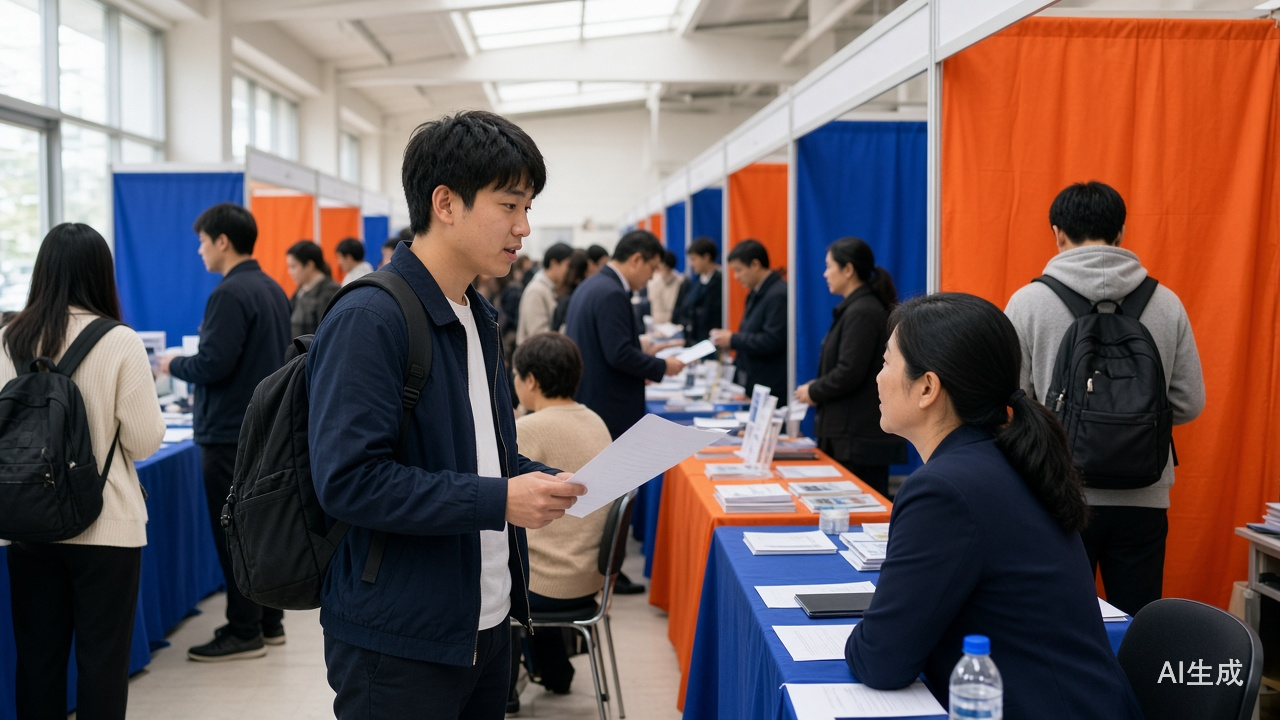
On October 7, the Reuters economics podcast "Reuters Econ World" invited Nela Richardson, chief economist at US payroll company ADP, to discuss AI and employment. ADP works with Stanford University researchers to analyze employment changes by occupation's AI exposure and by workers' career stage. Citing ADP's August data, Richardson said employment for young workers in occupations with high AI exposure fell 4.4 percent year over year, versus a 2 percent decline in occupations with low exposure, a gap of 2.4 percentage points. Software development and customer service fall into the first group, while home care and nursing assistants are relatively less directly affected.
She stressed that the gap cannot be read directly as "AI caused 4.4 percent unemployment": young people are inherently more exposed to economic cycles and hiring pullbacks, and the employment changes in the research are not a confirmed causal effect. What surprised her was a different split: among workers later in their careers, AI currently seems to play more of a supporting role and may even support employment. She argues AI is reinforcing the value of knowledge and experience, since the easiest tasks to automate tend to be those that need little judgment or experience, which is exactly what many newcomers do most when they first join.
Another Stanford Digital Economy Lab study adds to the picture: as of June 2026, workers aged 22 to 25 in highly AI-exposed occupations had formed a roughly 19 percent gap in employment levels relative to the comparison trend for same-age, low-exposure occupations, up from a 15 percent gap in the July 2025 version. The team noted this is a relative trend gap, not an unemployment rate, and that the change mainly reflects fewer hiring opportunities for young people rather than a sudden rise in separation rates among existing employees.
9. IBM Quantum Processor Completes a Calculation in 19 Seconds That Would Take a Supercomputer About 110 Years
Source: Mydrivers (Kuai Technology)
A new research report shows that researchers used IBM's latest quantum processor to complete an extremely complex computation in just 19 seconds, according to Kuai Technology on October 8. The team estimates that giving the exact same task to one of the world's most powerful supercomputers, such as the US Frontier system, would take about 110 years, which is seen as an important milestone in verifying quantum advantage.
The experiment was led by theoretical physicist Tigran Sedrakyan of the US quantum software company BlueQubit, whose team used IBM's latest Nighthawk r2 processor. The chip has 120 qubits and is already commercially accessible through IBM's cloud platform. In the experiment the researchers used 61 of those qubits for a random circuit sampling test of up to 40 cycles; the data showed that Nighthawk r2 generated 1 million computation samples in those 19 seconds.
Random circuit sampling has long been regarded as the standard test for verifying quantum advantage. In 2019 Google announced that its 53-qubit Sycamore processor took 200 seconds to complete a task that was estimated to take a classical supercomputer 10,000 years. Note that the report has not yet been peer-reviewed; it was first posted on the preprint platform arXiv on September 23, and the researchers noted the 110-year figure is an estimate based on a specific classical simulation algorithm, so the gap could shrink if classical computing techniques and algorithms improve.

10. Draconid Meteor Shower Peaks Tonight (October 8), Visible Before Bedtime
Source: Space
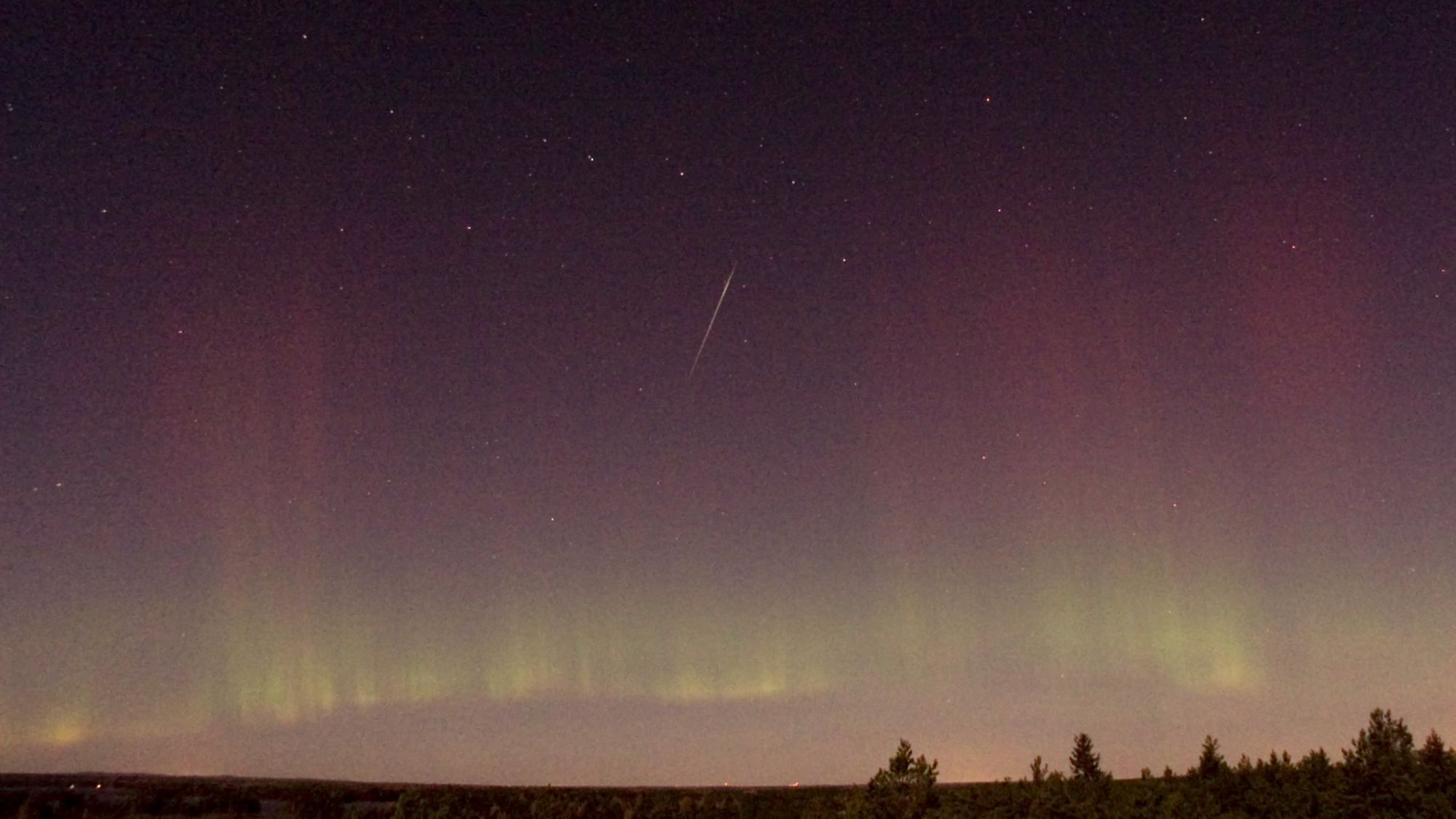
The Draconid meteor shower reaches peak activity on the evening of October 8, under the beautifully dark skies ahead of October's new moon. Unlike most meteor showers, the Draconids are best viewed in the evening, just a few hours after sunset, making them wonderfully accessible to newcomers and veteran meteor hunters alike. The meteors appear to streak away from a radiant in the constellation Draco, whose faint stars can be found high overhead in the northwestern sky after sunset in October.
The Draconids can be spotted from October 6 to October 10, as Earth barrels through the debris stream left by Comet 21P/Giacobini-Zinner, which returns to the inner solar system once every 6.6 years to refresh the trail of meteoroids. According to NASA, the shower is expected to reach maximum activity around 9 p.m. EDT on October 8 (0100 GMT on October 9).
To watch, find a patch of sky roughly 40 degrees away from the radiant and allow 30 minutes for your eyes to fully adapt to the dark. Under ideal conditions the Draconids can produce around 5 meteors per hour at peak, but are capable of spectacular displays on rare occasions: in 1933 observers in Europe watched an astonishing 500 shooting stars per minute, and in 2018 another brief outburst sent rates above 100 meteors per hour. The comet's most recent passage through the inner solar system was in March 2025.
More News
- Global Express | October 8, 2026 — Houthis Claim Missile Strike on Riyadh Airport as Explosions Heard in Saudi Capital
- Finance Morning Brief: US Stocks Fall on Rate-Hike Bets; A-Shares Slip After Holiday as Bank Shares Hit Records
- Sports Express | October 8, 2026 — Rays Sweep Yankees to Reach First ALCS Since 2020
- Maple Express | October 8, 2026 — Toronto parents scramble as five child-care centres close
- Finance Evening: Bond Sell-Off Lifts Treasury Yields to 24-Year Highs; Meta's Muse Tops App Charts
Comments (0)
View More
 -39%
-39%Webber Naturals Women's Daily Probiotic, 30 Capsules — 25 Billion Cells, 10 Strains! $20.87 CAD (39% Off)
 -44%
-44%LEGO Christmas Table Decoration 40743 — 433-Piece Holiday Centerpiece! $31.34 CAD (43% Off)
 0
0Worth It: Nintendo Switch 2 Pro Controller — The Best Way to Play!
 -53%
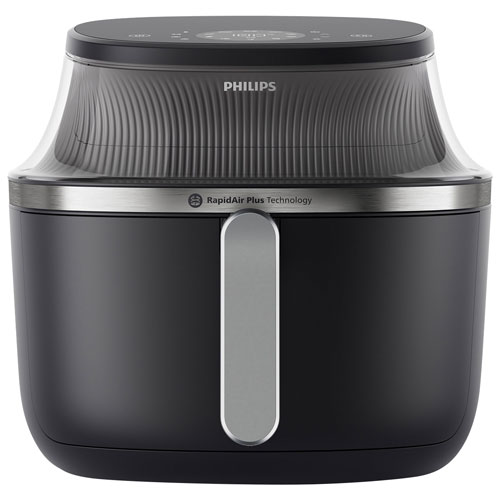
-53%Philips 3000 Series Air Fryer with Window — 6.2L & RapidAir Plus, Up to 90% Less Fat! $99.99 CAD (52% Off)
 Global Express
Global Express | October 8, 2026 — Houthis Claim Missile Strike on Riyadh Airport as Explosions Heard in Saudi Capital
 Finance Evening
Finance Evening: Bond Sell-Off Lifts Treasury Yields to 24-Year Highs; Meta's Muse Tops App Charts
-39%Webber Naturals Women's Daily Probiotic, 30 Capsules — 25 Billion Cells, 10 Strains! $20.87 CAD (39% Off)
Amazon
-44%LEGO Christmas Table Decoration 40743 — 433-Piece Holiday Centerpiece! $31.34 CAD (43% Off)
Amazon
0Worth It: Nintendo Switch 2 Pro Controller — The Best Way to Play!
Amazon
-53%Philips 3000 Series Air Fryer with Window — 6.2L & RapidAir Plus, Up to 90% Less Fat! $99.99 CAD (52% Off)
Best Buy
Global ExpressGlobal Express | October 8, 2026 — Houthis Claim Missile Strike on Riyadh Airport as Explosions Heard in Saudi Capital
Finance Evening