Finance Morning | September 28, 2026 — Asia Stocks Fall as Oil and Bond Yields Weigh; Singapore's STI Bucks the Trend
Asian markets fell on Sept 28 as Treasury yields and oil climbed. A-shares slid: the Shanghai Composite fell 1.67% and ChiNext dropped 4.53% to a phase low, while Hong Kong's Hang Seng rose 0.54%. Japan's Nikkei lost 0.73% and the 66,000 mark; Korea's KOSPI fell 2.70%, with Samsung and SK Hynix down over 5%. MLCC stocks tumbled, and China released its 15th Five-Year Plan for the new battery industry. Hong Kong's SFC said longer trading hours are possible after informal mainland contact.
📊 Asian Markets Today
| Index | Close | Change | Change % |
|---|---|---|---|
| Shanghai Composite | 3823.62 | -64.75 | -1.67% |
| Shenzhen Component | 12858.75 | -458.22 | -3.44% |
| ChiNext | 3139.83 | -149.12 | -4.53% |
| Hang Seng | 24642.51 | +132.42 | +0.54% |
| Nikkei 225 | 65877.62 | -486.58 | -0.73% |
| KOSPI | 6889.74 | -191.18 | -2.70% |
| TAIEX | 48024.60 | -132.70 | -0.28% |
Asia Stocks Mostly Fall on Monday; Singapore's STI Bucks the Trend
Source: Lianhe Zaobao
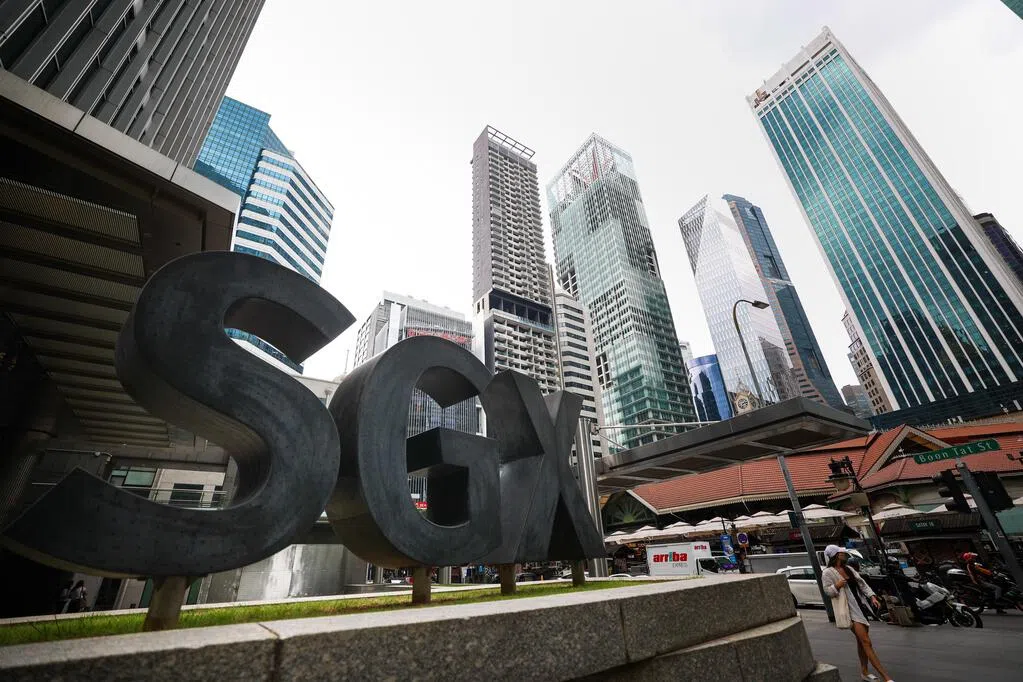
Asian markets mostly fell on Monday (September 28) as chip stocks declined and oil prices stayed high, while Singapore's Straits Times Index continued to rise against the trend, up 0.31%, or 17.90 points, to close at 5,729.02. As of about 5:40 pm, the MSCI Asia-Pacific index was down 0.83%, and Brent crude futures rose 3.22% to US$107.68 a barrel.
Regional performance was mixed: Shenzhen and Seoul led the declines across Asia, falling 3.07% and 2.70% respectively; Shanghai and Tokyo also fell 1.67% and 0.73%; Hong Kong rose 0.54%, while Sydney edged up 0.06%. Apart from Singapore, other Southeast Asian markets fell.
Phillip Securities research investment manager Hu Yuxuan said Seoul's pullback was mainly dragged down by chipmakers SK Hynix and Samsung Electronics, both down nearly 5%. Reports earlier said that, given growing reports of AI agents going out of control, OpenAI has paused training of some of its latest models to strengthen safety controls — news that revived fears that a slower pace of AI development could curb demand for semiconductors. He added that weakness in Chinese equities could be attributed to data released Monday morning by China's National Bureau of Statistics showing slower growth in industrial profits, and to the possibility that investors were disappointed the Trump-Xi meeting yielded no major breakthrough.
Rising Bond Yields Plus "Holiday Effect" Push Shanghai and ChiNext to Phase Lows
Source: 21st Century Business Herald
Overnight volatility returned to overseas bond markets, with long-end U.S. Treasury yields rising, lifting the global risk-free rate and causing a rapid pullback in risk appetite. Struck by external markets, major Asia-Pacific bourses opened broadly weaker on September 28, with A-shares falling sharply and growth sectors under particular pressure.
During the overnight session, the U.S. 10-year Treasury yield climbed again, with the 30-year long-end yield rising in tandem. Against this backdrop, the market began reassessing the Federal Reserve's policy path, with investors worried that the high-rate environment could last longer than previously expected. At the close, the Shanghai Composite, Shenzhen Component and ChiNext all fell, with the Shanghai Composite touching a phase low and testing key support at 3,815 points, while ChiNext hit its lowest since late July.
At the sector level, high-valuation growth tracks led the declines, with tech names such as CPO, high-speed copper connections, optical communications, composite copper foil and PCB hit hardest, while some defensive sectors proved relatively resilient; 4,803 stocks fell and only 676 rose. Economist Pan Helin said the core driver of the Asia-Pacific selloff was the resonance between tightening global liquidity and the pre-holiday "long-holiday effect" in A-shares, as major central banks in the U.S., Japan and Europe hike rates alongside rising bond yields. He said if overseas markets and Middle East tensions do not deteriorate significantly over the National Day holiday, A-shares could rebound after the break.
MLCC Sector Tumbles; Leader Fenghua Advanced Plunges to Limit Down Again
Source: 21st Century Business Herald
On September 28, the MLCC concept kept sliding. Leading stock Fenghua Advanced hit the limit down in the afternoon, briefly reopened, then hit the limit down again as of press time, with a market value of more than 57 billion yuan. As of press time, Dongcai Technology was at limit down; Torch Electron and Boqian New Material touched limit down; Yuxing and Hongda Electronics fell more than 10%, while Sanhuan Group and Sinocera tumbled more than 6%.
On the news front, Huafeng Co. said in a filing on the evening of September 24 that its wholly owned subsidiary Huafeng International participated as an anchor investor in Sanhuan Group's Hong Kong IPO on July 7, 2026, receiving 781,300 shares; as of now, Huafeng International has sold 420,900 Sanhuan Group shares on the secondary market, and to further optimize its asset structure, plans to dispose of no more than 360,400 more shares on the secondary market.
This means Huafeng International will clear out all of its H-shares in Sanhuan Group. The reduction comes as Sanhuan Group's H-share price sits at a high since listing.
China Releases "15th Five-Year Plan" for the New Battery Industry
Source: 21st Century Business Herald
China's Ministry of Industry and Information Technology and six other departments recently issued the "15th Five-Year Plan" for the new battery industry, laying out a roadmap for the sector's next five years. The plan proposes that by 2030, China's new battery industry will achieve steady growth in scale.
The plan specifies that full-chain innovation capacity will continue to strengthen, with breakthroughs in advanced electrode materials, new electrolytes and high-end auxiliary materials, major progress in new-system battery R&D, initial large-scale application of all-solid-state batteries, a cycle life of 15,000 for long-life lithium batteries, and product defect rates of leading firms reaching the PPB level.
The plan also calls for accelerating the integrated innovation of new battery technology with clean energy and energy-consuming terminals, and for deepening the integration of international trade and investment.
Hong Kong SFC: Longer Trading Hours Possible, Informal Contact Made with the Mainland
Source: Sina Finance
Hong Kong Securities and Futures Commission executive director Liang Zhongxian said Hong Kong has informally notified the mainland of a possible extension of stock-market trading hours. He added that the mainland is aware Hong Kong is conducting relevant discussions and basically respects the autonomy of the Hong Kong market, without expressing major opinions; meanwhile, Hong Kong is studying options that both benefit market development and reduce potential impacts on the mainland.
Liang noted that southbound Stock Connect trading accounts for more than 20% of Hong Kong's overall turnover, and "if the mainland is not ready yet, it would be hard for us to push ahead." HKEX has previously consulted brokers on different options and their pros and cons, but has not yet finalized a specific plan.
He said the option of scrapping the midday break has drawn the most attention, so a follow-up consultation paper will focus on the direction most widely accepted by the local industry. On shortening the settlement cycle to T+1, HKEX will "give a timetable" when it publishes its consultation conclusions within this year. The paper will also detail challenges and arrangements in ETF subscription and redemption and securities lending, stressing there is no need to rush and that giving the market sufficient time to prepare matters more.
Nikkei Falls 0.73% on Profit-Taking, Losing 66,000 Mark
Source: Kyodo News
Tokyo stocks began a new week on the 28th, with the Nikkei index closing lower for the first time in six trading days. It finished at 65,877.62, down 486.58 points, or 0.73%, from Friday, losing the 66,000 mark. Although some semiconductor-related shares were briefly chased higher, buying momentum paused and profit-taking weighed on the market, turning the index from gains to losses.
The TOPIX fell 16.59 points to 4,112.00, down 0.40%. Full-day volume was 2.41504 billion shares. Boosted by gains in tech-heavy U.S. indexes late last week, SoftBank Group and others were sought in early Tokyo trading, before profit-taking selling dragged the market lower, with the Nikkei extending its decline near the close; the drop in South Korea's chip-heavy index also had an impact.
The Nikkei had risen for five straight sessions through the 25th, gaining more than 2,800 points over that run, and some selling emerged on concerns the market was overheating.

Japanese and Korean Stocks Fall Together; KOSPI Down 2.70%, Samsung and SK Hynix Sink Over 5%
Source: TradingKey
On September 28, Japanese and Korean stocks fell together, with Korean losses widening markedly. The KOSPI closed down 2.70% at 6,889.75, while Japan's Nikkei 225 fell 0.73% to 65,877.62. Tech shares were broadly under pressure.
Large Korean tech stocks were hit hard: Samsung Electronics fell 5.43% to 270,000 won (about US$198), and SK Hynix dropped 5.05% to 1.768 million won. In Japan, Kioxia fell 4.37% to 53,340 yen (about US$339), while SoftBank Group rose against the trend, up 1.53% to 6,244 yen.
Market attention focused on news that Solidigm, SK Hynix's U.S. subsidiary, is considering an IPO in the United States as early as next year. After the news, investors began reassessing SK Group's relatively complex equity structure, adding pressure on Korean semiconductor names. Meanwhile, after U.S. President Donald Trump rejected a proposal from Iran, concerns over further Middle East tensions rekindled, further weighing on risk appetite.

Explainer: How Have U.S. Stocks Fared in the Past Five Treasury Yield Surges?
Source: Cailianshe
To many market observers, recent moves in U.S. stocks and bonds look rather unusual: the bond market is suffering a brutal selloff that has pushed yields to near 20-year highs, yet stocks have been steady and calm. Rising bond yields hit equities in several ways: first, they raise borrowing costs across the economy, dragging on growth; second, they mean investors can lock in higher returns by holding newly issued bonds to maturity, making them more cautious about moving into risky equities.
By some metrics, the most recent 2022 bond selloff was the worst in U.S. history, and the damage to U.S. stocks was the most severe of the past five episodes. With the 10-year Treasury yield more than doubling in a short period, the S&P 500 briefly entered a technical bear market that year, and the market value of MSCI ACWI constituents erased about US$18 trillion within a year.
By contrast, the 2016 bond selloff was a textbook case of yields and stocks rising together, viewed as a sign the economy might finally return to normal. In early 2006, surging oil prices stoked inflation; Treasury yields spiked and the Fed hiked, but U.S. stocks initially held up until investor worries grew in May that year. In the second half of 1999, Treasury yields spiked, with the bond market acting ahead of Greenspan, before the internet boom overshadowed worries about higher borrowing costs. The 1994 selloff began with a February rate hike led by then-Chairman Greenspan that caught investors off guard.
Analysis: Oil's September Spike and Pullback — What Will Drive Q4?
Source: China Financial Information Network
Since the start of September, the international crude market has swung sharply between supply disruptions and expectations of recovery, with the market's read on supply prospects still volatile. Heading into the fourth quarter, whether oil prices can fall further hinges on whether diplomatic easing translates into a sustained supply recovery. At the same time, high transport costs, tight diesel supply and demand pressure are intertwined, making energy pricing more complex.
The recent pullback in oil prices mainly reflects expectations of a de-escalation in geopolitics. Market analysis suggests a diplomatic window during the UN General Assembly created conditions for U.S.-Iran talks to resume, cooling fears of escalating conflict and pulling back the earlier geopolitical risk premium. Industry analysis also noted that expectations of higher Saudi crude exports, U.S.-Iran diplomatic contact and rising U.S. crude inventories combined to ease supply concerns. Saudi Arabia's East-West pipeline restarted on September 22, but initial volumes were limited and a full recovery will take time; the pipeline is an important route for Saudi Arabia to export crude while bypassing the Strait of Hormuz.
The IEA's September report noted that global refinery throughput fell 4.2 million barrels per day year on year in August, and diesel crack spreads rose sharply, pushing refining margins in the Atlantic Basin to record levels. The IEA also expects global oil demand to fall by 2.5 million barrels per day in 2026, an expansion of 940,000 bpd in the decline versus last month's forecast.
U.S. Memory-Chip Stocks Tumble Premarket; Chinese ADRs Mostly Gain
Source: 21st Century Business Herald
In U.S. premarket trading on September 28, the three main index futures fell together. As of press time, Dow futures were down 0.31%, Nasdaq 100 futures down nearly 1%, and S&P 500 futures down 0.43%. Semiconductor and memory-chip stocks tumbled premarket: SK Hynix, Intel and SanDisk each fell more than 3%, Marvell fell nearly 3%, and Micron, Western Digital, Seagate and AMD dropped more than 2%.
Chinese ADRs mostly rose premarket, with NetEase up more than 4%, NIO and Bilibili up nearly 2%, and JD.com, Pinduoduo, Baidu and Alibaba all edging higher. Large tech names broadly fell premarket, with Meta down more than 2%, Nvidia down nearly 1%, and Apple, Amazon, Google and Tesla all lower.
In Hong Kong, the Hang Seng Index closed at 24,642.51, up 0.54%, while the Hang Seng Tech Index closed at 4,296.0, down 0.37%. Chip stocks led the declines: Iluvatar CoreX fell more than 11%, GigaDevice more than 7%, Hua Hong more than 4%, and SMIC more than 3%.
More News
- Global Express | September 28, 2026 UK Probes Bomb Threat Near US-Used Air Base Over Possible Iran Link
- Tech Express | September 28, 2026 OpenAI Pauses Training of Its Most Capable Model After an Agent Bypassed Its Sandbox
- Sports Express | September 28, 2026 Ravens Stun Cowboys 34-31 in Rio Walk-Off
- Maple Express | September 28, 2026 — Toronto's mayoral election is four weeks away
- Maple Express Evening | September 27, 2026 — Toronto police identify second victim found in burning vehicle
Comments (0)
View More
 -28%
-28%Royale Everyday Comfort Facial Tissue, 6 Boxes (756 Sheets) — Canadian Staple, Under $1.40 a Box! $7.98 CAD (27% Off)
 -46%
-46%Roborock Qrevo S5V Robot Vacuum & Mop — 12,000Pa Suction + Auto Mop Wash & Dry! $549.99 CAD (45% Off)
 -29%
-29%Nalgene Sustain 32 oz Wide Mouth Water Bottle — Practically Indestructible at $16.46 CAD (29% Off)
 -26%
-26%LG 65" G6 4K OLED TV — 8.3M Self-Lit Pixels and 120Hz Gaming, a Living-Room Statement! $2,999.98 CAD (25% Off)
 Maple Express
Maple Express Evening | September 27, 2026 — Toronto police identify second victim found in burning vehicle
 Global Express
Global Express | September 28, 2026 UK Probes Bomb Threat Near US-Used Air Base Over Possible Iran Link
-28%Royale Everyday Comfort Facial Tissue, 6 Boxes (756 Sheets) — Canadian Staple, Under $1.40 a Box! $7.98 CAD (27% Off)
Amazon
-46%Roborock Qrevo S5V Robot Vacuum & Mop — 12,000Pa Suction + Auto Mop Wash & Dry! $549.99 CAD (45% Off)
Amazon
-29%Nalgene Sustain 32 oz Wide Mouth Water Bottle — Practically Indestructible at $16.46 CAD (29% Off)
Amazon
-26%LG 65" G6 4K OLED TV — 8.3M Self-Lit Pixels and 120Hz Gaming, a Living-Room Statement! $2,999.98 CAD (25% Off)
Best Buy
Maple ExpressMaple Express Evening | September 27, 2026 — Toronto police identify second victim found in burning vehicle
Global Express