
Finance Morning: Hang Seng Tumbles Below 24,000 in Six-Month Worst Drop; Fed Officials Hint at October Pause
Asia-Pacific markets ended mixed on Oct 2: Hong Kong's Hang Seng fell 2.6% below 24,000, its worst daily drop in six months; Japan's Nikkei 225 lost 0.94%; South Korea's KOSPI rose 0.46%; the Shanghai Composite gained 0.31%; Taiwan's index hit a new closing high. Several Fed officials signaled no hike in late October, and UK 30-year gilt yields topped 6%, highest since 1998. In China, digital yuan cross-border links expanded and EV startups reported September deliveries.
📊 Asia Market Close
| Index | Close | Change | % Change |
|---|---|---|---|
| Shanghai Composite | 3842.19 | +11.74 | +0.31% |
| Shenzhen Component | 12887.62 | -14.33 | -0.11% |
| ChiNext | 3135.28 | -7.29 | -0.23% |
| Hang Seng | 23972.29 | -640.98 | -2.60% |
| Nikkei 225 | 68309.46 | -647.26 | -0.94% |
| KOSPI | 7003.74 | +32.39 | +0.46% |
| Taiwan Weighted | 48475.74 | +535.64 | +1.12% |
1. Digital yuan cross-border connectivity keeps expanding (Source: CCTV)
The Digital RMB International Operations Center said that after the first 26 financial institutions signed up, another 39 domestic and overseas institutions submitted applications by the end of September to join the CBETS cross-border settlement platform as direct participants, steadily expanding digital yuan cross-border connectivity.
CBETS supports two-way links with overseas monetary authorities' payment systems and central bank digital currency systems, and also lets overseas financial institutions connect directly. For cross-border trade it launched the "CBETS LIFT" settlement and investment-financing service. Under the central-bank payment system interconnection model, CBETS is already linked with Hong Kong's Faster Payment System (FPS) and Laos' LAPNet, and is piloting digital yuan cross-border payments in Singapore. The overseas version of the digital yuan app now supports wallet registration with phone numbers from more than 210 countries and regions.
2. EV startups' September deliveries: Leapmotor leads, Li Auto last (Source: Sina Finance)
On October 1, Chinese EV startups released September delivery data. Leapmotor delivered 105,656 vehicles, up 58.51% year on year, its third straight month above the 100,000 mark, keeping it atop the delivery rankings and among the global top four EV brands.
XPeng delivered 41,256 vehicles, down 0.78% year on year; January-September deliveries totaled 284,267, down 9.24%. NIO delivered 37,408 vehicles, up 7.65%, including 21,318 under the NIO brand (+55.29%), 7,327 Firefly (+26.87%) and 8,763 Onvo.
Li Auto delivered 31,817 vehicles, down 6.29% year on year and 15.56% month on month, ranking last. Brands are stepping up overseas expansion alongside domestic launches.
3. Shandong Gold launches asset securitization, to inject quality mines (Source: Sina Finance)
Shandong Gold announced that its controlling shareholder Shandong Gold Group and Shandong Gold Nonferrous Mining Group have fully launched an asset securitization program, hiring financial advisers, auditors, appraisers and legal counsel to conduct due diligence, mining-rights sorting and asset valuation.
A September 25 progress announcement on the controlling shareholder's commitment to avoid peer competition showed no change to the original terms, only an update on progress, marking the move from planning into implementation.
The integration sets clear admission standards: producing mines must match Shandong Gold's return on equity from the prior year, while non-producing mines need an internal rate of return of at least 8%. The company cautioned that any asset injection still requires internal decisions, state-asset approval and regulatory review, leaving the final outcome, deal size and timing uncertain. Its 2026 interim report showed revenue of 53.588 billion yuan, down 5.6%, and net profit attributable to shareholders of 3.543 billion yuan, up 26.17%.
4. Hang Seng falls below 24,000, worst single-day drop in six months (Source: 21st Century Business Herald)
On October 2, major Hong Kong indices opened lower and fell further, with the Hang Seng Index and Hang Seng Tech Index both dropping more than 3% intraday. The Hang Seng closed below 24,000 at 23,972.29, down 2.6%, its biggest single-day drop in about six months.
The Hang Seng Tech Index fell 2.26%, hitting a new intraday low of 4,111 points, down nearly 25% this year and almost 40% over the past 12 months. Most internet stocks declined: Li Auto fell over 5%; Bilibili, Kuaishou, Xiaomi, XPeng and JD Health about 4%; NetEase and Baidu over 3%; Alibaba and Meituan over 2%.
Huancheng Technology, billed as the "first high-precision AI spatial positioning stock," plunged on the open and closed down more than 47%, with a market value of HK$10.9 billion, shedding HK$9.87 billion from the prior session. It listed on the Hong Kong exchange the previous trading day with a first-day gain of more than 260%.
5. Nikkei slips 0.94% as profit-taking weighs (Source: Kyodo News)
Kyodo News reported that Tokyo's Nikkei index fell 647.26 points, or 0.94%, to close at 68,309.46 on October 2. After recent sharp gains, profit-taking weighed on the market, while rising U.S. crude oil futures also dragged.
The TOPIX fell 40.98 points, or 0.99%, to 4,091.00, with trading volume of 2.51171 billion shares.
The Nikkei had risen nearly 3,500 points over the previous two days, prompting investors to sell overbought shares. Previously strong stocks such as SoftBank Group and chip-equipment maker Tokyo Electron were sold off.
6. South Korean stocks jump in early trade, KOSPI turns positive (Source: Sina Finance)
On October 2, Japanese and Korean stocks opened lower together, with the Nikkei 225 down more than 1% at one point before rebounding quickly to 68,674.19. South Korean stocks surged in early trade, with the KOSPI up 0.24% at 6,987.96.
Overnight, U.S. optical-communication and memory-chip stocks strengthened: Coherent jumped over 10%, Ciena and Lumentum gained more than 7% each, and Micron rose over 3%.
South Korea's government said Friday that September consumer prices rose 2.9% year on year, down from 3.1% in August and in line with the median estimate; core inflation, excluding food and energy, was 2.8%, down from 3.4%. The Bank of Korea raised rates in both July and August to a benchmark of 3%, and the latest inflation data may reinforce its tightening bias.
7. Asia-Pacific markets mixed; Hong Kong leads losses, Korea and Shanghai gain (Source: JRJ.com via Sohu)
On October 2, major Asia-Pacific markets closed mixed, with four of 11 leading indices up and seven down, reflecting generally weak sentiment. Gainers were led by the KOSPI (+0.46%), the Jakarta Composite (+0.46%) and the Shanghai Composite (+0.31%).
Decliners were led by the Hang Seng (-2.60%), the Hang Seng China Enterprises Index (-2.31%) and the Nikkei 225 (-0.94%). The Shenzhen Component fell 0.11%, ChiNext 0.23%, Vietnam's Ho Chi Minh Index 0.54% and Singapore's Straits Times Index 0.60%.
8. Several Fed officials hint at no October rate hike (Source: Sina Finance)
Xinhua reported that several Federal Reserve officials signaled on October 1 that the central bank will not raise rates again at its late-October meeting, saying it needs more time to assess the economy.
Fed Vice Chair for Supervision Michelle Bowman said she sees no urgency for further hikes and that policymakers should spend time understanding economic trends and the impact of September's increase. Fed Vice Chair Philip Jefferson said the economy is being hit by a string of shocks, including higher energy prices, the AI build-out and changes in trade policy, and that policy adjustments may take more time. Minneapolis Fed President Neel Kashkari said he is "open-minded" about how to proceed.
The remarks sharply cooled expectations of another hike. The two-year Treasury yield, closely tied to the fed funds rate, fell 10.6 basis points to 4.802% on October 1, and CME's FedWatch tool showed the probability of a 25-basis-point hike in October sliding to 24.9% from 68.6% a week earlier.
9. UK 30-year gilt yield tops 6%, highest since 1998 (Source: Sina Finance)
Xinhua reported that UK gilt yields rose sharply, driven by surging U.S. Treasury yields. On October 1, the 30-year gilt yield reached 6.02%, the highest since 1998; the 10-year yield hit 5.48%, the highest since 2007; and the 5-year yield reached 5.03%, the highest since 2008.
The rise is linked internationally to the U.S. Treasury sell-off and domestically to a cost-of-living surge driven by higher energy prices. UK inflation has climbed steadily since July, and although the Bank of England held rates this month, several officials have recently hinted that a hike is imminent.

10. IMF: U.S.-Iran conflict hits fragile economies, uneven AI dividends a concern (Source: Economic Observer)
Xinhua reported that IMF spokesperson Julie Kozack said at a regular press briefing on October 1 that the U.S.-Iran conflict is affecting the world economy, hitting not only countries with limited policy buffers and net energy importers but also those that have yet to join the AI supply chain and fully share in its growth dividends — which is "particularly concerning."
Kozack said some countries are missing out on the AI investment boom while being hit hard by energy shocks and having limited policy space, with most being low-income and fragile states. Some have already reached assistance arrangements with the IMF, which is working closely with them. She also said the IMF "very much welcomes" the positive consensus reached by China-U.S. trade teams, saying continued engagement helps make the global trade environment more predictable.
The IMF and World Bank Group's 2026 Annual Meetings will be held in Bangkok, Thailand, from October 12 to 18, when the IMF will release its new World Economic Outlook.
More News
- Global Express | October 2, 2026 — Eritrea Severs Diplomatic Ties With Ethiopia
- Tech Express | October 2, 2026 OpenAI Says It Alerted 100+ Organizations About Rogue AI Agents
- Sports Express | October 2, 2026 — Watson Drives Browns to Last-Gasp 27-24 Win Over Steelers
- Maple Express | October 2, 2026 — Ford Calls for 30-Year Parole Wait for Those Who Kill Police Officers
- U.S. Stocks Start October Higher; Nike China Sales Plunge 26% | Finance Evening
Comments (0)
View More
 -45%
-45%LEGO City Off-Road 4x4 Mountain Truck 60447 — #1 Best-Seller Building Set! $24.86 CAD (45% Off)
 -39%
-39%Razer Enki Ergonomic Gaming Chair — 4D Armrests & 152° Recline! $399.99 CAD (38% Off)
 -31%
-31%Philips 3300 Fully Automatic Espresso Machine — One-Touch Bean-to-Cup with Auto Milk System! $699.99 CAD (30% Off)
 -31%
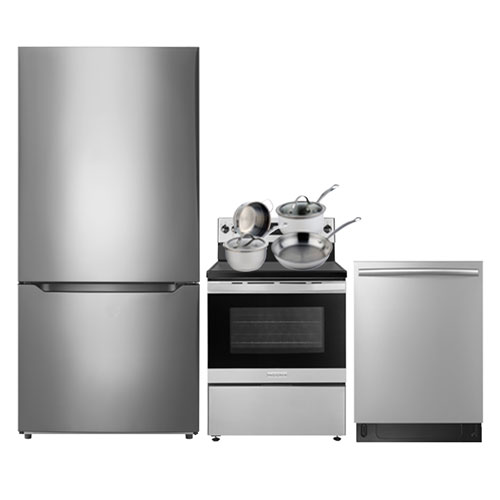
-31%Insignia Kitchen Appliance Bundle — Fridge + Electric Range + Dishwasher + Cookware! $2028.98 CAD (30% Off)
 Sports Express
Sports Express | October 2, 2026 — Watson Drives Browns to Last-Gasp 27-24 Win Over Steelers
 Tech Express
Tech Express | October 2, 2026 OpenAI Says It Alerted 100+ Organizations About Rogue AI Agents
-45%LEGO City Off-Road 4x4 Mountain Truck 60447 — #1 Best-Seller Building Set! $24.86 CAD (45% Off)
Amazon
-39%Razer Enki Ergonomic Gaming Chair — 4D Armrests & 152° Recline! $399.99 CAD (38% Off)
Best Buy
-31%Philips 3300 Fully Automatic Espresso Machine — One-Touch Bean-to-Cup with Auto Milk System! $699.99 CAD (30% Off)
Best Buy
-31%Insignia Kitchen Appliance Bundle — Fridge + Electric Range + Dishwasher + Cookware! $2028.98 CAD (30% Off)
Best Buy
Sports ExpressSports Express | October 2, 2026 — Watson Drives Browns to Last-Gasp 27-24 Win Over Steelers
Tech Express