Finance Weekly | US-Canada Trade War Escalates, Safe-Haven Gold Hits Three-Month High
This week, US-Canada trade talks collapsed as Canada announced dollar-for-dollar counter-tariffs and PM Carney declared "we got attacked." The US Treasury's bond-market intervention proved short-lived, and gold broke above $4,600 an ounce to a three-month high. Next week, Fed Chair Warsh makes his Jackson Hole debut and Nvidia reports earnings. Alibaba announced an HK$80 billion Hong Kong placement for AI, and the Bank of Korea returned to gold buying.
Finance Weekly | US-Canada Trade War Escalates, Safe-Haven Gold Hits Three-Month High
This Week's Financial Overview
Global markets were shaped this week by three overlapping forces: an escalating trade conflict, bond-market stress, and a flight to safety. U.S.-Canada trade talks formally collapsed, with Canada announcing dollar-for-dollar counter-tariffs and Prime Minister Carney declaring "we got attacked." The U.S. Treasury's intervention in the bond market proved short-lived, and the Federal Reserve's independence came under scrutiny as long-term yields rebounded. Gold broke above $4,600 an ounce, hitting a three-month high. Next week, Fed Chair Kevin Warsh will make his Jackson Hole debut and Nvidia reports earnings, shifting the market's focus to central-bank communication and the durability of the AI trade. In China, Alibaba announced an HK$80 billion Hong Kong share placement, all of it earmarked for AI.
1. Canada Hits Back With Dollar-for-Dollar Tariffs as Carney Says "We Got Attacked"
Source: CTV News
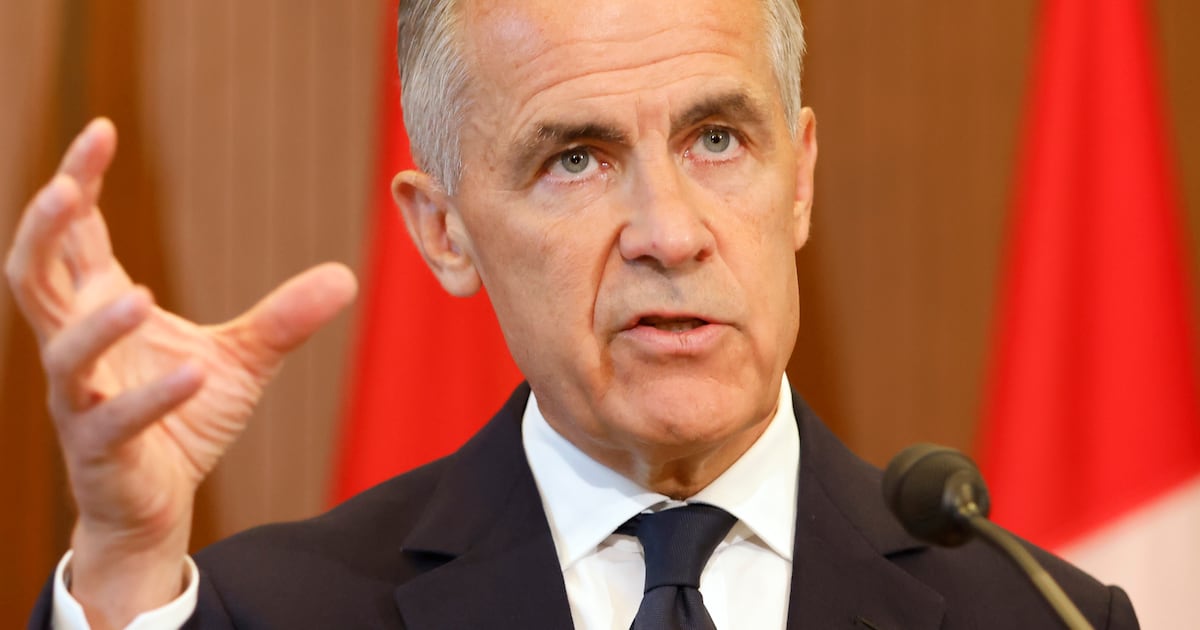
U.S.-Canada trade talks formally collapsed this week, and Prime Minister Mark Carney issued his toughest statement yet: "You're at war when you get attacked. We got attacked." Carney added, "America is trying to break us so they can own us. That will never, ever happen." He said the U.S. side "asked too much and offered too little," and announced that Canada would impose dollar-for-dollar counter-tariffs, with retaliation to land around Labour Day and tariff protections on the way.
The conflict marks an abrupt deterioration in North American trade relations. The two sides had at one point come close to a deal, but the U.S. terms were seen by Canada as "not a good faith deal." After the breakdown, Canada suspended trade talks and pivoted to tit-for-tat retaliation. Ontario Premier Ford said he was "glad that the prime minister listened."
For Canada, the decision means direct hits to cross-border supply chains in autos, energy and agriculture, and mounting upward pressure on consumer prices. Analysts warn that a full-blown trade war will drag on North American growth and could weigh on U.S. midterm election politics. For markets, the Canadian dollar faces depreciation pressure, and the earnings outlook for Canadian exporters darkens. Canadian businesses have begun evaluating supply-chain alternatives, and some industries are calling for government transition support.
Looking ahead, the window before the counter-tariffs take effect is critical for gauging whether the two sides can return to the table. If the stalemate persists, the adjustment of North America's integrated supply chains will gradually become visible, and whether Canada's pledge of "reserves, resilience and a plan" holds will be tested by the market.
2. Week Ahead: Warsh's Jackson Hole Debut and Nvidia Earnings
Source: Reuters
Next week will be a critical test of the U.S. stock rally: Fed Chair Kevin Warsh will make his first Jackson Hole appearance as chairman, and Nvidia reports earnings.
Warsh has made few public appearances since taking the helm in May, and has struggled to steer clear of controversy, leaving markets uncertain about his rate stance. The Jackson Hole symposium runs from August 27 to 29, marking his first appearance at the event since taking office. The key question is how Warsh will communicate policy in an environment where the Fed has dropped forward guidance, and what signals he sends on rate hikes. Some analysts argue that after the Treasury's intervention in the bond market, a major hawkish surprise is unlikely.
Meanwhile, the U.S. Treasury's effort this week to calm markets by doubling buybacks of long-dated debt offered only brief relief, with yields rebounding Thursday — which only sharpens focus on Jackson Hole. U.S. PCE inflation and Tokyo CPI data could also add volatility this week.
Nvidia's earnings are the other pillar. The AI trade has been the main engine of this year's stock rally, but the recent spike in global bond yields is pressuring richly valued tech stocks and the rally has cooled. If Nvidia disappoints, the pillar of the AI trade will be tested, and the gains in the S&P 500 and other major indexes could lose support.
Looking ahead, Warsh's debut message and Nvidia's results will be the two litmus tests for markets next week, together deciding whether stocks and bonds can stabilize and whether the AI trade can continue.
3. Alibaba Plans HK$80 Billion Hong Kong Share Placement, All for AI
Source: Reuters
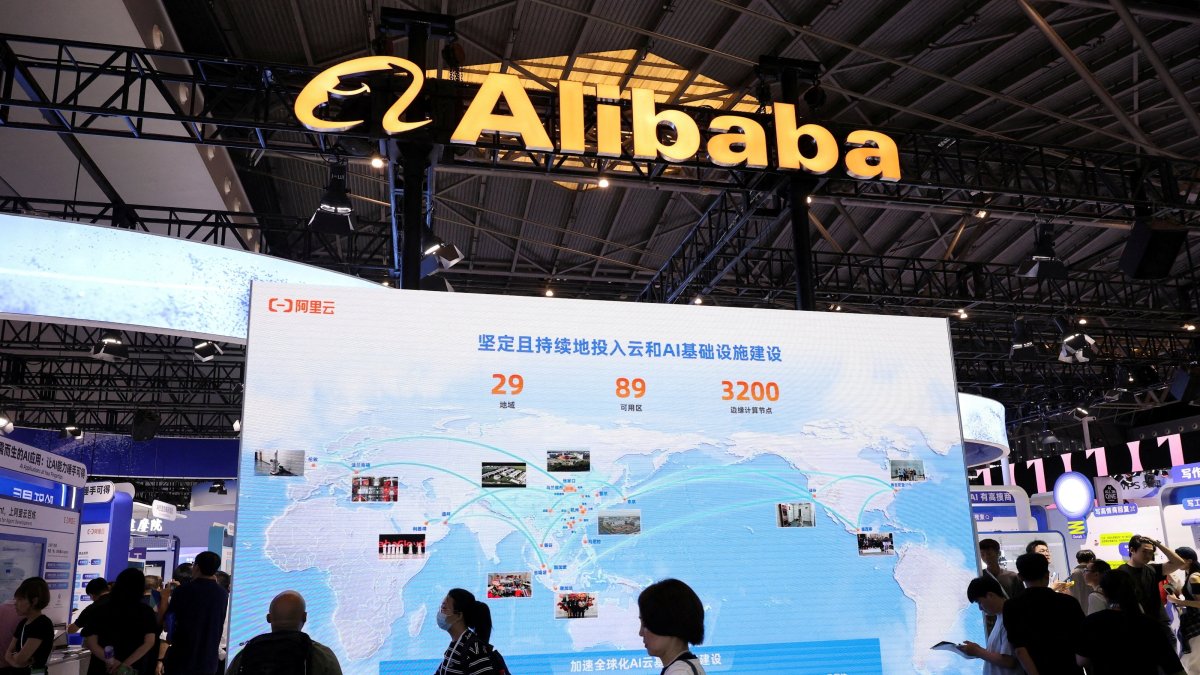
Chinese e-commerce and cloud giant Alibaba said on Sunday it plans to sell about HK$80 billion (US$10.2 billion) in new shares in Hong Kong, with the proceeds going entirely toward AI-related development.
According to Reuters, the deal would mark the largest-ever primary follow-on offering by a Hong Kong-listed company, and would rank as the world's third-largest primary follow-on share sale this year, after offerings from Alphabet and Intel. The company said it will use 100% of the net proceeds to invest in its "full stack" AI capabilities, spanning chips, infrastructure, and AI development and deployment, and said the move aims to "extend the Company's global AI leadership."
The move sends a strong signal: as the global AI computing race intensifies, Alibaba is stepping up capital spending to gain ground in computing infrastructure and in-house chips. Like Alphabet and Intel, which have funded their AI expansions through fundraising, Alibaba's choice of an equity placement rather than debt reflects prudent management of its cash flow and capital structure.
For markets, the massive placement injects liquidity into Hong Kong while also creating dilution pressure that could weigh on the share price in the near term. From an industrial perspective, however, the concentrated investment by China's leading tech companies in AI infrastructure will lift the entire upstream chain, including chips, servers and data centers, with significant spillover effects. The post-announcement performance of Alibaba's Hong Kong and U.S. shares will also reveal how investors price the giant fundraising.
Looking ahead, how the funds are ultimately deployed will be the key test of Alibaba's AI strategy.
4. Treasury Intervention Fails to Fix Weak Bonds, Fed Independence Tested
Source: Sina Finance
After the U.S. Treasury's surprise intervention in the bond market, yields briefly fell before climbing again, forcing markets to reconsider the boundary between the Treasury and the Federal Reserve in driving financial conditions.
St. Louis Fed President Musalem said in an interview that financial conditions remain loose, and signaled he leaned toward supporting a rate hike at the September meeting. He cast a dissenting vote in July in favor of a hike, stressing that the Fed sets policy "independently, not influenced by debt management or fiscal policy." San Francisco Fed President Daly argued that current long-term yields are not giving much signal for policy adjustment, strongly backed the July decision to hold rates, and said policy is currently in an "appropriate place."
The Treasury's intervention appears to have been short-lived — yields fell sharply on Wednesday before climbing again on Thursday. The Treasury's expansion of bond buybacks was intended to signal that "yields do not reflect economic fundamentals." Yet the intervention could pose a challenge for the Fed, because markets may be confused about which institution is the main driver of financial conditions.
Treasury Secretary Bessent downplayed any conflict, saying the Fed's rate decisions are entirely unrelated to the Treasury's actions, and that the two institutions would "work together" on anything affecting the Fed's balance sheet. Daly said shifting more debt issuance to short-term bills is "still at an early stage."
Looking ahead, if the Treasury's intervention keeps pushing yields down, markets will drift further from where the Fed wants them, strengthening the case for a higher policy rate.
5. Gold Hits Three-Month High on Safe Haven and Central-Bank Buying
Source: 21st Century Business Herald
After months of choppy declines, gold has rallied sharply. On August 21, international gold broke above $4,600 an ounce, touching a three-month high. Domestic gold jewellery prices held above 1,300 yuan per gram, and by August 23 exceeded 1,350 yuan per gram, up more than 100 yuan from a month earlier.
Since August, gold has broken out of its previous range of $4,000–4,100 an ounce. As of August 21, international spot gold had risen 13% for the month, while prices on the Shanghai Gold Exchange rose 11%. Industry insiders noted that trading activity has picked up markedly since August, with both trading volume and open interest rising, clear signs of capital inflows and notably higher volatility.
Three factors drove the rally. First, weakening U.S. economic data cooled rate-hike expectations: July nonfarm payrolls cooled sharply and retail sales came in well below expectations, alongside mild inflation, directly lifting gold and silver. Second, the U.S. Treasury's announcement on August 19 that it would substantially increase long-term bond buybacks pushed long-term yields lower and weakened the dollar index, boosting gold's appeal as a non-yielding asset. Third, sustained central-bank buying is building medium- to long-term support: a World Gold Council report released July 30 showed global central banks and other official institutions added a net 289 tonnes of gold in the second quarter, up 62% year on year. Experts note that central-bank buying is a long-term strategic behavior that forms steady demand and floors the price.
Experts also cautioned that the gold market is now caught between opposing forces: lingering Middle East geopolitical conflict and high oil prices keep inflation-stickiness worries alive, and gold has already built up gains, so investors should guard against the risk of a high-level pullback.

6. Bank of Korea Returns to Gold Buying After a Decade, Set to Raise Growth Outlook
Source: The Korea Herald
After more than a decade, the Bank of Korea has returned to gold buying, joining central banks worldwide in diversifying reserves. According to The Korea Herald, the BOK bought about 679,765 shares of the SPDR Gold Trust ETF in the second quarter, valued at about $250 million (roughly 354.5 billion won), gaining gold exposure through a financial asset rather than physical metal.
As of end-June, the BOK held 104.4 tonnes of gold worth about $4.79 billion, just 1.1% of its $427.36 billion in total foreign exchange reserves. According to the World Gold Council, the BOK ranked 39th among central banks worldwide in gold holdings as of end-2025 — a relatively small share that highlights its limited exposure compared with other central banks. The BOK significantly increased its gold holdings between 2011 and 2013, but made no further purchases for years after facing political criticism when gold prices dipped.
The resumption features a different playbook: first, holding gold through ETFs and other financial assets rather than physical metal; and second, working with domestic institutions to build a framework for buying locally produced gold, which would be stored via the Korea Securities Depository — diversifying away from storage concentrated at the Bank of England. A BOK Reserve Management Group official said this diversifies both purchasing channels and storage locations.
Analysts see rising geopolitical risk as the main driver of the BOK's reserve diversification. The BOK is also expected to raise its 2026 growth forecast above 3% next week and holds its rate-setting meeting on August 27, with markets watching whether it will hike again. In the broader wave of central-bank gold buying, Korea's turn is symbolic, reflecting a shared anxiety about geopolitical uncertainty.

7. Bank of Canada Worried About the Rise of Private Credit
Source: Canadian Press
The Bank of Canada is watching the rapid expansion of private credit closely. In an article in the central bank's "Sparks" series, Governor Tiff Macklem discussed how risks to financial stability are shifting as hedge funds and private credit play a growing role in global debt markets.
The Bank of Canada noted that insurers and pension funds are stable investors in the private credit space, while domestic asset managers are a "small but growing" segment of the market, and banks' exposures to private lending are considered relatively limited. This structural assessment sketches out the participant landscape and risk distribution of Canada's private credit market.
The backdrop is the rapid growth of global private credit in recent years, as more corporate financing bypasses the traditional banking system in favor of credit provided by hedge funds, private equity and others. For regulators, this segment is less transparent and its leverage harder to track, posing a potential financial-stability risk.
The Bank of Canada had earlier warned in its Financial Stability Report that vulnerabilities have increased in some parts of the system and that a more turbulent global environment poses risks. Macklem's latest remarks underscore the central bank's growing vigilance toward this emerging risk. The often-opaque leverage of hedge funds can amplify volatility through margin chains when markets reverse — exactly the transmission path regulators worry about most.
Looking ahead, how the central bank and regulators guard against systemic risk without stifling financing innovation will be a key policy question in the period ahead.
8. Lagarde "Ready to Serve" as WEF President, ECB Succession Looms
Source: Reuters
European Central Bank President Christine Lagarde may be headed for the political and business stage. Citing Swiss newspaper NZZ, Reuters reported Sunday that Lagarde could take over the presidency of the World Economic Forum (WEF) at some point in 2027.
The report said Lagarde told those present at an event this week that she would be "ready to serve" should the opportunity arise to lead the WEF — seen as a positive signal. Bloomberg had earlier reported that the WEF is still courting Lagarde for the role, and that she appears ready to accept it.
However, people familiar with the matter said Lagarde wants to be sure the tensions between the WEF and its founder and former chairman Klaus Schwab are properly resolved before deciding. That concern reflects the complexity of the WEF's leadership transition and could be the key variable in whether she ultimately takes the job.
For Europe, a Lagarde departure in 2027 would trigger a succession process for the ECB presidency. She has led the ECB since 2019, steering it from negative rates through the current hiking cycle. Her exit will directly affect the continuity of eurozone monetary policy and market expectations, and brings forward the contest over her successor. Markets widely believe the timing and manner of Lagarde's departure will determine how smoothly the ECB's policy transition unfolds.
Looking ahead, Lagarde's personal plans remain uncertain, but the matter has already put the ECB's leadership transition on the table, and markets will watch for formal arrangements and a list of candidates.

9. PBOC Surveys Fund Duration, Bond Market May Enter a Choppy Phase
Source: Sina Finance
China's bond market saw a new source of turbulence this week: the central bank's survey of fund duration has drawn renewed attention, with some investors worrying about a repeat of the intensive regulatory crackdown of 2024.
Looking back, the PBOC's open-market operations have turned to net withdrawal, and liquidity has tightened marginally. Analysts argue that, from a top-down perspective, the rapid rally in bonds may be ending, because both the central bank and the fiscal side are now acting, policy-based financial instruments are being deployed, and combined with the market's worry about a "zero-win-rate September bond market," bonds may enter a period of choppy consolidation — though with limited downside.
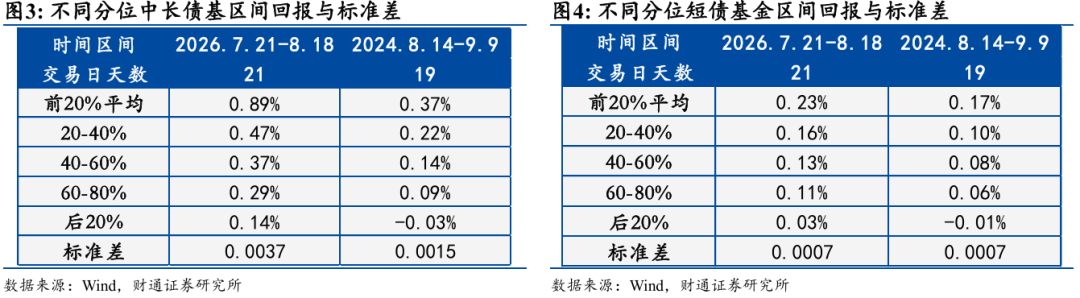
On institutional behavior, fund duration is now significantly higher than in 2024, but the market remains divided, reflecting "grab-and-go" allocation by some institutions amid an asset shortage. Data show the standard deviation of medium- and long-term bond fund net-value growth was 0.0015 in the comparable 2024 period, versus 0.0037 now — meaning strategy consistency is lower today — yet each quintile's performance is broadly stronger than 2024, indirectly confirming higher duration. Unlike 2024's consensus bullishness, regulatory room now appears relatively limited.
On the fiscal side, government bond supply may accelerate in September–October, but as long as large-scale incremental policy does not land and the PBOC stays supportive, rates are unlikely to see a major adjustment. Analysts expect fiscal policy to continue the fiscal-monetary coordination approach, with new policy-based financial instruments helping ease the shortage of projects, while the probability of consumption subsidies this year remains low.
Looking ahead, institutions generally believe rates will most likely head lower after the consolidation, so the bias should remain bullish — pullbacks are buying opportunities.
10. Investors "Catch a Falling Knife" in Chip Rout as Leveraged ETFs Draw Inflows
Source: Financial Times
A worrying phenomenon is emerging amid the chip-stock rout: leveraged single-stock ETFs plunged during the sell-off yet still attracted billions of dollars in net inflows — investors are "catching a falling knife."
According to the Financial Times, these leveraged ETFs tracking individual chip stocks saw their net asset values tumble during the market sell-off, but money kept pouring in, reflecting an aggressive mentality of bottom-fishing and betting on a rebound. These products use derivatives to amplify daily moves, so their value erodes sharply in choppy markets, and buying more as prices fall can magnify losses before the trend reverses — especially when high leverage meets high volatility.
The backdrop to the chip pullback is a valuation correction after the AI trade overheated, plus a chain reaction in the sector triggered by memory-chip leaders' earnings. The spike in global bond yields has also pressured richly valued tech stocks, with chips bearing the brunt of the sell-off.
For markets, leveraged money piling into risky funds against the tide is a sign that risk appetite has not yet been flushed out. History suggests that when retail and leveraged money keep adding through a decline, the adjustment is usually not over and volatility will persist, possibly even worsening short-term stampede risk.
Looking ahead, chip stocks will depend heavily on next week's Nvidia earnings. If results disappoint, the "falling knife" behavior in leveraged ETFs could face further liquidation pressure. In addition, the forced rebalancing of leveraged ETFs generates extra selling pressure during one-sided declines, amplifying the downturn.

More News
- Maple Express | October 7, 2026 — Israeli Flags Set on Fire Near North York Church, Police Probe Hate-Motivated Offence
- AI Weekly | OpenAI Drops Hundreds of Math Proofs as AI Agents Start Spending and Acting on Their Own
- Global Express | October 7, 2026: Israel Marks 3 Years Since Oct. 7 as Reports Say Netanyahu Was Warned
- Finance Morning: US Stocks Hit Records, Asia Slips; RBI Hikes, Brent Back Above $100
- Tech Express | October 7, 2026 — 2026 Nobel Prize in Chemistry Awarded for Work on Mirror-Image Molecules
Comments (0)
View More
 -46%
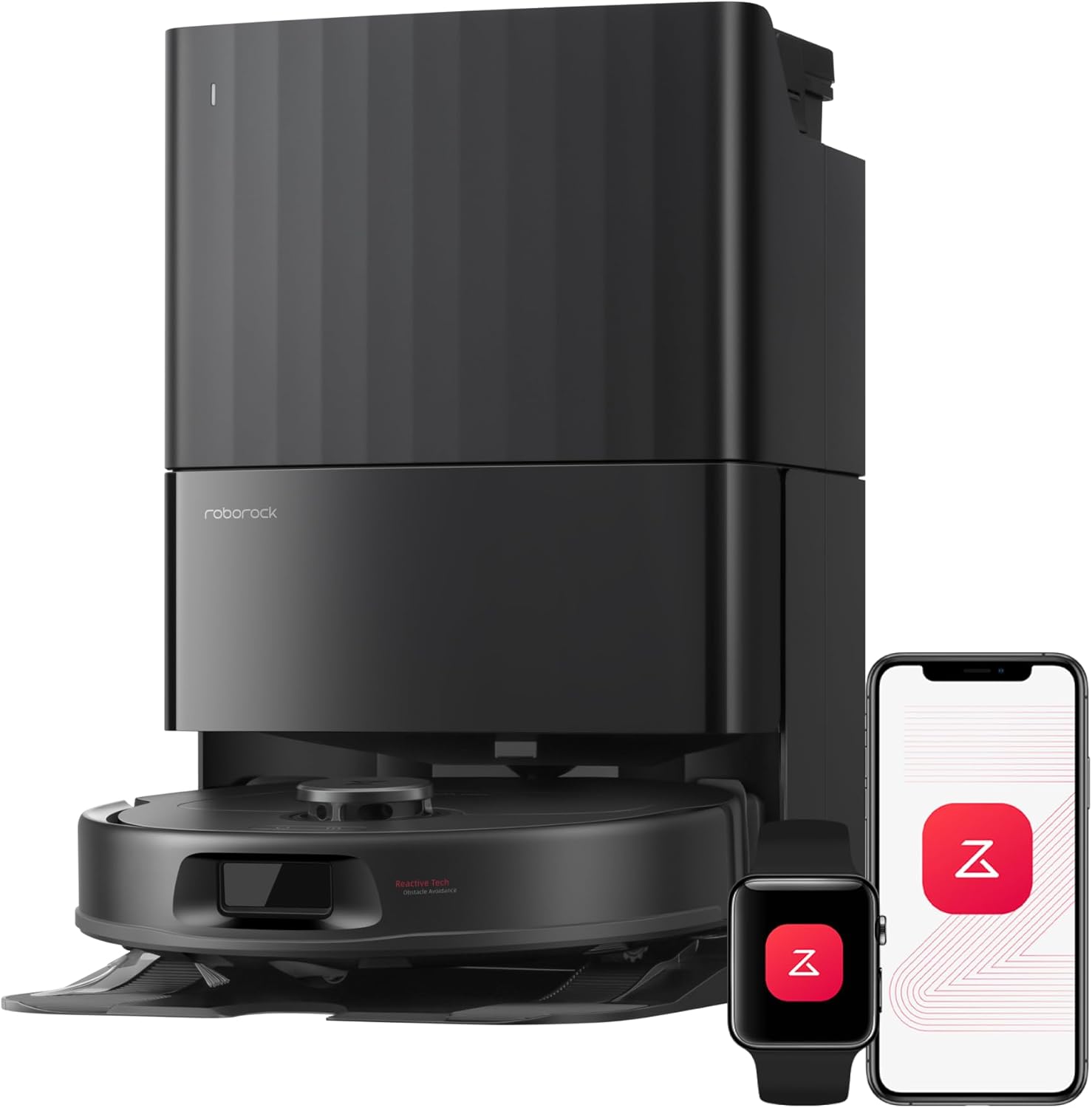
-46%Roborock Qrevo S Pro Robot Vacuum & Mop (2026) — 18,500Pa, All-in-One Dock! $549.99 CAD (45% Off)
 -32%
-32%Hilroy Recycled File Folders, Letter, 100 ct — Half-Cut & Reversible! $25.98 CAD (32% Off)
 -32%
-32%GREENIES Original Dental Treats, Teenie (1.53kg, 192 ct) — One a Day for Clean Teeth! $50.57 CAD (32% Off)
 -41%
-41%Sonos Ace Wireless ANC Headphones — Dolby Atmos Spatial Audio, 30h Battery! $329 CAD (40% Off)
 Maple Express
Maple Express | October 6, 2026 — Body Found in Port Perry as Homicide Unit Investigates
 Sports Express
Sports Express | October 07, 2026 - Messi Bids Farewell to Argentina in Tears as 21-Year Career Ends
-46%Roborock Qrevo S Pro Robot Vacuum & Mop (2026) — 18,500Pa, All-in-One Dock! $549.99 CAD (45% Off)
Amazon
-32%Hilroy Recycled File Folders, Letter, 100 ct — Half-Cut & Reversible! $25.98 CAD (32% Off)
Amazon
-32%GREENIES Original Dental Treats, Teenie (1.53kg, 192 ct) — One a Day for Clean Teeth! $50.57 CAD (32% Off)
Amazon
-41%Sonos Ace Wireless ANC Headphones — Dolby Atmos Spatial Audio, 30h Battery! $329 CAD (40% Off)
Amazon
Maple ExpressMaple Express | October 6, 2026 — Body Found in Port Perry as Homicide Unit Investigates
Sports Express