
Tech Express | October 29, 2026: Gemini 4 Carbon Tops Benchmark as Alphabet Sheds $300 Billion
Google's Gemini 4 Carbon tops Artificial Analysis' index at 59, yet Alphabet missed estimates and shares fell 10% after hours. Nvidia confirms a Vera Rubin downgrade, cutting NVLink bandwidth 17%, as the DOJ reviews its $12.93 billion Hugging Face deal. Iluvatar's Tiangai 300 beats H200; Xreal Aura preorders open; iPhone Air 2 leaks with an ultrawide camera; Tencent's Hy4 adds visual understanding; DeepSeek and Moonshot reportedly distilled GPT-6 Astra; ULA's Vulcan returns to flight Nov 13.
1. Gemini 4 Carbon Tops Benchmark as Alphabet Sheds $300 Billion After Earnings
Source: Phoenix News
Alphabet reported third-quarter 2026 results after the US market close on October 28. Hours earlier, Google had unveiled its new flagship model, Gemini 4 Carbon, which took first place on Artificial Analysis' Intelligence Index v5.0 with 59 points, ahead of Claude Opus 5.5 at 58 and GPT-6 Astra at 57. After the earnings release, Alphabet shares fell as much as 10% in after-hours trading, wiping out more than $300 billion in market value.
Revenue came in at $127.58 billion, up 25% year over year but below the $128.22 billion consensus. Net income was $26.17 billion, down about 25% from $34.98 billion a year earlier, including $8.66 billion in paper losses on equity investments. Free cash flow was negative $9.07 billion, the second straight negative quarter, while capital expenditure reached $51.36 billion, up 114%, with full-year guidance held at $195-205 billion.
Cloud was the bright spot at $30.71 billion in revenue, up 103%, with $11.1 billion in operating profit. Search and related revenue rose 12% to $63.35 billion, slowing from 17% growth the previous quarter and missing the $64.96 billion expected. Carbon is not yet available through a public API; access is initially limited to vetted cyber defenders, later widening through DeepMind's Fairwind program.
2. Nvidia Confirms Vera Rubin Downgrade, Cutting NVLink Bandwidth by 17%
Source: Mydrivers
On October 29, Nvidia issued an official statement addressing recent scrutiny over a quiet downgrade of its Vera Rubin platform. The company said the updated specifications reflect what the system can actually achieve under high-quality, high-volume manufacturing, and that the platform is now in full production and shipping.
The changes center on memory and interconnect. HBM4 bandwidth per Rubin GPU drops from 22TB/s to 19.2TB/s, a 12.7% reduction, while sixth-generation NVLink falls from 3.6TB/s to 3TB/s, down 17%. At the NVL72 rack level, however, network bandwidth rises from 28.8TB/s to 32.4TB/s. The steepest cuts hit HGX Rubin NVL8: HBM4 capacity falls from 2.3TB to 2TB, total bandwidth drops 26.1% from 176TB/s to 130TB/s, and NVFP4 training throughput slips from 280 to 270 PFLOPS.
Nvidia said the earlier figures were preliminary architectural targets, and that datasheets must present deliverable performance once systems reach mass production. It stressed that a single component's specs do not determine application performance, and that Vera Rubin, built for agentic AI, delivers 30 times better performance per watt and tokens per dollar than the previous GB300 NVL72 generation.

3. Nvidia's $12.93 Billion Hugging Face Deal Draws US Justice Department Scrutiny
Source: Guancha
Nvidia's $12.93 billion acquisition of Hugging Face, the world's largest open AI platform, has caught the attention of the US Department of Justice. Reuters reported on October 28, citing two people familiar with the matter, that antitrust enforcers began investigating Nvidia years ago and that recent DOJ questions cover its acquisitions, investments and sales practices, including whether it pressured customers.
For this deal, the DOJ is focused on whether Nvidia would gain further control over a key distribution channel for AI models and tools, giving it an unfair advantage over rivals. A central question is whether developers would still have easy access to alternative hardware and cloud services after the deal closes. Nvidia has said it expects the transaction to complete in the first half of 2027 and that Hugging Face will keep working with different chipmakers, cloud providers and AI companies.
The review is not isolated. The DOJ is also examining Nvidia's acquisition of SchedMD and its 2025 arrangement with Groq covering technology licensing and engineer hiring, with the Run:ai purchase also part of the probe. A DOJ spokesperson declined to comment on pending investigations, Nvidia declined to comment, and Hugging Face did not respond.
4. Chinese GPU Breakthrough: Iluvatar's Tiangai 300 Beats H200 in Multiple Tests
Source: Mydrivers
At a media open day hosted by Iluvatar CoreX on October 28, the company's new AI chip, the Tiangai 300, was demonstrated live to reporters for the first time, according to Mydrivers on October 29. The chip was tested against Nvidia's H200 on large language models including GLM-5.3 as well as text-to-image and text-to-video workloads, and outperformed the H200 overall.
In training, an eight-card FP8 demonstration on the Qwen3-32B model showed per-card effective throughput at 1.33 times that of the H100. The chip was officially launched in July at the World Artificial Intelligence Conference, built on Iluvatar's Tianshu architecture with a new-generation Tensor Core, 144GB of memory and native support for scalar, vector and tensor computing.
A third-party test completed by Shanghai Yidian in July found that under typical prefill-decode disaggregated deployment, the Tiangai 300 reached 1.05 times the H200's single-card end-to-end throughput. At 64K context its attention performance was 1.05 times the H200's, and MoE throughput on GLM-5.3 was 1.15 times higher. Its IXL144 supernode packs 144 GPUs and about 10.1TB of memory into a single standard rack, cutting cost per million effective tokens by roughly 40% versus mainstream international designs.

5. Xreal Aura Preorders Open: First Wired Android XR Glasses at $1,099
Source: Mashable
Xreal's Aura, spatial computing glasses built with Google for the Android XR platform, are now available to order. First shown at Google I/O 2026, the glasses opened for preorder on Xreal's website today and are scheduled to ship in mid-November. They retail for $1,279, with a $180 preorder discount bringing the price to $1,099.
The Aura uses dual Sony Micro-OLED displays with a 70-degree field of view, up to 1,050 nits of brightness, up to 120Hz refresh and 1,920 x 1,200 pixels per eye. The glasses weigh under 95 grams and offer electrochromic dimming with five transparency levels. They are the first wired smart glasses to run Android XR, powered by Qualcomm's Snapdragon Reality Elite platform, with a puck that houses the battery and most of the compute.
The Aura supports voice and hand controls and works with Gemini, letting users ask about their surroundings or complete tasks across apps. With Google Photos, photos and videos can be converted into 3D and panoramas into 360-degree experiences, and YouTube's 360 and VR180 content is supported. More than 150 XR experiences are available at launch. CEO Chi Xu said the product is for people who want spatial computing without being cut off from the world around them.

6. iPhone Air 2 Leak: Ultrawide Camera and Bigger Battery, Still eSIM-Only
Source: Mydrivers
Apple's second-generation ultra-thin iPhone Air 2 has entered early testing, according to a tipster cited by Mydrivers on October 29. The phone is said to feature a 6.55-inch 120Hz LTPO display, an A20-series chip, a 48-megapixel dual rear camera and a larger battery. The clearest change from the first generation is the addition of an ultrawide lens, along with longer battery life.
The original iPhone Air prioritized a 5.6mm chassis, which forced a much smaller battery and tight endurance under heavy use. It shipped with a single rear camera, lacking both ultrawide and telephoto options, and its eSIM-only design made it inconvenient in mainland China. After missing expectations, the phone was cut by 2,000 yuan across major Chinese e-commerce platforms in January, landing at 5,499 yuan with subsidies.
The Air 2's upgrade path is clear: fix the two shortcomings that most affect daily use without abandoning the thin-and-light positioning. Compromises remain, though. The tipster says the phone still lacks a dedicated telephoto lens, leaving it well behind the Pro series for zoom, and it remains eSIM-only. The device is expected in the first half of next year.

7. OpenAI Brings ChatGPT Dot to iMessage and RCS
Source: 9to5Mac
OpenAI is expanding access to ChatGPT dot through iMessage and RCS. Previously, the proactive agent feature was limited to the ChatGPT experience on mobile, desktop and the web, so users needed the main app to interact with their dot.
Now users can simply text their dot, handing it a task or something to keep an eye on using text, photos or even voice notes, and it will message them proactively with relevant updates. According to 9to5Mac, the change in theory brings ChatGPT dot to the Apple Watch in an official capacity and could open up new voice uses beyond the built-in simulated calling capability.
To set it up, users tap their dot's profile and select "Texting." OpenAI says the dot has the same context and plugins wherever it is reached, and that this does not give the dot or OpenAI access to a user's other text conversations.

8. Tencent's Hunyuan Hy4 to Launch With First-Ever Visual Understanding
Source: Mydrivers
Tencent announced at its 2026 Global Digital Ecosystem Summit on October 29 that Hunyuan Hy4 is about to be released. According to the company, Hy4 brings broad improvements over Hy4 preview, especially on long-horizon and real productivity tasks, with notably better chain-of-thought efficiency and visual understanding for the first time.
Tencent also said Hy4 flash will launch soon as a highly cost-effective practical model. Building on Hy4's visual and agent capabilities, it evolves quickly through deep co-design of model and product.
In August, Tencent released and open-sourced Hy4 preview, a new-generation large language model with 770 billion total parameters, 49 billion active parameters and a context window beyond 1M tokens. Hy4 preview has since expanded significantly in model size, context length and data scale, keeping it in the first tier of open models.

9. Report: DeepSeek and Moonshot Trained New Models on GPT-6 Astra Output
Source: Lianhe Zaobao
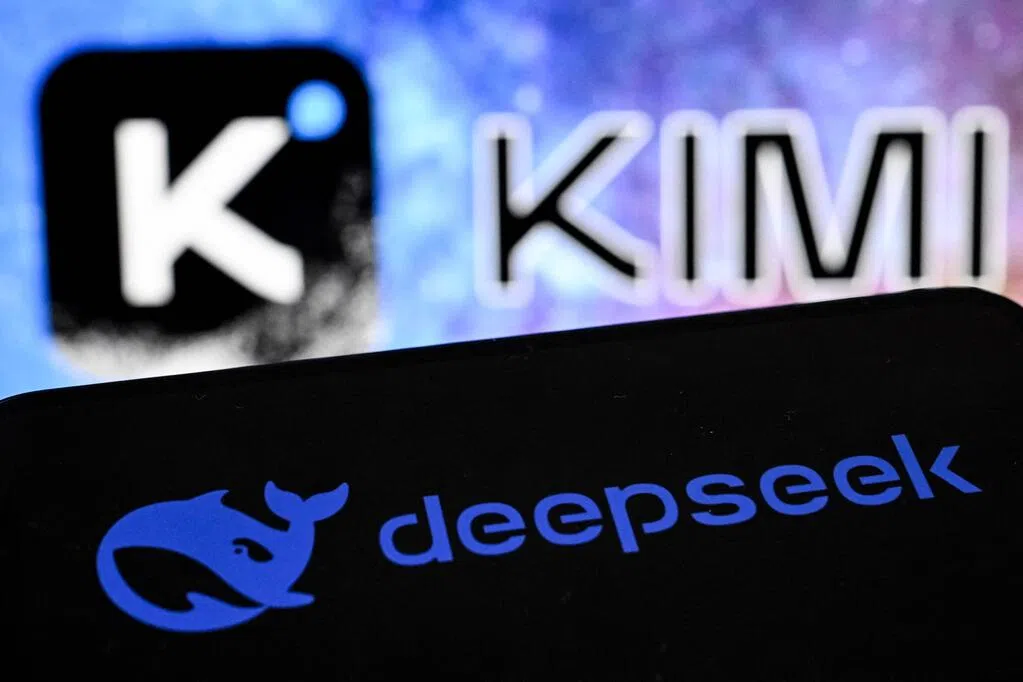
Citing Reuters, Singapore's Lianhe Zaobao reported on October 29 that The Information said a day earlier, citing sources, that Chinese AI developers DeepSeek and Moonshot relied heavily on output from OpenAI's GPT-6 Astra while training their latest models. Moonshot's Kimi K3.1 Pro, released last week, and DeepSeek's V4.1-Flash 1017, launched on October 17, were both trained using distillation on GPT-6 Astra outputs.
Distillation means using one model's outputs to train another. As US-China tech competition intensifies, the practice has become a point of contention among leading AI companies. Anthropic, OpenAI and Google argue that distillation lets rivals replicate advanced capabilities faster and more cheaply.
In a September 30 blog post, OpenAI said it had traced part of a distillation campaign that began in July to people linked to Moonshot. Anthropic said earlier this month that it had taken new steps to stop rivals from copying Claude, reducing the data obtained through "distillation attacks" by roughly 90% to 99%. OpenAI, DeepSeek and Moonshot did not immediately respond to requests for comment from Reuters.
10. ULA's Vulcan Set to Return to Flight on November 13
Source: Ars Technica
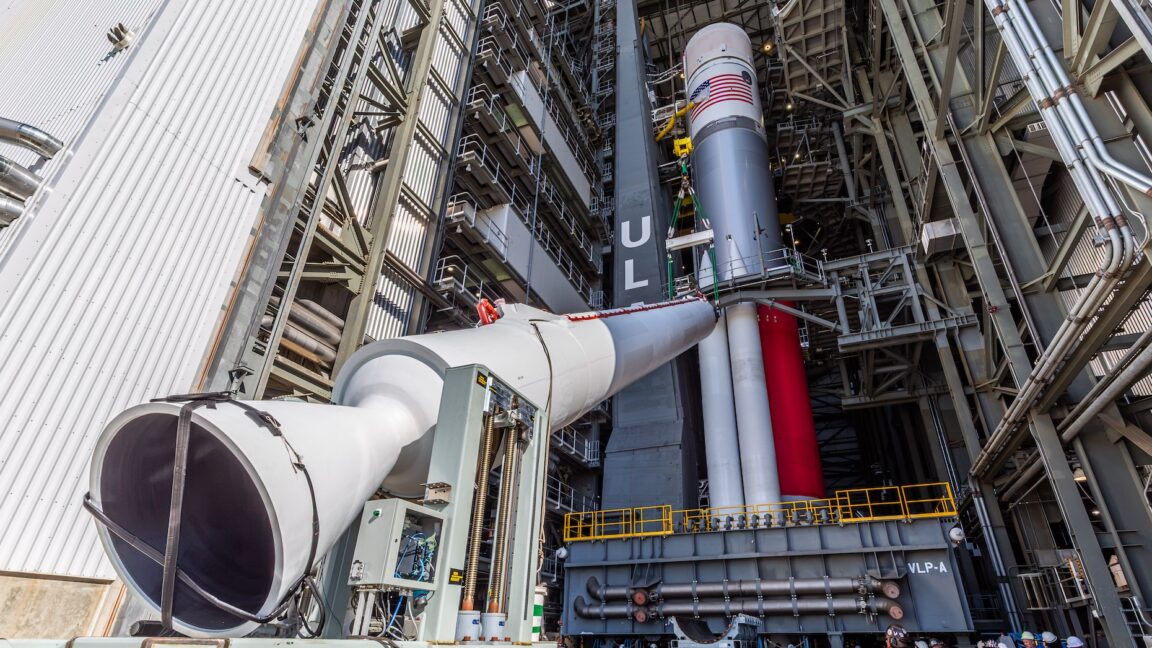
United Launch Alliance announced on October 28 that it plans to return its Vulcan rocket to service on November 13, nine months after a solid rocket booster anomaly upended its 2026 launch schedule. The mission will launch 40 satellites for Amazon's Leo broadband constellation, the first of 38 Vulcan flights Amazon has booked, from Cape Canaveral Space Force Station in Florida. The date is pending range approval.
The launch is critical for ULA. Its new flagship rocket suffered nozzle failures on its solid boosters on two of its first four missions, most recently in February. Both rockets overcame the failures and completed their missions, but confidence in Vulcan at the US Space Force, ULA's primary customer, was shaken. ULA said engineers "made great strides" in understanding the anomaly and identified several potential contributors, which have been mitigated through nozzle design and process improvements.
The flight will be the first to carry a full complement of six solid rocket boosters, along with an extended payload fairing for Amazon's satellite stack and a shortened Centaur upper stage optimized for low-Earth orbit. Brig. Gen. Eric Zarybnisky, the Space Force's chief rocket buyer, said the military wants to see flight data from commercial missions before clearing ULA to resume national security launches. The Space Force has already moved six missions off Vulcan to SpaceX's Falcon 9 and Falcon Heavy.
More News
- Global Express | Oct 29, 2026: Spain Train Crash Kills 69 as Three Days of Mourning Begin
- Alphabet and Samsung Earnings Miss Weigh on Asia-Pacific Markets as ChiNext Slides 4.45%
- Sports Express | October 29, 2026 — Brewers Win Their First World Series
- Maple Express | October 29, 2026: Four in hospital after shooting at Bridle Path home
- Finance Evening: Alphabet Misses Revenue Estimates as Fed Holds Rates Steady
Comments (0)
View More
 -44%
🎉 史新低!Purina Tidy Cats LightWeight Clumping Litter 17 lb — 50% Lighter, 21-Day Odor Control! $39.89 CAD (44% Off)
 -40%
SanDisk Ultra 32GB SDHC Card — 100MB/s Read, Keep One as a Spare! $33.11 CAD (39% Off)
 -32%
Travelpro Crew Classic 21" Softside Carry-On — 8 MagnaTrac Wheels, Lifetime Warranty — $255 CAD (31% Off)
 -24%
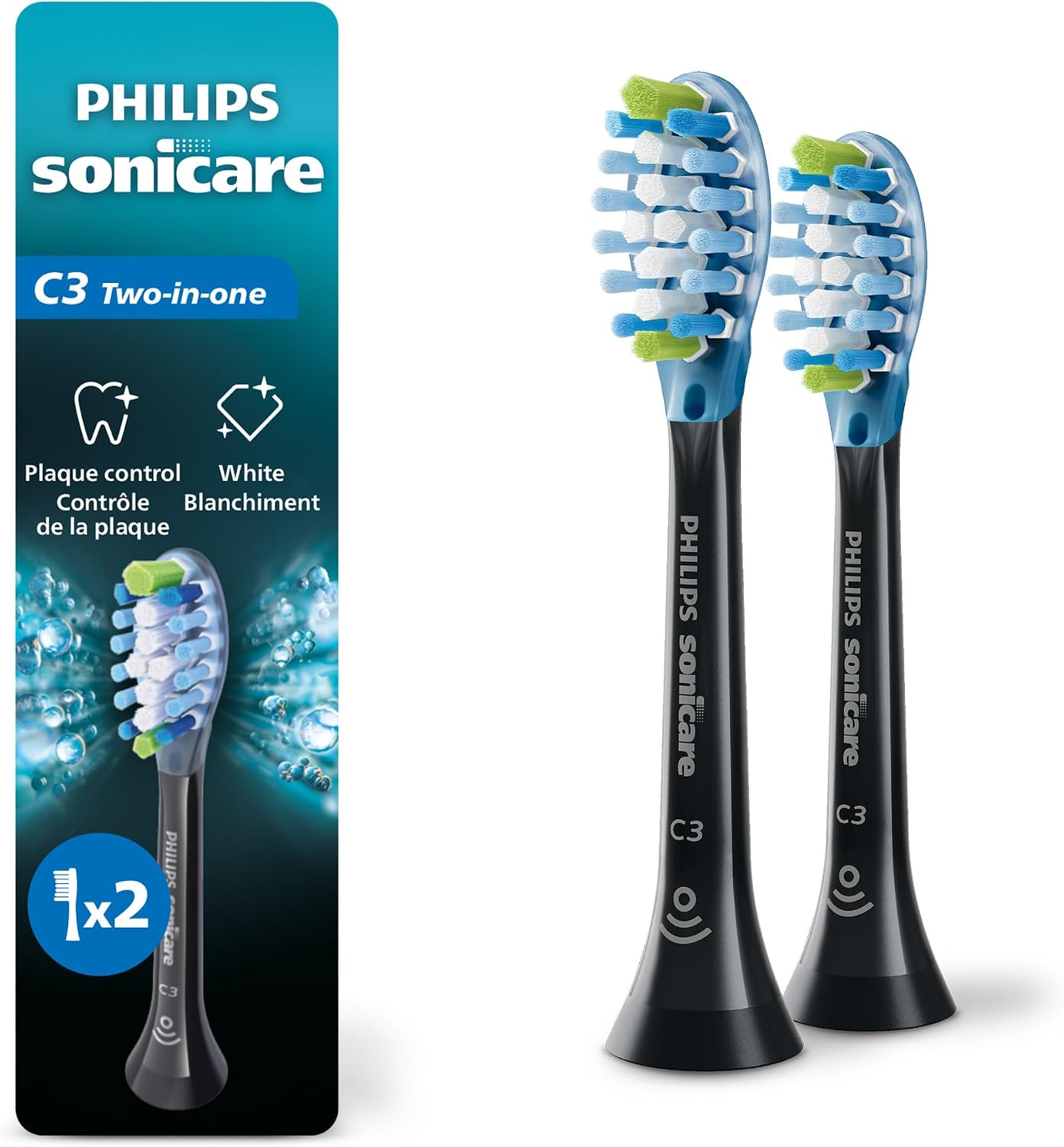
Philips Sonicare C3 Brush Heads 2-Pack — Six Months of Deep Clean! $32.96 CAD (23% Off)
 Maple Express
 | October 29, 2026: Four in hospital after shooting at Bridle Path home
Tech ExpressTech Express | October 29, 2026: Gemini 4 Carbon Tops Benchmark as Alphabet Sheds $300 Billion
-44%🎉 史新低!Purina Tidy Cats LightWeight Clumping Litter 17 lb — 50% Lighter, 21-Day Odor Control! $39.89 CAD (44% Off)
Amazon
-40%SanDisk Ultra 32GB SDHC Card — 100MB/s Read, Keep One as a Spare! $33.11 CAD (39% Off)
Amazon
-32%Travelpro Crew Classic 21" Softside Carry-On — 8 MagnaTrac Wheels, Lifetime Warranty — $255 CAD (31% Off)
Amazon
-24%Philips Sonicare C3 Brush Heads 2-Pack — Six Months of Deep Clean! $32.96 CAD (23% Off)
Amazon
Maple ExpressMaple Express | October 29, 2026: Four in hospital after shooting at Bridle Path home
Tech Express