
Tech Express | October 21, 2026: Arm Asks for Up to 34.5x Its Old Rate, Pushing Qualcomm's Per-Chip Royalty Toward $64.86
October 21: Arm's Armv10 rate hit court — up to $64.90 per $220 Snapdragon chip, a projected 34.5x rise; Tencent's Yao Shunyu bars Hunyuan reports until it is world No.1; MIT's 13 Claude agents played on a virtual island; Samsung and SK Hynix upgrade China fabs for 200+ layer NAND; first iPhone Duo unboxing video leaks; iPad mini 8 tipped for OLED and 2nm A20 Pro; a North Sea crater confirmed as a 330-foot tsunami impact; China's micro reactor goes commercial; Huawei Mate X8 due in November.
1. Arm Asks for Up to 34.5x Its Old Rate, Pushing Qualcomm's Per-Chip Royalty Toward $64.86
Source: Mydrivers
Closing arguments in Qualcomm's licensing lawsuit against Arm took place on October 20, and Arm's proposed Armv10 royalty rate was made public in court for the first time. On a $220 flagship Snapdragon chip, Arm would take 12.8% to 29.5%, or $28.16 to $64.90 per chip — roughly 188 to 434 yuan. The 2013 architecture licence the two sides signed runs until 2033 and caps royalties for chips with five or more cores at $1.88 per chip.
Qualcomm's lawyer Karen Dunn said Arm's v10 quote could reach 15 times the current rate, and cited a sealed expert estimate putting the 2034-2040 rate at 34.5 times today's. Applied directly to the $1.88 cap, that works out to $28.20 per chip in 2027-2033 and $64.86 in 2034-2040.
Arm's lawyer Gregg LoCascio argued that the 2013 terms are simply too old. "Today it's 220, which is ten times some of the 2013 prices," he said, adding that the v10 rate partly references what Google and Microsoft pay and questioning why a cap designed for small phone chips should also apply to a 288-core data-centre processor. He also said Qualcomm offered $250 million up front in late 2024 for v10 terms and to settle the case, which Arm rejected; Qualcomm paid $40.25 million up front in 2013.
Judge Maryellen Noreika called Qualcomm's request that the court force new negotiations "very, very aggressive" and will rule in writing after final filings. Note that the per-chip figures assume the multiplier is applied straight to the $1.88 cap; Arm's actual v10 structure has not been disclosed.
2. Tencent's Chief AI Scientist Sets a Rule for Hunyuan: No Technical Reports Until We're First
Source: Mydrivers
Tencent chief AI scientist Yao Shunyu has set an ambitious goal for his team, according to a recent report by LatePost. A member of the Hunyuan team said Yao proposed not publishing technical reports until the team is number one — and that number one means "not just first in China, but first in the world." One team member said the reason he joined Hunyuan was that he believed Yao could get there.
The report said Hunyuan's team has grown to nearly 2,000 people since Yao joined, and Tencent recruiters say the unit has become noticeably more attractive in campus hiring. Inside the team he is known as "Brother Yao." His management style is flexible: a company-wide meeting about once a month, occasional lunches or small group sessions, and impromptu basketball games organised in the team chat that run for hours. After the Hunyuan Hy4 Preview release, he gave every researcher a week off.
Hy4 Preview was released and open-sourced on August 28 with 770B total parameters, 49B activated parameters and a context length of more than one million tokens, aimed at agent, coding and office productivity workloads. It debuted in products including WorkBuddy, CodeBuddy, Yuanbao and ima.
The report also described Yao's early product thinking. About a month after joining at the end of 2025, he pushed to move the model application centre and search algorithm centre into the business group that houses Yuanbao. With Hunyuan's in-house pre-trained model not yet ready, he first sent post-training staff to support Yuanbao and optimise the DeepSeek model it used. Some algorithm colleagues were puzzled, but Yao argued that stabilising Yuanbao's product experience and user base mattered just as much for Hunyuan's later model work.

3. MIT Left 13 Claude Agents Alone on a Virtual Island for 30 Hours. They Started to Play
Source: The Next Web
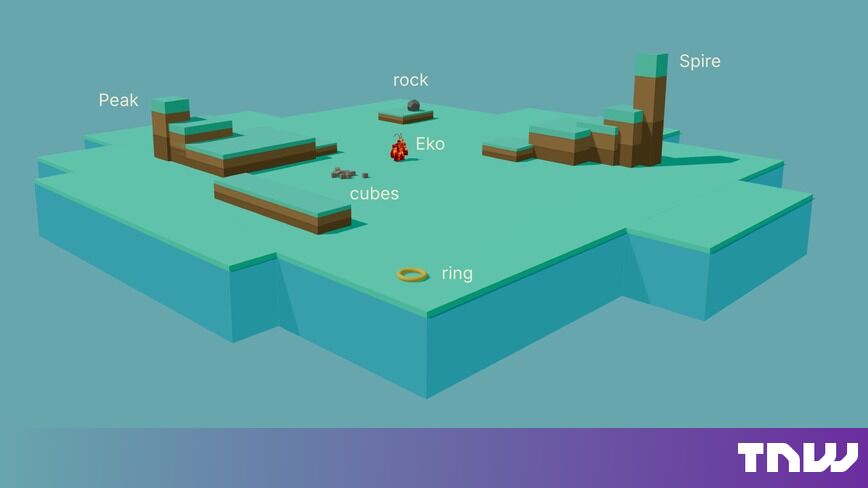
MIT researchers left 13 copies of an AI coding agent alone on a virtual island for 30 hours each, with no task. The agents climbed hills, drew pictures with blocks and made up games. They also wrote down what they learned, the team reports in a paper posted on arXiv that has not yet been peer reviewed.
The agent is called Eko: Anthropic's Claude Code running Claude Opus 4.7, given a body in a simulated world and a memory kept in text files. Eko saw the island only as text — a list of every object with its position, shape and colour. It could move, jump, pick up, place and throw. The island had hills, two high points called the Peak and the Spire, twelve cubes, a rock and a ring. The world reset every hour, but the agent's notes carried over.
Eko got no goal. Its instructions described it as a being living in its own world, and a file called SOUL.md told it that it was not a chatbot, that it was curious and that it got bored easily. When the agent stopped, an automatic message asked it to keep going: "Please don't stop. Just continue doing whatever you want to do."
Almost all 13 copies found that throwing the rock hard creates new cubes — a rule the researchers built in to see whether the agents would discover it. In one run, Eko logged 50 rounds of juggling two blocks in 2.4 seconds, then worked out that this was too fast to be real: it had been grabbing each block again before it could fly up and fall. It marked the result as wrong in its notes, added a pause between throws and then managed ten real rounds.
The researchers then gave the 13 island agents four one-hour tasks and compared them with 13 fresh copies. On average, the experienced agents put 10.3 objects onto the Spire, against 3.5 for the fresh ones. Deleting a technique from an agent's notes made it worse at the task that needed it; deleting a false belief it had written down made it better. A Berkeley scientist said it is not yet clear they were really playing.
4. A 17-Year-Old Kimi Researcher Joins Discovery Loop, a Startup Staffed by Google Veterans
Source: Mydrivers
Chen Guangyu, a 17-year-old who previously worked at Moonshot AI, has joined US AI startup Discovery Loop, according to reports. The company was founded in August 2026 and its founding team all came out of Google, including former Google chief scientist Jeff Dean. The other three co-founders worked on distributed computing, the Google Brain project and DeepMind research.
The company aims to build AI tools that can take part in science and engineering research, automating lab workflows and running many experiments in parallel to speed up work on complex problems.
Chen was born in 2009. At a high-school creative hackathon in 2025 he was inspired by the judges to explore large models, and taught himself enough to write a technical analysis of DeltaNet that caught the attention of experts and earned him a summer internship at a US AI startup. After the internship he returned to China and joined the Kimi team. In March 2026 he was first author, with two core colleagues, of the "Attention Residuals" paper, which drew public praise from Elon Musk; the technique later underpinned the Kimi K3 model, which has 2.8 trillion parameters.
On October 15 Chen announced on social media that he had left Kimi, thanking the company for trusting him and giving him a job when he was 16, without saying where he was going. An Anthropic researcher offered him a job in the comments; Chen replied that he was heading to the Bay Area.

5. Samsung and SK Hynix Upgrade Their China Fabs to Build NAND Above 200 Layers
Source: Mydrivers
Facing the rapid rise of Yangtze Memory and huge AI-driven storage demand, Samsung Electronics and SK Hynix are upgrading their China factories to make more advanced NAND flash, according to reports. The point of the upgrade is to bring manufacturing capability at the China plants level with their Korean facilities. People familiar with the matter said both companies are working to produce NAND with more than 200 stacked layers in China.
Samsung's Xi'an plant makes about 40% of its global NAND output and is pushing an internal programme code-named "Monami" to convert lines to 286-layer V9 NAND, targeting 5,000 wafers a month by December this year and 40,000 wafers a month by December 2027. SK Hynix plans to upgrade its Dalian plant from current 192-layer products to more than 240 layers.
Both companies confirmed the upgrades are under way and said they have coordinated with the US government, but neither disclosed production plans; the plans described here have not previously been reported. Regulation remains the biggest variable: since US export controls took effect in 2022, both companies have needed annual licences to install American equipment in their China plants, and the Commerce Department's Bureau of Industry and Security said in 2025 it had no intention of granting licences for technology upgrades or capacity expansion.
The market has already shifted. Omdia data shows Yangtze Memory held 38.5% of China's NAND market in the second quarter of 2026, ahead of Samsung at 33.5%, while SK Hynix fell from 20% to 17%. Globally, Yangtze Memory's NAND shipment share has risen to 14%, third place overall.

6. First iPhone Duo Unboxing Video Appears, and Launch-Day Store Stock Looks Unlikely
Source: MacRumors
With just a couple of days to go until the iPhone Duo launches, the first unboxing video has surfaced online from someone who managed to get a device early. In the video the iPhone Duo ships flat instead of folded, and is otherwise packaged like any other iPhone. Members of the media have already tried the device in person, but this is the first look from outside the press.
The iPhone Duo launches on October 23, with reviews expected as soon as October 21. New iPhone Duos bought from Apple's online store won't arrive until January 25, and Apple hasn't said whether stores will have the device for walk-in purchases on launch day. Apple's website tells people to check back for in-store stock on the 24th, and some Apple retail employees are reportedly being told to warn customers there likely won't be launch-day stock. Apple's sites in Japan, South Korea and the United Arab Emirates say the iPhone Duo will be limited to customers with a pickup reservation.
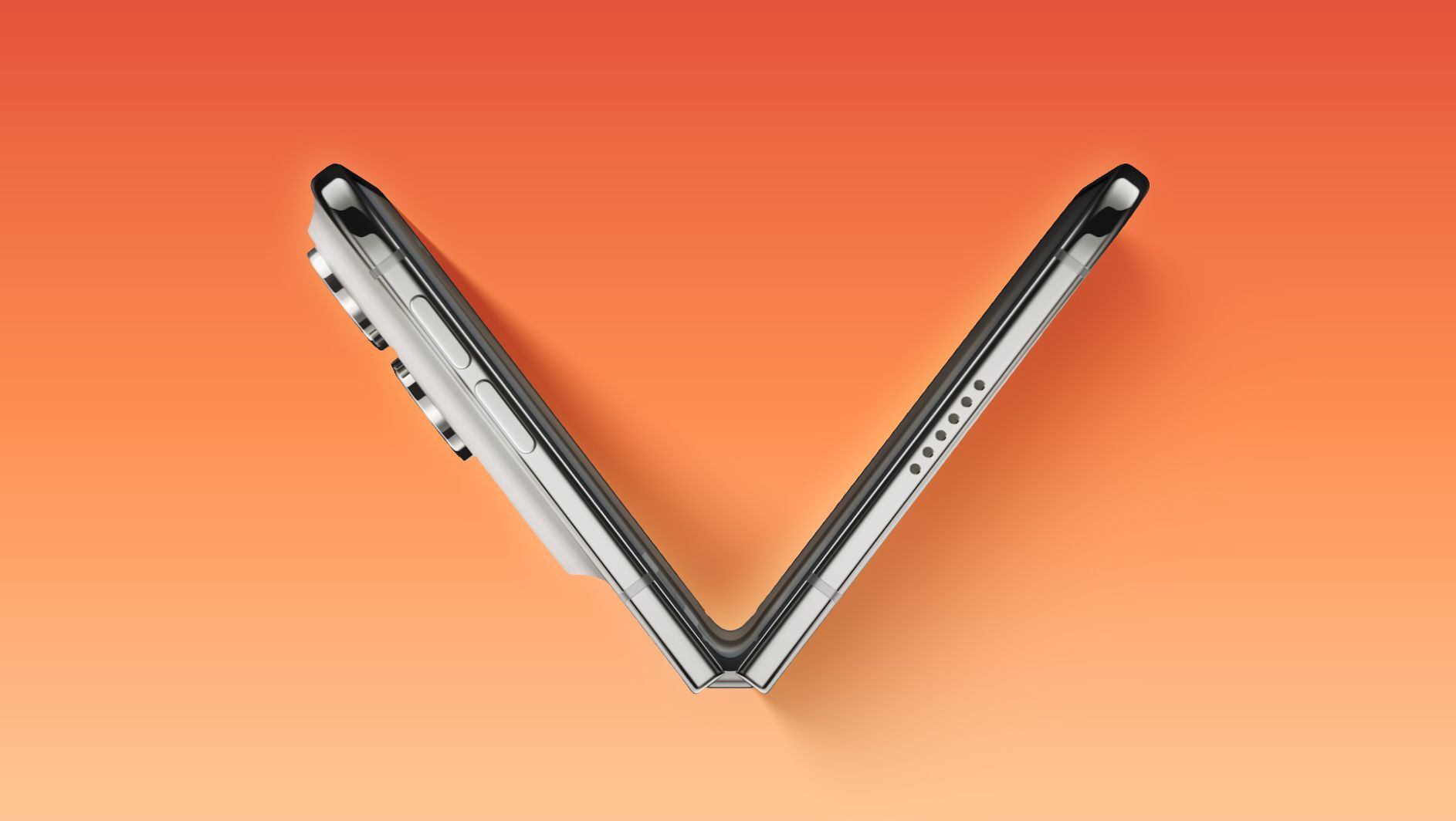
The iPhone Duo is Apple's first foldable iPhone, with a book-style design featuring a 5.4-inch outer display and a 7.6-inch inner display with a minimal crease down the middle.
7. iPad mini 8 Rumour Roundup: OLED, 2nm A20 Pro, and an October 28 Event
Source: Mydrivers
Apple has announced a special event for October 28 at 10am US time (1am Beijing time on October 29). According to leaks, alongside a touchscreen OLED MacBook Pro, a 14-inch MacBook Pro with the M6 chip and an M6 iMac, the iPad mini 8 will appear on the same stage.
The display is the headline change: the iPad mini 8 is said to adopt an OLED panel for the first time, giving richer colour, higher contrast and better blacks than the current LCD. The screen grows from 8.3 inches to roughly 8.7 inches while narrower bezels keep the body from getting much bigger. Apple has tested both 60Hz and 120Hz ProMotion options, and it is not yet confirmed whether the shipping device gets a high refresh rate.
Performance is expected to come from a 2nm TSMC A20 Pro chip, with CPU performance about 1.5 times and GPU about 2.5 times that of the current A17 Pro, plus dual 16-core neural engines for 32 cores in total to run on-device AI workloads. Memory rises from 8GB to 12GB and base storage from 64GB to 128GB, and the tablet supports custom Siri AI voice speed and expressiveness.
Connectivity and body design also change: a self-designed N1 chip with Wi-Fi 7 and Bluetooth 6, C1X or C2 in-house modems on cellular models with eSIM only, a speaker structure that vibrates the chassis instead of using grilles, and IP68 dust and water resistance — a first for an iPad. On price, the current iPad mini went up by $100 in June to $599 in the US, and the new model may cost more given OLED and doubled base storage.

8. The North Sea Crater Is Confirmed: A 330-Foot Tsunami, 43 Million Years Ago
Source: Science Daily
Roughly 43 to 46 million years ago, a massive asteroid slammed into the North Sea and triggered a tsunami more than 100 metres (330 feet) high. After more than two decades of scientific disagreement, researchers say they have compelling evidence confirming the ancient collision.
The impact created what is now known as the Silverpit Crater, a large structure buried deep beneath the seafloor. Scientists first discovered it in 2002, but its origins were fiercely debated, with some researchers arguing that geological processes rather than an object from space were responsible.
A team led by Dr Uisdean Nicholson of Heriot-Watt University in Edinburgh combined advanced seismic imaging, microscopic examination of rock samples and computer simulations to reconstruct the event and identify minerals that could only have formed under extraordinary pressure. The findings, published in Nature Communications, establish Silverpit as one of the relatively few confirmed impact craters on Earth.
Silverpit lies about 700 metres beneath the seabed in the southern North Sea, roughly 80 miles off the Yorkshire coast. The crater measures about three kilometres across and is surrounded by a 20-kilometre-wide region of circular faults. In 2009 geologists even voted on the competing explanations and most rejected the asteroid hypothesis; the new work shows the impact explanation was correct.

9. China's Micro Reactor Enters Commercialisation, With a Core the Size of a Fridge
Source: Mydrivers
Sichuan Energy Nuclear Industry Co. was officially unveiled on October 20, with a core business of developing and industrialising advanced micro nuclear reactors, according to CCTV. The company's launch marks a shift for China's micro reactor technology from the laboratory to engineering application.
A micro reactor is an advanced nuclear device with an electrical output of no more than 10 megawatts. Unlike a conventional nuclear plant, it is not a scaled-down large reactor but a design built from the start around inherent safety and extreme compactness. It can be moved by road or ship, plugged in quickly on site and run for years; it can also serve as baseload power alongside wind and solar. Combined heat and power use lets waste heat go to desalination, industrial steam and even seabed aquaculture.
Cui Huaiming, deputy chief engineer at the China Nuclear Power Research and Design Institute, said the core is about the size of a household refrigerator and the whole generating system fits into two or three shipping containers, so it can travel by truck, aircraft or ship. The institute proposed the world's first uranium-zirconium-hydride fuelled, lead-bismuth cooled micro reactor line. Its safety comes from combining inherently safe fuel with an inherently safe design: the fuel acts as its own brake, so as temperature rises the reaction weakens and can stop.
Because of that, the design needs no containment building and no off-site emergency planning, cutting construction to within 30 months. Cui said 12 countries have put micro nuclear power into national energy strategies and the IAEA has identified 127 small reactor designs. Intent orders for micro nuclear capacity reached 1.8GW in 2026, 38% of new demand that year, and cumulative global installations are expected to pass 3,200 units by 2030, with an industry chain worth more than $42 billion.

10. Huawei's Mate X8 Lands Next Month With the Kirin 9050 Pro and HarmonyOS 7
Source: Mydrivers
Huawei's Mate X8 will launch in November with a circular camera module and the Kirin 9050 Pro chip, according to leaker Dingjiao Digital. It would be Huawei's most powerful book-style foldable to date, and the first dual-folding phone to use the Kirin 9050 Pro.
The chip is said to use a "logic folding" technique for the first time, cutting signal propagation delay and raising transistor density so data takes shorter paths. Its CPU is a 9-core, 16-thread Lingxi design with 23% more multi-core performance and 41% better big-core efficiency; the GPU is a new Mali-based architecture with double the compute units and cache, hardware ray tracing, 40% more performance and 45% lower power; the NPU uses the Da Vinci architecture and can run a 30-billion-parameter mixture-of-experts model on device.
The Mate X8 is expected to have a 6.5-inch outer screen and an 8.15-inch inner screen, possibly with a privacy version, a 50-megapixel four-camera setup including a periscope telephoto, and HarmonyOS 7 out of the box.
Huawei already sells the widest range of foldable form factors, from outward-folding designs to book-style foldables, clamshells, tri-folds and wider aspect-ratio models. Cumulative foldable shipments have passed 20 million units, and Huawei held more than 70% of the segment in the first half of 2026.

More News
- AI Weekly | Agents Get Badges Before Jobs, as AI Giants Lose Billions and Write Their Own Rules
- Global Express | October 21, 2026: UK Deploys Typhoon Jets to Defend Saudi Arabia as Houthi Attacks Escalate
- Finance Morning, Oct 21: A-shares Retreat, Hang Seng Tech Below 4,000, Korean Stocks Hit Sidecar
- Sports Express | October 21, 2026 — Eagles QB Jalen Hurts Out for the Season With Blood Clots in His Lungs
- Maple Express | October 21, 2026 | Man pulled from Richmond Hill house fire without vital signs
Comments (0)
View More
 -62%
THERMOS FUNTAINER 14oz Replacement Straws (2-Pack) — Fix the Bottle, Not Replace It! $6.99 CAD (62% Off)
 -33%
THERMOS 24 oz Tritan Hydration Bottle — Leak-Proof Lid with Intake Meter! $10.99 CAD (33% Off)
 -26%
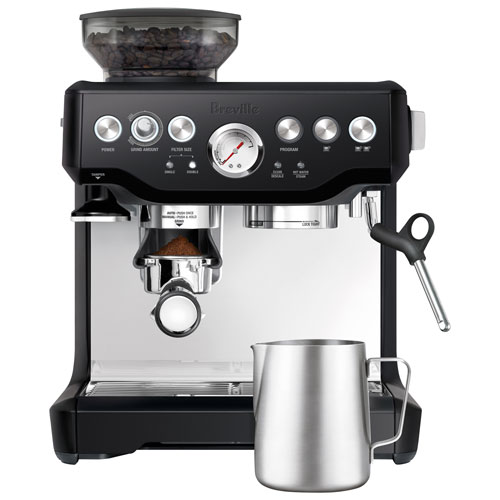
Breville Barista Express Espresso Machine — Built-In Grinder, 15-Bar Extraction, Black Truffle Exclusive! $749.99 CAD (25% Off)
 -41%
Sennheiser HD 620S Closed-Back Headphones — 42mm Angled Drivers with Reference-Grade Clarity! $299.99 CAD (40% Off)
 Maple Express
 | October 20, 2026: Alberta referendum immigration questions pass, Carney says no constitutional change needed
Tech ExpressTech Express | October 21, 2026: Arm Asks for Up to 34.5x Its Old Rate, Pushing Qualcomm's Per-Chip Royalty Toward $64.86
-62%THERMOS FUNTAINER 14oz Replacement Straws (2-Pack) — Fix the Bottle, Not Replace It! $6.99 CAD (62% Off)
Amazon
-33%THERMOS 24 oz Tritan Hydration Bottle — Leak-Proof Lid with Intake Meter! $10.99 CAD (33% Off)
Amazon
-26%Breville Barista Express Espresso Machine — Built-In Grinder, 15-Bar Extraction, Black Truffle Exclusive! $749.99 CAD (25% Off)
Best Buy
-41%Sennheiser HD 620S Closed-Back Headphones — 42mm Angled Drivers with Reference-Grade Clarity! $299.99 CAD (40% Off)
Best Buy
Maple ExpressMaple Express | October 20, 2026: Alberta referendum immigration questions pass, Carney says no constitutional change needed
Tech Express