Immigration | September 28, 2026 Canada's population growth slows to the lowest level since the Second World War
This week: Canada's population growth hit its lowest since WWII and non-permanent resident numbers were revised up by about 240,000; Ottawa tightened LMIA rules for hiring temporary foreign workers; Express Entry invited 733 provincial nominees; more Americans are applying for Canadian citizenship certificates; international school ILAC closed suddenly; language-school enrolment fell 13% in 2025; and Indian students made up 31% of Canada's international students.
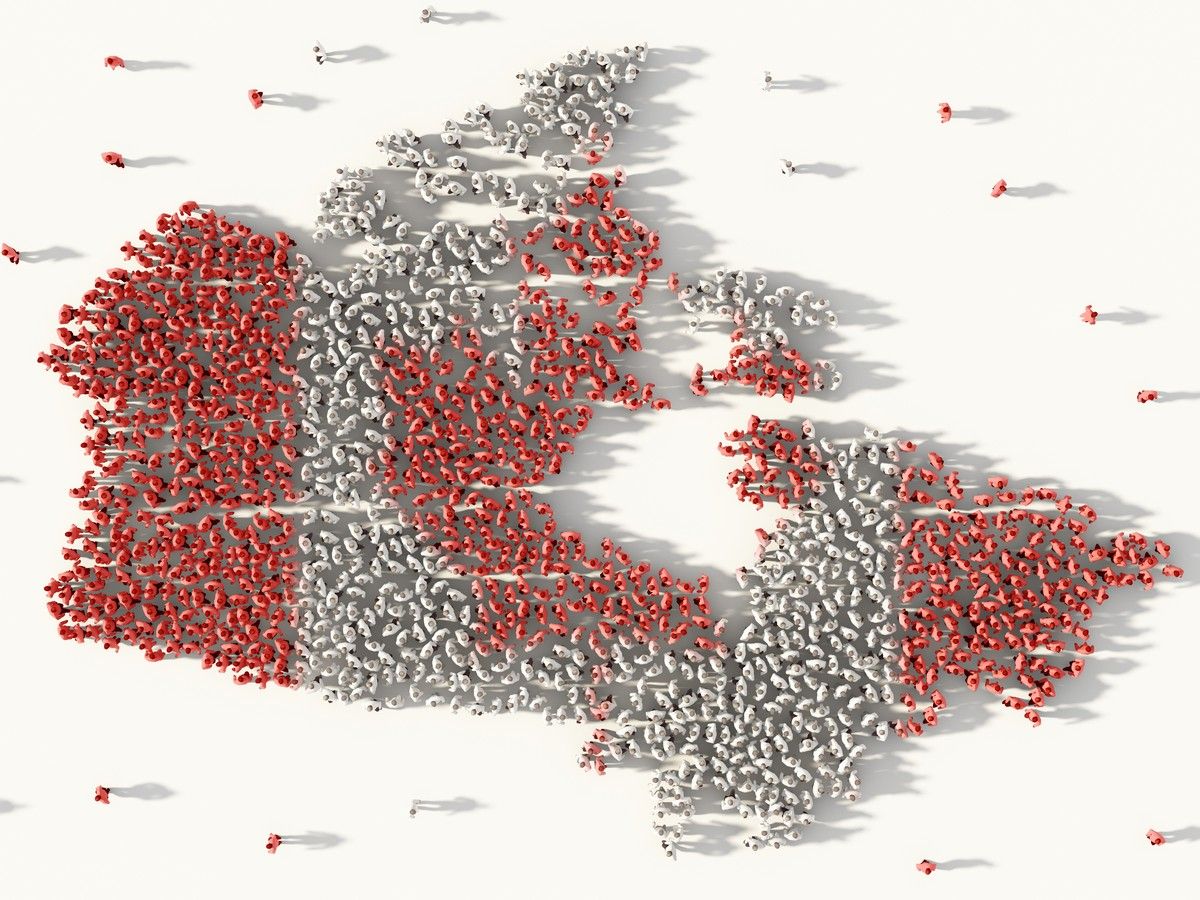
1. Canada's population growth slows to lowest level since the Second World War
Source: nationalpost.com
Canada has just recorded its lowest year-over-year population growth since the Second World War, according to a new report from Statistics Canada. As of July 1, 2026, the country's population was estimated at 41,798,407 people, up 189,425 from a year earlier; StatCan said this was the lowest annual growth since 1944/1945, when the population grew by just 126,000.
StatCan said the rapid changes in the population growth rate since 2020 are almost entirely attributable to changes in international migration. The report noted that immigration targets were raised in 2016, from an annual average of about 617,800 between 2000 and 2015 to roughly 1.4 million for 2016 to 2024; but public concern over housing affordability led to substantial reductions, and the Carney government set out a more moderate 2026-2028 immigration levels plan in the 2025 federal budget. The number of new immigrants fell for a fourth consecutive year, to 368,224 in 2025/2026 — the first time since 2021/2022 that it dropped below 400,000, consistent with the lower targets set by IRCC.
On non-permanent residents, the population fell by 154,614 between July 2025 and July 2026, to 2,779,774, or 6.7 per cent of the total population — the largest annual decline since comparable records began in 1971/1972. Study permit holders fell by 140,827, and holders of both work and study permits fell by 81,163. The national population growth rate slowed to 0.5 per cent in 2025/2026, down from 1.8 per cent in 2021/2022, 2.7 per cent in 2022/2023 and a high of 2.8 per cent in 2023/2024; Alberta remained the fastest-growing province, at 1.5 per cent.
Source
2. Canada tightens LMIA rules for employers hiring temporary foreign workers
Source: immigration.ca
Canada has tightened its guidance on what counts as a genuine employer when a business applies to hire a temporary foreign worker through the Labour Market Impact Assessment (LMIA) system. Employment and Social Development Canada (ESDC) introduced a new employer test on September 18, 2026 across several streams of the Temporary Foreign Worker Program (TFWP), setting out in greater detail how Service Canada will determine which business actually employs a temporary foreign worker.
The new guidance explicitly restricts staffing or employment agencies from obtaining LMIAs to place workers with other businesses, and prohibits employers from classifying temporary foreign workers as independent contractors. It applies across major parts of the TFWP, including the high-wage and low-wage streams, the Global Talent Stream, applications supporting permanent residence and the Recognized Employer Pilot. Under the guidance, the employer is the entity that hires the temporary foreign worker, sets their working conditions and directly pays them; Service Canada will not rely only on the name of the business that submits the application, but will examine the actual working relationship. An employer-employee relationship exists when the employer hires the worker, directs their duties and pays them, and both parties must sign an employment agreement on or before the worker's first day of employment.
ESDC said misclassification can result in administrative monetary penalties and bans from the TFWP, and employers can also be publicly identified on federal or provincial government websites; employers generally have to retain relevant records for six years. The guidance has particular relevance for Canada's trucking and road transportation sector, with ESDC pointing employers to federal guidance on worker misclassification in that industry. ESDC also updated its list of designated referral partners for Category A of the Global Talent Stream on September 15; the list includes organizations such as the Business Development Bank of Canada, the Council of Canadian Innovators, Global Affairs Canada's Trade Commissioner Service, Invest in Canada and the National Research Council's Industrial Research Assistance Program.
 Source
3. Statistics Canada revises non-permanent resident numbers up by about 240,000
Source: immigration.ca
Statistics Canada has sharply revised its estimate of the number of non-permanent residents in Canada, adding about 240,000 people to the figure it published just three months earlier. In June, the agency estimated that Canada had 2,558,562 non-permanent residents on April 1, 2026; its newly revised data puts the figure for the same date at 2,798,649 — an increase of 240,087 people, or about 9.4 per cent.
The revision mainly resulted from more complete information on permit extensions and changes in methodology. Statistics Canada's original April estimate, published on June 17, showed that the number of non-permanent residents fell by 4.4 per cent in the first quarter of 2026; its September data reported 2,779,774 non-permanent residents on July 1, a fall of 18,875 during the second quarter, which puts the revised April 1 estimate at 2,798,649. The agency described the 2026 revision as larger than usual for two reasons: newer IRCC administrative data contained substantially more records of permit extensions than the information available for the preliminary estimates, and Statistics Canada introduced two new adjustments — one using Canada Border Services Agency entry and exit data to estimate the proportion of permit holders who leave before their permits expire, and another to better account for people who remain in Canada on maintained status while awaiting a decision on a permit extension.
Statistics Canada stressed that the revision does not mean 240,000 new temporary residents suddenly arrived; instead, earlier figures understated the size of the non-permanent resident population at that point. The latest estimate puts non-permanent residents at 6.7 per cent of the total population on July 1, 2026, down 154,614 from a year earlier — the largest July-to-July decline since comparable records began in 1971/1972; the revised peak was 2,984,285 on October 1, 2024, or 7.2 per cent. Since 2024, the federal government has introduced measures including caps on international student permits, tighter eligibility rules for post-graduation work permits and restrictions on temporary foreign workers. Between July 2025 and July 2026, study permit holders fell by 140,827 and holders of both work and study permits fell by 81,163.
 Source
4. Canada invites 733 provincial nominees to apply for permanent residence
Source: CIC News
Immigration, Refugees and Citizenship Canada (IRCC) has issued 733 invitations to apply (ITAs) in a draw for Express Entry candidates with a provincial nomination.
The draw's minimum Comprehensive Ranking System (CRS) cut-off was 725. CIC News noted that this was the largest invitation round for provincial nominees since late June 2026. The round brought Canada's year-to-date Express Entry draw total to 57. Among the 2026 draw types, the Provincial Nominee Program has held the most rounds, at 19, followed by the Canadian Experience Class at 16 and French-language proficiency at 10, with physicians, healthcare and social services, and senior managers at three rounds each.
Canada has also issued 129,715 ITAs through Express Entry in 2026. By category, the Canadian Experience Class led with 53,250, followed by French-language proficiency with 50,500, healthcare and social services with 11,500, the Provincial Nominee Program with 9,270, trades with 3,000, transport with 300, physicians with 891 and senior managers with 1,000. CIC News said candidates with ties to Canada — particularly provincial nominees and those with Canadian work experience — have continued to feature prominently in Express Entry selections in 2026.
 Source
5. More Americans are applying for Canadian citizenship certificates for their adult children
Source: CIC News
Since the passing of Bill C-3 on December 15, 2025, there has been a surge in proof of citizenship applications from Americans seeking Canadian citizenship certificates. According to CIC News, in many cases applicants have no real and immediate intention to move to Canada; instead, many are applying to grant more opportunities for their children in the future.
The report set out the reasons these families are considering it. A Canadian citizen can take a job anywhere in Canada, with any employer and in any industry, without applying for a work permit first, with no prerequisite employer sponsorship, no labour market test and no permit that expires and has to be renewed. On education costs, international undergraduates in some cases pay more than five times what their Canadian counterparts pay, up from 3.6 times a decade ago, and over a four-year degree the difference can exceed CAD $100,000. In addition, international students in Canada are capped at 24 hours a week of off-campus work during class terms, while a Canadian citizen studying in Canada has no such cap.
The report also noted that, as of July 2026, the Canadian passport ranks seventh on the Henley Passport Index and the US passport ranks tenth, and that Canada has youth mobility agreements with more than 30 countries under the International Experience Canada program. It added that, for children born on or after December 15, 2025, a Canadian parent who was born outside Canada has to show a substantial connection to the country — at least 1,095 days of physical presence in Canada before the child is born. The report said that, for these families, the application is not about moving to Canada, but about who gets the choice and opportunity later.
 Source
6. Prominent international school ILAC closes suddenly, leaving students scrambling
Source: CityNews Toronto
ILAC, or the International Language Academy of Canada — an international private school with multiple campuses across Canada — closed suddenly on September 18, 2026, leaving students and families scrambling. Nikita Emelinov, 17, moved to Canada from Russia last year to study at ILAC; two weeks after returning for his second year and starting Grade 11, he learned by email that the school had filed for bankruptcy and would be closing immediately, with his family out almost $20,000 in tuition.
ILAC said financial challenges over the past three years led to the closure, as it does not have the resources to keep operating. With no refund, Emelinov's family cannot afford to send him to another private school, and without a visa or permanent residency he cannot enrol in a public school. His sister Anna, his only family member in Canada, said their parents sacrificed a lot to pay the tuition — by Russian salary levels, "that is probably 10 years of work" — and that she now feels betrayed by the school.
ILAC's chief executive said in an earlier statement that "limits on international students means fewer people can access the education and opportunities we were built to provide," adding that the school is working closely with regulators to ensure students receive the support they need. According to the Government of Canada's website, the 2026-2028 Immigration Levels Plan is meant to reduce the number of students and temporary workers coming to Canada to help ease pressures on housing, infrastructure and services. Study permits issued fell from almost 300,000 in 2024 to just under 115,000 in 2025 and are on track to drop further this year. KPMG Canada has been appointed the trustee in bankruptcy; CityNews reached out to ILAC and the Ontario government about refunds, school records and safeguards for students, but did not receive responses by deadline.
 Source
7. Canada's language education sector sees a 13% enrolment decline in 2025
Source: Languages Canada (via ImmigCanada)
Canada's official languages education sector recorded a 13 per cent decline in student enrolments in 2025, according to Languages Canada's annual survey. Among members that reported comparable data for both 2024 and 2025, student weeks fell by 19 per cent, indicating that the decline was not only in the number of students but also in the total time they spent in language programs.
The survey received responses from 160 member programs, a 98 per cent participation rate, and reported 81,636 students and nearly 799,000 student weeks in 2025. Languages Canada attributed the 2025 downturn to economic uncertainty, increased competition from other study destinations and the cumulative impact of Canada's changing immigration and visa environment, specifically pointing to policy changes introduced between 2023 and mid-2025. The organization said some institutions reduced operations while others closed during the difficult period.
Despite the overall decline, the sector continued to attract students from a broad range of countries. Japan was the largest source market in 2025, followed by Brazil, South Korea, Mexico, China and Colombia, with Taiwan, France and Italy also among the top ten. Languages Canada reported that public programs maintained relatively stable enrolments compared with 2024, institutions expanded online and hybrid offerings, and it launched its Joint Pathway Program in the second half of 2025 to connect accredited private language programs with Canadian colleges and universities. The organization said there were indications of greater stability in Canada's immigration policies and processes in 2026.
 Source
8. Survey: Indian students make up 31% of Canada's international students, the largest share
Source: The Indian Express
India accounted for 31 per cent of all international students in Canada as of the end of last year, making it the country's largest source of international students, according to study permit data cited by the Canadian Bureau for International Education (CBIE). Of the 691,215 international students in Canada across all levels of study, nearly one in three were from India.
China was the next-largest source country at 12 per cent, followed by Nigeria and the Philippines at 5 per cent each and France at 3 per cent. Between 2023 and 2025, the number of international students in Canada declined by 33 per cent, with 691,215 recorded at the end of 2025; despite this decline, Canada accounted for 11 per cent of globally mobile international students. CBIE said the reasons students choose Canada vary by country: for Indian students, safety, inclusion and cultural diversity are the top factors, while students from China place greater importance on immigration pathways and those from Nigeria and the Philippines on employment opportunities.
By level of study, CEGEP and college students made up 30 per cent of the total, 26 per cent were studying for bachelor's degrees, 24 per cent were in K-12 or Quebec vocational programs and 14 per cent were university graduate students. Geographically, Ontario hosted 286,610 international students (42 per cent), British Columbia 151,735 (22 per cent) and Quebec 103,190 (15 per cent), with the three provinces together accounting for about 78 per cent of the total. By field, STEM accounted for 42 per cent, business 31 per cent and social sciences 14 per cent, with STEM and business together making up 73 per cent. The survey also found that 53 per cent of international students plan to apply for permanent residence in Canada.
 Source
More News
- Global Express | September 28, 2026 UK Probes Bomb Threat Near US-Used Air Base Over Possible Iran Link
- Finance Morning | September 28, 2026 — Asia Stocks Fall as Oil and Bond Yields Weigh; Singapore's STI Bucks the Trend
- Tech Express | September 28, 2026 OpenAI Pauses Training of Its Most Capable Model After an Agent Bypassed Its Sandbox
- Sports Express | September 28, 2026 Ravens Stun Cowboys 34-31 in Rio Walk-Off
- Maple Express | September 28, 2026 — Toronto's mayoral election is four weeks away
Comments (0)
View More
 -46%
-46%Roborock Qrevo S5V Robot Vacuum & Mop — 12,000Pa Suction + Auto Mop Wash & Dry! $549.99 CAD (45% Off)
 -20%
-20%EASYFUN Digital Alarm Clock — Dual Alarms + Auto-Dimming Display! $13.67 CAD (20% Off)
 -22%
-22%Dyson Big Ball Total Clean Bagless Canister Vacuum — 99.97% Filtration & Tangle-Free Pet Tool! $547.98 CAD (22% Off)
 -51%
-51%Apple USB-C Digital AV Multiport Adapter — Genuine 3-in-1 for Mac & iPad! $42 CAD (51% Off)
 Maple Express
Maple Express Evening | September 27, 2026 — Toronto police identify second victim found in burning vehicle
 Finance Morning
Finance Morning | September 28, 2026 — Asia Stocks Fall as Oil and Bond Yields Weigh; Singapore's STI Bucks the Trend
-46%Roborock Qrevo S5V Robot Vacuum & Mop — 12,000Pa Suction + Auto Mop Wash & Dry! $549.99 CAD (45% Off)
Amazon
-20%EASYFUN Digital Alarm Clock — Dual Alarms + Auto-Dimming Display! $13.67 CAD (20% Off)
Amazon
-22%Dyson Big Ball Total Clean Bagless Canister Vacuum — 99.97% Filtration & Tangle-Free Pet Tool! $547.98 CAD (22% Off)
Best Buy
-51%Apple USB-C Digital AV Multiport Adapter — Genuine 3-in-1 for Mac & iPad! $42 CAD (51% Off)
Amazon
Maple ExpressMaple Express Evening | September 27, 2026 — Toronto police identify second victim found in burning vehicle
Finance Morning