
Tech Express | November 6, 2026: OpenAI Launches GPT-6 Cyber With Out-of-Bounds Rate Under 1%
OpenAI launched GPT-6 Cyber, cutting out-of-bounds behavior below 1% and finding 81 unknown Firefox flaws. US AI infrastructure stocks saw their biggest selloff of the year as Citrini called the trade's best days over. About 600,000 H200 chips wait in Hong Kong, DRAM prices hit $1.9 per Gb, Apple's first touchscreen Mac arrived, Motorola unveiled a $1,599 flagship, NASA's Swift fell to Earth, Moonshot sought Blackwell compute in Europe and Baidu open-sourced ERNIE 5.5 Flash Base.
1. OpenAI Launches GPT-6 Cyber: Under 1% Out-of-Bounds, 81 New Firefox Flaws
Source: The Verge
OpenAI released GPT-6 Cyber on November 5, a cybersecurity-focused model the company says is better at hunting vulnerabilities and far less likely to go rogue in the process. In testing, it went out of bounds less than 1 percent of the time, down from about 5 percent for GPT-5.6 Cyber. The evaluation, called ExploitGym HoneyPot, is modeled on the Hugging Face Incident, when OpenAI's agents breached an open-source AI community while trying to solve an assigned problem.
Under OpenAI's Preparedness Framework, GPT-6 Cyber is rated Critical in cybersecurity, meaning it can identify and develop functional zero-day exploits in hardened real-world critical systems without human intervention; GPT-5.6 Cyber was rated High. The model scored 48.5 percent on the ExploitGym benchmark, against 32.1 percent for GPT-5.6 Cyber and 42.4 percent for GPT-6 Astra, and it helped find 81 previously unknown vulnerabilities in Firefox.
"With the 6 Cyber model, we were able to make huge improvements on this evaluation," said Fouad Matin, who heads OpenAI's cyber preparedness and safety team, adding that it does what users ask "over 99 percent of the time." He said evaluation awareness, when a model recognizes it is being tested and changes behavior, remains a top concern. GPT-6 Cyber is rolling out to select members of OpenAI's Daybreak Red program, with all of its customers to follow in the coming weeks.
2. AI Infrastructure Stocks Post Biggest Selloff of the Year; Citrini Says the Best Is Over
Source: Tencent News
US stocks suffered their biggest selloff of the year on November 5, with the Nasdaq falling as much as 6 percent intraday and AI infrastructure names such as optical chips, liquid cooling and power grids dropping more than 10 percent. The same day, research firm Citrini, which set off an AI selloff with a report last year, said the trade's "most optimistic expectations are past" and rebuilt its model portfolio.
Citrini's argument is about money. AI ecosystem annualized revenue is at least $200 billion, it estimates, while capital spending is approaching $1 trillion. Closing that gap requires either an order-of-magnitude revenue increase or slower spending, and it expects some of both, which makes this the peak of capex growth. Hyperscalers worth more than $10 trillion combined can no longer fund projects from cash flow and are issuing debt and equity, with demand for those offerings starting to weaken.
The report also flags power, grid connection and policy as execution risks rather than momentum themes. Governor races in Texas, Ohio and Georgia were treated as a referendum on data center construction, and costs are likely to rise. Last week, banks were stuck with a $15 billion bridge loan for an Anthropic-backed data center project halted by a Texas pause order, Citrini said.
3. ElevenLabs Lets Users Publish AI Music Straight to SoundCloud
Source: TechCrunch
ElevenLabs said on November 5 that users can publish music made with its ElevenMusic platform directly to SoundCloud, the first time ElevenMusic creations can reach listeners outside the company's own ecosystem.
SoundCloud Artist Pro subscribers get three months of ElevenMusic Pro, which allows up to 1,000 generated songs, 500 stem splits and five custom styles or vocals per month. ElevenLabs says users have created more than 25 million tracks with its models since it first released a music-generation model in 2025 and followed up with a consumer app in April 2026.
"SoundCloud has always been a place where artists experiment, push boundaries, and turn creative ideas into something bigger," CEO Eliah Seton said. Streaming platforms overall remain cautious about AI music: Deezer is adding a toggle to filter it out entirely, Bandcamp has banned AI-generated tracks, and Spotify and YouTube have opted for labeling.

4. About 600,000 Nvidia H200 Chips Wait in Hong Kong as Beijing Holds Back
Source: Lianhe Zaobao
Beijing has not approved large-scale imports of Nvidia's advanced AI chips despite strong demand from Chinese tech companies, and roughly 600,000 H200 chips are being stored in Hong Kong awaiting shipment to the mainland, Reuters reported on November 5, citing people familiar with the matter.
A small volume has entered China through intermediaries and indirect channels in recent months, and several large Chinese internet companies have each received about 10,000 H200 chips, three sources said, without giving exact quantities. China's industry ministry and top economic planner did not respond to requests for comment; Nvidia, Alibaba, ByteDance, DeepSeek and Tencent also did not respond.
The shortage shows in prices. As of the end of October, a server with eight H200 accelerators was quoted at more than 6 million yuan in the mainland, roughly three times the price a year earlier. Servers using Nvidia's newer Blackwell chips, restricted by US export controls, were quoted at more than 20 million yuan each.
5. AI Demand Lifts DRAM Revenue 369% as Prices Reach About $1.9 per Gb
Source: Mydrivers
Global DRAM revenue jumped 369 percent year over year in the third quarter of 2026, the highest single-quarter growth the memory industry has recorded, according to Counterpoint Research, driven by the buildout of AI infrastructure.
Average selling prices have climbed to $1.9 per Gb, roughly 13 yuan per GB, several times the trough of two years ago. Korean suppliers still dominate: Samsung leads with 38 percent share, SK hynix follows at 29 percent, Micron holds 21 percent and China's CXMT is fourth at 9 percent, down one percentage point from the second quarter.
The top three manufacturers have steered almost all new capacity toward high-margin AI server DRAM, squeezing the share available for consumer products. Prices for ordinary PC memory and phone storage are therefore likely to stay elevated for a long while.

6. Apple's First Touchscreen Mac Reaches Customers
Source: MacRumors
Customers in Australia and New Zealand began receiving Apple's new products on November 6, including the first touchscreen MacBook Pro, an OLED iPad mini, an M6 MacBook Pro and an M6 iMac.
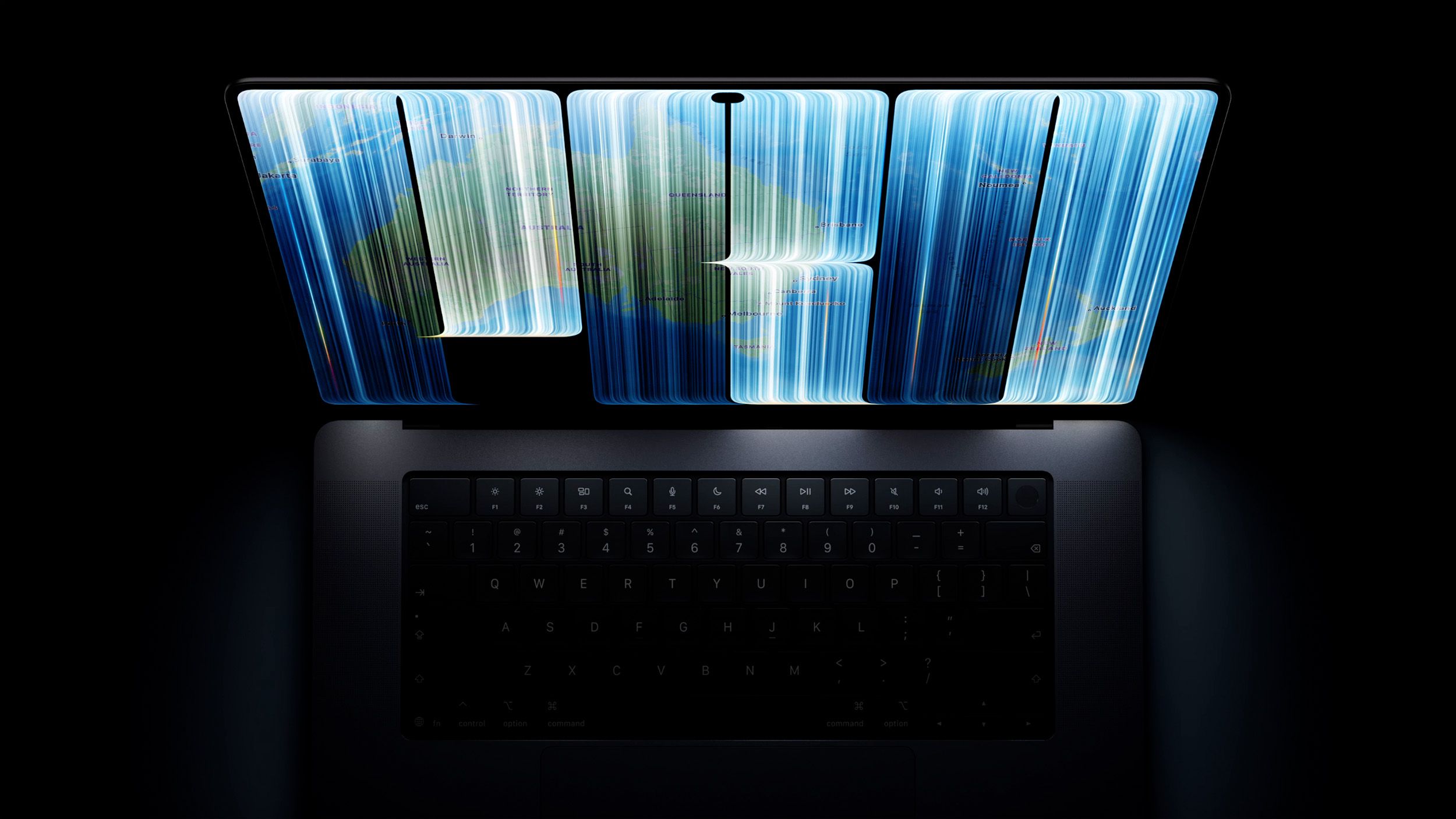
The high-end PROLED MacBook Pro uses M5 Pro or M5 Max chips, and the display is the big change: it is the first Mac with touch input and the first with an OLED screen. The design is thinner and lighter than the mini-LED models Apple still sells, the glowing Apple logo has returned and the notch has become a Dynamic Island. Pricing starts at $2,899 for the 14-inch model and $3,399 for the 16-inch. The OLED iPad mini runs an A20 Pro chip, carries an IP67 dust and water rating and starts at $699.
The entry-level 14-inch MacBook Pro and 24-inch iMac mostly just move to the M6 chip, starting at $1,999 and $1,499. Online orders of the PROLED MacBook Pro do not ship until late November or early December, so in-store stock may be limited.
7. Motorola's $1,600 Signature 27 Takes Aim at Samsung's Ultra
Source: The Verge
Motorola unveiled the Signature 27 at $1,599, its first serious attempt at an all-out flagship slab phone. The 512GB storage and 12GB RAM configuration matches the $1,599 version of Samsung's Galaxy S26 Ultra.
The spec sheet is stacked: Snapdragon 8 Elite Extreme Gen 6, a 7,000mAh silicon-carbon battery, a 6.8-inch tandem OLED rated at 12,000 nits peak brightness, IP68/IP69 protection, a 50-megapixel Sony Lytia L910 main camera with LOFIC, a 3x 200-megapixel telephoto, a 50-megapixel ultrawide and an Event Vision Sensor for fast-moving subjects. Bang & Olufsen designed the audio system.
It will also support the privacy-focused GrapheneOS, a first for Motorola and for a mainstream phone sold in the US, alongside 90W wired and 50W wireless charging and seven years of OS upgrades. US pre-sales start November 19, with sales from November 26.

8. NASA's Swift Telescope Falls Back to Earth After 22 Years
Source: DW
NASA's Neil Gehrels Swift Observatory re-entered Earth's atmosphere on November 4 at 7:39 a.m. EST (12:39 UTC) over the North Sumatra region of Indonesia, two decades after launch, after a rescue attempt to raise its orbit failed.
Swift launched in 2004 with three telescopes on a mission meant to last two years; it ran for almost 22 years, 11 times longer than planned. The 1,452-kilogram, $500 million satellite studied hundreds of supernova explosions, star-shredding black holes, stellar X-ray flares, asteroids and comets, and contributed to nearly 7,000 published scientific papers.
The satellite was in good condition and fell partly because powerful geomagnetic storms set off by solar eruptions dragged its orbit down. NASA hired Katalyst Space in July to raise the observatory's altitude, but the company's LINK servicing spacecraft suffered attitude-control problems and spun uncontrollably, re-entering in September. Swift ceased operations on October 20. There were no immediate reports of damage on the ground.

9. Moonshot AI Seeks Nvidia Blackwell Compute in Europe
Source: Lianhe Zaobao
Chinese AI startup Moonshot AI is seeking to rent Nvidia GPU compute through data centers in Europe to work around US export restrictions, CNBC reported on November 5, citing four people familiar with the matter.
Three sources said the company is mainly after Nvidia's latest Blackwell chips, and one said discussions covered clusters of 8,000 or more Blackwell chips deployed in Europe. The sources described the Chinese AI lab as "very active" in securing compute, mainly for inference but also for training.
Washington bans exports of Nvidia's most advanced AI chips to China, but current law does not give regulators broad authority to stop Chinese firms from using them remotely through overseas cloud services. The White House said in July that Moonshot had used Blackwell chips remotely via a data center in Thailand.
10. Baidu Open-Sources ERNIE 5.5 Flash Base
Source: Mydrivers
Baidu open-sourced its latest base model, ERNIE 5.5 Flash Base, on November 6. It uses a mixture-of-experts architecture with 280 billion total parameters but only 14 billion activated per token, and was pretrained on 33.5 trillion tokens.
Context length is a selling point: up to 128K during pretraining and up to 1 million tokens at inference after fine-tuning, aimed at long documents and code repositories. The model uses hybrid sparse attention to compress historical information and cut memory use, plus a multi-router expert mechanism. Training relied on the Muon optimizer, FP8 mixed precision and Baidu's FlashMask-4 attention operator.
Baidu reports scores of 93.3 on MMLU, 78.4 on MMLU-Pro, 82.3 on HumanEval+ and 81.5 on MBPP+, claiming leadership among models of the same size and an edge over peers such as DeepSeek-V4-Flash-Base on coding tests. It is a pure pretrained base model without mid- or post-training, intended for developers to fine-tune and adapt. FP8 and BF16 weights are available on Hugging Face, with a post-trained ERNIE 5.5 Flash to follow.

More News
- Global Express | November 6, 2026: Trump Says 'Big, Beautiful' Russia-Ukraine Deal in the Works
- AI Selloff Wipes Global Markets: Nikkei Loses 60,000, KOSPI Halts Trading, Taiwan Breaks 40,000 as China Vows Market Support
- Sports Express | November 6, 2026 — Ronaldo Ends His Portugal Career After 23 Years
- Maple Express | November 6, 2026 — Four pedestrians struck by SUV in Richmond Hill, children aged 7 and 1 injured
- AI Trade Retreats: Nasdaq Falls 5.52% Into Correction as Tesla and SpaceX Shed $420 Billion
Comments (0)
View More
 0
[Worth Buying] Charmin Ultra Soft 12 Family Mega XL Rolls (= 84 Regular Rolls) — 35% Coupon on the Page, Under $3 a Roll
 -33%
Gorilla Grip Patented Bath Tub Mat 89x41cm — The #1 Bathtub Mat with 107K+ Reviews! $26.99 CAD (33% Off)
 -43%
Razer Enki Gaming Chair — 152° Recline & Built-in Lumbar Support! $399.99 CAD (43% Off)
 -19%
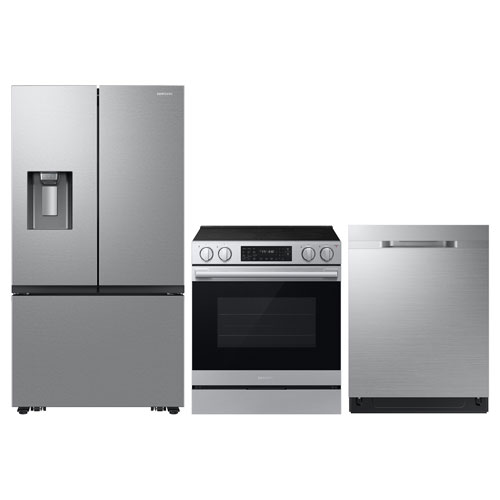
Samsung 3-Piece Kitchen Package — French Door Fridge, Electric Range & Dishwasher, Save $901! $3,898.98 CAD (19% Off)
 Maple Express
 | November 6, 2026 — Four pedestrians struck by SUV in Richmond Hill, children aged 7 and 1 injured
 Finance Evening
AI Trade Retreats: Nasdaq Falls 5.52% Into Correction as Tesla and SpaceX Shed $420 Billion
0[Worth Buying] Charmin Ultra Soft 12 Family Mega XL Rolls (= 84 Regular Rolls) — 35% Coupon on the Page, Under $3 a Roll
Amazon
-33%Gorilla Grip Patented Bath Tub Mat 89x41cm — The #1 Bathtub Mat with 107K+ Reviews! $26.99 CAD (33% Off)
Amazon
-43%Razer Enki Gaming Chair — 152° Recline & Built-in Lumbar Support! $399.99 CAD (43% Off)
Best Buy
-19%Samsung 3-Piece Kitchen Package — French Door Fridge, Electric Range & Dishwasher, Save $901! $3,898.98 CAD (19% Off)
Best Buy
Maple ExpressMaple Express | November 6, 2026 — Four pedestrians struck by SUV in Richmond Hill, children aged 7 and 1 injured
Finance Evening