
AI Trade Retreats: Nasdaq Falls 5.52% Into Correction as Tesla and SpaceX Shed $420 Billion
US stocks sold off as the AI trade unwound: the Nasdaq fell 5.52% into correction, the S&P 500 lost 4.36% and Toronto's TSX 2.03%. Tesla and SpaceX shed over $420 billion in two days. Wendy's posted a seventh straight sales decline and rejected a $1.4 billion offer; Qualcomm beat on Q4 but its EPS outlook disappointed; CVS announced a breakup. Democrats' Senate win blunts Trump's Fed push, crypto's Clarity Act dims, and the IRS published 2027 brackets.
📊 North American Markets Today
| Index / Asset | Close | Change | % Change |
|---|---|---|---|
| S&P 500 | 7,353.73 | -334.89 | -4.36% |
| Nasdaq | 24,315.00 | -1,421.52 | -5.52% |
| Dow Jones | 51,523.06 | -1,833.06 | -3.44% |
| Toronto TSX | 35,605.27 | -736.13 | -2.03% |
| CAD/USD (USD/CAD) | 1.4012 | +0.0037 | +0.26% |
| WTI Crude | 91.20 | +0.68 | +0.75% |
| Gold | 4,097.90 | -15.60 | -0.38% |
1. US Stocks | AI trade retreats, Nasdaq slips into correction
Source: CNBC
After the US midterm elections, the market began repricing the outlook for artificial intelligence infrastructure and technology stocks sold off sharply on Thursday. The Nasdaq Composite dropped 5% on the day and fell into correction territory, more than 11% below the record high it set last month. The iShares Semiconductor ETF fell 11%, its biggest one-day decline since the Covid shock in March 2020.
Democrats won big in the midterms and are more aggressively opposed to data center buildouts than Republicans, so Wall Street is quickly redoing its math on what any restrictions could mean for the future growth of the companies involved. Peter Boockvar, chief investment officer at One Point BFG Wealth Partners, told CNBC that investors are now questioning the $1.2 trillion of capex the firm forecasts for next year. "Well, maybe that's not going to happen."
The selling spilled over into non-AI names, with the Dow Jones Industrial Average down more than 1,600 points intraday. Eric Johnston, head of equities at Cantor Fitzgerald, said there has been "a huge change in the outlook for AI infrastructure buildout," adding that the entire economy, the consumer and earnings growth are all levered to that buildout. Some firms see an overshoot: Larry Adam, chief investment officer at Raymond James, called the "indiscriminate selling" a buying opportunity and urged investors to take a longer-term view of fundamentals.
2. US Stocks | Memory-chip shortage spreads, Micron shares plunge
Source: Investor's Business Daily
Memory-chip shortages are having ripple effects across the tech sector, leading to higher prices and lower production for computers, smartphones and other devices. Micron Technology (MU) stock fell sharply on Thursday in the wake of that trend.
According to Investor's Business Daily, the shortage has led to disappointing sales and profit margins this earnings season for companies ranging from Apple (AAPL) to Zebra Technologies (ZBRA). The impact is no longer confined to memory makers themselves but is being felt along the entire hardware supply chain.

3. US Stocks | Musk's two companies shed over $420 billion in market cap in two days
Source: CNBC
Investors are concerned that Elon Musk could face new congressional probes — and his companies stricter regulation — following the US midterm elections. SpaceX and Tesla shares declined by about 9% and 11%, respectively, on Thursday afternoon. The declines brought aggregate market cap losses for the two companies to over $420 billion since Tuesday's close; by the close of business on Thursday the figure was about $456 billion. The drop correlated with a broader tech sell-off.
Musk's wealth, which had topped $1 trillion after SpaceX's initial public offering in June, is now below $800 billion, having dropped about $90 billion in the past week, according to Forbes. He is still the richest person in the world. Musk was the biggest donor to GOP candidates and causes in the midterms, with contributions exceeding $470 million, the Financial Times first reported — yet most of the candidates he backed lost.
In Texas, where both Tesla and SpaceX are headquartered, Democrats Sen.-elect James Talarico and Gov.-elect Gina Hinojosa beat longtime Musk allies, state Attorney General Ken Paxton and Gov. Greg Abbott. Deutsche Bank analysts wrote in a note on Wednesday that Hinojosa "made data centers a major campaign issue," calling for "a moratorium on new approvals until the legislature passes stronger protections on water use, electricity costs, local control, and incentives," and criticizing tax breaks for large facilities. Both companies are building out AI infrastructure in Texas, including plans for Terafab, a facility that will include a data center and a sprawling semiconductor factory, in Grimes County.

4. Corporate | Wendy's posts seventh straight sales decline, rejects $1.4 billion offer
Source: CNN
Wendy's reported its seventh consecutive quarter of declining sales on Thursday, prompting the company to reveal a turnaround plan while rejecting a massive takeover offer. The board "unanimously rejected" a $1.4 billion offer from a group of investors, including former chairman and largest shareholder Nelson Peltz, to buy Wendy's and take it private. The company said the offer undervalues Wendy's and its potential.
Same-store sales at its US locations fell 5.7% for the third quarter ending September 27. Wendy's trails chief rivals including McDonald's, which fell 0.2%, and a reinvigorated Burger King, which reported an 8.4% increase. The multi-year turnaround plan, dubbed "Dave's Way" after founder Dave Thomas, will include improvements to the food, better marketing and expanded delivery.
The menu will get a full refresh in 2027: thicker bacon, bigger pieces of lettuce for sandwiches, creamier Frosty's and upgraded salads, while lower-volume items that add complexity in the kitchens are removed. Breakfast, launched in 2020, is now optional for franchisees. Over the past several months, Wendy's has shuttered nearly 300 of its 6,000 US restaurants that were consistently underperforming.

5. Corporate | Qualcomm beats on Q4, but EPS outlook drags the stock lower
Source: Yahoo Finance
Qualcomm reported fourth-quarter results after the bell on Wednesday, topping expectations on the top and bottom lines and providing a better-than-anticipated Q1 revenue outlook. But a lower-than-expected midpoint for its earnings per share forecast sent the stock tumbling more than 11% in premarket action on Thursday.
For Q4, Qualcomm reported adjusted earnings per share of $2.17 on revenue of $10.32 billion; analysts were projecting $2.16 and $10.12 billion. The company saw EPS of $3 and revenue of $11.27 billion in the same quarter last year. It guided Q1 revenue to $10.4 billion to $11.2 billion, with the midpoint ahead of Wall Street's $10.6 billion outlook. EPS, however, is set to come in between $2.15 and $2.35, a midpoint of $2.25 versus analysts' $2.32.
Qualcomm's QCT segment, which includes handset and automotive sales, declined 8% year over year but topped expectations at $9 billion versus $8.8 billion. The bulk of that drop came from handsets, where revenue plunged 26% to $5.1 billion, below the $5.3 billion analysts expected. The automotive segment helped offset some of that, with sales up 89% to $2 billion. Its QTL business line saw revenue of $1.3 billion.

6. Corporate | CVS announces major breakup of insurance and pharmacy businesses
Source: Fox Business
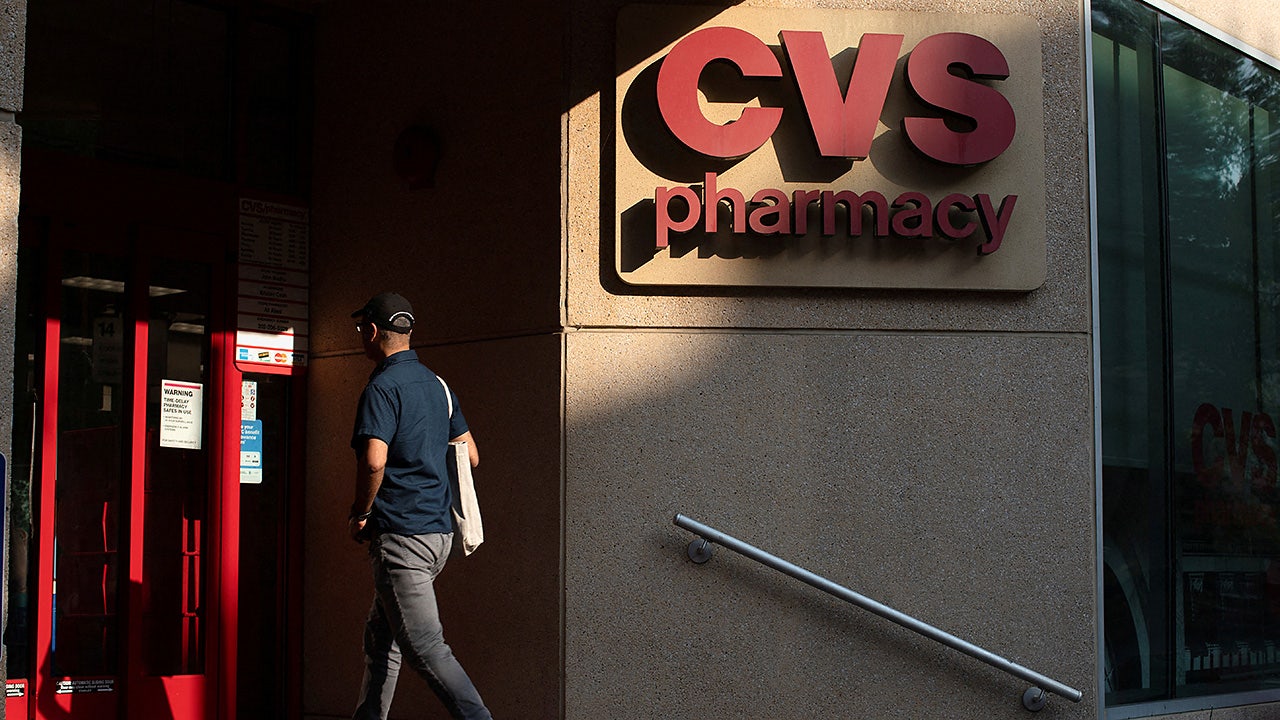
CVS Health announced on Wednesday plans to split its sprawling conglomerate into separate health insurance and pharmacy businesses, a move expected to be completed by the first half of 2028 and creating two independent, publicly traded companies. Existing CVS Health investors will receive shares in both companies tax-free.
The healthcare solutions company, which will temporarily retain the CVS Health name, will include its pharmacy benefit manager business, insurance plans and subsidiaries including Aetna, CVS Caremark, CVS Specialty, Oak Street Health and Signify Health. CVS Pharmacy, the retail division, will include roughly 9,000 stores, its mail-order pharmacy business, MinuteClinic and the Health100 technology services unit.
The announcement rattled investors, sending CVS shares down nearly 13% on Wednesday to levels not seen since spring. Douglas Hoey of the National Community Pharmacists Association, which represents thousands of independent pharmacies, told Fox Business the split could be "good for competition, good for patients, lower prices, good for small businesses." But he also predicted the standalone retail pharmacy business could look even more closely at underperforming stores and close more of them.
7. Macro | Democrats take the Senate, a new wall for Trump's Fed pressure campaign
Source: Yahoo Finance
Democrats secured control of the Senate on Tuesday, a shift that effectively blocks President Trump's campaign to reshape the Federal Reserve and neutralizes what many analysts viewed as a threat to the central bank's independence. It also heightens the challenge for Trump should he maneuver to replace any sitting officials.
Jonathan Pingle, an economist for UBS, wrote in a note that Democrats' control of the Senate reclaims the party's ability to approve or deny the President's nominees for judges and heads of other executive branch agencies, "including the need for Democrats to approve any new members of the Board of Governors of the Federal Reserve System should one of the existing governors step aside." That firewall directly affects the administration's effort to remove Fed governor Lisa Cook. Trump fired Cook in August 2025, claiming she committed mortgage fraud by making misrepresentations on loan documents years before her appointment; Cook has denied any wrongdoing and sued, and the case reached the Supreme Court earlier this year. Last month, Trump established a committee to determine whether her statements constituted legal "cause" for removal.
Michael Feroli, chief US economist for JPMorgan, noted that even a successful removal would not open a seat up to a friend of the administration. Jaret Seiberg, analyst with TD Cowen, agreed that the inability to confirm a replacement may make Trump less inclined to fire Cook. Loretta Mester, former head of the Cleveland Fed, told Yahoo Finance: "Perhaps it makes it less likely he will succeed, but I'm not convinced it will stop the president from trying."

8. Macro | Crypto goes on the defensive in Washington as Clarity Act dims
Source: CNBC
Democrats' sweep of Congress likely resets the political calculus for crypto, ushering in a more adversarial approach in Washington and pushing industry-friendly legislation like the Clarity Act to the back burner. With crypto critics like Sherrod Brown, D-Ohio, returning to the Senate and Sen. Elizabeth Warren, D-Mass., retaining significant influence over financial policy, analysts say the new Congress is likely to focus on scrutinizing President Donald Trump's personal crypto dealings over supportive industry legislation.
"We see Sherrod Brown winning in Ohio as damaging the crypto industry's political clout as the industry worked to defeat him," Jaret Seiberg, TD Cowen's Washington analyst, said in a note Wednesday. "We did not think Clarity could advance over the next two years. This makes us more confident in our prediction." Seiberg said Democrats "will investigate Trump's crypto entanglements including World Liberty Financial" and that the resulting political environment may make it impossible to advance a version of Clarity that the crypto sector could back.
The crypto industry spent more than $200 million to sway the midterms, hoping to elect leaders who could push a comprehensive market structure bill over the finish line after the Clarity Act stalled in the Senate. As of Thursday morning, 19 candidates characterized as pro-crypto by the advocacy nonprofit Stand With Crypto have been elected to the Senate versus eight it characterizes as anti-crypto; in the House, 228 pro-crypto candidates have been elected versus 106. Coinbase's vice president of U.S. policy, Kara Calvert, said the 120th Congress is on track to have more new pro-crypto members than any freshman class before.

9. Commodities | High fuel prices won't be settled quickly, even with Democrats in power
Source: NPR
Democrats are now poised to take control of Congress by wide margins, and a critical driver of their success has been voter fury about how the war in Iran has driven up the cost of fuel. Before the war, about one fifth of the world's oil passed through the Strait of Hormuz. As the war throttled that waterway, a barrel of Brent crude went from about $70 in late February to months hovering around the $110 mark, and is now close to $95.
A gallon of gas costs $4.12 on average, about $1 higher than a year ago, according to AAA. The price of diesel hit a record high in September at $6.52, and while it has fallen a bit since then, a gallon remains about $2.50 higher than this time last year. Experts say not to expect a quick drop: members of the new Congress won't be sworn in until January, and once seated, U.S. legislators have limited powers to directly affect the price of oil, which is dictated by a complex global market.
Claudio Galimberti, chief economist of Rystad Energy, wrote that a unified Democratic Congress can make escalation considerably more costly by passing resolutions, attaching conditions to war spending and holding back confirmations of key officials — but the president retains full discretionary authority over military strikes, blockades and sanctions. Jaime Brito, executive director of refining and oil markets for Dow Jones Energy, said that if a deal to end the war is reached, he personally sees crude prices dropping $15 to $20 a barrel immediately, within two or three days of the announcement. Even in the most optimistic scenario, he said, it could take three months for gasoline and diesel prices to hit their prewar levels.

10. Personal Finance | IRS announces 2027 federal income tax brackets and standard deduction
Source: CNBC
The IRS announced new federal income tax brackets and standard deductions for 2027 on Thursday, raising the income thresholds for each bracket. The figures apply to tax year 2027, for returns filed in 2028. The agency also increased figures for other key provisions, including long-term capital gains brackets, the estate and gift tax exemption, and eligibility for the earned income tax credit.
For 2027, the top rate of 37% applies to individuals with taxable income above $661,375 and married couples filing jointly earning $793,650 or more. The standard deduction will rise to $33,200 for married couples filing jointly, up from $32,200 in 2026, while single filers can claim $16,600, a bump up from $16,100.
For 2027, the federal brackets include seven income tiers, with rates ranging from 10% to 37%, applied to each band of income rather than a flat percentage for all earnings. The IRS adjusts the income ranges for each tax rate yearly based on the consumer price index. The new brackets come as Americans wrestle with affordability issues: the consumer price index climbed 3.7% in September 2026 from a year earlier, up from an annual pace of 3.4% in August.

More News
- Maple Express | November 5, 2026 - Carney government's budget adds $142.1B in new spending
- Maple Express | November 5, 2026 — Five pedestrians struck across the GTA overnight, elderly man critically injured
- Global Express | November 5, 2026: Hong Kong Activist Joshua Wong Sentenced to 10 Years
- Finance Morning: Chinese Assets Rally, Hang Seng Tech Jumps 5.55%, Korea Halts Trading Twice
- Tech Express | November 5, 2026: Switch 2 Sales Plunge 41% as Memory Costs Bite
Comments (0)
View More
 -32%
JBL Xtreme 5 Waterproof Bluetooth Speaker — IP68, 24-Hour Battery & Built-In Powerbank! $319.99 CAD (32% Off)
 -33%
LEGO Harry Potter Knight Bus Adventure 76446 — Removable Decks, Sliding Beds & Swinging Chandelier! $40.58 CAD (32% Off)
 -34%
Utopia Bedding Waterproof Pillow Protectors (2 Pack, Queen) — Fully Zippered, Bed Bug & Dust Mite Proof! $27.71 CAD (34% Off)
 -35%
LEGO Super Mario: Mario Kart 72043 — Interactive Mario Included, Drift and Shell Launcher, $42.72 CAD (34% Off)
Finance EveningAI Trade Retreats: Nasdaq Falls 5.52% Into Correction as Tesla and SpaceX Shed $420 Billion
 Finance Morning
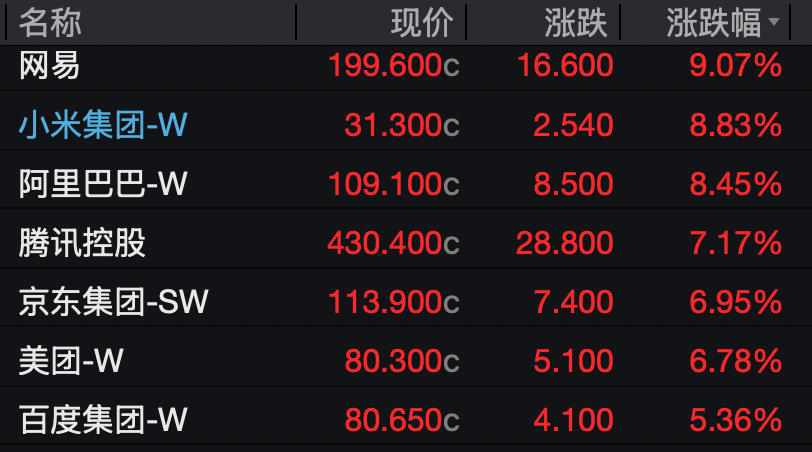
: Chinese Assets Rally, Hang Seng Tech Jumps 5.55%, Korea Halts Trading Twice
-32%JBL Xtreme 5 Waterproof Bluetooth Speaker — IP68, 24-Hour Battery & Built-In Powerbank! $319.99 CAD (32% Off)
Best Buy
-33%LEGO Harry Potter Knight Bus Adventure 76446 — Removable Decks, Sliding Beds & Swinging Chandelier! $40.58 CAD (32% Off)
Amazon
-34%Utopia Bedding Waterproof Pillow Protectors (2 Pack, Queen) — Fully Zippered, Bed Bug & Dust Mite Proof! $27.71 CAD (34% Off)
Amazon
-35%LEGO Super Mario: Mario Kart 72043 — Interactive Mario Included, Drift and Shell Launcher, $42.72 CAD (34% Off)
Amazon
Finance EveningAI Trade Retreats: Nasdaq Falls 5.52% Into Correction as Tesla and SpaceX Shed $420 Billion
Finance Morning