
Immigration | October 26, 2026 Express Entry's new scoring takes effect November 3: high-wage job offers worth up to 100 points
This week: Express Entry's new scoring starts November 3, with up to 100 points for a high-wage job offer; all five Alberta referendum immigration questions pass; Quebec renames its immigration ministry and plans PR cuts; the work permit population rises despite fewer arrivals; Manitoba issues 1,304 invitations; August student arrivals rebound but the yearly total stays down 71 per cent; MUN's international enrolment falls 45 per cent; K-12 international enrolment drops 4 per cent.
1. New Express Entry scoring starts November 3: high-wage job offers worth up to 100 points
Source: CIC News
Canada's Express Entry (EE) scoring overhaul, announced by the federal government on October 16, takes effect on November 3. From that date, candidates will be ranked under a new version of the Comprehensive Ranking System (CRS) that awards them the higher of two options: points for a high-wage job offer, worth up to 100, or points for Canadian work experience.
The new mechanism is called the Labour Market Integration Factor (LMIF). Job offers are grouped by whether the occupation's wage reaches 1.3, 1.5 or 2 times the Canada-wide median, worth 50, 70 and 100 points respectively. The work-experience side adds points for length of Canadian work experience (up to 80) to points for experience in a high-wage occupation (up to 70, requiring 12 months), for a maximum of 150.
CIC News calculated the impact for three fictional candidates: Arjun, 27, who holds a Canadian MBA and works in management consulting, rises from 483 to 513; Sarah, 33, a University of Toronto PhD now in a postdoctoral fellowship (NOC 41200), rises from 467 to 567; Emeka, 35, promoted from information systems specialist to manager, rises from 488 to 528. Staying in the same job adds further points over time.
2. Alberta referendum: all five immigration questions pass
Source: CBC
Alberta voters gave majority approval to all five immigration-related questions put forward by the provincial government in this referendum. Elections Alberta said in a Sunday afternoon statement that the count was completed Saturday night, with 20,574,612 ballots hand-counted — the highest number ever counted by hand in a Canadian electoral event. Official results are due October 29.
The strongest support went to Question 5, which requires proof of citizenship to vote in provincial elections, at 58 per cent. About 55 per cent backed Alberta seeking greater control over immigration from Ottawa in order to reduce the number of newcomers. Three questions on restricting public and social services for some non-permanent residents drew 52.6, 53 and 52 per cent support.
If all five proposals become law, some temporary residents — such as international students and temporary foreign workers — could need 12 months of provincial residence before qualifying for provincial social supports such as childcare subsidies, and could be charged a "reasonable fee or premium" for public health care and education. Premier Danielle Smith has floated a $1,900 health-care fee for temporary residents. She said she will "proceed with caution" beyond economic migrants, while Prime Minister Mark Carney said immigration cooperation with provinces can be achieved without constitutional change.

3. Quebec renames immigration ministry as new government prepares PR cuts
Source: Immigration.ca
Quebec's new Parti Québécois government is preparing a major shift in immigration policy and renamed the immigration ministry on October 22. The Ministère de l'Immigration, de la Francisation et de l'Intégration (MIFI) became the Ministère de l'Immigration et de l'Intégration (MII), dropping the reference to francization from its official name, although the government confirmed French-language instruction remains part of the ministry's responsibilities. The change came a day after Premier Paul St-Pierre Plamondon's new cabinet was sworn in.
The bigger development is the leadership and policy direction: Catherine Gentilcore was appointed immigration minister and deputy premier, tasked with delivering a commitment to cut annual permanent resident admissions from about 45,000 to roughly 35,000. That would mean about 10,000 fewer permanent residents a year, but the new figure has not been formally implemented and must still be allocated across economic immigration, family reunification and humanitarian categories.
The party has also proposed at least halving Quebec's temporary resident population over four years, to roughly 250,000-300,000, and reducing workers under the federal Temporary Foreign Worker Program to about 40,000. It wants a moratorium on selecting new economic immigrants from outside Quebec until the reduction target is met, prioritizing foreign workers and international students already in the province. Existing work and study permits do not become invalid because of the renaming or the change of government.

4. New worker arrivals fall 57%, but Canada's work permit population keeps rising
Source: Immigration.ca
Figures published by Immigration, Refugees and Citizenship Canada (IRCC) on October 20 show that 1,550,215 people held only a work permit as of August 31, 2026. That is an increase of about 118,000, or 8.2 per cent, compared with August 2024, even as new worker arrivals fell 57 per cent over the same two-year period.
The opposite trends show that fewer arrivals do not immediately shrink the existing population. Restrictions mainly affect people seeking to enter Canada or obtain permits under the new rules, while workers already in the country with valid permits are unaffected and some can apply to extend. IRCC acknowledges that existing applications are still processed under the rules in place when they were submitted, so the effects of restrictions may only become fully visible in the statistics months later.
Over the same period, the study permit population fell by almost 41 per cent, a sharp contrast with work permits. Under the 2026-2028 Immigration Levels Plan, the government aims to bring temporary residents below five per cent of the population by the end of 2027. The 2026 target is 385,000 new temporary resident arrivals — 230,000 workers and 155,000 students — falling to 370,000 a year in 2027 and 2028. Between January and August 2026, 153,005 former temporary residents became permanent residents, 58 per cent of all new PRs in that period.

5. Manitoba issues 1,304 Letters of Advice to Apply in PNP draw #282
Source: Immigration.ca
Manitoba's Provincial Nominee Program (MPNP) issued 1,304 Letters of Advice to Apply (LAAs) in Expression of Interest draw #282, held on October 22. It was the 21st MPNP round of 2026 and the province's largest since July.
The round had three components. A selection for candidates who completed post-secondary study in Manitoba issued 734 LAAs with a minimum score of 816, compared with 508 LAAs at 825 in the previous Manitoba-graduate round (#279 on September 10). A selection open to all eligible Skilled Worker in Manitoba profiles issued 513 LAAs at 846 or higher. Another 57 went to candidates directly invited through strategic recruitment, down from 83 in draw #281. Of the 1,304 LAAs, 353 went to candidates with a valid Express Entry profile number.
With this draw, the MPNP has issued 8,527 LAAs across 21 rounds in 2026 — the second-largest total of the year after 2,146 on July 16, and almost four times the 340 issued in draw #281. A provincial nomination adds 600 points to a candidate's CRS score in the federal Express Entry system.

6. 37,090 international students arrived in August, but the yearly total is still down 71%
Source: The Indian Express
IRCC data shows 37,090 new study permit holders arrived in Canada in August 2026, nearly six times the number recorded in earlier months this year. For the year as a whole, however, international student arrivals are still falling: 65,240 students arrived between January and August, down 71 per cent from the same period in 2024.
The monthly figures show how heavily arrivals depend on the timing of the fall semester. Between January and July 2026, monthly arrivals ranged from 2,070 to 6,930; August alone accounted for more than half of the eight-month total. Even so, the August figure was 53 per cent below the 79,660 recorded in August 2024 and 17 per cent below the 44,865 in August 2025. Combined student and worker arrivals were 63 per cent lower than in 2024, a reduction of 326,900 people.
Canada's target for 2026 is 155,000 new international student arrivals. As of August 31, there were 602,115 study permit holders in Canada, compared with 799,665 in August 2025 and 1,019,545 in August 2024 — a decline of about 41 per cent over two years. IRCC says it remains on track to meet its 2026 student arrival target.

7. MUN international students down 45% after federal study permit restrictions
Source: CBC
The number of international students at Memorial University (MUN) in Newfoundland and Labrador has fallen 45 per cent over the past three years, following the federal government's tightening of study permit rules. The decline mirrors the wider trend in Atlantic Canada, where the overall international student population is nearly half what it was in 2023, according to the Association of Atlantic Universities.
Angie Clarke, MUN's interim university registrar, said there was "certainly a stark decrease in previous enrolments." In 2024, Ottawa capped study permits nationwide, citing housing pressure and abuses at some private colleges. Canada's Auditor General later said the federal changes led to a "sharper decline" in international students than expected, disproportionately affecting smaller provinces.
International undergraduate tuition at MUN is currently $22,500 a year. Clarke said new international enrolments this September were up 14 per cent from last year and that the university is "cautiously optimistic." But Taqi Yeasir, director of external affairs for MUN's student union, said tuition and living costs push some students toward higher-ranked Canadian schools, and that further declines could mean more course cuts and job losses affecting local students too. IRCC said 21 per cent of new study permits this year went to master's and doctoral students, up from 12 per cent last year.

8. Canada's K-12 international enrolment falls 4% as the Chinese market shrinks
Source: ImmigCanada
Canada's public K-12 international education sector is seeing a shift in where its students come from. New data from the Canadian Association of Public Schools-International (CAPS-I) shows international enrolment at member public schools fell 4 per cent in the 2025/26 academic year, with a sharp decline from China playing the biggest role.
CAPS-I counted 31,875 international students across 125 member public schools and school districts, about 4 per cent fewer than the previous year. China remained the largest source market for long-term students, but Chinese enrolment fell 21 per cent in 2025/26; Hong Kong also recorded a substantial decrease, while Japan's decline was smaller. Germany, South Korea, Italy, Spain and several other markets grew.
European families, however, are more likely to choose summer or short-term programs, so more students do not necessarily mean the same number of long-term places. About half of member programs with declining or flat enrolment also cited limits on school space and homestay capacity. K-12 students are not directly covered by the federal post-secondary study permit cap, but the broader policy climate still shapes how families view Canada — and studying at a Canadian primary or secondary school does not automatically create eligibility for permanent residence.

More News
- Maple Express | October 26, 2026: Ford says trade war is hurting both countries
- Global Express | October 26, 2026 - Serbia's Vucic Concedes Defeat, Ending 14 Years in Power
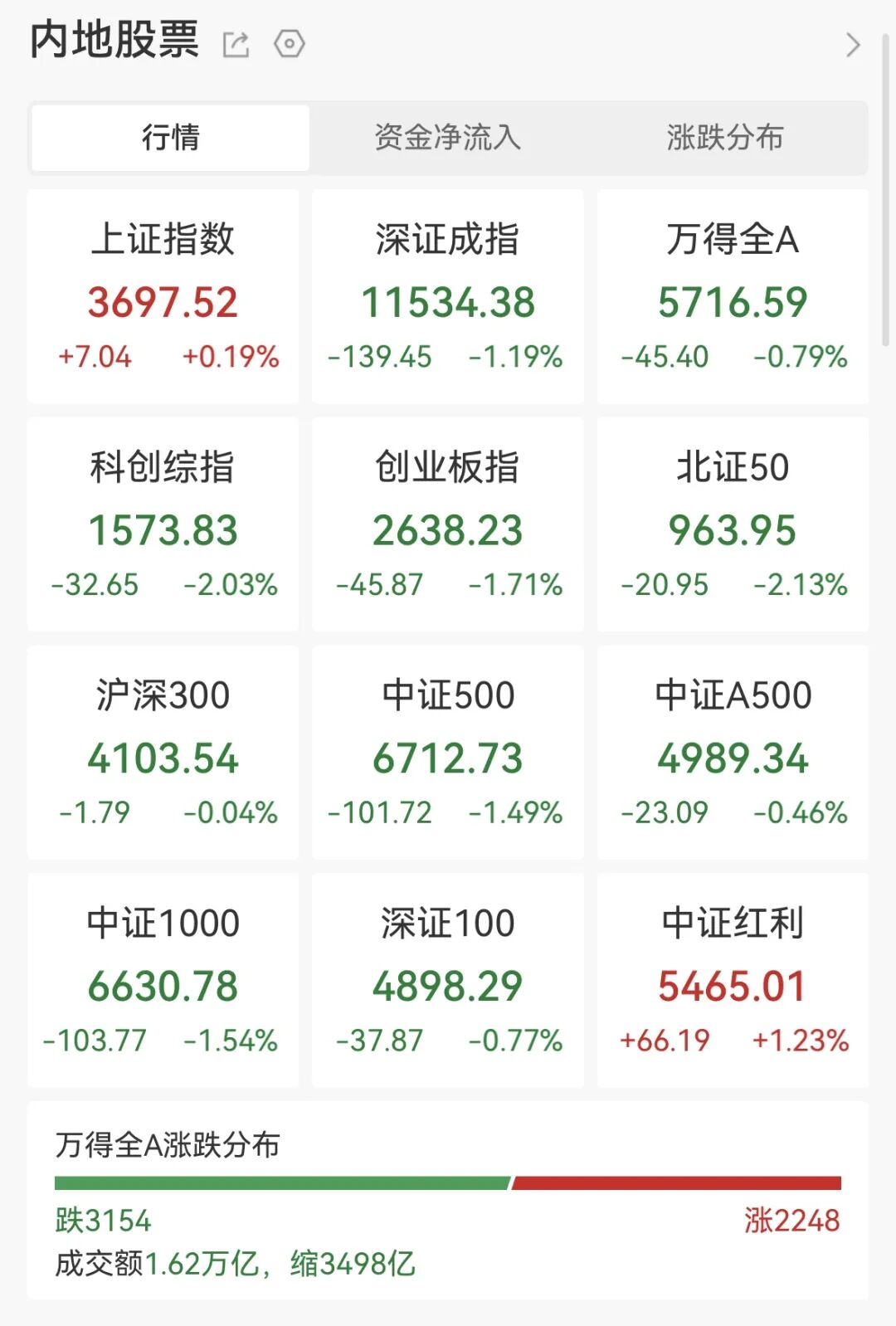
- Finance Morning | October 26, 2026 — Shanghai Edges Up 0.19% as Banks and Oil Lead, Asia Mostly Lower
- Tech Express | October 26, 2026 - Huawei's Kirin Chips Return to Public View as Mate 90 Lights Up Landmarks
- Sports Express | October 26, 2026: Seahawks Hand Chiefs First Loss of Season
Comments (0)
View More
 -34%
HUANUO Monitor & Laptop Mount — 16" Long Arm, Full Motion! $54.99 CAD (34% Off)
 -20%
Dell SE2426HG 24" 240Hz IPS Gaming Monitor — 0.5 ms and FreeSync Premium for $124.99 CAD (19% Off)
 -22%
Breville Smart Scoop Ice Cream Maker — 12 Hardness Settings, Self-Refrigerating! $469.99 CAD (22% Off)
 -23%
KitchenAid 24" Dishwasher — 44dB Quiet, Third Rack, 16 Place Settings! $1,399.99 CAD (22% Off)
 Maple Express
 | October 26, 2026: Ford says trade war is hurting both countries
 Finance Morning
 | October 26, 2026 — Shanghai Edges Up 0.19% as Banks and Oil Lead, Asia Mostly Lower
-34%HUANUO Monitor & Laptop Mount — 16" Long Arm, Full Motion! $54.99 CAD (34% Off)
Amazon
-20%Dell SE2426HG 24" 240Hz IPS Gaming Monitor — 0.5 ms and FreeSync Premium for $124.99 CAD (19% Off)
Amazon
-22%Breville Smart Scoop Ice Cream Maker — 12 Hardness Settings, Self-Refrigerating! $469.99 CAD (22% Off)
Best Buy
-23%KitchenAid 24" Dishwasher — 44dB Quiet, Third Rack, 16 Place Settings! $1,399.99 CAD (22% Off)
Best Buy
Maple ExpressMaple Express | October 26, 2026: Ford says trade war is hurting both countries
Finance Morning