Finance Morning | October 9, 2026: PBOC Sets Out RMB Exchange-Rate Stance; A-shares Reverse Higher, Hang Seng Jumps 1.79%
Asian markets were mixed on Oct 9: A-shares reversed higher, Shanghai Composite +0.05% at 3813.79; Hang Seng +1.79%, Hang Seng Tech +3.06%. Nikkei -0.02%; Korean and Taiwanese markets were closed for holidays. The PBOC set out its RMB exchange-rate stance, saying it sets no target level. Spot gold topped $4,200/oz; overseas funds fled Korean stocks after KOSPI's Q3 slump; TSMC's September revenue rose 54.6% YoY to a record; Apple cut iPhone 18 Pro orders about 15% on memory cost inflation.
📊 Asia Markets Today
| Index | Close | Change | Change % |
|---|---|---|---|
| Shanghai Composite | 3813.79 | +1.89 | +0.05% |
| Shenzhen Component | 12641.86 | +20.96 | +0.17% |
| ChiNext | 3043.33 | +6.67 | +0.22% |
| Hang Seng | 24211.35 | +425.56 | +1.79% |
| Nikkei 225 | 69030.92 | -11.19 | -0.02% |
| KOSPI | 6625.93 | -177.97 | -2.62% |
| TAIEX | 49313.44 | -492.93 | -0.99% |
Note: Korean and Taiwanese markets were closed for holidays on Oct 9; those figures are Oct 8 closes.
1. [Top Story] PBOC Sets Out RMB Exchange-Rate Stance, Says It Sets No Target Level
Source: Phoenix Finance
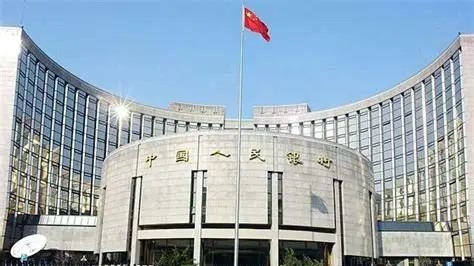
China's central bank, the People's Bank of China (PBOC), on Oct 8 published its policy stance on the RMB exchange rate in response to rising international discussion of the currency. It said China runs a managed floating exchange-rate regime based on market supply and demand and adjusted with reference to a basket of currencies, letting the market play a decisive role in rate formation, and that there is no simple linear relationship between the exchange rate and the current account.
The PBOC said it sets no target level for the exchange rate, does not intervene in its long-term trend, and keeps the rate flexible and two-way floating. It added that simply attributing a country's declining industrial competitiveness, weakened fiscal constraints and complex structural problems to another country's exchange rate amounts to shirking one's own adjustment responsibilities; describing the complex problems of the international monetary system and economic structure as simply an RMB exchange-rate issue is unhelpful and, in effect, a political move in the context of protectionism and unilateralism.
The PBOC stressed that China's trade development stems from stronger industrial competitiveness, that China has no need or intention to gain a trade advantage through currency depreciation, and that it has never engaged in competitive devaluation. Over the past two decades the RMB has floated in both directions, and since 2010 it has gone through multiple appreciation and depreciation cycles, broadly trading between 6.04 and 7.35 against the dollar; since 2025 the RMB has appreciated about 9% against the dollar. The PBOC also noted that global foreign-exchange trading averaged nearly $10 trillion a day in 2025, and that central banks generally lack the capacity to influence the medium- and long-term trend of exchange rates.
2. Hong Kong Shares Rally, Hang Seng Tech Jumps 3.06%
Source: 21st Century Business Herald
Hong Kong's main indices closed sharply higher on Oct 9. The Hang Seng Index rose 1.79% and the Hang Seng Tech Index gained 3.06%. Non-ferrous metals advanced in the afternoon session, with several gold shares rising, while media, software, autos, food and beverage, coal and property sectors led the gains.
Tech and internet names rose broadly: Xiaomi surged more than 9%, while SenseTime, Kuaishou, NetEase, Bilibili, Tencent, Meituan and Alibaba were among the top gainers. Among individual names, Shimao Group jumped 41% in the afternoon, and Li Auto, NIO and XPeng all climbed.
3. Nikkei Edges Down 0.02% as AI Growth Optimism Cools
Source: Kyodo News
Tokyo's Nikkei index slipped 11.19 points, or 0.02%, to close at 69030.92 on Oct 9, Kyodo News reported. Weighed by an overnight slide in US tech shares, some AI and semiconductor stocks in Tokyo were sold off; the biggest decliners clawed back losses in the afternoon, trimming the drop. The broader TOPIX index, by contrast, rose 13.35 points to 4104.81, up 0.33%.
Citing the Financial Times, the report said OpenAI's annualized revenue through end-September came in about $20 billion below market expectations, cooling optimism about AI market growth. SoftBank Group, a major OpenAI investor, fell sharply, and the Nikkei was down more than 800 points at one stage. Fast Retailing, which owns the Uniqlo brand, also dropped: its profit-margin forecast for the fiscal year to August 2027, released a day earlier, was a seventh straight record, but fell short of market expectations.

4. Overseas Funds Flee Korean Stocks; KOSPI Slumps 19.3% in Q3
Source: East Money
Since September, Korean stocks have faced heavy selling by overseas funds, concentrated in the two semiconductor giants SK Hynix and Samsung Electronics. As money flowed out, the KOSPI fell 19.3% over the third quarter, its worst quarterly drop since the first quarter of 2020.
Data from the Korea Exchange and Yonhap Infomax show that foreign investors net-sold a cumulative 20.31 trillion won (about $15.1 billion) on Korea's main board between Sept 1 and Oct 2, posting net buying on only seven of 22 trading days. They net-sold 12.01 trillion won of SK Hynix and 5.19 trillion won of Samsung Electronics, pulling about 17 trillion won out of just those two stocks. As of Oct 2, foreign ownership of SK Hynix had fallen to 49.76%, its lowest in about three years and four months.
A report by the Institute of International Finance (IIF) on Oct 7 showed that foreign investors withdrew $26.3 billion from emerging-market stocks and bonds in September, including $19.2 billion of net stock outflows, with selling of Korean shares the core driver. Market participants say whether foreign money returns depends on key variables such as Middle East tensions, global oil prices and long-term US interest rates.
5. A-shares Stage an Afternoon Reversal, All Three Indexes Close Higher
Source: 21st Century Business Herald
A-shares opened lower across the board on Oct 9 and fell in the morning, with the ChiNext Index briefly losing the 3,000 mark, before all three main indices turned higher in the afternoon, lifted by brokerage shares. At the close, the Shanghai Composite was up 0.05% at 3813.79, the Shenzhen Component up 0.17% at 12641.86 and the ChiNext up 0.22% at 3043.33.
Turnover expanded markedly: combined turnover reached 1.9 trillion yuan, up 218.5 billion yuan from the previous session. Across the two exchanges and the Beijing bourse, 3,294 stocks rose and 2,140 fell. Media stocks led a sharp afternoon rally, non-ferrous metals climbed with Western Gold hitting the limit up, and brokerages briefly surged, while bank and defence stocks stayed weak.
On the news front, citing China Construction News, transactions of existing homes nationwide totaled 617.46 million square metres of online-signed area in the first nine months, up 10.7% year on year. A CITIC Securities note said existing-home transactions during the 2026 National Day holiday jumped 57% year on year, and forecast that fourth-quarter activity would beat the same period of 2024.
6. Why Is Huawei Pushing HarmonyOS Overseas Now?
Source: 21st Century Business Herald
On Oct 6, Huawei's overseas official account published an interview transcript in which Richard Yu, Huawei's executive director and chairman of its Device BG, discussed the company's latest progress in chips, HarmonyOS, AI, foldables and overseas markets with international media. He said Huawei is considering gradually taking its HarmonyOS operating system to the global market, but that this is only a preliminary plan and will proceed step by step.
Yu said more than 90 million devices now run HarmonyOS 6 and HarmonyOS 7, a figure expected to reach 100 million by the end of 2026; the HarmonyOS ecosystem now offers more than 450,000 apps and services, with 11 million registered developers worldwide. In the second quarter of 2026, Huawei ranked first in China's smartphone market with a 23% share, ahead of Apple at 18%. China's Ministry of Industry and Information Technology has confirmed HarmonyOS as the world's third-largest mobile operating system after Android and iOS.
Yu also noted that sharply rising memory-component prices have added more than $200 to the cost of each phone; Huawei has tried to absorb this itself, but margins have fallen sharply and it must now raise prices. Separately, on Oct 5 Huawei and Qualcomm announced a multi-year cross-licensing agreement covering 5G, computing, AI and networking, their first such deal to cover 5G, subject to regulatory approval.
7. New-Home Sales in Beijing, Hangzhou and Nanjing Surge Over 150% During the Holiday
Source: 21st Century Business Herald
The property market warmed up during this year's National Day holiday, helped by new rules on the sale of completed homes, with online-signed volumes generally better than a year earlier. Beijing Municipal Housing and Urban-Rural Development Commission data show that from Oct 1 to 7, new-home transactions in Beijing reached 1,008 units, up 161.1% year on year, while Hangzhou, Nanjing and Wuhan recorded 86, 587 and 783 new homes sold, up 196.6%, 325.4% and 59.5% respectively.
In the existing-home market, transactions in Hangzhou, Qingdao and Dongguan rose more than 100% year on year, though Shenzhen and Chengdu saw declines. Data from the China Index Academy show that from Oct 1 to 7, new residential transactions in 25 key cities totaled 551,000 square metres, up 33.8% year on year on a daily basis and roughly flat versus the 2024 National Day holiday, while daily existing-home transactions in 11 key cities rose 42.8%.
On policy, after the new home-sales system was unveiled on Aug 28, Beijing, Shanghai, Guangzhou and Wuhan issued implementing rules within a month. Wuhan's detailed plan, issued jointly by housing, natural-resources and local-finance authorities, covers 18 measures across seven areas including pre-sale management, completed-home sales and land supply. The China Index Academy expects the fourth quarter's policy focus to shift to implementing supporting rules for property-system reform, with demand-side policy likely to be stepped up.
8. TSMC's September Revenue Tops NT$511.8 Billion, a Record for the Month
Source: Economic Daily News
TSMC released its September 2026 revenue report on Oct 8. Consolidated revenue for September was about NT$511.857 billion, down 0.6% from August but up 54.6% from a year earlier, a record high for the month.
For the first nine months of 2026, TSMC's revenue was about NT$3.898727 trillion, up 41.1% year on year and its best ever. Analysts had expected September revenue of NT$444.8 billion to NT$483.2 billion, so the actual figure beat expectations. TSMC's third-quarter earnings conference is scheduled for Oct 15, 2026.

9. Spot Gold Jumps Back Above $4,200 an Ounce
Source: Phoenix Finance
On Oct 9 spot gold extended its rally, breaking back above $4,200 an ounce intraday for a gain of 1.6%. The previous session it edged up 0.52% to close at $4,131.89 an ounce. Spot silver rose in tandem while international oil prices fell, with London spot silver up more than 2% and back above $60 an ounce.
In the secondary market, A-share precious-metals stocks surged in the afternoon, with Western Gold hitting the limit up and Shandong Gold International, China National Gold and Sichuan Gold all climbing. Affected by the gold move, domestic branded jewellery prices edged higher, with per-gram prices at Chow Sang Sang, Laomiao and Lao Feng Xiang up 3 to 6 yuan on the day.
On the news front, US President Donald Trump said in a social-media post on Oct 8 that the United States and Iran are holding "productive" talks and that the US will not attack Iran before the Nov 3 midterm elections. According to CME's FedWatch, the probability the Fed holds rates steady in October is 82.3%. Shanghai Mid-Term Futures said continued central-bank gold buying, concerns over US debt credibility and the approaching US midterms should help support gold's safe-haven and allocation value.

10. Apple Cuts iPhone 18 Pro Orders; October Component Orders Down at Least 15%
Source: 21st Century Business Herald
On Oct 9, citing Cailian Press, several people familiar with the matter said sharply rising memory-chip costs have forced Apple to raise prices and dampened consumer demand, prompting Apple to ask some suppliers to cut component output for the newly launched iPhone 18 Pro and iPhone 18 Pro Max.
Two of the people said Apple's component orders this month were at least 15% below its original request; one executive said the company cut orders for the two high-end models by 15% to 20% in October alone. Another person said this may be tied to Apple adjusting its iPhone launch schedule. This year Apple prioritized three high-end models, while the standard iPhone 18 and the new iPhone Air are slated for release next spring.
More News
- Global Express | October 9, 2026 — Former ICC Judge Navi Pillay Wins 2026 Nobel Peace Prize
- Tech Express | October 9, 2026 — Apple Announces October 13 'Welcome Home' Event Focused on the Smart Home
- Sports Express | October 9, 2026 — MLB Proposes 154-Game Season, Best-of-Seven Division Series
- Maple Express | October 9, 2026 — Food Experts Warn of a Tough Winter at the Grocery Store
- Finance Evening (Oct 8): AI Stocks Slide, Canada-U.S. Trade Uncertainty Draws Business Warning
Comments (0)
View More
 -37%
-37%2000 Flushes Chlorine Automatic Toilet Bowl Cleaner — Cleans With Every Flush, ~4 Months! $5.91 CAD (36% Off)
 -16%
-16%Rust-Oleum Decorative Color Chips 1 lb (Glacier Gray Blend) — Give Your Concrete Floor a Finished Look, 16% Off! $42.27 CAD
 -26%
-26%SteelSeries Arctis Nova 3P Wireless Gaming Headset (Lavender) — 200+ Game Audio Presets, Multi-Platform! $104.89 CAD (25% Off)
 -31%
-31%Herschel Retreat Backpack — One Bag for Commuting, Class and Weekend Trips! $69.99 CAD (30% Off)
 Maple Express
Maple Express | October 8, 2026 — Chow Pledges 10,000 Rental Homes Would Break Ground in 2027 if Re-elected
 Tech Express
Tech Express | October 9, 2026 — Apple Announces October 13 'Welcome Home' Event Focused on the Smart Home
-37%2000 Flushes Chlorine Automatic Toilet Bowl Cleaner — Cleans With Every Flush, ~4 Months! $5.91 CAD (36% Off)
Amazon
-16%Rust-Oleum Decorative Color Chips 1 lb (Glacier Gray Blend) — Give Your Concrete Floor a Finished Look, 16% Off! $42.27 CAD
Amazon
-26%SteelSeries Arctis Nova 3P Wireless Gaming Headset (Lavender) — 200+ Game Audio Presets, Multi-Platform! $104.89 CAD (25% Off)
Amazon
-31%Herschel Retreat Backpack — One Bag for Commuting, Class and Weekend Trips! $69.99 CAD (30% Off)
Amazon
Maple ExpressMaple Express | October 8, 2026 — Chow Pledges 10,000 Rental Homes Would Break Ground in 2027 if Re-elected
Tech Express