Finance Morning: Asian Stocks Dive and Gold Jumps as Global Bond Yields Hit Multi-Year Highs
Asian markets swung sharply on September 3, with Japanese, South Korean, Chinese and Hong Kong stocks diving in the afternoon while gold surged over 1%. Global bond yields spiked, with Japan's 10-year yield touching 3% for the first time since 1996. South Korean stocks plunged on US semiconductor tariff threats. In China, YMTC seeks to raise RMB 33 billion on the STAR Market, and HUTCHMED struck a GSK licensing deal worth up to $1.295 billion.
📊 Asia Markets Today
| Index | Close | Change | % |
|---|---|---|---|
| Shanghai Composite | 3,942.09 | -37.80 | -0.95% |
| Shenzhen Component | 13,625.12 | -247.28 | -1.78% |
| ChiNext | 3,312.54 | +0.30 | +0.01% |
| Hang Seng Index | 25,213.31 | -116.39 | -0.46% |
| Nikkei 225 | 64,214.48 | -111.16 | -0.17% |
| KOSPI | 6,579.48 | +16.76 | +0.26% |
| Taiwan Weighted | 45,857.66 | -1,091.04 | -2.32% |
Global Stocks Dive in Afternoon Trading; Japan-Korea Chip Stocks Fall
Source: Sina
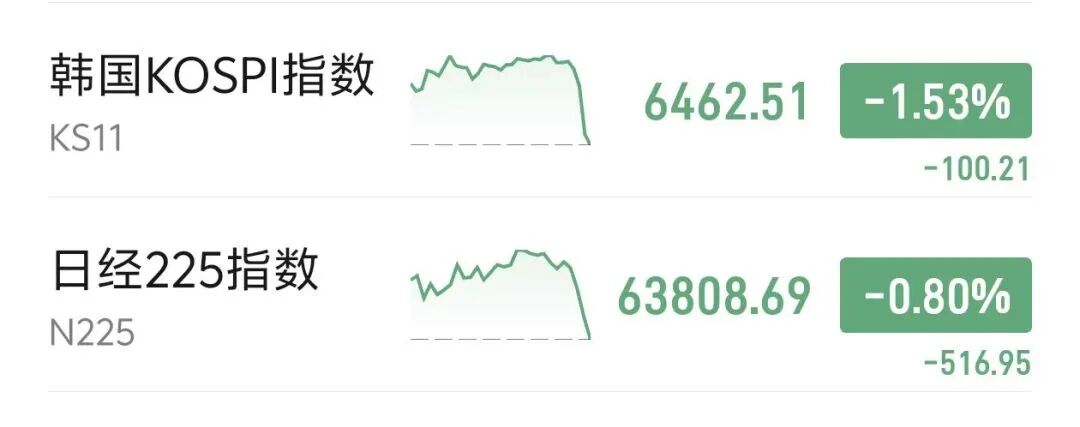
Global stock markets tumbled on the afternoon of September 3. As of 13:30 Beijing time, equities in South Korea, Japan, China's A-shares and Hong Kong all fell sharply as risk-averse sentiment suddenly intensified.
Japanese and South Korean stocks both turned lower. The Nikkei 225 dropped 0.8%, reversing its earlier gains, while Korea's KOSPI erased a 1.8% advance to fall 1.53%. Chip stocks led the decline, with Samsung Electronics and SK Hynix both down more than 2%, and Japanese memory maker Kioxia down over 1%.
China's four major A-share indices all turned lower in the afternoon, with the STAR 50 index widening its loss to 1% and more than 3,900 stocks falling across the Shanghai, Shenzhen and Beijing exchanges. Hong Kong's Hang Seng Tech Index fell over 1%, while US stock futures also declined. Spot gold surged more than 1% to $4,433 an ounce.
Global Bond Yields Surge on Four Key Drivers
Source: ifeng Finance
Global bond yields climbed across the board this week, with long-term government bond yields in several major economies hitting multi-year highs. Japan's 10-year yield touched 3%, the first time since 1996, while German and French 10-year yields reached their highest since 2011 and 2008, respectively.
The sell-off has been attributed to four factors: rising rate-hike expectations for the Fed, the ECB and the Bank of Japan; the continuing US-Iran conflict; mounting government debt; and heavy bond issuance by AI companies.
Many institutions expect yields to remain elevated. Some analysts warn that while equities have so far shrugged off the rise, the impact will eventually surface and weigh on stocks.

South Korean Stocks Plunge on US Semiconductor Tariff Threat
Source: Sohu
South Korean stocks plunged on the afternoon of September 3, with the KOSPI erasing a 1.8% gain to trade down 1.28% as of press time. Samsung Electronics and SK Hynix both fell nearly 2%.
The sell-off was triggered by US Commerce Secretary Howard Lutnick's comments on semiconductor tariffs. On September 2 local time, Lutnick told CNBC the US would implement cautious, targeted semiconductor tariff measures, tying US chip investment to tariffs.
South Korea's presidential office responded that the details had not yet been finalized, and that the government would work to prevent such measures from harming Korean companies while closely monitoring developments and communicating with the US.

Nikkei Falls 0.17% on Oil Price Worries
Source: Kyodo News
The Nikkei 225 extended its decline on September 3, closing at 64,214.48, down 111.16 points, or 0.17%, from the previous session.
Selling dominated as investors remained wary that persistently high US crude oil futures prices could fuel further inflation. With few fresh trading cues, investors stayed cautious and price swings were limited. The broader TOPIX rose 20.44 points to close at 4,102.04, up 0.50%.
High-priced semiconductor-related shares fell and dragged on the market, while Uniqlo operator Fast Retailing dropped sharply. However, a pause in the rise of long-term interest rates was seen as a positive, and the Nikkei briefly turned positive during the session.

The $16 Billion Smart Ring Company Heads for an IPO
Source: 21st Century Business Herald
Finnish smart ring maker Oura plans to raise up to $3 billion through a US IPO, according to Bloomberg, with a listing as early as September that would value the company at more than $16 billion (about RMB 114 billion).
The underwriting syndicate includes Goldman Sachs, Morgan Stanley and JPMorgan, among others. The company confidentially filed its draft prospectus with the SEC in May, and people familiar with the matter said existing investors are expected to sell a sizable portion of shares in the offering.
If successful, it would be the largest IPO in the consumer wearables category in more than a decade. The business is built on a roughly 4-gram screenless metal ring. Oura's revenue surpassed $1 billion in 2025, and the company projects $1.5 billion to $2 billion for 2026.
After CXMT, YMTC Comes to the STAR Market
Source: 21st Century Business Herald
On August 21, Yangtze Memory Technologies Corp (YMTC) saw its STAR Market IPO application accepted for review, planning to raise RMB 33 billion. It is the second domestic memory chip IDM giant to seek an A-share listing, after DRAM leader CXMT.
YMTC's first-quarter 2026 revenue reached RMB 47.04 billion with net profit of RMB 33.38 billion, a single-quarter profit more than double its full-year 2025 figure. By TrendForce data, YMTC ranked third globally and first in China in NAND Flash in Q1 2026.
Of the proceeds, RMB 20.8 billion will go toward upgrading its production lines and RMB 12.2 billion toward R&D projects. As of end-Q1 2026, its wafer capacity utilization reached 98.02%, near full capacity.
China's Five Listed Insurers Pay Interim Dividends for First Time
Source: Sina Finance
With 2026 interim results fully released, all five major listed insurers in China - PICC, China Life, Ping An, CPIC and New China Life - announced interim dividend plans, with total proposed payouts exceeding RMB 39 billion.
CPIC announced an interim dividend for the first time, marking the first time all five insurers have made interim payouts together. Ping An proposed RMB 0.98 per share, totaling RMB 17.75 billion, up 3.2% year-on-year.
Management at each insurer said they would build a regular dividend mechanism. Industry insiders believe that as semi-annual payouts become the norm, the long-term investment value of insurance stocks may gain further recognition.
HUTCHMED Surges on GSK Licensing Deal
Source: Sina Finance
HUTCHMED surged more than 16% in US pre-market trading and gained 14.3% in Hong Kong after announcing an exclusive licensing agreement with GSK covering HMPL-A830, a first-in-class KRAS-EGFR antibody-targeted conjugate (ATTC).
Under the deal, HUTCHMED will receive an upfront payment of $110 million and is eligible for up to $1.295 billion in development, regulatory and commercial milestone payments, plus tiered royalties on net sales.
HUTCHMED retains all rights in mainland China, Hong Kong, Macau and Taiwan, while GSK will handle development and commercialization in the rest of the world. Clinical development will focus on colorectal, pancreatic and lung cancers, with a global Phase I trial expected to begin in the second half of 2026.
Goldman Sachs Warns of Lower Stock Returns Ahead
Source: Sina Finance
Goldman Sachs chief global equity strategist Peter Oppenheimer said global stocks have delivered remarkable returns over the past year, but returns are expected to be lower going forward.
Oppenheimer expects returns of mid-to-high single digits over the next 12 months, below the levels seen over the past year, though still relatively decent as long as economic growth continues.
Citadel Securities chief equity and derivatives strategist Scott Rubner said the earnings tailwind has largely run its course and the market's focus has shifted back to macro variables. He sees September as a tactical downside-risk window rather than the start of a full bear market.
China's Credit Card Count Shrinks by Nearly 20 Million in H1
Source: Sina Finance
Latest central bank data shows that by the end of Q2, there were 677 million credit cards and combined credit-debit cards in circulation, down 10 million from Q1 and nearly 20 million from the start of the year.
Interim reports from listed banks show a divergence. Credit card portfolios at ICBC, CCB and Ping An, among most banks, fell sharply, with ICBC's shrinking by about 2 million cards in six months, while Bank of China, Postal Savings Bank and China Merchants Bank saw modest growth.
Analysts note that internet credit tools such as Huabei and Baitiao are squeezing credit cards, and China's credit card industry is leaving its high-growth era for a stock-based competition focused on quality and efficiency.
More News
- Finance Evening: Dow Jumps 500 Points as Canada's PBO Cuts 2026 Growth Forecast to 0.9%
- Maple Express | October 20, 2026: Alberta referendum immigration questions pass, Carney says no constitutional change needed
- Maple Express | October 20, 2026 — 33 military members still in hospital after Wainwright base fire
- Global Express | October 20, 2026 — Drone Strikes Across Sudan Kill More Than 160 in Days
- Finance Morning: Asia Stocks Slide, KOSPI Down 3.73%; China Leaves LPR Unchanged for 17th Month
Comments (0)
View More
 -37%
-37%Hisense 43R63N 43" 4K Roku Smart TV — 4K AI Upscaling + Game Mode Plus, $299.99 CAD (36% Off)
 -10%
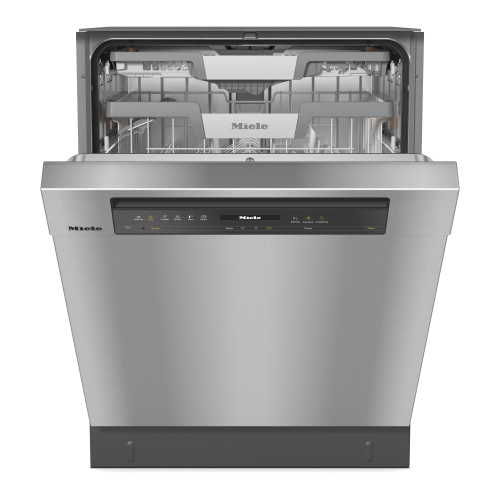
-10%Miele G 7606 SCU 24" Built-Under Dishwasher — AutoDos Auto-Dispensing with 40 dB Quiet Operation! $3,149.10 CAD (10% Off)
 -37%
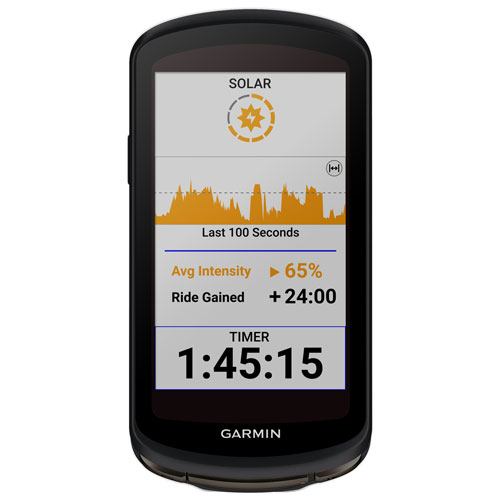
-37%Garmin Edge 1040 Solar GPS Cycling Computer — Solar Charging with Up to 100 Hours of Battery! $649.99 CAD (36% Off)
 -30%
-30%YETI Rambler Slim Colster Can Insulator — Built for 12oz Slim Cans, Seafoam! $24.50 CAD (30% Off)
 Maple Express
Maple Express | October 20, 2026: Alberta referendum immigration questions pass, Carney says no constitutional change needed
 Finance Morning
Finance Morning: Asia Stocks Slide, KOSPI Down 3.73%; China Leaves LPR Unchanged for 17th Month
-37%Hisense 43R63N 43" 4K Roku Smart TV — 4K AI Upscaling + Game Mode Plus, $299.99 CAD (36% Off)
Amazon
-10%Miele G 7606 SCU 24" Built-Under Dishwasher — AutoDos Auto-Dispensing with 40 dB Quiet Operation! $3,149.10 CAD (10% Off)
Best Buy
-37%Garmin Edge 1040 Solar GPS Cycling Computer — Solar Charging with Up to 100 Hours of Battery! $649.99 CAD (36% Off)
Best Buy
-30%YETI Rambler Slim Colster Can Insulator — Built for 12oz Slim Cans, Seafoam! $24.50 CAD (30% Off)
Amazon
Maple ExpressMaple Express | October 20, 2026: Alberta referendum immigration questions pass, Carney says no constitutional change needed
Finance Morning