
Tech Express | September 5, 2026 DeepSeek Reportedly to Deploy 160,000 Huawei Chips in Inner Mongolia
Today's Tech Express: DeepSeek to deploy 160,000 Huawei chips in Inner Mongolia; Huawei's He Tingbo on EUV alternatives; Xiaomi open-sources TabLDM; Sony and Warner sue Anthropic over music copyright; Horizon Robotics targets No.1 in China's auto-driving chips; Xiaomi Pad 9 Pro Max debuts HyperOS 4; Apple develops a touchscreen MacBook Pro; LZ experiment finds dark matter signs; 16 DGX Spark units run Kimi K3; Alibaba joins the Qianfan constellation.
1. DeepSeek Reportedly to Deploy at Least 160,000 Huawei Chips in Inner Mongolia
Source: Lianhe Zaobao
Chinese AI startup DeepSeek will deploy at least 160,000 of Huawei's high-end accelerator chips in its Inner Mongolia data center, according to a Bloomberg report, with plans to use Huawei's next-generation Ascend 950DT chip to run its models.
People familiar with the matter said the deployment timeline will depend on Huawei's production capacity. DeepSeek has no immediate plan to use the Ascend 950DT for model training, and while it has used Huawei AI chips to train previous models, it still relies mainly on Nvidia accelerators.
Because of shortages of high-end memory and other components, Huawei is estimated to produce only hundreds of thousands of 950DT units this year, and with other customers and a small volume of overseas orders to serve, completing DeepSeek's full order could take more than a year. The report added that the company is in talks to raise funds to expand its infrastructure, involving billions of dollars.
2. Huawei's He Tingbo Updates Paper: No Access to EUV Lithography, Must Find Another Path
Source: Guancha
On September 4, Huawei semiconductor chief He Tingbo updated a paper titled "Huawei's τ Chip Was Supposed to Melt?" on ChinaXiv, the Chinese Academy of Sciences preprint platform. In it she wrote that scaling beyond what the industry calls the 7nm node requires extreme ultraviolet (EUV) lithography, which Huawei cannot access, so the company must find another path.
The paper continues the "Tau Law" (τ Law) that Huawei published in May and directly addresses an outside question: with 3D-stacked chips dramatically increasing transistors per unit area, which should make them hotter and more power-hungry, how does Huawei balance performance and power? He Tingbo's core argument is to shift the focus of energy consumption from "compute" to "movement" — long-distance data transfer within a chip also consumes a large amount of dynamic power.
Data disclosed in the paper shows that the Kirin 2026 chip's transistor density rose from 155 million to 238 million per square millimeter; at the same performance, NPU power consumption dropped 66%, GPU 58%, and CPU performance cores 41%. He Tingbo closes by invoking the myth of Sisyphus, arguing that the Tau Law seeks to open another growth curve for semiconductor evolution.
3. Xiaomi Releases and Open-Sources Tabular Data Model Xiaomi-TabLDM
Source: MyDrivers
On September 5, Xiaomi officially released Xiaomi-TabLDM, a general-purpose foundation model for tabular data. After a single round of pre-training, it can directly handle classification and regression tasks without retraining, tuning, or model ensembling for each dataset, extending the foundation-model paradigm to the tabular structured-data scenarios common in finance, healthcare, manufacturing, and logistics.
Tabular data processing has long relied on traditional machine-learning tools such as XGBoost and LightGBM, requiring retraining and tuning for every new business table. Xiaomi-TabLDM aims to break the "one table, one model" status quo and enable a single model to be used directly across datasets, built around large-scale synthetic-data pre-training, efficient model scaling, and test-time scaling.
In the four public benchmarks TALENT, OpenML-CTR23, BCCO, and TabArena, Xiaomi-TabLDM landed in the top tier overall, taking first place in TALENT binary classification and OpenML-CTR23 regression. In real industrial scenarios, material-property prediction accuracy improved 130% and ineffective trial-mold testing was cut by 90%.

4. Sony and Warner Sue Anthropic Over Using Pirated Music to Train Claude
Source: ifeng
In August 2026, Sony Music Publishing and Warner Chappell Music, joined by several music publishers, sued AI company Anthropic and its two co-founders in the US District Court for the Northern District of California, accusing them of stealing copyrighted music at scale through illegal downloads and web scraping to train the Claude models. The plaintiffs described the conduct as "one of the largest and most brazen persistent intellectual-property thefts in history."
The lawsuit is not an isolated event. Anthropic previously drew fire for a book-destruction scandal under the code name "Project Panama" — to obtain training data, the company bought millions of physical books, sliced off their spines, scanned them, and destroyed them. In September 2025, Anthropic agreed to pay $1.5 billion to settle with authors and publishers, the largest copyright class-action settlement in US history, which received final court approval in July 2026.
The complaint alleges that Anthropic accessed piracy libraries such as Library Genesis via the BitTorrent protocol and fed the entire pirated database into its models without any copyright filtering. In tests, plaintiffs found that prompting Claude with certain song titles produced verbatim lyrics. Under US copyright law, each willfully infringed work can carry up to $150,000 in statutory damages, meaning Anthropic's potential liability could reach billions of dollars.

5. Horizon Robotics' Yu Kai: Aiming for No.1 in China's Autonomous-Driving Chips Next Year
Source: MyDrivers
On September 5, at the opening ceremony of the 2026 Yabuli Forum summer annual meeting in Chengdu, Horizon Robotics founder Yu Kai said in a speech that the company aims to reach the No.1 market share in China's autonomous-driving chip market next year, surpassing Nvidia.
Reviewing the company's path, Yu Kai said Horizon Robotics started in the assisted-driving track and took the No.1 share of China's intelligent assisted-driving chip market in 2024; after entering the high-level autonomous-driving track, the company launched high-compute autonomous-driving chips against Nvidia's dominant position and now ranks second in China's autonomous-driving chip market, behind only Nvidia.
Yu Kai said there is no permanent technology advantage in the smart-driving chip industry and that continuous iteration is essential. Financials show that Horizon Robotics posted customer contract revenue of 2.055 billion yuan in the first half, up 32.9% year over year, with a profit of 3.784 billion yuan, swinging to profitability, and a gross margin of 66.0%.

6. Xiaomi Pad 9 Pro Max Debuts HyperOS 4 with Up to Six-Way Split Screen
Source: MyDrivers
On September 5, Xiaomi Pad 9 Pro Max was reported to debut HyperOS 4, a system packed with productivity optimizations for large-screen tablets, supporting up to six apps running in split-screen simultaneously and pushing tablet multitasking to a new level.
Multi-window split screen is a highlight of the update: beyond the standard two-way split screen with adjustable ratios, users can enable three-way or six-way split screen, tiling multiple app windows at once. A PC-grade browser also arrives with webpage translation and third-party AI plugins, plus vertical and grouped tab management.
The new Xiaomi Notes adds AI capabilities, including voice-to-text, and can turn scattered text and recordings into a structured mind map with one tap. Xiaomi Pad 9 Pro Max will make its official debut at the September 7 launch event, where HyperOS 4's full feature set will also be revealed.

7. Apple Is Developing a Touchscreen MacBook Pro, Possibly Launching in October
Source: iFanr
Apple is developing a MacBook with a touchscreen, according to Bloomberg, but will not change its existing core operation — the keyboard and trackpad remain the primary input methods, with touch serving only as a supplement. The new machine is reportedly slated for the high-end 14-inch and 16-inch lineup.
Beyond hardware leaks, Apple has already taken concrete steps in macOS 27's underlying code: the system adds an interface to detect whether the current screen supports multi-touch, separates "direct touch" (fingers on the screen) from "indirect touch" (trackpad swipes), and has rolled out "pull to refresh" in native apps such as Safari, Mail, and Calendar.
Supply-chain reports indicate the new machine will use On-cell embedded touch technology, with panels supplied by Samsung Display using the tandem OLED architecture proven on the iPad Pro. Bloomberg's Mark Gurman said Apple may hold a product event in October, where the touchscreen MacBook could debut alongside a new iPad mini.

8. Scientists May Have Found New Signs of a Dark Matter Particle
Source: Al Jazeera
Scientists may have found new signs of a dark matter particle in an underground laboratory in South Dakota, US. The LUX-ZEPLIN (LZ) team said a tank of liquid xenon deep inside an old gold mine beneath the Black Hills produced a single "unexplained particle interaction" that resembles a dark matter particle, though researchers have not called this a confirmed detection.
Dark matter is an invisible substance believed to make up roughly 27% of all matter in the universe; scientists have observed its existence through gravitational effects but have been unable to detect it directly for nearly a century. The LZ experiment involves 250 scientists and engineers from 38 institutions, testing the theory that a hypothetical WIMP particle reacting with a xenon nucleus would produce two flashes of light at a specific energy level.
After reviewing 220 days of data collected between March 2023 and April 2024, the team found one such event on June 16, 2023. Study lead Sam Eriksen said the team understands its detectors and backgrounds so well that even a single outstanding event is important, while spokesperson Rick Gaitskell stressed: "We are not claiming to have seen dark matter."

9. 16 Nvidia DGX Spark Units Clustered to Run the Kimi K3 Model
Source: MyDrivers
On September 5, a user on Nvidia's developer forum published a local AI compute test: by clustering 16 Nvidia DGX Spark units, they successfully ran the full Kimi-K3 model, reaching a top generation speed of 38 tokens per second at a 16,000 context depth.
The DGX Spark is originally a desktop device for local AI development and inference, but as models such as Qwen and DeepSeek proliferate, a single unit often cannot meet the needs of hundred-billion-parameter models. The project added compute nodes to extend the use case from single-machine testing to multi-machine parallelism, with a MikroTik core switch handling network scheduling.
Benchmark results show the cluster achieved a generation speed of 21.71 tokens per second at a 4,000 depth; at 16,000 depth, generation rose to 25.39 tokens per second with a peak of 38.00. The user said this was only a first, insufficiently tuned test and that they will continue optimizing and soon upload the runtime image to GitHub.

10. Alibaba Invests in Yuanxin Satellite, Joining the Qianfan Constellation
Source: MyDrivers
On September 5, Shanghai Yuanxin Satellite Technology completed a business-registration change, with Hangzhou Alibaba Venture Capital becoming a new shareholder, officially bringing Alibaba into the low-Earth-orbit mega-constellation "Qianfan," while SAIC Motor's financial arm also took a stake.
The Qianfan constellation, also known as the G60 low-orbit satellite internet constellation and seen as China's version of Starlink, is led by Shanghai Yuanxin Satellite in development, manufacturing, and commercial operation, and is described as a state-level, independently controlled space information infrastructure. The funds raised will go entirely toward constellation construction, core satellite technology R&D, domestic and overseas market expansion, and daily operations.
The Qianfan constellation currently has 238 satellites in orbit and plans to complete the first phase of 324 satellites for global coverage by the end of 2026, launching commercial operations. Its biggest civilian breakthrough is enabling existing ordinary phones to connect directly to satellites, with related technology trials completed and public use expected between late 2026 and early 2027.

More News
- Finance Evening: Dow Jumps 500 Points as Canada's PBO Cuts 2026 Growth Forecast to 0.9%
- Maple Express | October 20, 2026: Alberta referendum immigration questions pass, Carney says no constitutional change needed
- Maple Express | October 20, 2026 — 33 military members still in hospital after Wainwright base fire
- Global Express | October 20, 2026 — Drone Strikes Across Sudan Kill More Than 160 in Days
- Finance Morning: Asia Stocks Slide, KOSPI Down 3.73%; China Leaves LPR Unchanged for 17th Month
Comments (0)
View More
 -48%
-48%Brother MFC-J1410DW Colour Inkjet All-in-One — Half Price at $119.99 (48% Off)
 -45%
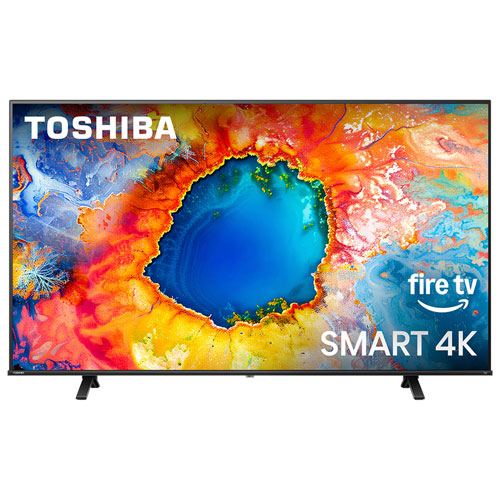
-45%Toshiba 50" C350NC 4K Fire TV — Dolby Vision and Dolby Atmos at a Budget Price! $349.99 CAD (44% Off)
 -16%
-16%gonicc 8" Titanium Bypass Pruning Shears — Cuts 3/4" Branches, #1 in Bonsai Cutters! $21.95 CAD (15% Off)
 -44%
-44%SUPERSHIELD Universal TV Remote RC-G008 — Works Out of the Box, Fits Samsung, Sony, LG & More! $12.97 CAD (44% Off)
 Sports Express
Sports Express | October 20, 2026 — Rays Rout Guardians 7-3 to Reach World Series
 Finance Evening
Finance Evening: Dow Jumps 500 Points as Canada's PBO Cuts 2026 Growth Forecast to 0.9%
-48%Brother MFC-J1410DW Colour Inkjet All-in-One — Half Price at $119.99 (48% Off)
Amazon
-45%Toshiba 50" C350NC 4K Fire TV — Dolby Vision and Dolby Atmos at a Budget Price! $349.99 CAD (44% Off)
Best Buy
-16%gonicc 8" Titanium Bypass Pruning Shears — Cuts 3/4" Branches, #1 in Bonsai Cutters! $21.95 CAD (15% Off)
Amazon
-44%SUPERSHIELD Universal TV Remote RC-G008 — Works Out of the Box, Fits Samsung, Sony, LG & More! $12.97 CAD (44% Off)
Best Buy
Sports ExpressSports Express | October 20, 2026 — Rays Rout Guardians 7-3 to Reach World Series
Finance Evening