Tech Express | July 16, 2026 TSMC Pledges Another $100B for US Chipmaking, DeepSeek Founder Becomes World's Richest AI Founder
Today's Tech Express highlights the AI industry's accelerating real-world deployment: TSMC pledges another $100 billion for US chipmaking as ASML raises guidance again amid surging AI infrastructure demand; DeepSeek founder Liang Wenfeng becomes the world's richest AI founder at $36 billion; OpenAI enters consumer hardware while China's desktop agent market explodes into a multi-player battle royale.
Tech Express | July 16, 2026 TSMC Pledges Another $100B for US Chipmaking, DeepSeek Founder Becomes World's Richest AI Founder
📰 TSMC Pledges Another $100 Billion to Expand US Chipmaking Capacity
Taiwan Semiconductor Manufacturing Co. (TSMC), the world's largest contract chipmaker, announced on July 16 that it plans to invest an additional $100 billion to expand its manufacturing capacity in the United States. This latest commitment, on top of the $65 billion previously pledged, brings TSMC's total US investment to a staggering $165 billion. Chairman C.C. Wei stated that AI-related demand globally remains "extremely robust," as the AI megatrend continues to drive the need for more and more computation.
The additional investment follows a US-Taiwan trade agreement in which Taiwan committed approximately $250 billion in new investments in the US tech sector, including semiconductors, in exchange for tariff reductions. TSMC is already building multiple advanced fabrication plants in Arizona, and the new funding is expected to support even more advanced 2nm and sub-2nm process nodes, further strengthening the resilience and self-sufficiency of America's domestic chip supply chain.
Analysts note that TSMC's massive investment is not only a strategic response to surging AI chip demand but also reflects the broader trend of global semiconductor supply chain decentralization under geopolitical pressure—a shift that will profoundly reshape the industry landscape for years to come.
— ABC News
📰 DeepSeek Founder Liang Wenfeng Becomes World's Richest AI Founder at $36 Billion
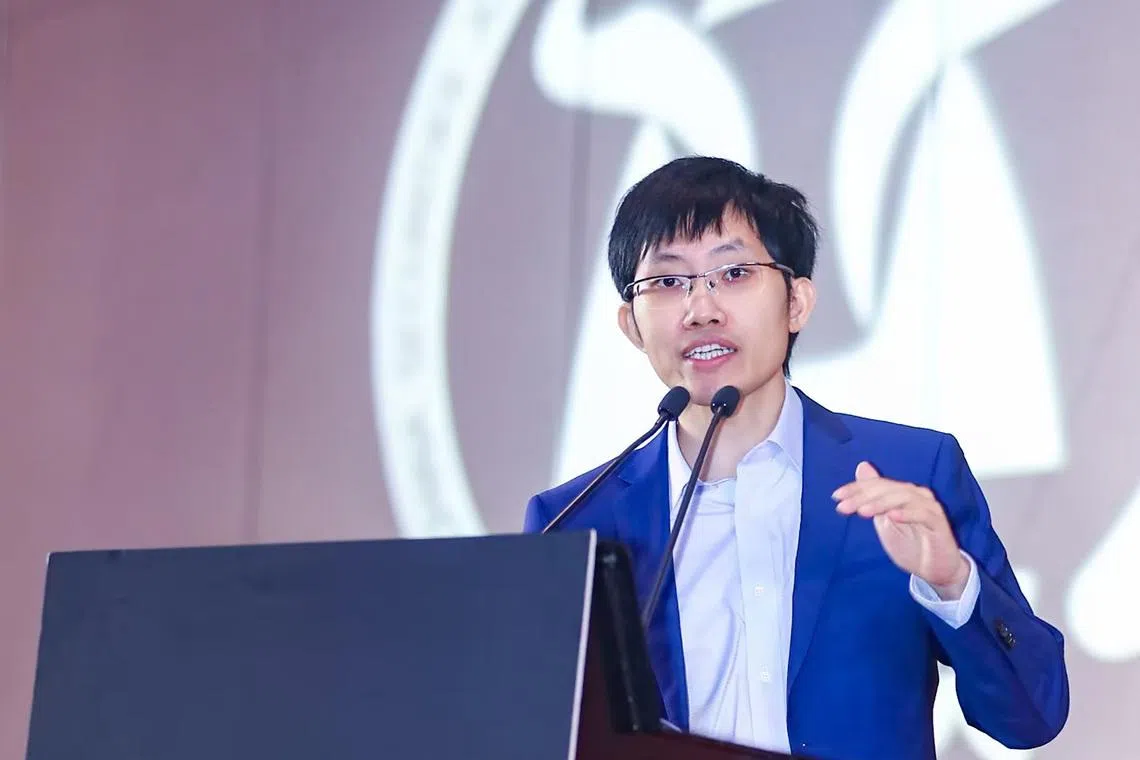
According to the latest Bloomberg Billionaires Index, DeepSeek founder and CEO Liang Wenfeng's net worth has surged to $36 billion, surpassing Anthropic co-founder Dario Amodei and OpenAI co-founder Greg Brockman to become the wealthiest founder of an AI model startup globally. His fortune was previously estimated at around $16.7 billion before a recent funding round dramatically boosted DeepSeek's valuation, more than doubling his personal wealth.
DeepSeek has rapidly emerged as a formidable force in the global AI landscape over the past year, driven by its open-source strategy and extreme cost-efficiency approach. Its latest flagship model has delivered impressive results across multiple benchmarks, outperforming GPT and Claude series models on certain metrics, making this 2023-founded Chinese company one of Silicon Valley's most formidable competitors.
This milestone marks a historic breakthrough for Chinese AI entrepreneurs on the global tech wealth map. Notably, just as Liang ascended to the top, Anthropic CEO Dario Amodei had previously named DeepSeek during congressional testimony, calling on the US government to impose stricter restrictions on Chinese AI companies.
📰 OpenAI's First Hardware Device Revealed: A Movable, Screenless AI Speaker
Bloomberg reported on July 14 that OpenAI's first consumer hardware product will be a movable, screen-free smart speaker, positioned internally as a "humanlike AI companion that lives in the home." The device, powered by ChatGPT's core capabilities, can proactively anticipate user needs and surface information without waiting for direct commands, marking OpenAI's official transition from a pure software company to an integrated hardware-software player.
The device is still under development, with OpenAI aiming to unveil it later in 2026 and release it in 2027. According to reports, the speaker includes mechanical elements that can move autonomously, enabling it to navigate rooms freely and establish more natural interactions with users. This design sets it apart from traditional stationary smart speakers like Amazon Echo and Apple HomePod.
The move puts OpenAI in direct competition with consumer electronics giants including Apple, Amazon, and Google. Notably, Apple is reportedly preparing a lawsuit against OpenAI, alleging infringement of Siri-related intellectual property, adding legal uncertainty to OpenAI's hardware ambitions.

📰 Anthropic and Blackstone Bet the Next Trillion-Dollar AI Business Is Implementation, Not Models
Anthropic-backed AI deployment company Ode has officially launched, signaling a strategic shift as AI industry leaders pivot from model competition toward enterprise implementation. Blackstone Group has also joined this ecosystem, with both parties betting that the next trillion-dollar AI market lies not in building ever-larger models but in deeply embedding existing AI capabilities into enterprise workflows. Ode employs a "forward-deployed engineer" model, embedding technical experts directly within client organizations to drive real AI adoption.
This strategic pivot reflects a growing industry consensus: despite continued advances in model capabilities, actual enterprise adoption rates remain far below expectations. The core bottleneck is translating general-purpose AI capabilities into concrete business productivity. Ode's business model attempts to bridge this "last mile" gap, helping enterprises scale from pilots to full production through embedded services.
Investment bank analysts estimate that the AI implementation services market could reach $1.5 trillion by 2030, far exceeding direct revenue from model API calls. This outlook is driving more AI labs to shift from "model-as-product" to "solution-as-service," with the competitive focus moving from technical benchmarks toward customer value and business outcomes.

📰 ASML Raises Full-Year Guidance Again as AI Chip Demand Surges
Dutch semiconductor equipment giant ASML reported better-than-expected second-quarter earnings on July 15, posting net sales of €9.3 billion and raising its full-year revenue forecast to between €43 billion and €45 billion. This marks the second time ASML has raised its guidance this year, reflecting robust demand for advanced lithography equipment from AI chip manufacturers. Major customers including TSMC, Samsung, and Intel are all expanding capacity, driving order growth for ASML's extreme ultraviolet (EUV) and High-NA EUV systems.
ASML's CEO stated during the earnings call that AI-driven chip demand will continue to accelerate for the foreseeable future, with the company already planning further capacity expansion to meet delivery commitments through 2027 and beyond. Notably, adoption of High-NA EUV technology is progressing faster than expected, with customers potentially beginning deployment as early as 2027, further cementing ASML's monopoly position in advanced chip manufacturing equipment.
Despite the stellar results, ASML shares dipped slightly after the earnings release, as markets weighed trade restrictions and geopolitical risks affecting exports to China. However, most analysts remain bullish on ASML's long-term growth, arguing that the structural growth in AI computing demand is far from peaking.
— CNBC
📰 Toronto Tech Week Doubles Attendance to 32,000 in Second Year
Toronto Tech Week (TTW) experienced explosive growth in its second edition. According to an impact report released on July 15, the weeklong event hosted more than 600 events from May 25 to 29, attracting over 32,400 participants—nearly double the inaugural year's figures. TTW co-director and co-founder Mell Truong said the scale "surpassed all of our expectations, even for the organizing team and stakeholders."
The event continued its decentralized grassroots format, allowing anyone to create their own niche events for free—from hackathons and fireside chats to founder brunches and investor cocktail parties. Standout events included Homecoming, the flagship gathering featuring keynotes from Shopify CEO Tobi Lütke and Uber President Andrew Macdonald, as well as BetaKit's Most Ambitious Town Hall and Creative Destruction Lab's annual Super Session.
TTW emerged in the wake of Collision Conference's departure from Toronto as a community-driven alternative. In just two years, it has become one of North America's largest grassroots tech gatherings, showcasing Toronto's vibrant momentum as a global technology hub.

— BetaKit
📰 Alberta and Québec Sign AI Partnership Agreement to Modernize Government Services
The Canadian provinces of Alberta and Québec signed a memorandum of understanding on AI on July 15, enabling the two provinces to share technical assets and develop joint projects in public service modernization. Alberta's Minister of Technology and Innovation, Nate Glubish, and Québec's Minister of Cybersecurity and Digital Technology, France-Élaine Duranceau, jointly signed the agreement. "By pooling our expertise, Québec and Alberta are drawing on solutions already developed by each of the two governments rather than starting from scratch," Duranceau said in a statement.
Under the agreement, a joint steering committee with representatives from both provinces will be established to guide the development of a shared work plan, identifying collaboration opportunities and potential joint pilot projects. The provinces will also share their respective provincial AI strategy resources. This interprovincial collaboration model carries demonstrative significance within Canada's federal system, showing how subnational governments can spontaneously drive innovation collaboration beyond national AI strategy frameworks.
The agreement highlights the growing trend of Canadian provinces accelerating AI adoption in public services. Alberta has invested significantly in technology and innovation in recent years, while Québec hosts world-leading AI research institutions like the Mila Institute. The partnership is expected to yield practical results in government efficiency, healthcare delivery, and education.

— BetaKit
📰 China's New AI Persona Regulation Takes Effect, Triggering Mass Removal of Virtual Characters
China's "Interim Measures for the Administration of AI Personified Interaction Services" took effect on July 15, triggering a large-scale removal of user-created AI personas across major domestic AI platforms. Jointly issued by five government agencies including the Cyberspace Administration, the regulation explicitly prohibits providing virtual relative, virtual partner, and other virtual intimate relationship services to minors, while requiring compliance rectification for all personified interaction services. As a result, user-created virtual characters on platforms like Doubao and Qianwen are being systematically taken down.
The policy comes amid growing social risks from the rapid proliferation of AI personas. A 2025 survey by the China Youth Research Center found that over 60% of minors had used AI chat applications, with more than 20% saying they "only want to talk to AI, not real people." On social media, many users are holding spontaneous "digital farewells," bidding emotional goodbyes to AI companions that have accompanied them for years.
However, the business model for AI persona services had struggled from the start. Although QuestMobile data shows AI social interaction ranks third in monthly active users behind AI search engines and AI comprehensive assistants, these deep-conversation services are heavy token consumers with high costs and limited user willingness to pay. Combined with mounting regulatory risks, this industry shakeout was not unexpected.

— 36Kr
📰 StepFun Unveils World's First Native LLM Agent Phone STEPX Neo
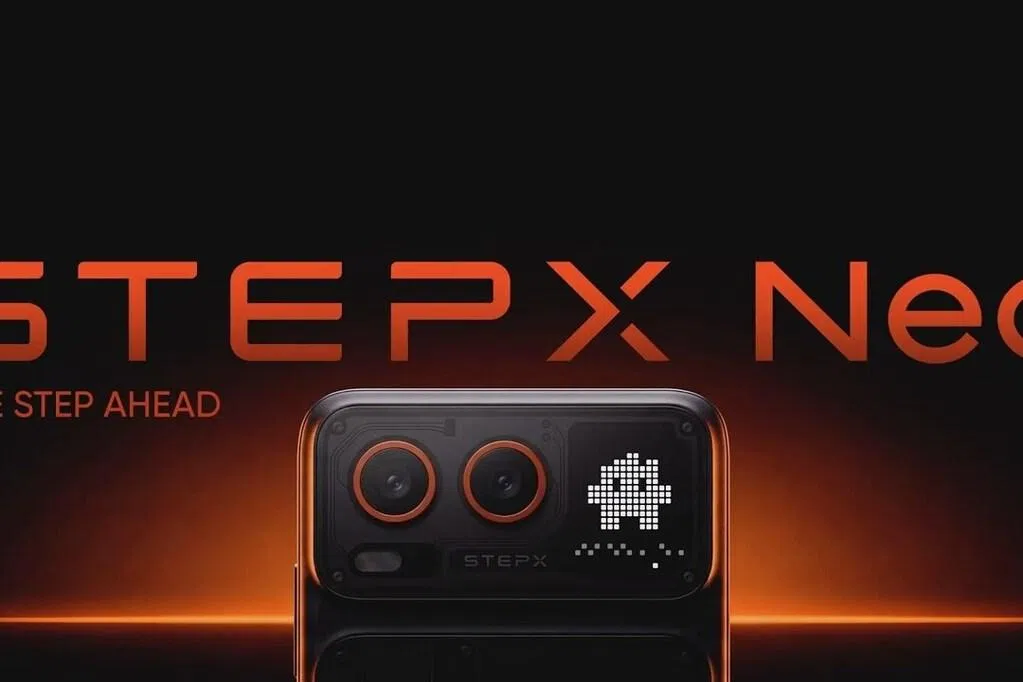
On July 13, on the eve of the 2026 World AI Conference (WAIC), Chinese AI company StepFun (阶跃星辰) launched the world's first native large-model AI terminal brand "STEPX" and its debut agent phone, STEPX Neo, in Shanghai. The phone runs StepFun's proprietary agent-native operating system, Step AOS, which was designed from the ground up around agent operation requirements—integrating model, software, and hardware as a unified architecture. This represents a paradigm shift from traditional "human operating apps" to "human expressing intent."
STEPX Neo features StepFun's personal AI agent "Amoo," capable of proactively understanding user intent and autonomously completing tasks. It is also among the first products to pass the Level 3 (L3) certification under China's national standard "AI Terminal Intelligence Classification," marking the transition of AI phones from "application-layer AI overlay" to "system-level AI native." The launch event simultaneously unveiled the STEPX brand, Step AOS operating system, and the Amoo personal agent, forming a complete AI terminal brand matrix.
Industry analysts noted the impressive timing and product completeness of StepFun's launch. Revealing a four-layer architecture—brand, OS, agent, and hardware—all at once is relatively rare in the current global AI terminal race, and is viewed as a significant move by a Chinese company in the battle to define the AI smartphone.
📰 2026 China's Codex Battle Royale: 15 Desktop Agent Products Vie for Dominance
The biggest AI product trend of 2026 is undoubtedly Chinese internet giants and model companies rushing to launch their own desktop agent products. From Alibaba's QoderWork, Tencent's WorkBuddy and Marvis, to Kimi Work, ByteDance's TRAE Work, and Doubao Task Mode, at least 15 representative products are now competing for users' "execution gateway." These products have moved beyond Q&A interactions into real workflows—handling files, operating web pages, organizing data, generating presentations, and even executing cross-application automation.
The starting point of this "Codex war" was OpenAI's Codex product. Originally a coding tool designed to compete with Claude Code, Codex evolved into a desktop agent with over 5 million weekly active users, the majority of whom are non-engineers. The Chinese market has quickly followed suit, with products differentiating on model selection, pricing strategies, and ecosystem integration: Tencent's WorkBuddy connects to Tencent Docs, WeCom, and other ecosystem products while supporting 11 domestic models, while Marvis emphasizes cross-device management and multi-agent collaboration.
AI is becoming the new middleware connecting users to the digital world. The explosion of the desktop agent race will profoundly reshape the software industry's entry-point logic and business models—when AI can directly execute tasks on behalf of users, traditional in-app workflows may be dramatically simplified or bypassed, posing entirely new challenges and opportunities for utility apps and app stores alike.
— 36Kr
More News
- Immigration | October 26, 2026 Express Entry's new scoring takes effect November 3: high-wage job offers worth up to 100 points
- Global Express | October 26, 2026 - Serbia's Vucic Concedes Defeat, Ending 14 Years in Power
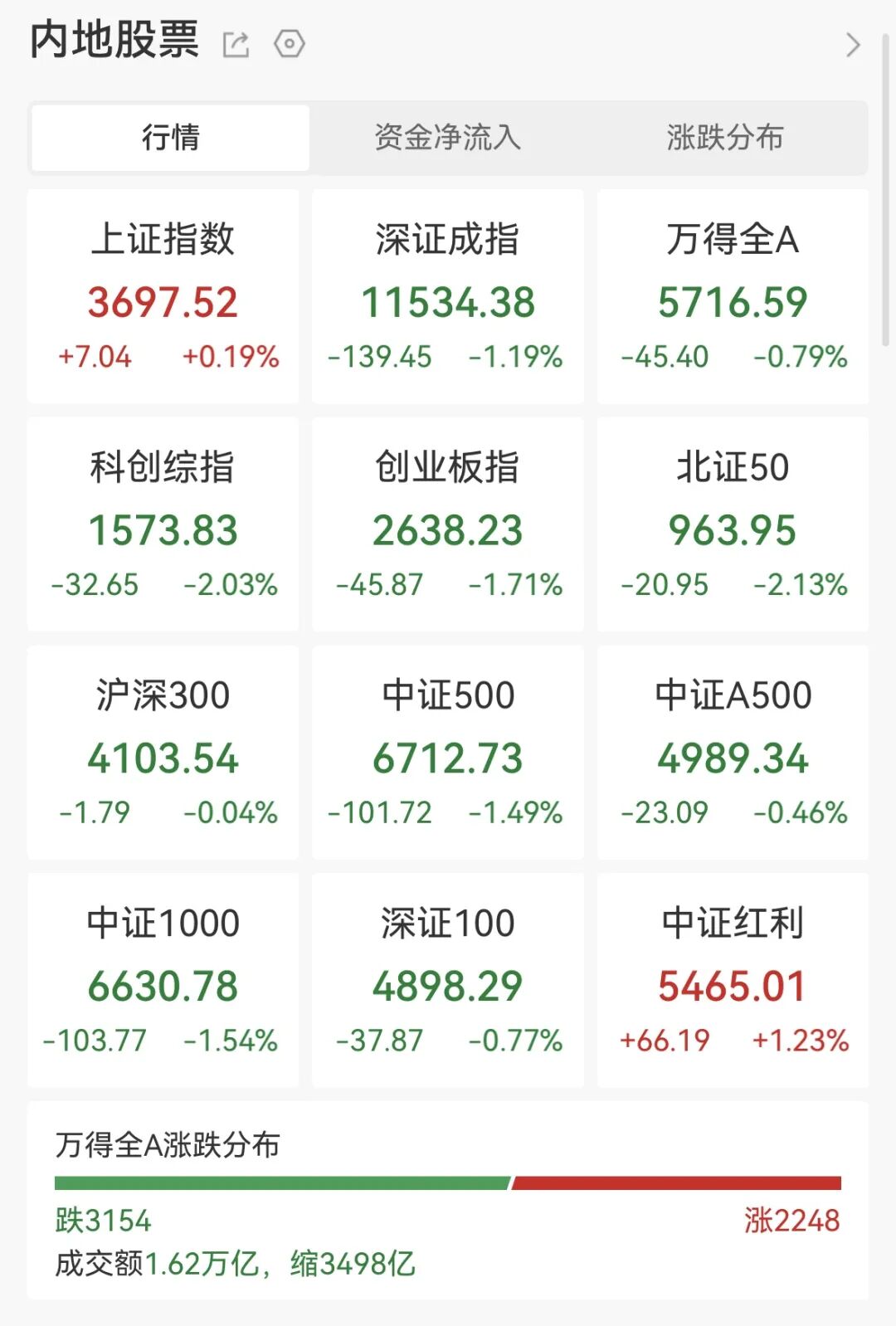
- Finance Morning | October 26, 2026 — Shanghai Edges Up 0.19% as Banks and Oil Lead, Asia Mostly Lower
- Tech Express | October 26, 2026 - Huawei's Kirin Chips Return to Public View as Mate 90 Lights Up Landmarks
- Sports Express | October 26, 2026: Seahawks Hand Chiefs First Loss of Season
Comments (0)
View More
 -45%
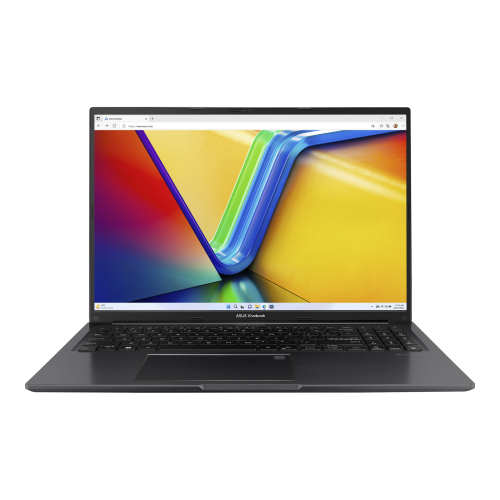
-45%ASUS Vivobook 16 — 16" OLED Display, Ryzen 7, 1TB SSD! $999.00 CAD (44% Off)
 -34%
-34%HUANUO Monitor & Laptop Mount — 16" Long Arm, Full Motion! $54.99 CAD (34% Off)
 -44%
-44%Utopia Bedding Twin Fitted Sheets, 6-Pack — All-Around Elastic Stays Put! $47.72 CAD (43% Off)
 -43%
-43%LEGO Speed Champions McLaren W1 77257 — 287-Piece Supercar for Under $20! $19.97 CAD (43% Off)
 Tech Express
Tech Express | October 26, 2026 - Huawei's Kirin Chips Return to Public View as Mate 90 Lights Up Landmarks
 Finance Morning
Finance Morning | October 26, 2026 — Shanghai Edges Up 0.19% as Banks and Oil Lead, Asia Mostly Lower
-45%ASUS Vivobook 16 — 16" OLED Display, Ryzen 7, 1TB SSD! $999.00 CAD (44% Off)
Best Buy
-34%HUANUO Monitor & Laptop Mount — 16" Long Arm, Full Motion! $54.99 CAD (34% Off)
Amazon
-44%Utopia Bedding Twin Fitted Sheets, 6-Pack — All-Around Elastic Stays Put! $47.72 CAD (43% Off)
Amazon
-43%LEGO Speed Champions McLaren W1 77257 — 287-Piece Supercar for Under $20! $19.97 CAD (43% Off)
Amazon
Tech ExpressTech Express | October 26, 2026 - Huawei's Kirin Chips Return to Public View as Mate 90 Lights Up Landmarks
Finance Morning