
Finance Evening: Alphabet Misses Revenue Estimates as Fed Holds Rates Steady
U.S. stocks rose: S&P 500 +0.28%, Nasdaq +0.27%, TSX +0.26%. Alphabet's Q3 revenue of US$127.58B missed estimates and the stock fell about 9% after the bell; Microsoft beat on both lines with Azure up 48%; Oracle jumped 11% on a US$225B fiscal 2030 target. The Bank of Canada hiked to 2.5% and the Big Six lifted prime to 4.70%, as Ontario unveiled an $8B business tax cut. The Fed held at 3.75%-4% with two dissents. AI debt is straining credit and JPMorgan sees more downside for gold.
📊 Today's North American Markets
| Index / Commodity | Close | Change | % Change |
|---|---|---|---|
| S&P 500 | 7,743.98 | +21.38 | +0.28% |
| Nasdaq | 26,549.85 | +72.04 | +0.27% |
| Dow Jones | 52,475.10 | +97.53 | +0.19% |
| Toronto TSX | 36,265.09 | +93.60 | +0.26% |
| USD/CAD | 1.3991 | -0.0055 | -0.39% |
| WTI Crude | 101.94 | -0.84 | -0.82% |
| Gold | 4,081.20 | +29.60 | +0.73% |
All three major U.S. indexes closed higher on Wednesday, with the S&P 500 up 0.28%, the Nasdaq up 0.27% and the Dow up 0.19%; Toronto's TSX gained 0.26%. The Canadian dollar strengthened, with USD/CAD falling 0.39% to 1.3991. WTI crude fell 0.82% to US$101.94 a barrel and gold rose 0.73% to US$4,081.20 an ounce.
Alphabet misses revenue estimates, shares fall about 9% after the bell
Source: Yahoo Finance (AP)
Alphabet reported third-quarter results after the U.S. market closed on Wednesday. Revenue rose 25% from a year earlier to US$127.58 billion, short of the US$127.97 billion analysts polled by FactSet had expected. Net income was US$26.17 billion, down from US$34.98 billion a year earlier. Within an hour of the release, the stock fell about 9% to US$295.20 in after-hours trading.
Earnings per share came in at US$2.12. Results were hit by an US$8.7 billion loss on equity investments in the quarter. CEO Sundar Pichai said in a statement that the quarter was strong and that the company is "now on a half-trillion dollar revenue run rate," adding that its full-stack approach is driving momentum across the business.
Pichai also said the Gemini AI assistant has reached one billion users, making it the fastest-growing product in Google's history.
Microsoft tops estimates on revenue and profit as Azure grows 48%
Source: Yahoo Finance
Microsoft reported first-quarter results after the bell on Wednesday: earnings per share of US$4.89 on revenue of US$92.28 billion, ahead of Bloomberg consensus estimates of US$4.73 and US$90.63 billion. A year earlier it posted EPS of US$4.13 on revenue of US$77.6 billion. The stock rose more than 4% on the news.
It was the first quarter under Microsoft's new segment structure. The Agents and Infrastructure segment posted revenue of US$76.8 billion, above the US$75.6 billion expected, with Azure sales up 48% to US$33.17 billion from US$22.38 billion a year earlier. Devices and Consumer revenue totalled US$15.5 billion, versus US$15 billion expected.
Capital expenditures including leases topped US$39.37 billion, below the US$45.93 billion analysts anticipated. The company said it will spend more than US$50 billion on capex in the second quarter and US$170 billion in fiscal 2027, while remaining cash-flow positive in 2027. CEO Satya Nadella said Microsoft brought 24 new data centres online across five continents in the quarter.

Oracle shares jump 11% on 2030 revenue target
Source: CNBC
Oracle shares rose 11% on Wednesday after the company issued a revenue forecast of US$225 billion for fiscal 2030, implying 35% average annual growth, and said it will limit additional fundraising over that stretch to US$20 billion. As part of its financing plan for fiscal 2027 through 2030, the amount raised will be split equally between equity and debt.
Analysts polled by LSEG had expected fiscal 2030 revenue of US$224.2 billion. Oracle also said vendor financing, customer-provided hardware and customer prepayments are expected to reduce upfront cash requirements as it transitions to positive free cash flow.
Before Wednesday, Oracle had lost about one-third of its value this year on concern that rising interest rates and its hefty debt load would make its AI buildout too costly. It has issued US$117 billion in long-term debt and holds a BBB- rating from S&P, the lowest investment-grade tier. Capital expenditures more than doubled to US$55.7 billion in fiscal 2026 and are expected to jump another 65% to US$91.9 billion this fiscal year. Oracle expects an operating margin above 40% in fiscal 2030 and positive free cash flow in the second half of fiscal 2028.

Bank of Canada raises key rate a quarter point to 2.5%, first hike since 2023
Source: Financial Post
The Bank of Canada raised its key interest rate by 25 basis points to 2.5% on Wednesday, its first hike since 2023, blaming higher, more persistent inflation and warning it could not rule out additional increases.
In its October Monetary Policy Report, also published Wednesday, the central bank projected inflation will remain above 3% through the rest of 2026 and much of 2027. It raised its 2026 average inflation forecast to 2.9%, 0.4 percentage points above July, and to 3.1% for 2027, 1.1 points higher. Stubbornly high energy prices and higher non-energy import costs will keep pressure on inflation into early 2027 before easing in early 2028, the report said.
Canada's inflation rate rose to 3.1% in September after holding at 3% in July and August. Energy prices were up about 19% year over year in September, while core measures remained around 2%. The bank's latest Business Outlook Survey found roughly half of firms surveyed plan to pass higher fuel costs on to consumers by the end of the year.
The bank also raised its growth projections: real GDP growth of about 1% in 2026, 0.3 points above July, strengthening to 2% in 2027 and 2028, 0.2 points higher. "What we don't want is those higher energy prices to pass through and raise the prices of other goods and services that Canadians are buying," Governor Tiff Macklem told reporters. Monetary policy must be forward looking, he added: "even with this increase, it's still low enough that it's not restraining growth."
Ontario unveils $8-billion tax cut to spur business investment
Source: CBC
Ontario Finance Minister Peter Bethlenfalvy announced an "Ontario Competitiveness Tax Cut" on Wednesday that lets companies write off 100% of the value of a range of assets, from fibre optic cables and software to machinery, worth about $8 billion in tax relief over five years.
Speaking at the MaRS Discovery District in Toronto, Bethlenfalvy said that as global trade patterns shift, Ontario businesses need the tools and support to adapt, invest and grow. He said the measure will support an estimated 30,000 new jobs and bring Ontario's marginal effective tax rate to 3.6%.
The cut is part of the province's multi-year tax action plan and dovetails with the federal productivity mega-deduction announced in September, which lets businesses immediately deduct 100% of the cost of some investments; last month Prime Minister Mark Carney widened it so two-thirds of assets qualify. Giles Gershon, president and CEO of the Toronto Regional Board of Trade, said the region's manufacturing economy has been "caught squarely in the US administration's cross-hairs" for 18 months.
The announcement comes a day before the provincial government releases its fiscal update, in which a deficit higher than the $13-billion shortfall that closed 2025-26 is expected.

Canada's Big Six banks raise prime rate to 4.70%
Source: Toronto Star
Canada's Big Six banks said Wednesday they are raising their prime rates to 4.70% from 4.45%, effective Oct. 29, after the Bank of Canada's quarter-point hike. Laurentian Bank and Desjardins Group said they will make the same change.
The increase will raise the cost of loans tied to the benchmark, such as variable-rate mortgages and lines of credit.
On Wednesday the central bank raised its key policy rate to 2.5%, its first hike in more than three years, as it tries to keep a lid on inflation. The rate had held steady for nearly a year following a series of cuts.
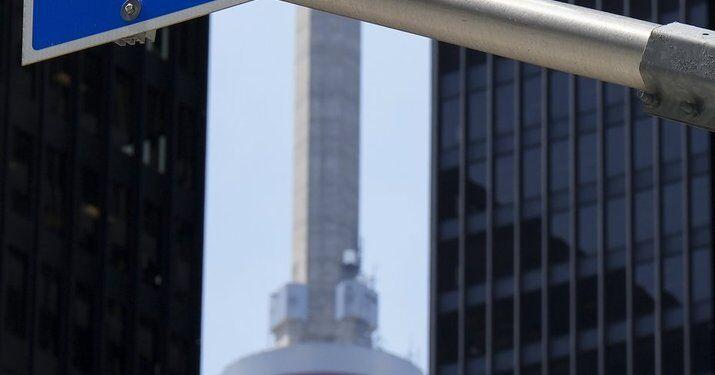
Fed holds rates steady as two officials push for a hike
Source: Yahoo Finance
With the midterm elections less than a week away, the Federal Reserve held its benchmark rate steady in the 3.75% to 4% range on Wednesday in a split vote, after raising rates last month for the first time in more than three years.
Cleveland Fed President Beth Hammack and Fed Governor Lisa Cook dissented, preferring a quarter-point increase. It was the second time since July that Hammack dissented in favour of a hike and Cook's first dissent in her tenure. Officials said "the accumulation of more information" will help the committee determine the policy stance needed to return inflation to its 2% goal in a timely way.
The latest inflation reports show price growth has accelerated since September's hike: CPI was 3.7% last month versus 3.4% in August, core CPI rose 2.6% versus 2.4%, wholesale prices jumped more than 6%, and the Fed's preferred core PCE index, due Thursday, is projected to top 3%.
Chair Kevin Warsh acknowledged at a press conference that the job of containing inflation is unfinished. "If you were listening next to me in that room the last couple of days, the overwhelming consensus ... is that what we've done in this monetary medicine [is] starting to work some, but there's no firm conclusions," he said. Warsh also announced a change to the FOMC schedule beginning next year: it will still meet eight times a year, but one meeting will focus exclusively on broad monetary policy strategy, with no vote on the federal funds rate and no policy statement; in 2028, two meetings will be dedicated to strategy and six to policy. "Politics played no role in the decision," Warsh said. The committee next meets on Dec. 9, and CME FedWatch shows traders pricing in 86% odds of a quarter-point hike by year-end.

AI debt supply surges, straining Wall Street credit markets
Source: Sina Finance
Financing the data centres and chip networks behind the AI boom is putting pressure on credit markets: yields on bonds and loans funding AI infrastructure have climbed into double digits, and banks are finding it harder to pass risk to insurers and other investors. Elon Musk warned recently that hundreds of so-called "neocloud" companies face collapse as they struggle to raise new financing.
Citadel Securities has warned clients that even tech giants could be dragged in, since they are backing many AI projects with their own balance sheets. In recent days the cost of default insurance has jumped for companies from Broadcom to SpaceX and Oracle, reaching levels more typical of junk-rated borrowers.
"The challenge may at some point no longer be finding investment-grade entities to provide credit support, but finding buyers actually willing to take on more risk," Citadel Securities analyst Tucker Roberts said. Morgan Stanley ABS strategist Carolyn Campbell said top-rated data centre bond yields were below 5% in early 2026 and are now close to 7%: "when borrowing costs approach 8%, issuing these bonds becomes much harder."
JPMorgan sees more downside risk for gold
Source: Sina Finance
The head of Asia rates and FX strategy at JPMorgan Private Bank said gold still faces downside risk after the recent selloff, with thin market liquidity and room for rates to rise further. She argued gold will only build a solid floor once rates peak.
The bank expects the Fed to hike in December and in the first quarter of 2027, pushing the 10-year Treasury yield from just above 5% to a peak of 5.25% to 5.5% by mid-year. Higher yields erode the appeal of non-yielding gold, though the firm believes bullion could rally strongly late next year once the Fed ends its tightening cycle.
Last week gold was sold off during a broad equity decline as investors raised cash to cover losses elsewhere, falling below US$4,000 an ounce. After retreating about 13% from its late-August high, prices have been churning around that level. The firm said there is little technical support below US$4,000 and the market is fragile. It forecasts gold at US$4,500 an ounce by mid-2027 and US$5,000 by year-end.

Microsoft buyouts: what to ask before you accept
Source: Business Insider
About 60,000 Microsoft employees have a choice: take a buyout and leave at the end of the year, or stay. Eligible employees have until early December to decide. Offers reviewed by Business Insider vary by level, location and length of service: for U.S. employees at levels 64 and below, the cash offer is one week of base pay for every six months of service; at levels 65 to 67, it is two weeks for every six months. The packages also include continued stock vesting and health insurance.
HR experts say the number matters, but it is not the whole picture. Employees should check what happens to their stock, paid time off, health coverage and any bonus or commission due after they leave, and calculate how long the payout would cover household expenses after tax. Deborah Saneman, CEO of workforce management firm Würk, suggested pricing out replacement health insurance — how long coverage lasts, the monthly cost and whether the company covers any premium — and checking which shares would vest after exit.
Marjo Miles of The Ember Effect advised doubling any estimate of how long a job search will take and starting to apply and network before the deadline, while Saneman suggested asking about career coaching, outplacement and training. Both cautioned that turning down a buyout does not guarantee job security, and that predicting a company's next move is unwise. "The benefit of a buyout is that it's on your own terms and gives you time to plan your next steps," Saneman said.
More News
- Maple Express | October 28, 2026: Canada-U.S. talks hit a 'now or maybe never' window
- Maple Express | October 28, 2026 - Bank of Canada Hikes Rate to 2.5%, Ford Calls It 'a Massive Mistake'
- AI Weekly | OpenAI Turns to Google TPUs as Nvidia's Compute Grip Loosens
- Global Express | October 28, 2026: Two High-Speed Trains Collide in Spain, at Least 30 Dead
- SK Hynix Earnings Ignite Asia Stocks: KOSPI Jumps 6.63% After Circuit Breaker
Comments (0)
View More
 0
SwissGear 1900 ScanSmart 17" Laptop Backpack — TSA Lay-Flat, RFID Pocket, 5-Year Warranty (Plus $18.38 Coupon)
 -61%
Blink Outdoor 4 Wire-Free 1080p HD Camera 3-Pack — Two Years on AA Batteries, 60% Off! $102.99 CAD
 -34%
Wavytalk Ionic Hair Dryer with Diffuser — 1875W, 3 Attachments for Every Hair Type! $39.99 CAD (33% Off)
 -50%
Dreame RGB IC LED Strip 5m — 4-in-1 Chip, 50 DIY Segments, Matter Support! $55.99 CAD (49% Off)
 Global Express
 | October 28, 2026: Two High-Speed Trains Collide in Spain, at Least 30 Dead
 Finance Morning
SK Hynix Earnings Ignite Asia Stocks: KOSPI Jumps 6.63% After Circuit Breaker
0SwissGear 1900 ScanSmart 17" Laptop Backpack — TSA Lay-Flat, RFID Pocket, 5-Year Warranty (Plus $18.38 Coupon)
Amazon
-61%Blink Outdoor 4 Wire-Free 1080p HD Camera 3-Pack — Two Years on AA Batteries, 60% Off! $102.99 CAD
Best Buy
-34%Wavytalk Ionic Hair Dryer with Diffuser — 1875W, 3 Attachments for Every Hair Type! $39.99 CAD (33% Off)
Amazon
-50%Dreame RGB IC LED Strip 5m — 4-in-1 Chip, 50 DIY Segments, Matter Support! $55.99 CAD (49% Off)
Amazon
Global ExpressGlobal Express | October 28, 2026: Two High-Speed Trains Collide in Spain, at Least 30 Dead
Finance Morning