
Tech Express | July 28, 2026 Kimi K3 Goes Open-Source: 2.8 Trillion Parameter Model Released
Tech Express July 28: Moonshot AI releases 2.8T-parameter Kimi K3 open-weight model; CXMT surges 466% on debut topping China's stock market; Huang and Musk endorse China's AI trajectory. SpaceX Starship Flight 13 succeeds, Apple inks $30B+ Broadcom chip deal, SK Hynix dips below IPO price, India's first private rocket reaches orbit.
Tech Express | July 28, 2026 Kimi K3 Goes Open-Source: 2.8 Trillion Parameter Model Released
📰 Moonshot AI Releases Kimi K3: 2.8 Trillion Parameter Open-Weight Model Now Available
On July 27, Chinese AI startup Moonshot AI officially released the full model weights of Kimi K3, a 2.8 trillion parameter Mixture-of-Experts (MoE) model that becomes the largest open-weight model in the world. Kimi K3 features a native multimodal architecture integrating the MoonViT-3D three-dimensional native-resolution vision encoder, with support for up to 1 million token context windows.
Kimi K3 introduces an innovative technique called "Agent Swarm" that dramatically reduces inference latency through parallel task execution, demonstrating powerful capabilities in real-world applications like visual-to-code generation. The model weights total approximately 594GB, released in MXFP4 format on Hugging Face under a modified MIT license. On the infrastructure side, vLLM, NVIDIA, AMD, and Moonshot AI are jointly advancing production-grade deployment support to enable multi-GPU cluster operation.
Notably, Chinese AI models now account for 60% of token consumption on the OpenRouter platform in the United States, and Kimi K3's release further validates the cost-efficiency and customization advantages of open-weight models. Forbes argues that Kimi K3 signals a major industry shift toward open architectures, as friction from closed systems increasingly gives way to open, adaptable frameworks.
— Forbes
📰 Jensen Huang and Elon Musk Both Endorse China's AI Prowess on the Same Day
On July 25, NVIDIA CEO Jensen Huang and Tesla CEO Elon Musk coincidentally voiced strong support for China's AI development on the same day. Huang publicly stated that China is destined to produce exceptional AI technology, calling on the international community to continue learning from and collaborating with China. He stressed that AI progress should not be obstructed by geopolitical tensions, and that technical exchange is vital for global innovation.
Musk went further on social media, bluntly stating that China is highly likely to become the leader in artificial intelligence, and that even if the U.S. tried to ban Chinese-developed AI models, it would be powerless to stop this trend. He pointed to China's AI talent pool, data scale, and engineering capabilities as forming an unshakeable competitive advantage that no restrictive measures could overcome.
The remarks from both tech leaders come amid intensifying global AI competition. This month alone, multiple leading Chinese AI companies have launched new products in rapid succession — from Kimi K3 to a wave of open-source models — reshaping the global AI landscape. These voices also echo growing industry concerns about an "AI Iron Curtain," where the politicization of technology exchange ultimately harms everyone's interests.
📰 Chinese Memory Chip Giant CXMT Surges 466% on Debut, Becoming China's Most Valuable Listed Company
On July 27, ChangXin Memory Technologies (CXMT), China's leading memory chip maker, skyrocketed nearly 466% on its first day of trading on Shanghai's STAR Market, instantly becoming the most valuable company listed on China's A-share market. The IPO raised approximately $10 billion, making it one of the largest listings in China's semiconductor history, with CXMT's market cap soaring to roughly 3.3 trillion yuan after the debut.
Behind CXMT's extraordinary performance lies surging memory chip prices driven by explosive global AI computing demand. As China's only manufacturer with large-scale DRAM production capability, CXMT's breakthroughs in DDR4 and DDR5 memory chips represent a critical milestone in China's semiconductor self-sufficiency drive. The funds raised will primarily be used to expand production capacity and advance next-generation process technology.
The IPO's success has also ignited widespread discussion about the global memory chip competitive landscape. The DRAM market remains dominated by Samsung, SK Hynix, and Micron, but CXMT's rise signals China's rapidly growing influence in this strategic sector. Analysts note that with AI-driven demand for high-bandwidth memory (HBM) continuing to surge, CXMT's expansion will have far-reaching implications for global supply chains.
— CNBC
📰 Israel Pitches High-Tech Trade and Safer AI Cooperation to Canada
On July 26, Israeli Ambassador to Canada Iddo Moed actively pitched Israel's high-tech solutions and AI security technologies to Canada at the CANSEC defense and security industry trade show in Ottawa. Despite diplomatic tensions between the two countries over Middle East conflicts, Israel views Canada as a key technology cooperation partner.
Ambassador Moed emphasized that Israel possesses extensive operational experience in cybersecurity, AI governance, and defense technology, offering tangible solutions for Canada. He stressed that safe AI technology represents an area where the two countries can find common ground beyond diplomatic differences. Israel's tech ecosystem, renowned for its density of startups, has cultivated unique expertise in AI ethics and security frameworks.
This proposal comes as Canada accelerates its own AI security capabilities. While Canada has maintained leadership in AI research in recent years, gaps remain in the industrialization of defense and security technologies. Analysts believe cooperation with Israel could help Canada bridge this gap while seeking diplomatic balance.
📰 San Francisco's GrubMarket Acquires Vancouver Online Grocery Platform SPUD
On July 21, U.S.-based online food wholesale platform GrubMarket announced the acquisition of Vancouver's Sustainable Produce Urban Delivery (SPUD), a pioneer in organic and local food online delivery in Canada. The acquisition amount was not disclosed, and the move will expand GrubMarket's online farmers market reach across British Columbia and Alberta.
Founded in 1997, SPUD is one of Canada's earliest online delivery platforms focused on organic and local produce, boasting a loyal customer base in the Vancouver area. GrubMarket, a unicorn in the U.S. agritech sector, has rapidly expanded through a series of acquisitions, bringing AI-powered supply chain management technology into traditional agricultural produce distribution.
The acquisition reflects the ongoing consolidation trend in North American agritech. As consumer demand for localized, sustainable food supply chains grows, technology-enabled food delivery platforms are reshaping every link from farm to table. For Canada's tech ecosystem, this deal also highlights the strategic value of homegrown innovators in cross-border integration.

— BetaKit
📰 SpaceX Starship Flight 13 Success — Tower Catch Attempt Planned for Next Mission
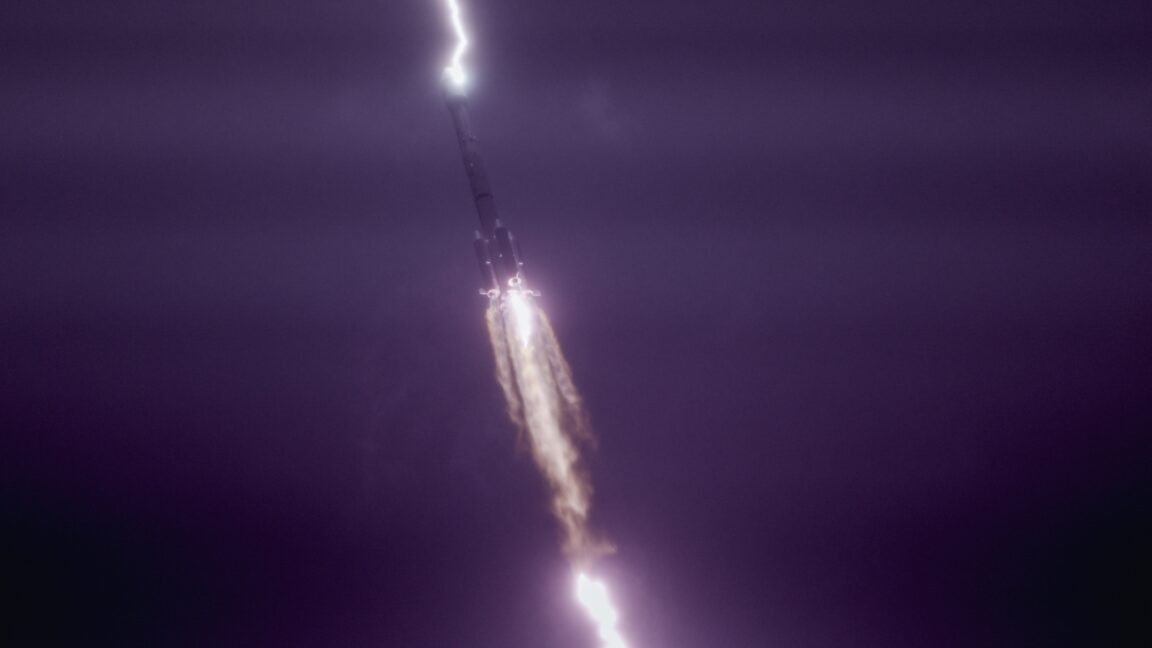
On July 24, SpaceX successfully completed the 13th full-scale Starship test flight from its Starbase launch site in South Texas. After Super Heavy booster and Starship lifted off smoothly, the spacecraft flew halfway around the world and executed a precise, intact splashdown in a remote section of the Indian Ocean, remaining afloat on the surface — marking a crucial step toward a fully reusable rocket.
Unlike previous splashdowns, Starship tipped over gently and remained floating stably after water contact, a result that buoyed the engineering team's confidence. SpaceX indicated that based on this flight's excellent performance, the next mission will attempt to catch the returning Starship using the launch tower's "chopstick" mechanical arms — a core technical validation for achieving full rapid reusability.
This flight was also SpaceX's first Starship launch since its July 16 IPO. Despite post-IPO stock fluctuations, the steady progress of the Starship program continues to earn investor confidence. Meanwhile, SpaceX's Falcon 9 rocket completed multiple Starlink deployment missions this week, maintaining its high-frequency launch cadence.

📰 Apple Signs $30 Billion+ Chip Agreement with Broadcom, Doubling Down on U.S. Manufacturing
On July 8, Apple announced a new multiyear commitment with Broadcom totaling over $30 billion, set to design and produce more than 15 billion custom silicon chips and advanced wireless connectivity components in the United States. This represents Apple's largest single commitment under its American Manufacturing Program (AMP) and marks a significant acceleration of the company's strategy to reshore its chip supply chain.
Under the agreement, Broadcom will invest $1.5 billion to expand and modernize its manufacturing facility in Fort Collins, Colorado, producing advanced RF components — including FBAR filters — and wireless connectivity technologies for use across Apple's entire product lineup, from iPhone and iPad to Mac. Apple CEO Tim Cook stated the deal not only accelerates American manufacturing innovation but also creates hundreds of high-quality American jobs.
This move comes at a pivotal moment in global semiconductor supply chain restructuring. Driven by the U.S. CHIPS and Science Act, TSMC, Intel, and Samsung are all building fabs on American soil, while the Apple-Broadcom partnership focuses on localizing chip design and packaging. Industry observers widely agree that Apple's sustained investment in custom silicon and supply chain diversification is fundamentally reshaping the power dynamics of the global semiconductor industry.

📰 SK Hynix Falls Below U.S. IPO Price as Mega-Listing Enthusiasm Cools
South Korean memory chip giant SK Hynix's U.S.-listed shares continued to slide after their Nasdaq debut, hitting a new low on July 27 and officially falling below their record $26.5 billion IPO price. The company, renowned for its HBM high-bandwidth memory, completed one of the largest tech IPOs in U.S. market history earlier this month, but subsequently encountered a broader semiconductor sector pullback.
The decline reflects a global recalibration of investor sentiment toward AI chip valuations. While AI-driven HBM demand remains robust, mounting concerns over the memory chip industry's cyclical volatility, U.S.-China trade tensions, and slowing global economic growth are weighing on sentiment. SK Hynix's stock performance is being viewed as a barometer for mega-IPO enthusiasm — signaling that investors are shifting from chasing AI hype toward more prudent evaluation of fundamentals and earnings prospects.
Analysts note that SK Hynix's underlying fundamentals remain solid, with its leadership in the HBM3E market and deep partnership with NVIDIA constituting core competitive advantages. In the near term, however, the lofty IPO valuation needs time to be absorbed, and a recovery in market sentiment likely depends on actual performance in upcoming quarterly earnings.

📰 India's First Fully Private Rocket Vikram-1 Reaches Orbit, Ushering in New Commercial Space Era
On July 26, Indian startup Skyroot Aerospace's Vikram-1 rocket successfully launched on its maiden flight from India's primary spaceport on Sriharikota Island in the Bay of Bengal, precisely delivering its payload into a 280-mile-high target orbit. This marks a historic breakthrough as India's first entirely privately developed commercial launch vehicle, with Indian space officials hailing the launch as a "grand success."
The Vikram-1 launch experienced a delay of over half an hour to resolve a last-minute technical issue, but the subsequent flight proceeded flawlessly. The all-solid-propellant rocket is capable of delivering approximately 300 kg of payload to low Earth orbit, primarily targeting the small satellite launch market. Skyroot Aerospace, founded in 2018, is one of the most prominent startups to emerge following India's opening of its space sector to private enterprise.
This successful launch not only validates the technical capabilities of India's private space ventures but also introduces a new competitor to the global small satellite launch market. With explosive growth in demand for low-Earth orbit communication constellations and Earth observation, low-cost, flexible, and rapidly deployable small launch vehicles are becoming one of the hottest segments in the space industry. Skyroot's success signals that India's role in the global commercial space race is accelerating rapidly.
More News
- Maple Express | October 26, 2026: Ford says trade war is hurting both countries
- Immigration | October 26, 2026 Express Entry's new scoring takes effect November 3: high-wage job offers worth up to 100 points
- Global Express | October 26, 2026 - Serbia's Vucic Concedes Defeat, Ending 14 Years in Power
- Finance Morning | October 26, 2026 — Shanghai Edges Up 0.19% as Banks and Oil Lead, Asia Mostly Lower
- Tech Express | October 26, 2026 - Huawei's Kirin Chips Return to Public View as Mate 90 Lights Up Landmarks
Comments (0)
View More
 -36%
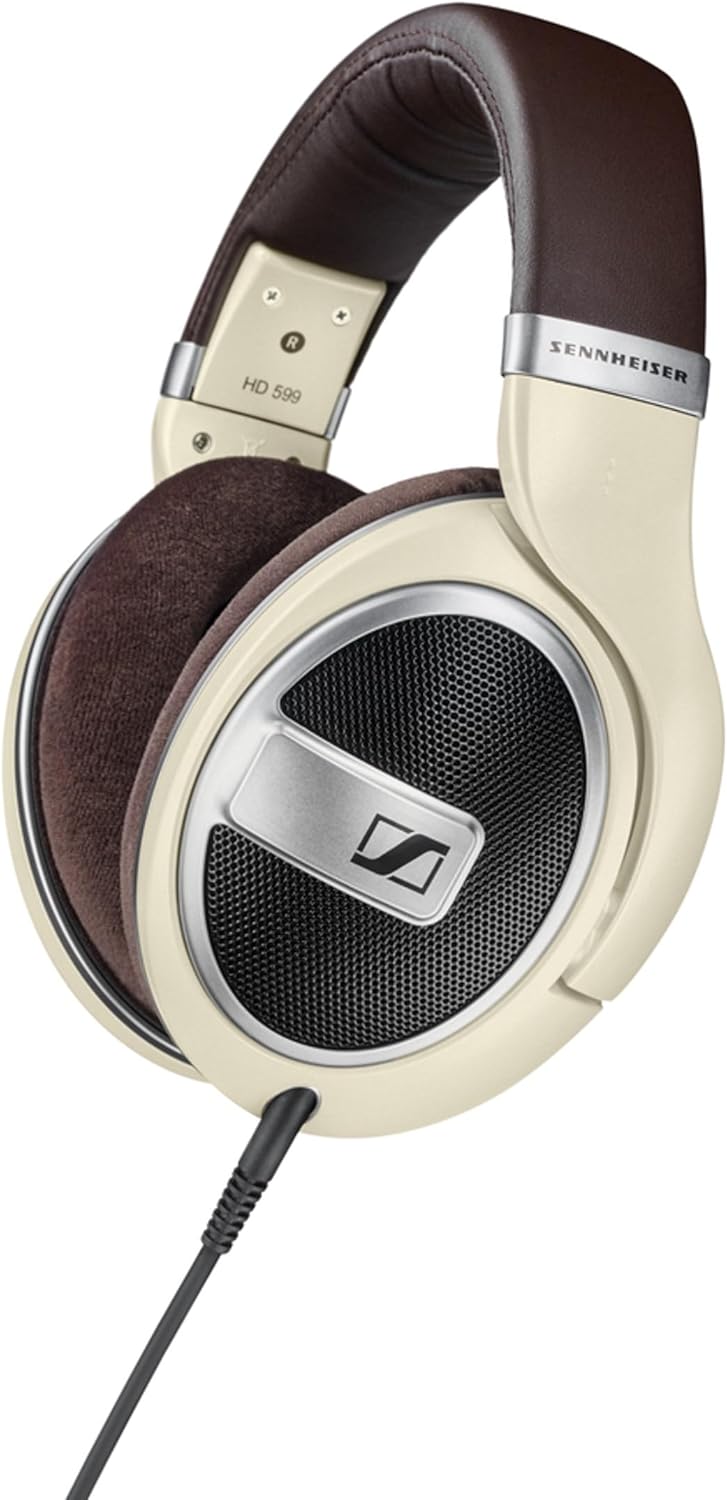
-36%Sennheiser HD 599 Open-Back Headphones — Velour Comfort, Natural Soundstage! $179.95 CAD (36% Off)
 -31%
-31%Nutrience Grain-Free Indoor Cat Food, 5 kg — Turkey, Chicken & Duck, Made in Canada! $38.84 CAD (31% Off)
 -31%
-31%Samsung 990 EVO Plus 2TB NVMe SSD — 7,250MB/s Reads, PS5-Ready! $549.99 CAD (30% Off)
 -46%
-46%GE 24" Built-In Dishwasher — 14 Place Settings, 50 dB Quiet, $500 Off! $599.99 CAD (45% Off)
 Maple Express
Maple Express | October 26, 2026: Ford says trade war is hurting both countries
 Tech Express
Tech Express | October 26, 2026 - Huawei's Kirin Chips Return to Public View as Mate 90 Lights Up Landmarks
-36%Sennheiser HD 599 Open-Back Headphones — Velour Comfort, Natural Soundstage! $179.95 CAD (36% Off)
Amazon
-31%Nutrience Grain-Free Indoor Cat Food, 5 kg — Turkey, Chicken & Duck, Made in Canada! $38.84 CAD (31% Off)
Amazon
-31%Samsung 990 EVO Plus 2TB NVMe SSD — 7,250MB/s Reads, PS5-Ready! $549.99 CAD (30% Off)
Amazon
-46%GE 24" Built-In Dishwasher — 14 Place Settings, 50 dB Quiet, $500 Off! $599.99 CAD (45% Off)
Best Buy
Maple ExpressMaple Express | October 26, 2026: Ford says trade war is hurting both countries
Tech Express