
Finance Morning | US-Iran Escalation Sends Asian Stocks Sliding; Global Bond Yields Hit 18-Year High
The US-Iran escalation lifted oil prices and bond yields, sending Asian stocks tumbling: the Nikkei 225 fell 2.85%, the KOSPI 3.99%, the Shanghai Composite 1.13% and the Hang Seng 1.00%, while the TAIEX edged up 0.08%. Global bond yields hit their highest since 2008, with the US 10-year at 4.81% and September Fed hike bets at 67%. China's A-shares pulled back, while Ant and BOC Consumer Finance reshuffled results and Tim Cook became Apple chairman.
📊 Today's Asian Markets
| Index | Close | Change | Change % |
|---|---|---|---|
| SSE Composite | 3941.39 | -44.91 | -1.13% |
| Shenzhen Component | 13611.55 | -403.45 | -2.88% |
| ChiNext | 3312.24 | -81.19 | -2.39% |
| Hang Seng | 25311.21 | -255.79 | -1.00% |
| Nikkei 225 | 64325.64 | -1889.70 | -2.85% |
| KOSPI | 6562.72 | -273.08 | -3.99% |
| TAIEX | 46164.72 | +36.22 | +0.08% |
US-Iran Escalation Sends Asian Stocks Lower as Oil and Bond Yields Rise
Source: Lianhe Zaobao
As the Iran conflict escalates, oil prices and bond yields climbed together, and market bets on a Federal Reserve rate hike in September picked up sharply. Reuters reported that the MSCI Asia-Pacific index (excluding Japan) fell 0.8% in early trading, while Brent crude futures rose 0.7% in Asian hours to USD 95.34 a barrel.
After the US military launched a fresh round of air strikes on Iran on Tuesday (September 1), oil prices briefly touched a five-week high. In bond markets, the US 10-year Treasury yield rose 0.4 basis points to 4.798%, and the US dollar index stood at 99.67.
Interest-rate futures data showed markets pricing in a 67% chance of a 25-basis-point rate hike at the Fed's September 15-16 meeting, up from 39.6% a week earlier. US stocks closed lower on Tuesday, with the S&P 500 down 0.7% and the Nasdaq Composite down 1%.
Tokyo Stocks Fall Sharply
Source: Beijing Daily
Japan's two main Tokyo stock indexes fell sharply on September 2, with the Nikkei 225 closing down 2.85% and the Tokyo Stock Exchange's Topix index down 2.40%. At the close, the Nikkei had dropped 1,889.70 points to 64,325.64, while the Topix fell 100.26 points to 4,081.60.
In the Japanese government bond market, the yield on newly issued 10-year bonds rose and briefly touched 3.015%. Rising long-term rates pressured stocks, with high-tech names hit hardest as AI- and semiconductor-related stocks such as SoftBank Group and Tokyo Electron dragged down the market.
Analysts said inflation pressure from rising oil prices increased the likelihood that central banks would tighten policy, boosting risk aversion. All 33 industry sectors on the Tokyo Stock Exchange fell, led by nonferrous metals, services, and glass and ceramics products.

Iran War Escalation Drags Down Korean Stocks; Samsung, SK Hynix Fall Over 3%
Source: Sohu
South Korean stocks fell more than 3% on Wednesday, as the escalation of the US-Iran conflict pushed bond yields higher and weighed on equities. The US launched large-scale air strikes on Iran on Tuesday, triggering Iranian retaliation in the most serious escalation of the conflict in weeks.
A Kiwoom Securities analyst said the market's negative sensitivity to macroeconomic variables such as oil prices and bond yields had risen. Data showed South Korea's consumer inflation quickened in August due to a low base effect a year earlier, but came in below market expectations.
Among heavyweight stocks, Samsung Electronics, SK Hynix and LG Energy Solution fell more than 3%, while Hyundai Motor and Kia fell more than 5%.
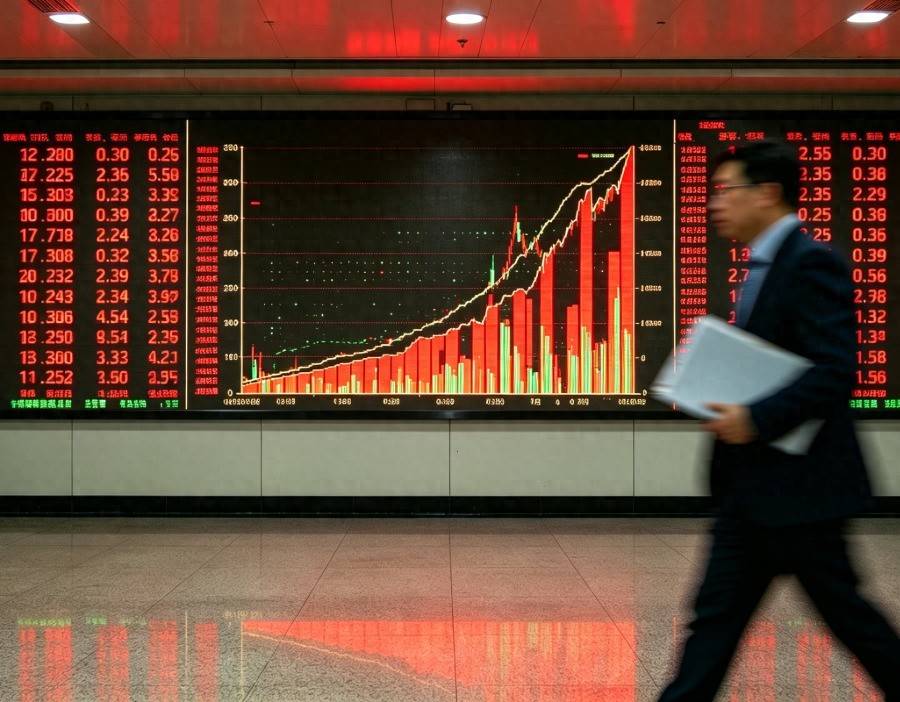
Global Bond Yields Hit 18-Year High; How Should Asian Investors Respond?
Source: Lianhe Zaobao
Middle East conflict has pushed up energy prices and fanned inflation worries, while hawkish remarks from Federal Reserve Chair Warsh have lifted rate-hike bets, driving global bond yields higher and pressuring stocks. Global bond yields rose to their highest level since 2008 on Wednesday (September 2).
The US 10-year Treasury yield climbed to 4.81%, a near three-year high; Japan's 10-year yield broke above 3%, the highest in 30 years; and Australia's 10-year yield rose to 5.198%, the highest in more than 15 years. Regional stocks fell, with the MSCI Asia index down 1.2% and Japanese and Korean markets down 2.85% and 4% respectively.
Analysts noted that rising bond yields signal expectations of higher future rates, meaning investors buying bonds can earn higher interest, so bonds still offer opportunities. Gold fell on Wednesday, approaching the USD 4,300 level, as it pays no interest and becomes less attractive when yields rise.
China's A-Share Indexes Pull Back as Trading Volume Shrinks to RMB 1.82 Trillion
Source: Yicai
China's three main A-share indexes pulled back on Wednesday. At the close, the Shanghai Composite settled at 3,941.39 points, the Shenzhen Component at 13,611.55 points and the ChiNext at 3,312.24 points. Combined turnover across Shanghai, Shenzhen and Beijing came to only RMB 1.82 trillion, shrinking by RMB 231.9 billion from the previous day.
Sector performance was mixed, with ground weaponry, aviation equipment and rubber leading gains, while energy metals, coal, rare earths and agriculture and forestry led losses. More than 1,500 stocks rose and over 50 hit the daily limit.
Defense stocks strengthened against the trend, while PCB-related names were active and the agriculture sector wobbled, with some seed companies hitting the daily limit down.
Mainland Stocks Fall Over 0.8% to 2% in Morning Session
Source: RTHK
Shanghai and Shenzhen stocks fell for a second straight day. According to RTHK, precious metals, agriculture and lithium-mining sectors declined, while aerospace and defense, oil and gas, and fiberglass stocks rose.
At the midday close, the Shanghai Composite stood at 3,947 points, down 32 points or 0.82%; the Shenzhen Component was at 13,635 points, down 237 points or 1.71%; and the ChiNext was at 3,319 points, down 74 points or 2.18%.
Australia Q2 GDP Grows 2.1% Year-on-Year, Beating Expectations
Source: Xinhua Finance
Data released by the Australian Bureau of Statistics on September 2 showed that, seasonally adjusted, Australia's gross domestic product (GDP) grew 0.4% quarter-on-quarter and 2.1% year-on-year in the second quarter of 2026, beating market expectations of 0.3% and 1.8% respectively.
This marked the 19th consecutive quarter of quarter-on-quarter growth. Grace Kim, head of national accounts at the statistics bureau, said growth remained soft in the second quarter as households stayed cautious, while higher imports weighed on the overall GDP contribution.
By component, government final consumption rose 0.6% quarter-on-quarter and household consumption rose 0.4%, while net trade contributed 0.1 percentage points to GDP growth, the first positive contribution since the fourth quarter of 2023.
Consumer Finance Reshuffle: Ant Tops Mid-Year Results, BOC Consumer Finance Soars
Source: Dazhong.com
As the 2026 interim reporting season wrapped up, the earnings picture of licensed consumer finance companies came into view. Among 11 sampled companies, Ant Consumer Finance led the pack in the first half with RMB 10.914 billion in revenue and RMB 1.942 billion in net profit, the only firm with revenue exceeding RMB 10 billion.
BOC Consumer Finance emerged as the biggest surprise: although revenue fell 7.50% to RMB 3.405 billion, net profit jumped 99.33% to RMB 299 million, already surpassing its full-year 2025 level. Merchants Union Consumer Finance and Industrial Consumer Finance actively shrank their balance sheets, with revenue down 15.33% and 14.63% respectively.
Industry watchers said the sector is collectively moving away from simply expanding loan scale to drive growth, and turning toward risk pricing, customer acquisition and operational efficiency.
Yadea and Aima Both Struggling to Sell?
Source: 21st Century Business Herald
According to data from Aowei Cloud Network, domestic electric two-wheeler sales fell 13% year-on-year in the first half of 2026 to 28.25 million units. The industry's two giants were hit hard: Yadea's first-half revenue fell 5% to RMB 18.2 billion with net profit down 27% to RMB 1.2 billion, while Aima's revenue fell 12% to RMB 11.4 billion with net profit down 45% to RMB 700 million.
Meanwhile, new-player brands such as Ninebot, Niu and Zeeho bucked the trend with strong growth, with first-half sales up 19%, 26% and 35% respectively. The new national-standard switch raised compliance costs, trade-in policies front-loaded demand, and rising raw material prices added to industry pressure.
As the industry shifts from growth to a mature phase, Yadea chose to acquire 100% of Jinjian Technology for RMB 1 billion in cash, while Aima pushed its store-efficiency program.
Tim Cook Becomes Apple Executive Chairman; What's Next?
Source: Sina Finance
Tim Cook's tenure as Apple's chief executive officially ended this Tuesday, but he has been given another major role: executive chairman of Apple's board. Apple said in a statement that Cook would help handle certain company matters, including engaging with policymakers around the world.
Analysts widely see this as pointing to his relationship with Washington and the White House. Some Silicon Valley experts said that amid tariffs, supply chains and shifting Washington policy, Cook has been one of the few Silicon Valley figures able to speak directly with the White House and Trump, earning him the nickname of the Trump whisperer.
According to reports, during the second Trump administration Apple pledged to invest USD 600 billion to expand its US operations, and announced plans to add another USD 100 billion in US manufacturing investment.
More News
- Finance Evening: Dow Jumps 500 Points as Canada's PBO Cuts 2026 Growth Forecast to 0.9%
- Maple Express | October 20, 2026: Alberta referendum immigration questions pass, Carney says no constitutional change needed
- Maple Express | October 20, 2026 — 33 military members still in hospital after Wainwright base fire
- Global Express | October 20, 2026 — Drone Strikes Across Sudan Kill More Than 160 in Days
- Finance Morning: Asia Stocks Slide, KOSPI Down 3.73%; China Leaves LPR Unchanged for 17th Month
Comments (0)
View More
 -27%
-27%Zinus Denzel Bamboo Sofa, 68-Inch — Fits a Small Living Room, $360 CAD (27% Off)
 -30%
-30%YETI Rambler 12 oz Colster Slim — Keeps Skinny Cans Cold All Afternoon! $24.50 CAD (30% Off)
 -37%
-37%Hisense 43R63N 43" 4K Roku Smart TV — 4K AI Upscaling + Game Mode Plus, $299.99 CAD (36% Off)
 -40%
-40%Acer Gadget Golf Rangefinder, 1700 Yards — Anti-Shake, Flag Lock & Slope Switch! $139.31 CAD (40% Off)
 Maple Express
Maple Express | October 20, 2026 — Alberta Referendum: 76.4% Choose to Stay in Canada
 Tech Express
Tech Express | October 20, 2026 — DeepSeek Joins Huawei Chip Design, Eyes Ascend 950DT Pretraining by Year-End
-27%Zinus Denzel Bamboo Sofa, 68-Inch — Fits a Small Living Room, $360 CAD (27% Off)
Amazon
-30%YETI Rambler 12 oz Colster Slim — Keeps Skinny Cans Cold All Afternoon! $24.50 CAD (30% Off)
Amazon
-37%Hisense 43R63N 43" 4K Roku Smart TV — 4K AI Upscaling + Game Mode Plus, $299.99 CAD (36% Off)
Amazon
-40%Acer Gadget Golf Rangefinder, 1700 Yards — Anti-Shake, Flag Lock & Slope Switch! $139.31 CAD (40% Off)
Amazon
Maple ExpressMaple Express | October 20, 2026 — Alberta Referendum: 76.4% Choose to Stay in Canada
Tech Express