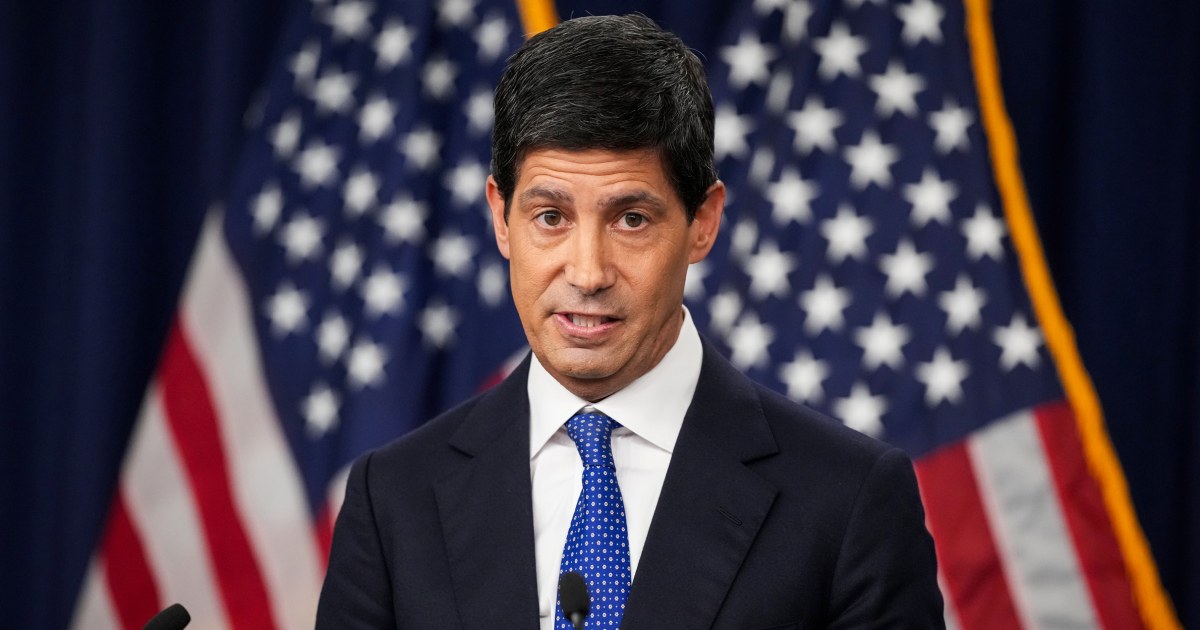
Finance Evening: Fed Hikes Rates for the First Time Since 2023, Trump Demands 1% or Lower
The Fed raised rates a quarter point to 3.75%-4%, its first hike since 2023; Chair Warsh said inflation is 'too high,' and Trump demanded rates of 1% or lower. US stocks slid, with the Dow down 630 points. Boeing and J.B. Hunt fell; American Airlines said 30% of seats drive half its revenue; SpaceX rose about 5%. Canada's Carney pledged C$1tn in investment. Moody's put the Iran-war household bill near $1,760. Amazon raised hourly pay by $1; Bitcoin fell as the Senate blocked the CLARITY Act.
📊 Today's North American Markets
| Index | Close | Change | Change % |
|---|---|---|---|
| S&P 500 | 7,551.81 | -33.92 | -0.45% |
| Nasdaq | 25,978.42 | -3.15 | -0.01% |
| Dow Jones | 51,461.90 | -631.21 | -1.21% |
| Toronto TSX | 35,491.27 | -90.80 | -0.26% |
| USD/CAD | 1.3990 | +0.01 | +0.55% |
| WTI Crude | 102.02 | -0.41 | -0.40% |
| Gold | 4,302.50 | -85.00 | -1.94% |
(Market data source: Yahoo Finance close)
Sources: NBC News, CNBC, BBC, Yahoo Finance, TechCrunch, Euronews
1. Fed hikes rates for the first time since 2023, to 3.75%-4%
The Federal Reserve on Wednesday raised its benchmark interest rate by a quarter point to a range of 3.75%-4.00%, its first hike since 2023. The Federal Open Market Committee backed the move unanimously and signaled one more increase may come before year's end. The move aims to curb inflation that picked up again last month, defying the president's calls for lower rates.
"Uncertainty remains elevated owing, in part, to geopolitical developments," the Fed's statement read. "Today's policy action will support a timelier return to the Committee's 2 percent goal." Chair Kevin Warsh said at a press conference: "The plain fact is that inflation is too high and has been for too long." Economic projections released this week showed all but two FOMC members expect another hike later this year.
Major indexes turned lower as Warsh spoke: the S&P 500 closed down 0.4%, the Nasdaq ended flat and the Dow fell 630 points. The 30-year Treasury yield eased slightly but stayed at a multi-year high, while the 10-year sat near its highest since 2007. Warsh attributed the surge in bond yields to three factors: economic strength, geopolitical hotspots and competition for capital from artificial intelligence companies.
2. Trump tells the Fed to cut rates to 1% or lower
Hours after the Fed's first rate hike since 2023, President Donald Trump on Wednesday demanded the central bank cut rates to 1% "or less." "We are 'carrying' almost every country in the World, and that cannot go on any longer," he wrote on Truth Social. "LOWER THE INTEREST RATES FOR THE UNITED STATES OF AMERICA, AND FAST!"
The Fed, led by Trump-picked Chairman Kevin Warsh, earlier Wednesday afternoon raised the benchmark rate by a quarter point to 3.75%-4%. The 12-member FOMC's decision was unanimous. "Inflation remains elevated," the committee said. Updated projections showed a strong majority of officials expect another increase.
In his post, Trump insisted rates "should be 1%, or less, because we are the Best Credit in the World — BY FAR." White House spokesman Kush Desai told Fox News earlier Wednesday that Trump "absolutely" still believes in the Fed's independence.

3. Boeing: 737 Max output stabilizing 'a little bit longer,' stock down more than 5%
Boeing's 737 Max production is taking "a little bit longer" than expected to stabilize, and the company expects to increase output next year, CEO Kelly Ortberg told investors Wednesday. Boeing stock extended its losses and was down more than 5% in afternoon trading.
Ortberg said wing production at its Renton, Washington, factory is a constraint now, and the company has plans to address it. Boeing is producing about 47 of the aircraft per month. He also reiterated to investors at a Morgan Stanley conference that he expects certification of the Max 10, the largest model, "very soon" — years behind schedule.
Asked about possible aircraft orders from China when President Donald Trump is scheduled to host Xi Jinping at the White House on Sept. 24, Ortberg gave no expectation, saying orders from China are "going to be announced by the airlines at their pace."

4. J.B. Hunt warns of weaker third-quarter earnings; shares sink more than 10%
Shares of J.B. Hunt plunged more than 10% on Wednesday after the trucking company said it expects earnings to drop in the third quarter. CFO Brad Delco said at the Morgan Stanley Industrials conference: "We kind of want to be transparent with investors... we are expecting our Q2 to Q3 earnings to actually drop 5% to 10%."
Delco said the company expects about $25 million more in third-quarter costs versus the second quarter across recruiting, advertising, onboarding, training and sign-on bonuses. He added that J.B. Hunt has seen "some of the most radical and abnormal swings" in fuel prices ever, plus record-high diesel prices, at least a $10 million headwind.
He expects volumes to improve sequentially to offset the pressures, calling it "more of a timing issue." Delco said the company is working on repairing its margins but still has a long way to go. The stock had risen nearly 100% over the past year.

5. American Airlines: 30% of seats drive half of revenue
American Airlines CEO Robert Isom said Wednesday that just 30% of its seats account for half of the company's revenue — a proportion pushing the Fort Worth, Texas-based carrier and its rivals to tear up existing layouts and add more first-class and higher-yielding options.
"Those 30% of seats, they're only going to grow in our fleet as the reconfigurations come on board," Isom said at a Morgan Stanley industry conference. Earlier this month, the airline unveiled a 70-suite business-class cabin on its largest aircraft, the Boeing 777-300ER.
American had fallen behind large rivals in profits. Isom has said adding premium seating to capitalize on higher-spending customers is key, especially as airlines cover this year's surge in fuel costs. Even smaller and budget carriers like Allegiant Air and JetBlue are adding upgraded seats.

6. SpaceX stock up about 5% ahead of Sept. 22 Starship test flight
SpaceX (SPCX) stock rose about 5%, coming on the heels of no new news, though a couple of catalysts may be at work. On Monday, SpaceX said on X it would fly the 14th test mission of its Starship spacecraft on Sept. 22 from its Starbase facility in South Texas — its first attempt since a positive flight in August.
SpaceX said the mission, if successful, will deploy new Starlink satellites and test enhancements to both Starship and its booster. CEO Elon Musk hinted the company may try to "catch" Starship with the "Mechazilla" arms at the launch site. A successful flight matters to SpaceX's bull case, underpinning Starlink deployment, commercial cargo launches and its lunar ambitions.
Earlier, SpaceX investor Ron Baron discussed the Starlink business: "I think Starlink alone could be a trillion dollars in revenue in 10 years... that would support a $14 trillion, $15 trillion valuation." Musk also hinted at the possibility of a merger between Tesla and SpaceX.

7. Carney pitches Canada as a 'safe harbour' at Toronto summit
Prime Minister Mark Carney is pitching Canada as a "safe harbour" for some of the world's largest investors amid geopolitical and economic uncertainty. He told more than 100 major investors in Toronto that Canada is "perfectly situated to build in the new global economic order." Carney has pledged to bring in C$1tn in investments over the next five years to reduce Canada's reliance on the US; the summit he convened this week is a test of whether he can deliver.
More than 160 projects were on offer, from data centres to pipelines and port expansions, and Ottawa dangled new tax incentives, including a "mega deduction" measure. Carney said Ottawa will offer "predictability" for major projects, targeting a one-year review timeline: "If we're going to say no, a quick no is necessary." One of the biggest announcements was Carney's plan to allow private investment in four of Canada's main airports — in Toronto, Vancouver, Montreal and Calgary.
The prime minister's office said Tuesday the summit had generated nearly C$500bn in new investments across critical infrastructure, digital technology, energy and defence. The proposal drew union criticism. "In the middle of a trade war, handing profitable public infrastructure over to private investors is exactly the wrong move," Lily Chang of the Canadian Labour Congress said in a statement.

8. Oil and rates hit consumers: Moody's estimates a $1,760 household bill
Consumers are facing a double-whammy of jumping oil prices and Treasury yields amid the U.S. war with Iran, leaving them increasingly cash-strapped. The total bill per household since the U.S.-Iran conflict began is around $1,760, per a Moody's Analytics analysis as of Sept. 11.
Mark Zandi, chief economist at Moody's Analytics, said $930 — more than half — of that comes from higher energy costs, including gasoline, diesel and jet fuel. Cumulatively, U.S. consumers have spent more than $121 billion extra on energy since the war began. Another $425 stems from higher interest rates, and the final $405 from higher military spending, which Zandi said consumers will ultimately foot through national debt or taxes.
The 10-year Treasury yield jumped this week to its highest in 19 years, pushing the average 30-year fixed mortgage above 7% this month for the first time in more than a year. "Consumers are under a lot of financial pressure," Zandi said. Economists say lower-income consumers feel pump pain more acutely, driving the "K"-shaped economy.

9. Amazon raises hourly pay for frontline workers by $1
Amazon is raising the minimum starting pay for its U.S. core operations workers — like delivery drivers and fulfillment center employees — to $20 per hour and its average hourly pay to nearly $24 per hour. The company says the higher pay represents a $1-per-hour increase for eligible employees. "When you add in the value of our industry-leading benefits, average total compensation comes to more than $32 per hour," SVP Udit Madan wrote in a blog post.
The investment in the raises comes to over $1.5 billion, or about 0.06% of its $2.68 trillion market cap. Amazon will also offer access to a low-cost banking system called Day 1 Financial, a First Tech Federal Credit Union membership and a 20% in-store discount at Whole Foods Market; online grocery orders get 10% off.
Amazon already offers free Prime memberships, prepaid education programs and healthcare coverage. On a subreddit for fulfillment center employees, people seemed less than enthused. On the Whole Foods discount, one worker said, "So it would make it cost almost the same as a regular store, then? Hahaha."

10. Bitcoin falls as the Senate blocks the CLARITY Act
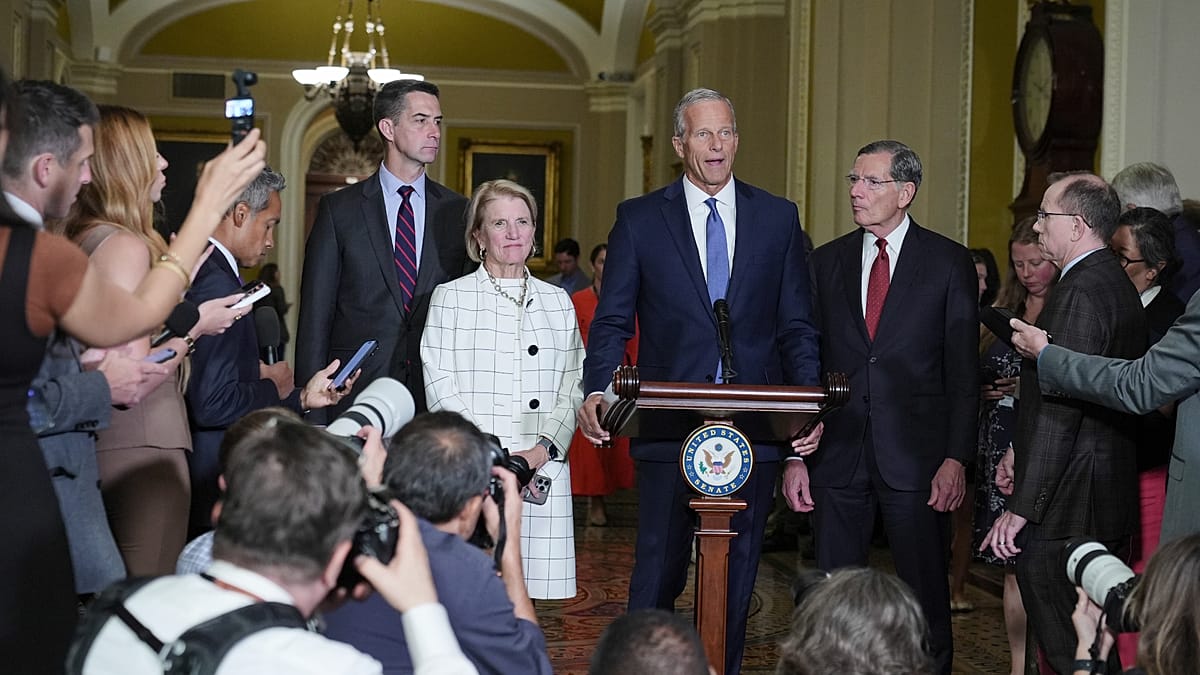
Crypto markets dropped late Tuesday and early Wednesday as investors digested a defeat few in the industry had expected. The procedural motion on the CLARITY Act drew 49 votes in favour and 50 against — 11 short of the 60 required to advance — dealing a major setback to efforts to pass market structure legislation this year.
The CLARITY Act, formally the Digital Asset Market Clarity Act, was meant to divide supervision of digital assets between the CFTC and the SEC, replacing a fragmented system largely settled through enforcement actions and litigation. After the vote, Bitcoin fell below $76,000 over 24 hours, while HYPE, the token behind the exchange Hyperliquid, dropped about 4% to below $78.
The defeat is striking because so much had been conceded: Republican negotiators said more than 120 Democratic requests were written into the final text of the more than 600-page bill. "I think we're done. It's over," Senator Cynthia Lummis told reporters. The failure likely means the crypto industry will wait until next year; US midterms are just seven weeks away.
More News
- Maple Express Evening | September 16, 2026 - Worker Killed in Brampton Road Work Collision
- Maple Express | September 16, 2026 — EU Proposes Canada as Its First 'Associate Member'
- AI Weekly | The AI 'Slowdown' Fight Splits Silicon Valley and Washington
- Global Express | September 16, 2026 Saudi Arabia Says Air Defenses Downed a Drone Near Mecca, Warns of 'Red Line'
- Asian Stocks Edge Up Ahead of Fed Decision; A-Share Tech Front-Runs, Yields Top 5%
Comments (0)
View More
 -44%
-44%Pzloz Dual-Head LED Desk Lamp — 25 Light Modes & Wireless Remote! $66.48 CAD (43% Off)
 -28%
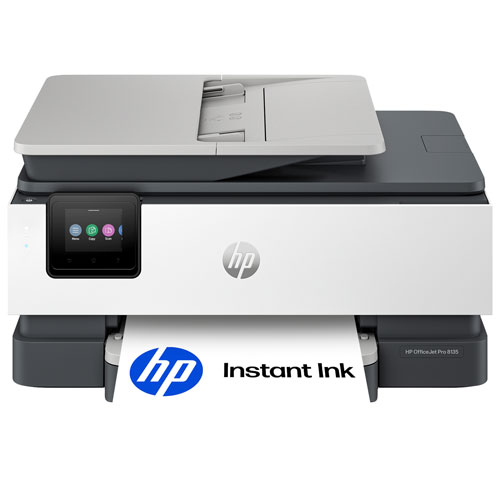
-28%HP OfficeJet Pro 8135 Wireless All-In-One Inkjet Printer — Print, Scan & Copy in One with 3 Months Instant Ink Free! $209.99 CAD (28% Off)
 -47%
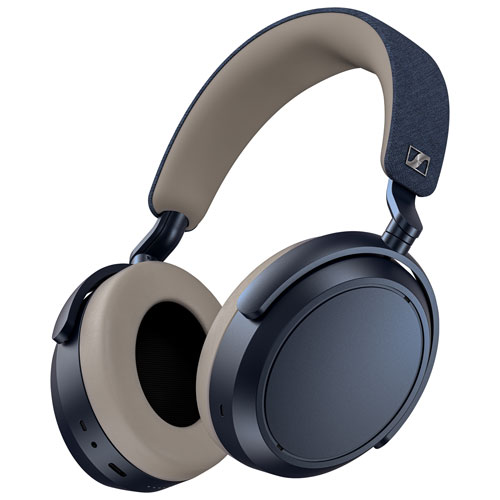
-47%Sennheiser MOMENTUM 4 Over-Ear Noise Cancelling Headphones — 60-Hour Battery & Adaptive ANC! $269.99 CAD (46% Off)
 -38%
-38%ApexGear Leverless Arcade Fighting Controller — RGB & Hot-Swappable Buttons, Works with PS5/PC/Switch! $123.99 CAD (37% Off)
 Tech Express
Tech Express | Sep 16, 2026 Apple's M5 Ultra Beats 96-Core Threadripper in Geekbench 7
Finance EveningFinance Evening: Fed Hikes Rates for the First Time Since 2023, Trump Demands 1% or Lower
-44%Pzloz Dual-Head LED Desk Lamp — 25 Light Modes & Wireless Remote! $66.48 CAD (43% Off)
Amazon
-28%HP OfficeJet Pro 8135 Wireless All-In-One Inkjet Printer — Print, Scan & Copy in One with 3 Months Instant Ink Free! $209.99 CAD (28% Off)
Best Buy
-47%Sennheiser MOMENTUM 4 Over-Ear Noise Cancelling Headphones — 60-Hour Battery & Adaptive ANC! $269.99 CAD (46% Off)
Best Buy
-38%ApexGear Leverless Arcade Fighting Controller — RGB & Hot-Swappable Buttons, Works with PS5/PC/Switch! $123.99 CAD (37% Off)
Best Buy
Tech ExpressTech Express | Sep 16, 2026 Apple's M5 Ultra Beats 96-Core Threadripper in Geekbench 7
Finance Evening