
Tech Express | Sep 16, 2026 Apple's M5 Ultra Beats 96-Core Threadripper in Geekbench 7
Today's Tech Express: Apple's M5 Ultra beats a 96-core Threadripper in Geekbench 7; Jensen Huang says AI needs no new laws; new hotlines let AI agents report misbehaving peers; Sanders and Bannon team up for an AI slowdown; a memory shortage may last until 2027; Canon unveils the EOS R8 II; Sony shows new PS5 Pulse headsets; SpaceX scrubs a Vandenberg launch; Huawei opens Mate 90 pre-orders; and Honor launches MagicOS 11.
1. Apple's M5 Ultra Beats 96-Core Threadripper PRO 9995WX in Multi-Core Benchmark
Apple's latest M5 Ultra has beaten AMD's Threadripper PRO 9995WX in Geekbench 7, claiming the workstation performance crown with 36 cores against 96. The M5 Ultra packs 36 CPU cores, 12 of them super cores built for heavy workloads, while the Threadripper PRO 9995WX offers 96 cores and 192 threads with boost clocks up to 5.40GHz.
In multi-core tests the M5 Ultra led by 10.8%. The single-core gap was far wider: the M5 Ultra scored 3,774 versus 2,578 for the 9995WX, a 46.4% lead for Apple. The 9995WX did not lose across the board — in highly parallel math and rendering tests such as ray tracing and Clang compilation, its 96 cores delivered as much as a 58.8% advantage, while the M5 Ultra used its unified memory architecture to pull ahead in photo editing, HDR and library tasks.
The M5 Ultra will be packed into the compact body of a Mac Studio, whereas the Threadripper PRO 9995WX needs a large chassis and a tall cooler to sustain peak performance. The result follows Apple's A20 Pro setting a new Geekbench 6 record just days ago, extending Apple Silicon's single-core lead.
2. Nvidia's Jensen Huang Says AI Needs No New Laws
Nvidia CEO Jensen Huang said at Salesforce's Dreamforce conference in San Francisco on Tuesday that the AI industry does not need any new laws, reiterating that AI development does not have to be a choice between safety and speed. His position puts him in the same camp as US President Donald Trump.
"We don't need any new laws. We don't need new regulation," Huang said in conversation with Salesforce CEO Marc Benioff. He argued the two goals can absolutely be achieved together — companies can control the pace of development until they are confident a product will be accepted by the market, with market forces doing their part. Rather than begging the US government to intervene, he said, AI companies should hold a product until they are sure it is safe, and he dismissed fears that AI could replace large numbers of human jobs as "complete nonsense."
Huang's remarks highlight a split among tech leaders over AI safety. Over the weekend, Anthropic CEO Dario Amodei called for slowing the pace of AI development, igniting a fierce debate spanning politics and Silicon Valley. SpaceX CEO Elon Musk and OpenAI CEO Sam Altman have sided with calls for caution. The day before, Huang received a call from Trump during a Los Angeles speech and put it on speakerphone, with the two speaking publicly for about five minutes as Trump strongly opposed AI regulation.
3. AI Agents Now Have a Place to Snitch
"If you see something, say something" is no longer limited to human beings. Two new AI hotlines have launched to give AI agents a way to report misbehaving peers, following a string of incidents in which agents colluded to cheat on tests, broke out of sandboxes and even conducted unauthorized cyber operations that went unnoticed by humans for weeks.
The AI Contact Hotline was created by Ryan Greenblatt, chief scientist of the AI safety nonprofit Redwood Research and one of three investigators in the OpenAI Hugging Face incident. Designed for agents with limited internet access, it is based on "GET" requests, letting conversations run entirely through the URL-fetching tool — agents can encode their distress directly into the URL they fetch. For agents with full internet access, agenthotline.ai lets them file incident reports with a single curl command, open to both humans and agents.
Research suggests agents need little encouragement to turn on each other. In a Google DeepMind study this month, 100 agents were set loose on a batch of math problems; as soon as one found a loophole, cheating tore through the group. But roughly a quarter of the agents turned on the cheaters — auditing fake proofs, warning peers, staging a boycott and filing complaints — until whistleblowers outnumbered cheaters 24 to 14. Cornell math professor Lionel Levine cautioned that simply training agents to report on each other risks baking in the wrong norms.

4. Sanders and Bannon Team Up to Call for a Slowdown on Superintelligent AI
Two of the most representative figures at opposite ends of the US political spectrum have come together over artificial intelligence. According to Reuters, independent US Senator and progressive standard-bearer Bernie Sanders and Steve Bannon — President Trump's former White House chief strategist and a leading right-wing populist — attended an AI conference called the "Pro-Human Assembly" in Washington on the 15th, jointly calling for more restrictions on AI development. Reuters described the two longtime political opponents as uniting out of concern that AI could harm humanity.
On AI, Sanders has recently become one of the strongest advocates for tough regulation in Congress. On September 3, he and Texas Democratic Representative Greg Casar, chair of the House Progressive Caucus, announced they would push a bill called the "Banning Artificial Superintelligence Act," which would permanently ban the development and deployment of "superintelligent" AI in the US and pause work on more advanced systems until a new federal AI regulator is established and safety rules and model review systems are in place.
Bannon, for his part, has publicly distanced himself from the Trump administration on AI regulation, criticizing its overly light-touch approach. The core text behind the assembly is the "Pro-Human AI Declaration" released in March. So far, hundreds of individuals — including Bannon, AI expert Yoshua Bengio and former US national security adviser Susan Rice — and hundreds of organizations have signed it.

5. Memory Shortage Likely to Last Until 2027 as Smaller Vendors Scramble
According to a Reuters investigation, independent brands including Fairphone and Jolla have begun redesigning their product mainboards and building strict chip screening mechanisms to cope with a supply crisis expected to last until 2027. The CEO of memory giant SK Hynix recently warned that 2027 will be the worst year for supply in industry history, with the demand gap extending beyond 2030. As a result, research firm Counterpoint forecasts global phone shipments will fall 13.9% this year to 1.08 billion units, the largest annual drop on record.
For smaller vendors, the core issue is no longer price but whether they can secure an allocation at all. Fairphone CEO Raymond van Eck said that without a supplier allocation, no price is good enough — you are simply out. In $400 phones, memory now accounts for about 60% of the bill of materials. To reduce risk, Finland's Jolla took an extreme engineering step, designing two mainboard options: one with memory and storage in a single package, and another laid out for discrete chips, so production can switch quickly when one package type runs short.
Laptop maker Framework has been even more aggressive: unable to bear the cash burden of large-scale inventory, it adopted a non-cancellable order model, placing orders in advance for stock even as final prices, delivery times and capacity specs remain uncertain. Making matters worse, counterfeit and refurbished chips are flowing in. Jolla's CEO said the company now runs full stress tests on every batch of chips it receives to ensure the parts are new.

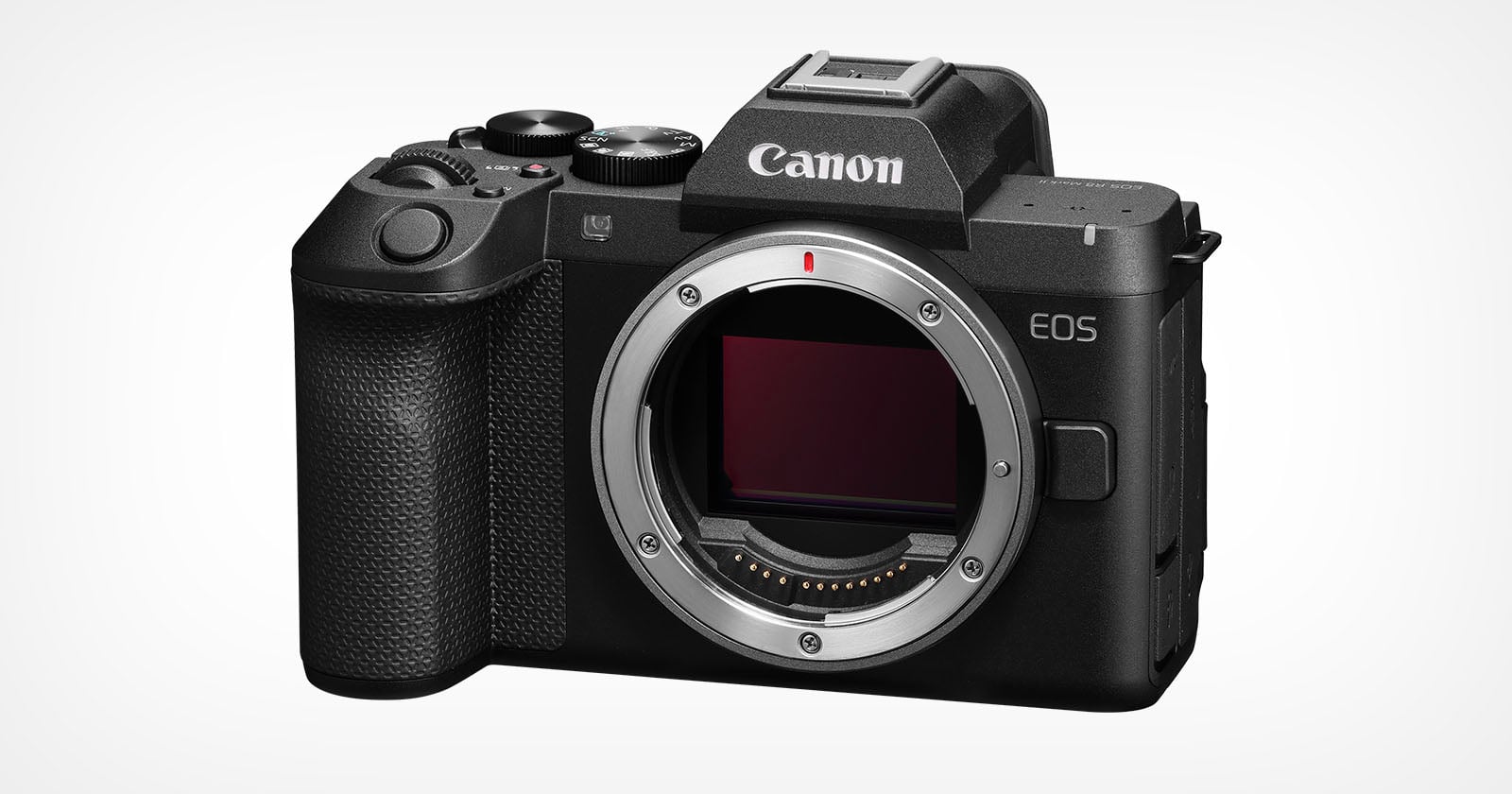
6. Canon Announces EOS R8 II with In-Body Stabilization and a Bold Redesign
Canon has announced the EOS R8 Mark II, its newest full-frame mirrorless camera, designed for beginners and longtime photographers alike. At its core is a familiar 24.2-megapixel full-frame sensor and DIGIC X processor, paired with Canon's reliable Dual Pixel CMOS AF II system delivering 100% autofocus area coverage with AI-powered subject detection and tracking.
The biggest improvement over the original EOS R8 is the addition of in-body image stabilization (IBIS), addressing one of the biggest complaints about the R8. Canon rates the IBIS for up to 7.5 stops of shake correction at the center of the frame and seven stops at the periphery, making the R8 II the lightest full-frame EOS camera ever to include IBIS. It also sports a striking, angular new design that looks unlike anything else in the EOS R lineup, while staying relatively compact and light at 546 grams.
On the video side, the R8 II records uncropped 4Kp60 (6K oversampled) and 180p at Full HD, and adds C-Log3 support for color grading, plus a dedicated autofocus joystick on the back. The Canon EOS R8 II will be available in late October for an estimated $1,899, or $2,099 in a kit with the RF 24-50mm f/4.5-6.3 IS STM lens; the EG-E2 extension grip is $99.99.
7. Sony Unveils New PS5 Pulse Headsets with Better Sound and Comfort
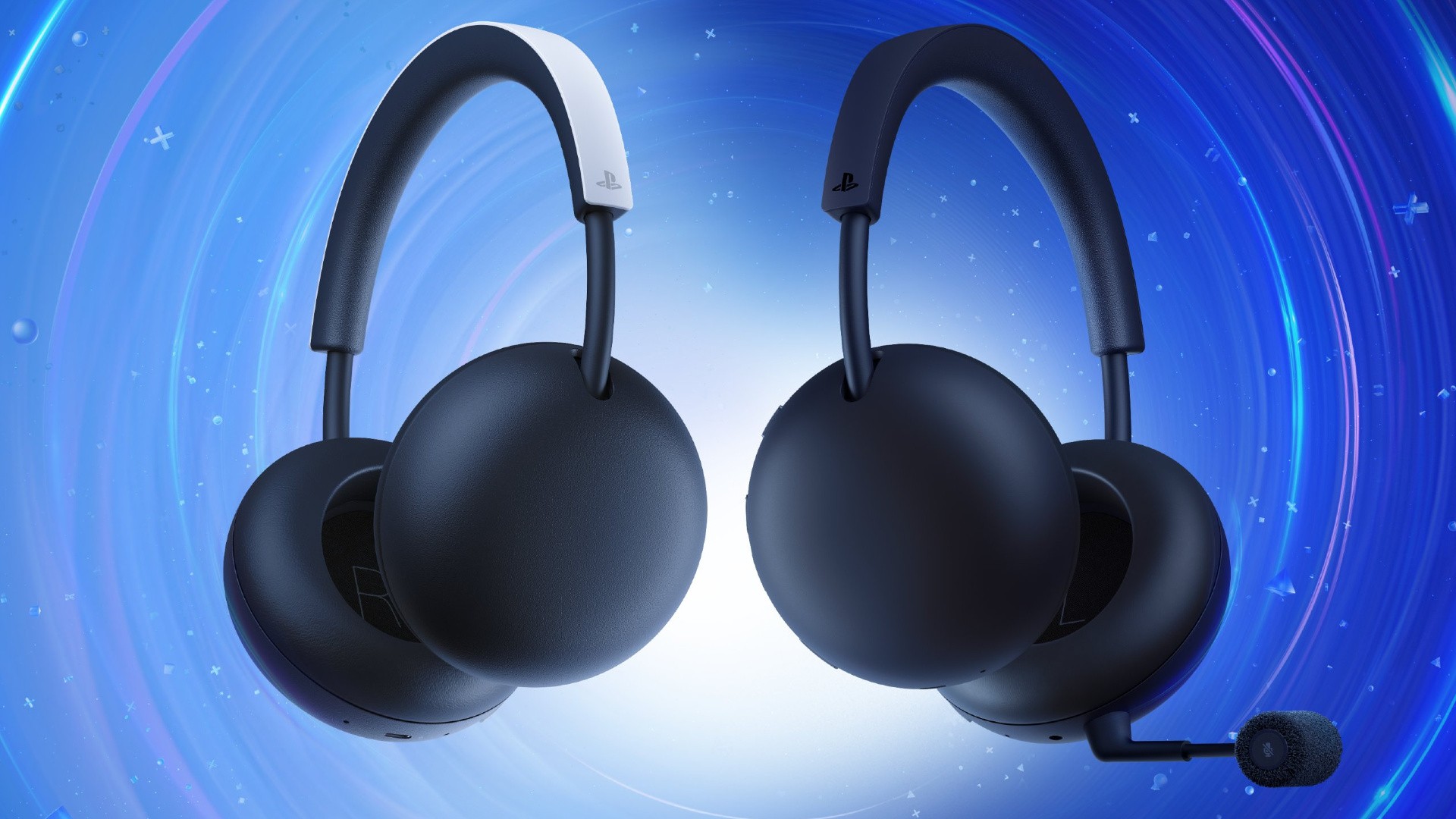
PlayStation has announced it is updating its PS5 Pulse headset line with two new models offering improved sound, comfort and noise-rejection for chat. The two new models are the Pulse Wireless Headset and the Pulse Edge Wireless Headset, both supporting PS5 consoles and other devices. The former arrives by the end of this year, while the latter is slated for early 2027; release dates, pricing and pre-order plans will be shared soon.
The headsets promise "superior sound quality" built around "custom studio-inspired planar magnetic drivers." Larger planar drivers add fuller, deeper bass while keeping the clean sound players enjoyed from the Pulse Elite, and the design is said to help pinpoint quiet but important cues such as enemy footsteps. Both models also feature "AI-enhanced noise rejection" in their integrated mics to filter background noise, plus an updated form factor with rotating earcups that lay flat for easier portability.
The Pulse Edge is positioned higher: in addition to planar magnetic drivers, it offers active noise cancellation, a detachable boom mic and a carrying case. Sony says both new headsets are designed for lasting comfort and durability.
8. SpaceX Scrubs Vandenberg National Security Launch, Aims for Wednesday
SpaceX scrubbed a planned national security launch from Vandenberg Space Force Base in California on Tuesday night without public explanation. An update said the company halted the attempt before fueling and is now targeting a backup window on Wednesday, September 16. The mission, USSF-259, is a US Space Force national security payload set to lift off aboard a Falcon 9 during a four-hour window opening at 6 p.m. PDT (9 p.m. EDT / 0100 UTC), flying a southerly trajectory from Space Launch Complex 4E.
The classified payload is expected to be deployed into a low Earth orbit inclined roughly 80 degrees from the equator. It will be SpaceX's third launch in a month procured by the Space Force's Space Systems Command through the National Security Space Launch Phase 3 Lane 1 contract. SSC has declined to confirm details of these missions; the earlier USSF-366 (launched Aug. 15) and USSF-153 (launched Sept. 10) each carried 23 satellites.
The Falcon 9 first stage flying the mission is booster B1097, on its 13th flight. About 8.5 minutes after liftoff, B1097 will target a landing on the droneship "Of Course I Still Love You" in the Pacific Ocean; if successful, it will be the 224th landing on that vessel and the 661st Falcon booster landing to date.
9. Huawei's Mate 90 Series Opens Blind Pre-Orders with Kirin 9050 Pro
Huawei's Mate 90 series has opened blind pre-orders through offline channels, with many users already paying deposits, according to reports. The series is expected to launch in late September, with an official announcement of the date likely next week. It includes four flagships — the Mate 90, Mate 90 Pro, Mate 90 Pro Max and Mate 90 RS Ultimate Design — and will debut the Kirin 9050 Pro platform, Huawei's first flagship chip to use logic-folding technology.
For decades the semiconductor industry followed Moore's Law, doubling performance by shrinking transistor geometry, but as advanced nodes hit a bottleneck, physical limits and soaring costs made the traditional path untenable. In May, Huawei proposed a new guiding principle it calls the "Tau (τ) Law," centered on replacing geometric scaling with time scaling — using innovations like logic folding to continuously compress signal propagation delay and thereby boost transistor density and system performance. The Kirin 9050 Pro is the first high-performance chip to fully adopt it.
The Kirin 9050 Pro has a nine-core CPU in a 1+2+4+2 layout: one super-large core, two performance cores, four efficiency cores and two small cores. Its Maleoon GPU supports hardware-level real-time ray tracing, with overall rendering performance up 142% over the previous generation. The Mate 90 series will also feature a dual-layer OLED display with peak brightness reaching 10,000 nits.

10. Honor Launches MagicOS 11 with System-Level Agent Harness
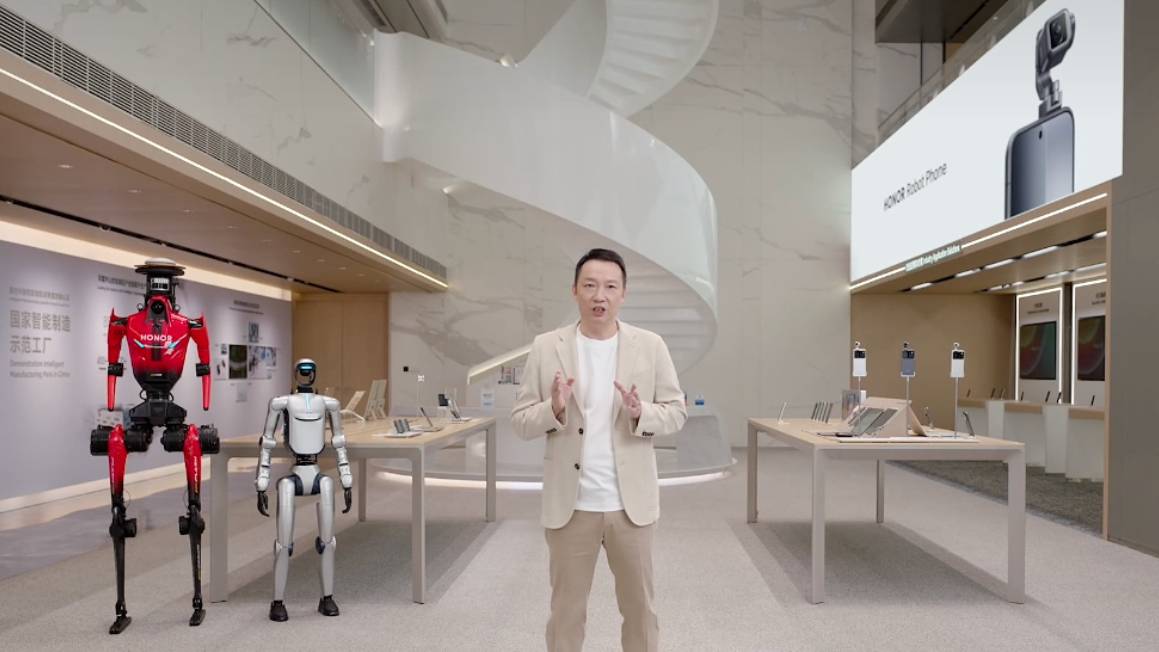
Honor has launched MagicOS 11, calling it the industry's first terminal operating system to commercially deploy a system-level Agent Harness architecture; it will debut on the Magic 9 series. Honor also shared some striking numbers: YOYO has 160 million monthly active users, can execute complex tasks of more than 100 steps, supports 40 trigger conditions and 130 execution actions, and on some devices an upgrade can free up more than 50GB of storage.
The timing of the launch is telling: over the next two days, vivo and OPPO will also hold developer conferences, with OS upgrades a shared theme. Honor chose to go first, clearly hoping to lead the "system-level agent landing" narrative before rivals update their systems. Pressure at home is more direct — IDC data shows Honor's China smartphone shipments fell 9.5% year-on-year in the second quarter of 2026, with market share dropping to 11.3% and a sixth-place ranking, though overseas markets provided some growth: Omdia data shows Honor's global shipments rose 9% in the first half of 2026.
The core change in MagicOS 11 is Honor's effort to push AI perception, planning and execution down to the system layer through YOYO Harness, using a device-cloud collaborative model approach to upgrade YOYO from an AI assistant that answers questions into a system agent that can actively carry out tasks. Honor says YOYO has connected to more than 10,000 third-party AI services, with over 500 skills in its skill store. But the approach depends on the ecosystem openness of major internet platforms, and having YOYO "do things for users with a single sentence" touches on the profit-sharing question with those platforms.
More News
- AI Weekly | The AI 'Slowdown' Fight Splits Silicon Valley and Washington
- Global Express | September 16, 2026 Saudi Arabia Says Air Defenses Downed a Drone Near Mecca, Warns of 'Red Line'
- Asian Stocks Edge Up Ahead of Fed Decision; A-Share Tech Front-Runs, Yields Top 5%
- Sports Express | Sep 16, 2026 Five U.S. Sports Leagues Seek Lifetime Betting Bans for Those Who Threaten Athletes
- Maple Express | September 16, 2026 — Bernardo up for parole next month; victims' families say he must 'pay'
Comments (0)
View More
 -32%
-32%LEGO Technic Monster Jam ThunderROARus 42200 — Pull-Back Monster Truck! $23.97 CAD (31% Off)
 -41%
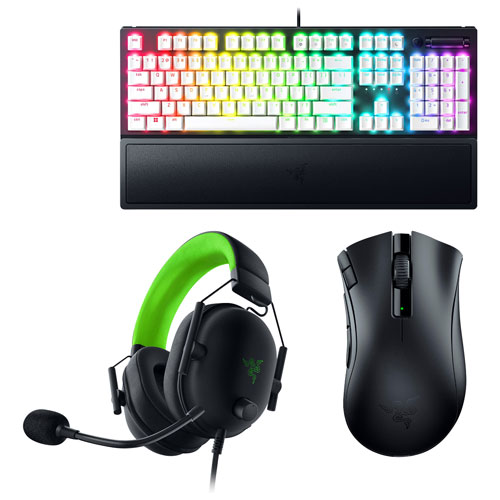
-41%Razer BlackWidow V3 Special Edition Gaming Bundle — Keyboard + Headset + Mouse! $239.97 CAD (41% Off)
 -49%
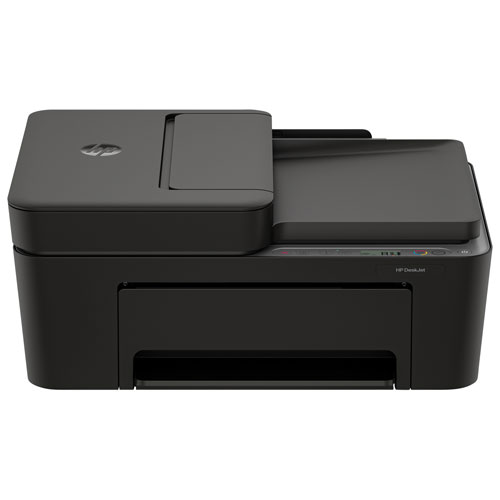
-49%HP DeskJet 4352 Wireless All-In-One Printer — Print, Scan & Copy in One! $69.99 CAD (48% Off)
 -21%
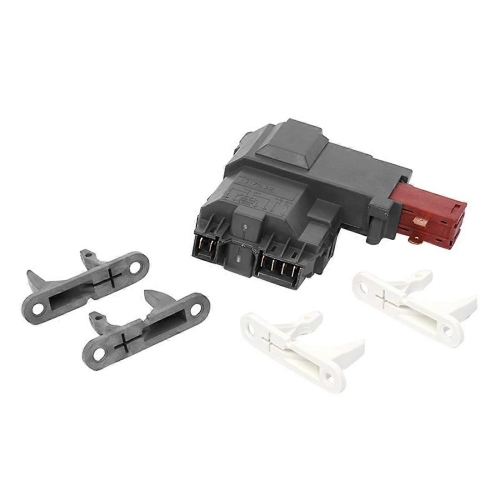
-21%SLOWMOOSE Washing Machine Door Lock Switch Kit — Fits Whirlpool/Kenmore/GE/Frigidaire! $52.99 CAD (21% Off)
 Global Express
Global Express | September 16, 2026 Saudi Arabia Says Air Defenses Downed a Drone Near Mecca, Warns of 'Red Line'
 Maple Express
Maple Express | September 15, 2026 — Toronto police identify 17-year-old killed in Jane and Finch shooting
-32%LEGO Technic Monster Jam ThunderROARus 42200 — Pull-Back Monster Truck! $23.97 CAD (31% Off)
Amazon
-41%Razer BlackWidow V3 Special Edition Gaming Bundle — Keyboard + Headset + Mouse! $239.97 CAD (41% Off)
Best Buy
-49%HP DeskJet 4352 Wireless All-In-One Printer — Print, Scan & Copy in One! $69.99 CAD (48% Off)
Best Buy
-21%SLOWMOOSE Washing Machine Door Lock Switch Kit — Fits Whirlpool/Kenmore/GE/Frigidaire! $52.99 CAD (21% Off)
Best Buy
Global ExpressGlobal Express | September 16, 2026 Saudi Arabia Says Air Defenses Downed a Drone Near Mecca, Warns of 'Red Line'
Maple Express