
Tech Express | Nov 1, 2026 — OpenAI Merges ChatGPT and Codex Quotas
OpenAI pools ChatGPT, Pro, Business and Codex quotas from December, billed in tokens; Instant chats exempt. DeepSeek details a Super-agent that finds work and fixes bugs itself. A malicious Claude Code extension sat in Cursor's marketplace 11 hours. Intel fell 28.58%, worst day since 1974. AMD raises Radeon prices again. Apple Intelligence starts a China beta Nov 4. Tmall token sales jumped 450%. Loongson joined Sinopec procurement. Voyager 1 briefly went silent.
Source: Mydrivers, Sina Finance, WIRED, Wenxuecity, Interesting Engineering
1. OpenAI Merges ChatGPT and Codex Quotas Into a Single Pool Starting in December
OpenAI said in a November 1 announcement that it will change how usage limits work for ChatGPT and Codex starting in December. Under the new rules, the quotas for the three paid tiers — Plus, Pro and Business — will be pooled, so the two services no longer draw on separate allowances but share one bucket.
The company tied the change to folding ChatGPT Work's agentic capabilities into ChatGPT, which it says will let users finish more complex tasks inside ChatGPT itself. Usage will now be counted in tokens, with consumption depending on the model chosen and how demanding the task is: stronger models and harder tasks draw down more of the pool.
OpenAI also said Instant chats will not consume the shared quota, so everyday chatting will not eat into it. For people who pay for both services, heavy use of one will shrink what is left for the other. OpenAI said it expects most users will not hit their limits more often than they do today, and that remaining quota and reset times will be visible under Settings → Usage.
2. DeepSeek Lays Out a Super-agent Architecture Where AI Finds Its Own Work
DeepSeek's Harness team published a technical post titled "Super-agent design exploration: toward a more autonomous agent system," arguing that agents should break out of a single chat window — staying online, handling several tasks at once and acting on changes in their environment. The team says it has already built an internal Super-agent instance on DeepSeek Harness for everyday engineering collaboration.
One example: when a team member reports a software problem in a group chat, the agent can spot the potential defect even without being @-mentioned, reproduce it in the background, look for a fix and even open a GitHub pull request for developers to review. A single task can also move continuously between group chat and GitHub, with the agent tracking changes in requirements and adjusting course.
The design uses two layers. A continuously running Router receives information from group chats, GitHub, email and other platforms, decides how work should be dispatched and keeps cross-task context, while Workers hold their own context and tools for reproduction, code review or feature work, and can call Subagents when needed. A subscription mechanism and a separate Watchdog cut coordination overhead and check whether a task is stuck in a loop.
In a simulation of group-chat and GitHub CI traffic — about 300 messages per run, roughly 20 of them real work requests, five runs per approach — Super-agent finished tasks in 12.4 minutes at p50 and 15.7 minutes at p95, while a conventional single-session setup with neutral prompts hit 29.5 minutes at p95. The trade-off: cached-token reads rose from 23.23 million to 31.77 million, about 37 percent more. The team stresses this is engineering exploration, with parts released as an open prototype rather than a shipping product.
3. Malicious Claude Code Extension Slips Into Cursor's Marketplace, Downloaded by Up to 5,000 Users
A malicious Anthropic Claude Code extension for Windows, macOS and Linux was live in Cursor's extension marketplace for roughly 11 hours on Thursday, according to WIRED. Cursor said the rogue extension was downloaded by "at most 5,000 users," briefly shut the marketplace while it investigated, and said no other extensions were affected.
The tainted extension carried a backdoor giving attackers access to victim machines — the kind of implant hackers use as a foothold for deeper control of a target network. Cursor published remediation steps on Thursday for the roughly 5,000 affected users. A flaw in the malware's design, however, stopped it from fully establishing itself on the vast majority of targets.
Anthropic technical staff member Felix Rieseberg said on X that this was not a compromise of Anthropic's systems or employee laptops: a malicious actor used access to Cursor's marketplace to publish a tampered copy of the extension, and "the versions on our official channels are not affected and this only impacts Cursor users." Anthropic security's David Dworken echoed that no Anthropic systems were compromised. Cursor did not answer WIRED's questions about how the upload happened.

4. Intel Plunges 28.58%, Its Worst Day Since 1974, Dragging Down Global Chip Stocks
Intel shares fell 28.58% at the October 30 close, the company's biggest one-day drop since 1974 and its second-worst on record after the 29.9% slide of July 5, 1974, wiping about $137.5 billion off its market value in a single session. The stock was down more than 30% intraday, with peak losses near $150 billion. The trigger was a weaker-than-expected outlook: its core Client Computing Group (CCPG) expects fourth-quarter revenue to fall more than 20% sequentially.
The selloff spread across the industry. The Philadelphia Semiconductor Index fell 7.20%, or 829.40 points, to 10,688.80 — its biggest one-day drop since June. Qualcomm lost 11.12%, AMD 10.88%, Arm 9.97%, Applied Materials 7.49%, ASML 6.55%, Lam Research 6.01%, Broadcom 5.48% and Micron 5.30%. Nvidia fell 4.22% to a $4.93 trillion market value, shedding about $217 billion — more in absolute terms than Intel. Dell dropped 10.77% and HPE 6.42%.
Intel CEO Lip-Bu Tan said the total PC market is expected to shrink about 12% in 2026, with a decline of more than 20% in the second half, and that there will be no sustained recovery until memory supply improves and prices normalize; he expects another roughly 10% decline in 2027. CFO David Zinsner said client revenue will fall more than 20% next quarter and that the company will cut Panther Lake output, shifting capacity to Granite Rapids data-center processors. Apple, by contrast, slipped just 1.23%.

5. AMD Tells Partners Radeon Cards Will Rise Another 10%-Plus in November
AMD has told partners that Radeon graphics cards will see a uniform price increase of more than 10%, according to Mydrivers. The cause is TSMC notifying customers of higher wafer prices; AMD has most of its chips made there, and the higher cost directly squeezes product margins.
It is not the first increase this year. AMD has raised Radeon prices several times in 2026 without fully covering rising costs. Internal word is that AMD will apply another increase to GPU-plus-GDDR6 memory kits, which should shape Radeon pricing next month; the company reassesses kit costs every quarter and moves prices when the assessment points higher.
GDDR6 memory prices rose roughly 8% to 10% in the third quarter of 2026, prompting AMD to keep raising prices in the fourth — another increase in November even after one in October. Nvidia's increases have been steeper: over the past two months, GeForce RTX 50-series cards have faced severe shortages, a widening supply-demand gap and sharply higher prices, especially for large-memory and high-end models.

6. Apple Intelligence in Mainland China: Beta on November 4, Wider Release With iOS 27.3 in December
Apple said on October 31 (Beijing time) that the first batch of Apple Intelligence features will open for testing through the iOS developer beta on November 4, with a rollout to users in mainland China planned for December alongside the iOS 27.3 release. The update includes live translation, a photo Clean Up tool, writing tools, Genmoji and Siri improvements, and taps Alibaba's Qwen models.
Per Apple's press release, the launch largely covers the core features first announced in 2024: live translation in Messages, Phone and FaceTime, plus in-person translation when paired with AirPods 4, AirPods Pro 2 and later models with active noise cancellation; Clean Up and natural-language search in Photos; rewriting, proofreading and summarizing in Writing Tools; and a Siri that can follow less structured speech and keep context across a conversation.
The limits are explicit. Only eligible iPhones are included at first, with iPad and Mac to follow once the necessary approvals are obtained. Supported models are iPhone 15 Pro, iPhone 15 Pro Max, iPhone 16 and later qualifying devices; the standard iPhone 15, iPhone 15 Plus and earlier phones cannot get it through a software update. The release also excludes the next-generation Siri AI unveiled at WWDC 2026.

7. China-Market iPhone Duo Accused of Cost-Cutting; Checks Point Mostly to Local Rules
A prominent Huaqiangbei teardown blogger compared the China-market and US versions of the iPhone Duo, and some users concluded Apple had cut corners on the domestic model. According to the comparison posted by Yang Changshun, the China version lacks a satellite communications module, a 6GHz Wi-Fi antenna, a 25W wireless charging circuit and the related RF components, with users putting the missing parts at roughly 800 to 1,000 yuan.
Industry figures who went through the details say much of that is a misreading. The most widely shared claim — that the China model drops the UWB chip — is contradicted by Apple China's published specifications, which list a second-generation ultra-wideband chip with the feature intact.
Most remaining differences stem from Chinese regulations. The satellite hardware is present in the China model but the service cannot be enabled under telecom rules; 6GHz Wi-Fi is restricted by radio-management rules, so Wi-Fi 7 runs only on 2.4GHz and 5GHz, leaving measured speeds below the US model; and MagSafe wireless charging tops out at 15W versus 25W in the US, again a matter of domestic frequency rules rather than removed hardware.

8. Tokens Go on Sale for Singles' Day: Tmall Category Sales Up 450% on Day One
Tokens were listed as a standalone category on several Chinese e-commerce platforms during this year's Singles' Day shopping festival, Xinhua reported. Since Tmall opened a token top-up center on September 3, it has onboarded vendors including DeepSeek, Alibaba Cloud, Zhipu and Kimi; MiniMax opened the first official brand flagship store, and Qwen Office and StepFun have also joined.
Previously, every token was billed in a model vendor's backend by API calls, leaving users unable to see unit prices or compare them. Putting tokens on shelves lowers the barrier to entry. Vendors are offering Singles' Day discount packages — a Qwen AI Lite monthly card, for example, costs 39 yuan against a list price of 60. A Tmall official said token sales on the platform rose 450% month over month on the October 20 opening day, with buyers mainly individuals and small businesses with clear AI needs.
Consumers generally buy tokens two ways: pay-as-you-go top-up vouchers, much like phone credit, or fixed monthly or annual subscriptions. Fixed plans have a catch — unused quota goes to waste, and too little leaves users short. An employee at a Beijing company making AI videos said he spends 30,000 to 40,000 yuan a month on tokens but still buys through official channels and tool-integration platforms: "we prefer to buy as we go." Ding Ding, deputy general manager of China Unicom's data intelligence unit, said tokens cannot simply copy the data-plan logic: traffic gets cheaper per unit as scale grows, while tokens are intelligent output, each unit backed by GPUs, power and depreciation — overselling means queues and throttling.

9. 13.44 Million Yuan, 2,400 Machines: Loongson Enters Sinopec's Annual Framework Procurement
Sinopec's procurement platform published bid results on October 30 for the 2027 framework agreement covering LoongArch desktop PCs for its Beijing information technology branch, and Qingdao ThundeRobot topped the shortlist with a tax-inclusive bid of 13.4408 million yuan and a composite score of 85.56.
The field was tight: iSoftStone bid 15.576 million yuan for a score of 83.21, and Inspur 16.1537 million yuan for 80.82. ThundeRobot's bid came in about 2.135 million yuan below the runner-up. The volume itself is modest — 1,600 portable and 800 desktop "xinchuang" PCs, 2,400 units in all, plus 300 storage drives, 350 memory modules, 50 optical drives and 50 graphics cards. Bidders needed at least 10 million yuan in sales of the same brand of Loongson CPUs over the previous 36 months, and consortia and resellers were excluded.
The significance lies in the nature of the framework deal: it is the first time LoongArch machines have entered Sinopec's annual framework procurement, a shift from scattered pilots to annual, systematic buying of domestic terminals by state-owned energy firms. The base is Loongson's own LoongArch instruction set; its current desktop mainstay, the 3A6000, packs four LA664 physical cores with simultaneous multithreading for eight logical cores at 2.5GHz. Tests by the China Electronics Standardization Institute's CESI laboratory put it at 43.1 points on SPEC CPU 2006 base single-thread integer, roughly level with Intel's 10th-generation Core quad-core; the coming 3B6600 moves to eight cores and the LA864 architecture with about 30% more performance at the same clock.

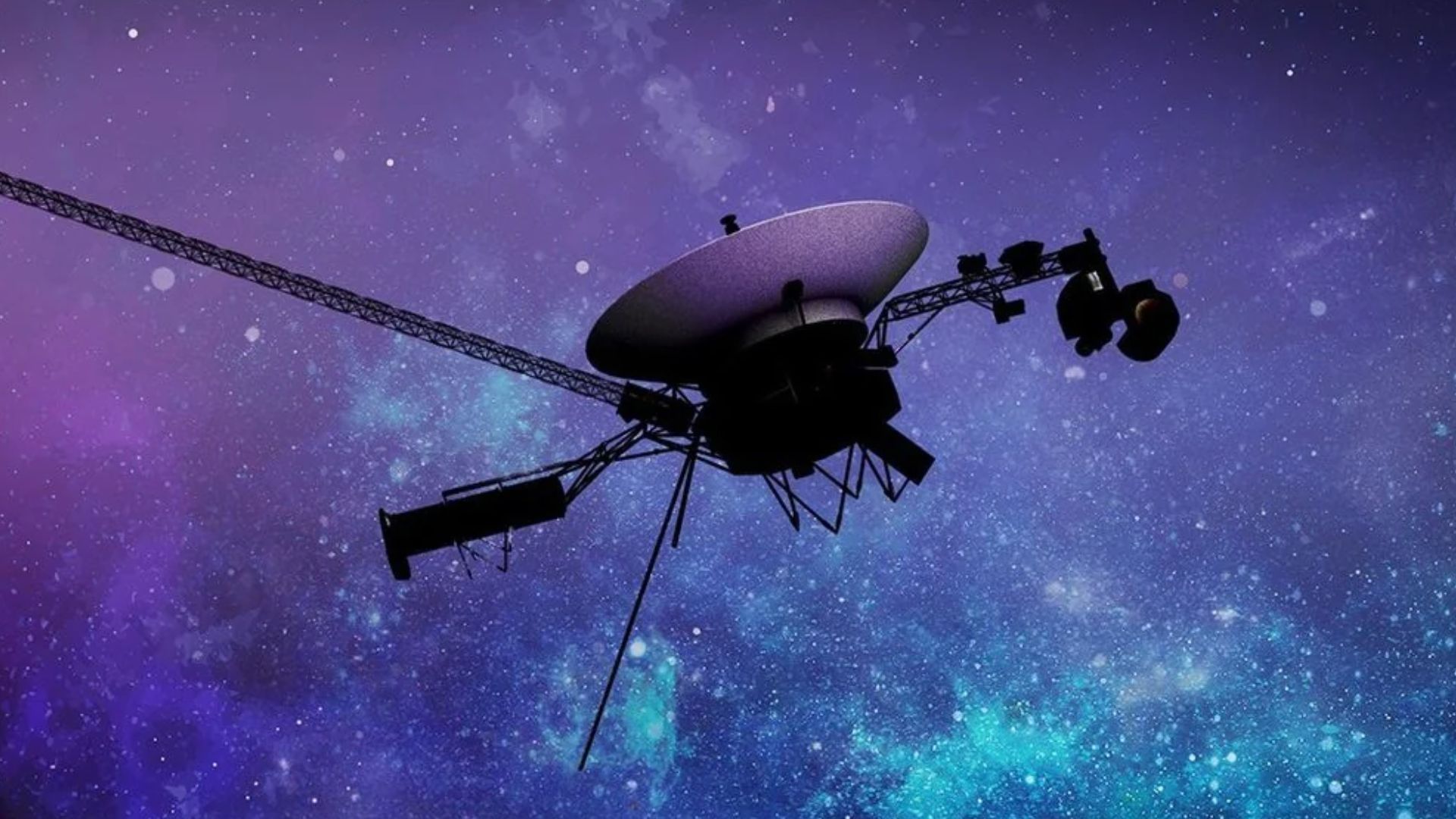
10. Voyager 1 Goes Silent for Two Days, Then Reconnects Ahead of Its One-Light-Day Milestone
NASA briefly lost contact with Voyager 1 in mid-October, detecting no signal during scheduled communications on October 18 and 19; the signal returned on October 20, roughly 48 hours later. The probe is now about 16 billion miles (24 billion kilometers) from Earth, according to Interesting Engineering.
NASA said one group of Voyager 1's thrusters went offline during the incident, prompting its backup thrusters to switch on automatically — a programmed response when onboard computers detect a possible problem with the active thrusters, putting the craft into a stable, safe configuration and pausing normal operations. The signal came back before the team sent troubleshooting commands. "This is the first time we've seen the spacecraft do something like this, but we are also at a point in the mission where we have to expect the unexpected," said Voyager mission manager Kareem Badaruddin.
The episode came weeks before a milestone: on November 18, 2026, NASA expects Voyager 1 to reach 16.094 billion miles (25.902 billion kilometers) from Earth — one light-day, where radio signals take a full 24 hours each way, so a single exchange takes two days. Both Voyagers rely on radioisotope thermoelectric generators, losing about four watts a year as the plutonium decays, forcing engineers to shut down instruments. In September the team completed a power-saving effort on Voyager 1 dubbed the "Big Bang," switching off three devices at once and enabling lower-power alternatives; without it, NASA estimated another instrument would have to go as early as summer 2027.
More News
- Global Express | November 1, 2026: Iran's Supreme Leader Orders Response 'Without Geographic Limits' as US Standoff Persists
- Finance Weekly | The AI Trade Cools as Rate Hikes Return, and Global Money Reprices Risk
- Sports Express | November 1, 2026 Valkyries beat Dream 68-63 to win first WNBA title
- Maple Express | November 1, 2026: Woman dies after stabbing in North York parking lot
- Maple Express | October 31, 2026: Four dead, two seriously hurt in crash near Guelph
Comments (0)
View More
 -34%
BISSELL CrossWave EdgeFind Wet/Dry Vacuum — Vacuum and wash in one pass! $199.99 CAD (33% Off)
 -44%
Command Medium Utility Hooks Value Pack — 6 Hooks + 12 Strips, No Nails Needed! $12.47 CAD (43% Off)
 -16%
TERRAMASTER D6-320 6-Bay HDD Enclosure — 132TB over USB-C at 10Gbps, Hot-Swappable! $339.99 CAD (15% Off)
 -23%
Fjällräven Raven 20 Backpack — Pocket-Rich, Properly Padded Everyday Commuter Pack! $126.12 CAD (22% Off)
 Sports Express
 | November 1, 2026 Valkyries beat Dream 68-63 to win first WNBA title
 Global Express
 | November 1, 2026: Iran's Supreme Leader Orders Response 'Without Geographic Limits' as US Standoff Persists
-34%BISSELL CrossWave EdgeFind Wet/Dry Vacuum — Vacuum and wash in one pass! $199.99 CAD (33% Off)
Amazon
-44%Command Medium Utility Hooks Value Pack — 6 Hooks + 12 Strips, No Nails Needed! $12.47 CAD (43% Off)
Amazon
-16%TERRAMASTER D6-320 6-Bay HDD Enclosure — 132TB over USB-C at 10Gbps, Hot-Swappable! $339.99 CAD (15% Off)
Amazon
-23%Fjällräven Raven 20 Backpack — Pocket-Rich, Properly Padded Everyday Commuter Pack! $126.12 CAD (22% Off)
Amazon
Sports ExpressSports Express | November 1, 2026 Valkyries beat Dream 68-63 to win first WNBA title
Global Express