
Global Express | November 1, 2026: Iran's Supreme Leader Orders Response 'Without Geographic Limits' as US Standoff Persists
November 1: Iran's supreme leader orders forces to respond 'without geographic limits'; Russia reports a mass drone attack; Polish police seal off the constitutional court; 139 arrested at a London protest. Markets: $828bn in AI capex wiped $1trn off US stocks; oil majors booked over $36bn in quarterly profit. Bolivia declares an El Nino emergency, Indonesian smog drives 283,000 respiratory cases, the FBI blames North Korea for a $6bn Binance heist, and Bangkok faces tidal floods.
1. US-Iran Standoff Persists as Supreme Leader Sets Tone for Response 'Without Geographic Limits'
China Media Group's correspondent in Iran reported on Sunday (November 1) that Washington is continuing to build up its military posture in the Middle East and says it is weighing a new round of strikes on Iran, while mediators led by Qatar keep shuttling between the two sides in an effort to broker a deal that would calm the region.
According to the report, Iran's supreme leader has set the tone for Tehran's handling of the crisis, ordering the armed forces to take immediate and effective measures "without geographic limits" when facing potential hostile threats, at any level and of any type. Iranian commentary described it as the toughest and most resolute statement in months, saying the phrase suggests that any fresh attack could trigger a response beyond the scope of past regional wars and at a higher intensity.
Diplomacy has not been closed off, but Tehran has set conditions. On October 31, Foreign Minister Araghchi confirmed that Iran had sent a delegation to Qatar for further consultations on the regional situation, but said there were no plans to negotiate or meet with the American side. The same day, the secretary of Iran's Supreme National Security Council, said he had not yet replied to a letter from US Vice President JD Vance and stressed that Washington must deliver on seven conditions - including lifting sanctions, unfreezing assets and ending the maritime blockade - before Iran would move to other topics. The report said mutual distrust, deadlock over how commitments are implemented and the continuing naval blockade are the biggest obstacles to a deal.
2. Russia Reports 'Massive' Drone Attack on Nizhny Novgorod Region as Refinery Is Reportedly Hit
Russia's Nizhny Novgorod region reported a "massive" drone attack on Sunday (November 1). Regional governor Gleb Nikitin said on Telegram that an industrial facility in the Kstovsky district had been hit by a "massive UAV attack" that caused "significant damage", adding that "more than 100 drones have been destroyed". Early information indicated there were no casualties and emergency crews were working at the site.
Nikitin said there could be temporary power cuts while repairs are carried out, along with reduced hot water and heating supplies for residential buildings. Telegram war-monitoring channels said the target was the Kstovo oil refinery, also known as the Lukoil-Nizhegorodnefteorgsintez refinery and considered one of Russia's largest, producing diesel and aviation fuel among other products. Earlier in the week, another refinery in Russia's Samara region reportedly caught fire after a drone attack.
The same day, Ukrainian President Volodymyr Zelenskyy said about 280,000 Ukrainian households were left without power after Russian strikes overnight on Friday - roughly 200,000 in Dnipro and the surrounding region and more than 80,000 in the Kyiv region. He said Russian forces hit a combined heat and power plant in Kyiv and four electrical substations in the eastern Dnipro region.

3. Poland's Constitutional Court Crisis Escalates as Police Seal Off Building and President Forces Entry
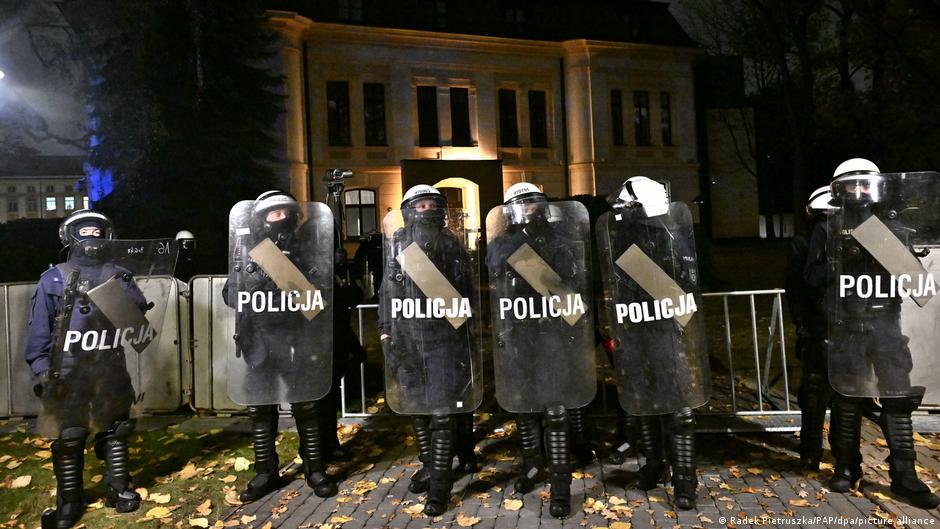
The struggle in Poland over the make-up of the constitutional court escalated sharply on October 30, and police subsequently sealed off the court building in Warsaw. DW's Chinese service reported on Sunday (November 1) that a notice on the court's website had announced that its president, Bogdan Swieczkowski, and his deputy were suspended for a month, with judge Anna Korwin-Piotrowska taking over leadership duties. The court then denied this on X, saying Swieczkowski remained in post and that Korwin-Piotrowska had no right to the role because she had not taken a sworn oath administered by the president. The court described the situation as a "coup".
Police said they moved to control the area around the building after a female judge reported that the safety of judges and staff might be at risk. That evening, large numbers of protesters gathered outside the court in central Warsaw and some tried to break through barricades; they were said to be mostly supporters of the right-wing populist Law and Justice party, and police reported at least three arrests. Crowds were still outside the building during the day on October 31.
President Karol Nawrocki, an independent aligned with the right, cut short a trip to Senegal and flew back to Warsaw, going to the court. Video posted by judge Maciej Berek showed the president, a former amateur boxer, pushing past security to try to enter the building, and Berek alleged that Nawrocki assaulted Korwin-Piotrowska. Nawrocki then called on parliamentary parties to hold consultations to "stabilise the political situation and restore constitutional order", and demanded that police leave the building. He began talks with party representatives on the afternoon of October 31, though Polish television reported, without confirmation, that Prime Minister Donald Tusk's Civic Platform did not plan to take part. Two Polish ambassadors have resigned since the events, and Justice Minister Waldemar Zurek is seeking to strip the court's president and deputy of immunity.
4. London Police Arrest 139 as Hundreds Protest Palestine Action Ban
London's Metropolitan Police said on October 31 that at least 139 people had been arrested after hundreds defied warnings and protested outside the US embassy against the proscription of Palestine Action as a terrorist organisation, up from the 48 arrests announced earlier in the day. Police said most arrests were for "expressing support for a proscribed organisation". Protesters also gathered outside the US consulate in Edinburgh, where no arrests were reported.
It was the first mass protest against the ban since Prime Minister Andy Burnham took office in July, and the latest since the proscription took effect in July last year under then-prime minister Keir Starmer. The UK Supreme Court is due on Wednesday to hear an appeal challenging the ban. Organisers Defend Our Juries said the arrests brought the total detained for defying the ban to more than 4,000 since July 2025.
Labour MP John McDonnell said on X that protesting against the government's decision to proscribe an organisation cannot be "automatically interpreted" as supporting it and therefore committing an arrestable offence, adding that he believed the government "made the wrong decision". Amnesty International UK also called on the government to reverse the proscription.

5. AI Capex Hits $828 Billion as Wall Street Wipes $1 Trillion Off Stocks in a Day
New disclosures from four of America's biggest technology companies plus Elon Musk's SpaceX, which includes xAI, show the group is set to spend as much as $828 billion on capital expenditure this year, including data centres and high-powered chips. The 2026 figures include an expected $220 billion from Amazon, up to $205 billion from Alphabet, about $170 billion from Microsoft, up to $145 billion from Meta and up to $88 billion from SpaceX.
Stocks tumbled on Friday in part in response: the tech-heavy Nasdaq closed down 2.9% and the S&P 500 fell 1.8%, their worst one-day performances since June, while Nasdaq 100 companies lost more than $1 trillion in market value. Weak guidance from US chipmaker Intel for the final three months of the year also played a role. Four of the five companies had negative free cash flow in the third quarter, Microsoft being the exception, meaning they spent more on buildings and equipment than they generated from operations.
Aleksandar Tomic, an economist at Boston College, warned that the consequences could reach far beyond Silicon Valley if the investments do not pay off, especially as companies increasingly rely on debt, pushing up the cost of capital for other businesses. "If these tech companies sneeze, the rest of the market would catch pneumonia," he said. The AI infrastructure bill has surpassed the market value of ExxonMobil or Mastercard and is approaching the roughly $1 trillion the US is spending on defence this fiscal year.

6. High Oil Prices Lift Majors' Profits Above $36 Billion in a Single Quarter
US oil majors reported another quarter of huge profits this week. ExxonMobil earned $15.4 billion, more than double its result a year earlier; Shell nearly doubled its earnings at $10.8 billion; and Chevron's profit rose 180% to $9.9 billion. Together the three pulled in just over $36 billion.
The surge is largely down to the war in Iran disrupting global oil supply: with less oil moving through the Middle East, crude elsewhere has become far more valuable. Brent is trading around $113 a barrel, against about $70 before the war began. Demand for oil and refined products has barely changed, since people still need fuel to heat homes, drive and move goods. Meanwhile US petrol costs about $1.20 more per gallon than a year ago, and diesel hit a record high in September and remains close to it.
Executives said much of the profit was going back to shareholders through dividends and buybacks: Shell's buyback was one of its biggest ever and Exxon announced its highest-ever quarterly dividend. Dan Pickering of Pickering Energy Partners said most companies were in a wait-and-see stance rather than spending on new drilling, because high prices are driven more by geopolitics than anything else and are hard to predict. Democrats in both chambers of Congress have called for a windfall profits tax.
7. Bolivia Declares National State of Emergency as El Nino Bites
Bolivian President Rodrigo Paz signed a decree on Saturday declaring a nationwide state of emergency to free up resources to deal with the effects of El Nino and to send more rescue teams to areas hard hit by flooding and drought. Paz said El Nino would have "very severe impacts in terms of drought and floods" and that Bolivia needs "the cooperation of all institutions".
Drought is now affecting 78,000 families in six of Bolivia's nine departments and has led to the loss of more than 75,000 cattle, according to a government report released this week. Bolivia is also prone to flooding; in December 2025 floods in the Santa Cruz region killed dozens of people. Neighbouring Chile's capital Santiago recorded its rainiest October ever, while wildfires in Peru killed at least 12 people last month.
El Nino is a global climate phenomenon that occurs roughly every two to seven years. This cycle could be the strongest in recorded history and is due to peak at the end of 2026, with impacts potentially lasting well into 2027. Scientists predict it could cause more than 450,000 deaths globally, with the poorest countries worst affected.

8. Indonesian Wildfire Smog Chokes Southeast Asia as Respiratory Cases Pass 283,000
Toxic smog from months of forest and peatland fires in Indonesia is blanketing parts of Southeast Asia. Natanael Undas, a schoolteacher in Central Kalimantan, said the skies are apocalyptic shades of yellow and orange - "it looks like Mars, like we're living on another planet". He said his family keeps the windows shut but the smoke still gets in, sending his two-year-old daughter into sneezing fits. Heat and drought aggravated by a "super" El Nino have made this Indonesia's worst fire season in more than a decade.
Citing Indonesian health ministry data, Reuters reported that more than 283,000 cases of respiratory illness linked to the fires had been recorded in seven provinces as of October 13, up from 113,000 as of September 9. On Wednesday, hundreds of students and civil society activists protested in Jakarta and other cities against President Prabowo Subianto's policies, including his refusal to declare the fires a national disaster, demanding transparent and independent investigations and a long-term prevention strategy. The government said it recognised the students' concerns and was prosecuting companies linked to the fires while sending aid to affected provinces.
Air pollution in neighbouring Singapore this month reached its highest level since 2015; Singapore has threatened to prosecute companies it sees as responsible, and the Singaporean and Indonesian foreign ministers said on Tuesday they were considering a joint task force against illegal land burning. A report this month by the Indonesian environmental group Walhi named 66 companies with links to Singapore and 27 with links to Malaysia, and the government said on Thursday that police had identified 20 suspect corporations. The haze is also threatening 67,000-year-old cave paintings on Sulawesi. Smaller showers this week brought some relief.

9. FBI Blames North Korea for $6 Billion Binance Heist, the Largest Crypto Theft on Record
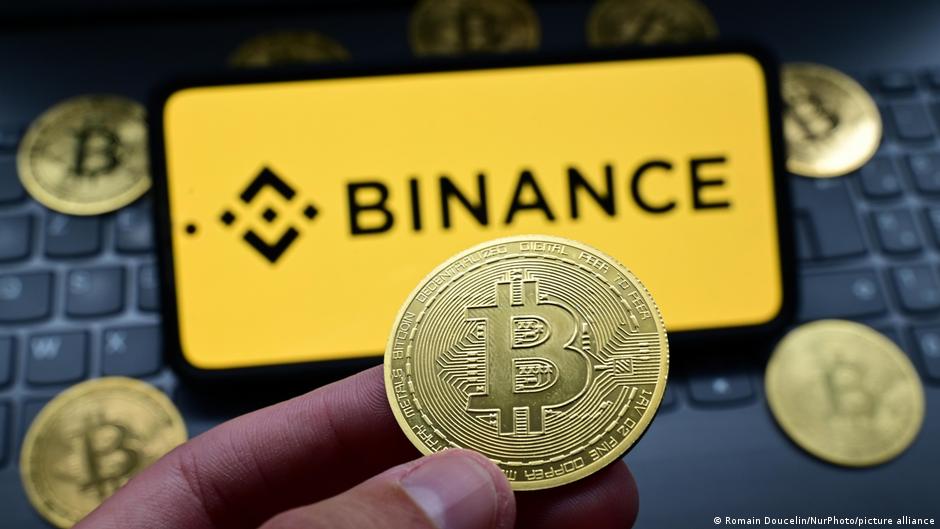
The FBI said on Saturday that North Korea was responsible for the theft of more than $6 billion in virtual assets from cryptocurrency exchange Binance on or about October 29. The bureau linked the heist to an entity known as TraderTraitor, the same actors behind a $1.5 billion hack of Bybit last year. The stolen assets included bitcoin, ethereum and stablecoins such as tether and USD Coin.
News of the attack sent most major cryptocurrencies lower on Friday. Binance, which suspended withdrawals after the hack, resumed them on Sunday, saying the process would be completed in phases and that the first covered 15 cryptocurrencies including bitcoin, ether, XRP and dogecoin. The FBI said it had observed TraderTraitor actors converting stolen assets primarily into ethereum and expected further laundering through decentralised finance and instant swap services, and asked exchanges and blockchain analytics firms to block linked addresses.
Binance said on Saturday it was using more than $6.34 billion of company funds to buy tokens and replenish about 90% of the stolen assets, with the remaining 10% in less liquid tokens that may take longer. "Binance will fully cover the financial impact of the funds stolen in this incident," the company said on X. The biggest crypto heist in history comes amid growing worries that expanding AI capabilities could compromise cryptography and IT security protocols.
10. Tidal Water and Rain Put Bangkok and Seven Nearby Provinces at Flood Risk
Thailand's national water resources office said in a nationwide water situation report on November 1 that a high-pressure system from China had strengthened winds over the upper part of the country and at sea, raising sea and estuary levels, and that Bangkok and seven surrounding provinces face tidal flood risks.
The warning covers Bangkok, Chachoengsao, Samut Prakan, Nonthaburi, Pathum Thani, Samut Sakhon, Nakhon Pathom and Samut Songkhram. The office said water levels in the estuaries of the Bang Pakong, Chao Phraya, Tha Chin and Mekong rivers could be affected by rising seawater, with low-lying riverside communities, areas outside flood barriers and places without permanent flood defences needing particular attention. Major roads including Sukhumvit, Suk Sawat and Rama II were listed for close monitoring.
The meteorological department expects unsettled weather nationwide from November 2 to 6, with thunderstorms, gusts and heavy rain in places. On November 1, 24-hour rainfall reached 96mm in central Samut Sakhon province and 108mm in eastern Trat province. As of November 1, Thailand's main reservoirs held about 66.493 billion cubic metres, 82% of total capacity, with about 42.367 billion cubic metres, or 75%, usable.
More News
- Finance Weekly | The AI Trade Cools as Rate Hikes Return, and Global Money Reprices Risk
- Tech Express | Nov 1, 2026 — OpenAI Merges ChatGPT and Codex Quotas
- Sports Express | November 1, 2026 Valkyries beat Dream 68-63 to win first WNBA title
- Maple Express | November 1, 2026: Woman dies after stabbing in North York parking lot
- Maple Express | October 31, 2026: Four dead, two seriously hurt in crash near Guelph
Comments (0)
View More
 0
Sonos Era 100 SL Microphone-Free Speaker — The Most Sensible Upgrade for an Arc or Beam
 -45%
Hoover Type K Vacuum Bags, 3-Pack — Genuine Allergen Filtration for Canister Vacuums! $9.09 CAD (44% Off)
 -45%
eufy by Anker Omni C20 Robot Vacuum & Mop — 7,000 Pa Suction and a Self-Cleaning Station! $499.99 CAD (44% Off)
 -39%
Turtle Beach Stealth 600 Wireless Gaming Headset — 2.4GHz + Bluetooth, 80-Hour Battery! $79.99 CAD (38% Off)
 Finance Weekly
 | The AI Trade Cools as Rate Hikes Return, and Global Money Reprices Risk
 Tech Express
 | Nov 1, 2026 — OpenAI Merges ChatGPT and Codex Quotas
0Sonos Era 100 SL Microphone-Free Speaker — The Most Sensible Upgrade for an Arc or Beam
Amazon
-45%Hoover Type K Vacuum Bags, 3-Pack — Genuine Allergen Filtration for Canister Vacuums! $9.09 CAD (44% Off)
Amazon
-45%eufy by Anker Omni C20 Robot Vacuum & Mop — 7,000 Pa Suction and a Self-Cleaning Station! $499.99 CAD (44% Off)
Amazon
-39%Turtle Beach Stealth 600 Wireless Gaming Headset — 2.4GHz + Bluetooth, 80-Hour Battery! $79.99 CAD (38% Off)
Best Buy
Finance WeeklyFinance Weekly | The AI Trade Cools as Rate Hikes Return, and Global Money Reprices Risk
Tech Express