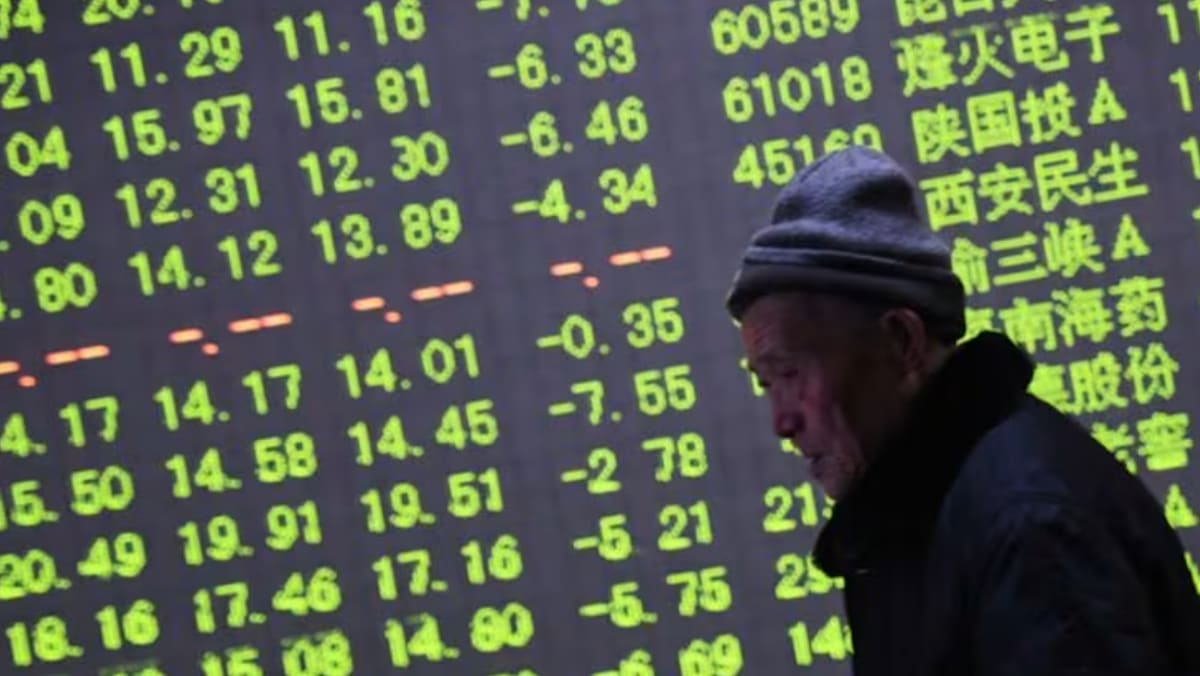
Finance Morning | Nov 4, 2026: A-Shares Rebounded Sharply, ChiNext Up 6.4%
A-shares rebounded sharply on Nov 4: Shanghai +2.16%, Shenzhen +4.22%, ChiNext +6.4%, with 2.04 trillion yuan turnover and over 100 limit-ups. Beijing added stabilisation tools, including a 100-billion-yuan swap facility. Hang Seng rose 1.67%, the Nikkei fell 1.42%, KOSPI gained 0.62% and Taiwan closed down 0.83% after a violent intraday swing.
📊 Asia Markets Today
| Index | Close | Change | % Change |
|---|---|---|---|
| Shanghai Composite | 3,686.17 | +78.07 | +2.16% |
| Shenzhen Component | 11,335.69 | +458.70 | +4.22% |
| ChiNext | 2,544.73 | +153.08 | +6.40% |
| Hang Seng | 23,919.50 | +393.53 | +1.67% |
| Nikkei 225 | 62,188.63 | -893.23 | -1.42% |
| KOSPI | 5,683.80 | +35.01 | +0.62% |
| Taiwan Weighted | 42,948.91 | -358.63 | -0.83% |
1. A-shares Stage Strong Afternoon Rebound, ChiNext Jumps 6.4%
Source: 21jingji (21st Century Business Herald)
Chinese stocks rebounded sharply in the afternoon session on Nov 4. According to 21jingji, the STAR 50 index rose nearly 10% and the ChiNext index gained more than 6%. Semiconductor sector ETFs surged in unison, with the Bosera Semiconductor ETF (159582) and China Merchants Semiconductor Equipment ETF (561980) hitting their daily limits. Combined turnover on the Shanghai and Shenzhen bourses reached 2.04 trillion yuan, 334.3 billion yuan more than the previous trading day, while more than 4,600 stocks advanced and over 100 hit limit-up.
Sector rotation was rapid, led by the semiconductor supply chain: Jingyi Equipment, Tolans, Huafeng Test & Control, Qiangyi Shares and Jiangfeng Electronics rose 20% to their limits, while NAURA Technology, Tongfu Microelectronics and Jinhaitong also hit limit-up. In precious metals, Xiaocheng Technology jumped 20%, alongside limit-ups for Shanjin International, Zhaojin Gold, Sichuan Gold, Chifeng Gold and Shengda Resources. Innovative drug and CRO names climbed, with Jinling Pharmaceutical, WuXi AppTec and Asymchem at their limits; computing hardware stocks rebounded in the afternoon, with Eoptolink, Zhongji Innolight and Everbright Photonics up more than 10%. Robotics and physical-AI names were also active.
On the downside, a group of stocks whose names contain the Chinese character for "sheep" weakened, with Aoyang Health, Yankon Lighting, Sunshine Dairy and Baiyang shares hitting limit-down. At the close, the Shanghai Composite was up 2.16%, the Shenzhen Component up 4.22% and ChiNext up 6.4%.
2. Beijing Rolls Out Fresh Stabilisation Tools for the Stock Market
Source: 8world
China's securities regulator has rolled out new measures to stabilise the stock market, including adding market liquidity, cutting the interest rate on stock buyback loans and relaxing margin trading restrictions. The moves follow an 8.5% slump in the CSI 300 in October, its biggest monthly drop since 2016.
The People's Bank of China said it will conduct a new round of swap facility operations for securities firms, fund companies and insurers that could inject more than 100 billion yuan (about S$19.1 billion), with 31 brokers and fund managers applying to take part. The central bank also cut the rate on special loans for share buybacks and increased holdings from 1.25% to 1%, and made the mechanism permanent so banks can provide low-cost funding for listed companies' buybacks.
The China Securities Regulatory Commission also urged major index companies and leading technology firms to buy back shares, encouraged exchange-traded funds to accelerate purchases and pushed fund managers to add positions when the market is weak. Gary Ng, senior economist at Natixis, said the measures help ease funding pressure; Hao Zhou, an analyst at Guotai Haitong in Hong Kong, said they show Beijing's determination to stabilise the market, though global volatility and external uncertainty remain.
Kenneth Goh, director of private wealth management at UOB Kay Hian, said the policy's short-term goal is to stop the decline rather than drive a rally. Qu Feng, an associate professor of economics at Nanyang Technological University, said the rally will be hard to sustain without economic growth, fresh capital inflows and an easing of the AI bubble. Ng also cautioned that while buybacks can reduce the number of shares in circulation and support prices, companies may take on more leverage and share prices may not necessarily rise.
3. CATL Builds a Big Stake in DeepSeek as 100 Billion Yuan Round Sets a Record
Source: Sina
DeepSeek's new funding round is nearing completion, with about 100 billion yuan raised — a record for a single round in China's AI sector. Bloomberg reported that DeepSeek raised roughly 100 billion yuan in the latest round after repeatedly raising its target, with CATL and Tencent as the main investors.
CATL's affiliated entities invested 5 billion yuan in DeepSeek's first round earlier this year. That first round included founder Liang Wenfeng, Tencent, NetEase, JD.com, the CATL group, Zhengxingu Capital, Shixiang Technology, Monolith and IDG Capital. Of the roughly 51 billion yuan raised, Liang Wenfeng and Tencent were the first and second largest contributors, followed by the CATL group, including CATL and Puquan Capital. DeepSeek has now raised more than 150 billion yuan over the past six months.
Investors said CATL's move is not purely financial but part of a "computing-power and power" strategy. In April, a CATL executive said AI adoption is moving very fast and energy is a key bottleneck for computing power, with data centre storage demand set to grow substantially. Zeng Yuqun (Robin Zeng) also said in an interview that "every token is energy".
CATL's energy storage revenue was just 189 million yuan in 2018, rising to 62.44 billion yuan in 2025 with a 30.4% global market share and five consecutive years as the world's largest; in the first half of this year it reached 53.261 billion yuan. In April the company planned to pay about 4.1 billion yuan for 49% of Zhongheng Technology, the controlling shareholder of Zhongheng Electric; a month later an affiliate spent about US$942 million (about 6.4 billion yuan) for a 38.1% stake in 21Vianet, becoming its largest shareholder.
4. Hong Kong SFC's Julia Leung: Drivers of Global Market Liquidity Are Fading
Source: Guandian
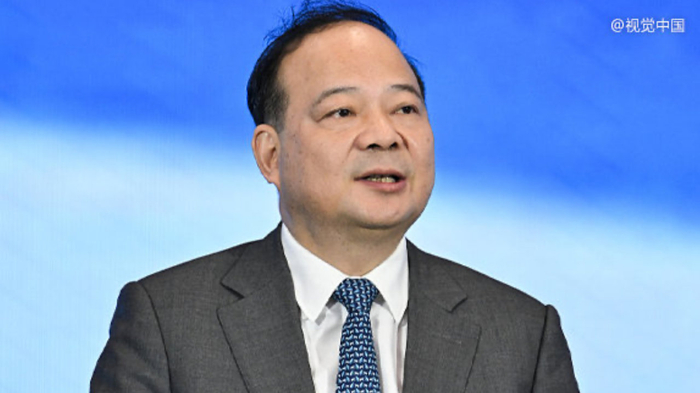
Speaking at the Global Financial Leaders' Investment Summit on Nov 4, Hong Kong Securities and Futures Commission CEO Julia Leung said rising global sovereign debt is raising questions about debt sustainability, and US and French government bond yields may remain volatile; surging food and oil prices are also worsening political and social instability.
She said countries lack sufficient monetary and fiscal policy tools to solve their own problems, persistently high inflation is pushing up interest rates and high borrowing costs may last longer, concluding that the main drivers of global equity market liquidity over the past year have faded.
On artificial intelligence, Leung said large companies are investing heavily in data centres and other AI-related supply chains, and the market is watching returns, leverage, circular financing and investment concentration closely. She noted that a major PHP security vulnerability in the past week showed how flaws exposed by AI could escalate into a global cybersecurity threat, with growing concerns about AI safety and reliability and reliance on third parties prompting calls to slow the pace of AI development.
She said major economies including the US remain solid, supported by trade, AI and data centre investment, which also underpins equity markets. But with average annual AI-related capex by large companies expected to reach US$2 trillion over the next five years, economic and market concentration will rise further, and spillovers to equity and credit markets deserve attention.
5. Nikkei Falls 1.42%, Briefly Testing the 60,000 Level
Source: Kyodo News
Tokyo stocks resumed trading on Nov 4 after a holiday and the Nikkei continued its sharp slide, at one point falling more than 3,000 points from the Nov 2 close before the break and approaching the 60,000 mark. The index pared losses to close at 62,188.63, down 893.23 points or 1.42%.
Kyodo reported that news that the Democrats — seen as favouring regulation of AI development — were leading in the US midterm elections heightened caution and increased selling in semiconductor-related shares.
The TOPIX fell 34.90 points to 3,895.38, down 0.89%. Trading volume for the day was 3.51279 billion shares.

6. Korea: Samsung and SK Hynix Give Back Gains as Asian Tech Sells Off
Source: Chosunbiz
Asian stock and currency markets swung sharply on Nov 4 after Democrats won majorities in both chambers of the US Congress, Chosunbiz reported. Fears that a Democrat-controlled Congress may tighten regulation of AI and crypto, plus the possibility that key state governments will revisit data centre policy, sent Asian chip and AI shares broadly lower; the dollar weakened as US Treasury yields fell.
On the Korea Exchange, Samsung Electronics and SK hynix, which had risen 3% and 5% in early trade, ended slightly lower. In Tokyo, chip bellwether Kioxia fell 5.4%, while TSMC, which accounts for 40% of the Taiwan weighted index's weight, slipped 1.5%. US equity futures dropped sharply in premarket trading before paring losses.
Charu Chanana, chief investment strategist at Saxo, told Reuters that investors are pricing in a stronger-than-expected Democratic surge, and that Democratic strength could lower expectations for additional fiscal stimulus. Jake Dollarhide, CEO of Longbow Asset Management, said Democratic control of Congress is a headwind for tech stocks and could bring regulatory pressure across AI; Nick Peles, CIO of Vantagepoint Asset Management, said the risk is tighter regulation across AI and crypto.
Markets also flagged data centre permitting and power supply issues stemming from the Texas and Georgia governor races as a new key risk. Tapas Strickland, chief market strategist at Moomoo Australia-New Zealand, said Texas and Georgia together account for roughly a third of AI data centre spending and projects, and if both seat Democratic governors the odds of a slower buildout are very high. Still, Kazunori Datebe, chief strategist at Daiwa Asset Management, said Japanese AI stocks are already cheap with solid earnings, so downside should be limited.

7. Taiwan Stocks Swing More Than 1,500 Points, Close Down 358.63
Source: TVBS News
Taiwan's weighted index swung violently on Nov 4. TVBS reported that the Taiex opened up 141.91 points at 43,449.45 and extended gains to nearly 400 points, but turned negative before 10 am and plunged more than 1,000 points by 11 am, breaking below 43,000 to 42,216 and losing its half-year line; as US midterm results came in, the index reversed higher and closed down 358.63 points at 42,948.91, failing to reclaim 43,000, a drop of 0.83% on turnover of NT$1.114822 trillion.
Heavyweights opened higher, turned lower and pared losses by midday: TSMC fell NT$35 to NT$2,260; MediaTek reversed to gain NT$40 to NT$3,715; Hon Hai fell NT$5.5 to NT$240; Delta Electronics dropped NT$50 to NT$1,220. Memory names were volatile, with Nanya Technology down NT$11.5 at NT$399.5, Winbond down NT$4.5 at NT$141.5 and Macronix down NT$1.1 at NT$87.2. Silicon wafer stocks were mixed, with GlobalWafers down more than 9% at NT$619 after its earnings call.
Radio Taiwan International reported that the index swung 1,885.72 points intraday, hitting a high of 43,741.54 and a low of 41,855.82. Cnyes calculated that the three major institutional investors sold a net NT$159.787 billion, including NT$149.899 billion from foreign investors.
8. Trump Acknowledges Democratic Win; Asia-Pacific Stocks Pare Losses
Source: Lianhe Zaobao
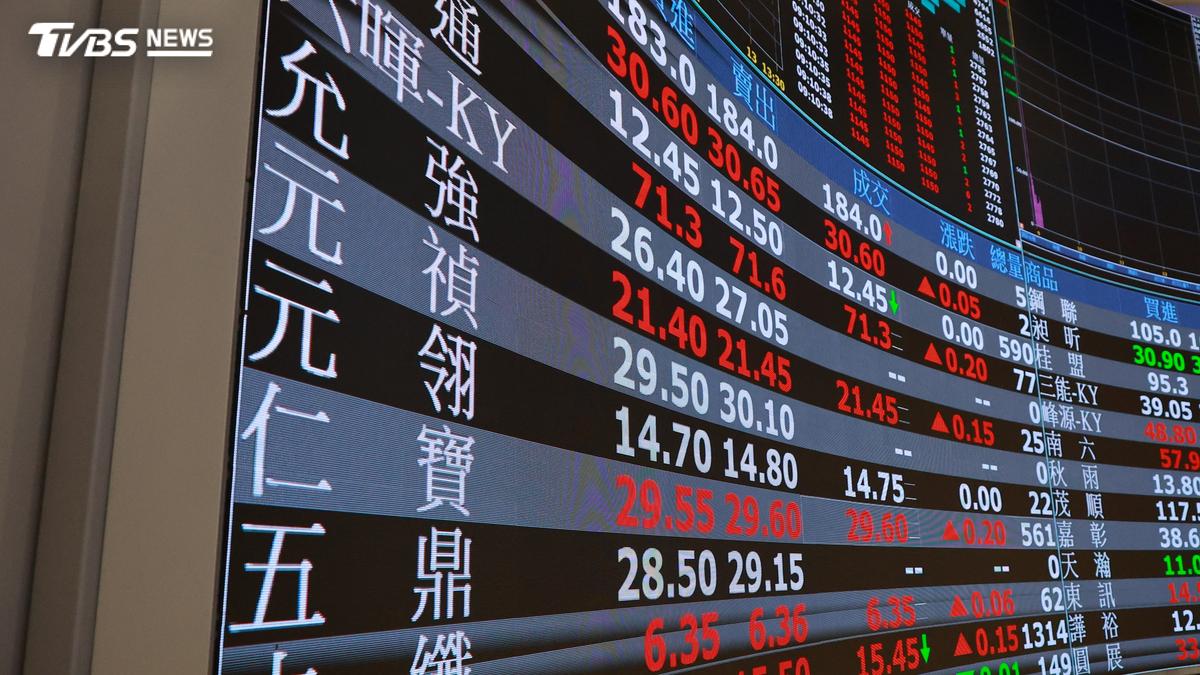
US President Donald Trump acknowledged the Democrats' victory in congressional elections, easing political uncertainty and prompting some Asia-Pacific markets to recover or pare losses. Lianhe Zaobao reported that Singapore's Straits Times Index closed down just 0.66 points, or 0.01%, at 5,268.63.
Democrats won majorities in both the Senate and the House in a sweeping victory that extended to Republican strongholds such as Kansas and Texas. Investors initially feared that Democratic control of Congress would mean tighter regulation of data centre projects and AI-related industries; Trump's comment that he would not challenge the election results helped ease some concerns.
Among major Asia-Pacific markets, Korea recovered to close up 0.62%, Taiwan pared losses to close down 0.83%, Japan fell 1.42% to lead declines, Australia lost 0.6%, Shanghai gained 2.16% and Hong Kong rose 1.67%.
David Kohl, chief economist at Julius Baer, said that although the Democratic win gives the party control of the US legislative agenda for two years, the president holds veto power and Trump has made extensive use of executive orders, which should severely limit the ability of a Democratic Congress to shape US economic policy; tax and tariff policy should therefore shift only modestly. Singapore turnover was 1.32 billion shares worth S$2.88 billion, with 392 gainers and 198 decliners.
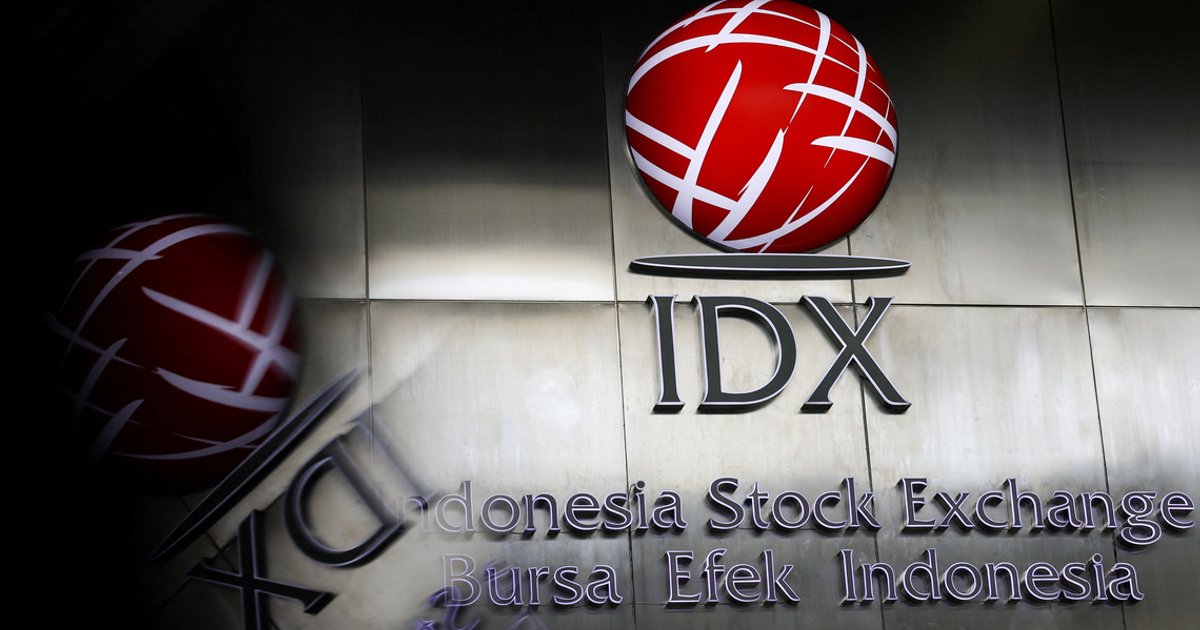
9. Indonesia's Regulator Imposes Sanctions for Alleged Stock Market Violations
Source: The Straits Times
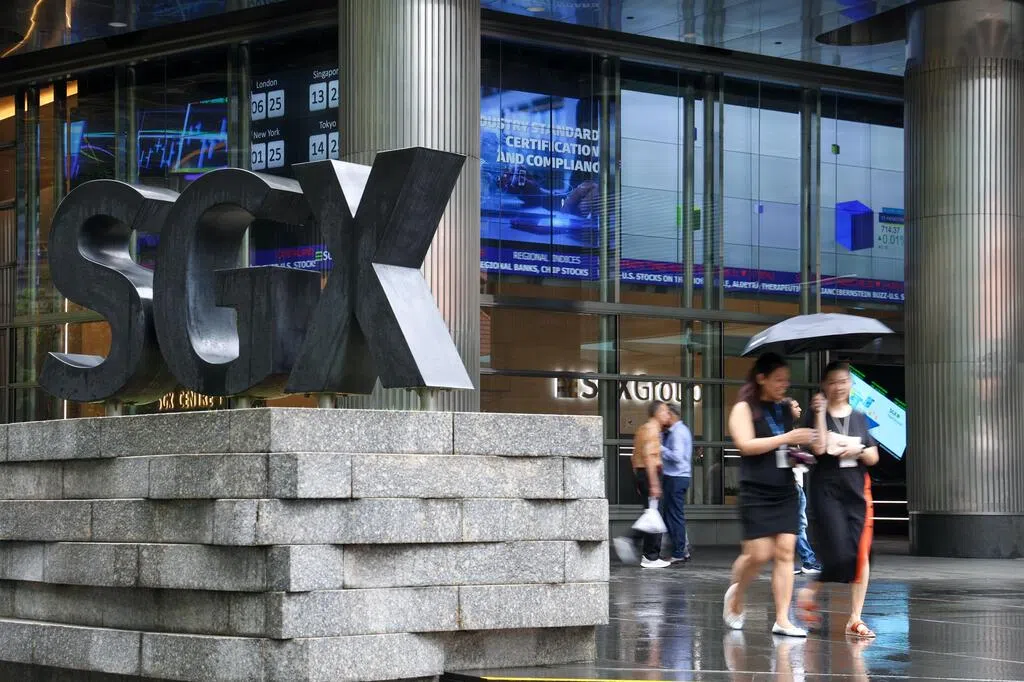
Indonesia's financial regulator announced new sanctions on Nov 4 for alleged stock market violations, part of market reforms following global index provider MSCI's recent warning of a possible downgrade.
The Straits Times reported that the regulator imposed sanctions on entities worth a combined 7.54 billion rupiah (S$532,113) over alleged violations involving tourism firm PT Panorama Sentrawisata Tbk and car dealer PT Bintang Oto Global. It found market manipulation in trading of Panorama shares that caused misleading price moves, and 18 securities accounts were closed.
The regulator also sanctioned three members of Bintang Oto's board, saying they signed off on inaccurate information about IPO proceeds in financial statements for 2017 to 2020. Neither company immediately responded to requests for comment.
On Nov 2, the regulator fined investment manager PT Aurora Asset Management 2.6 billion rupiah and closed its five mutual funds over violations that included failing to pay redemption requests submitted by investors.
10. UOB's Weak Third Quarter Weighs on Singapore Bank Stocks
Source: Lianhe Zaobao
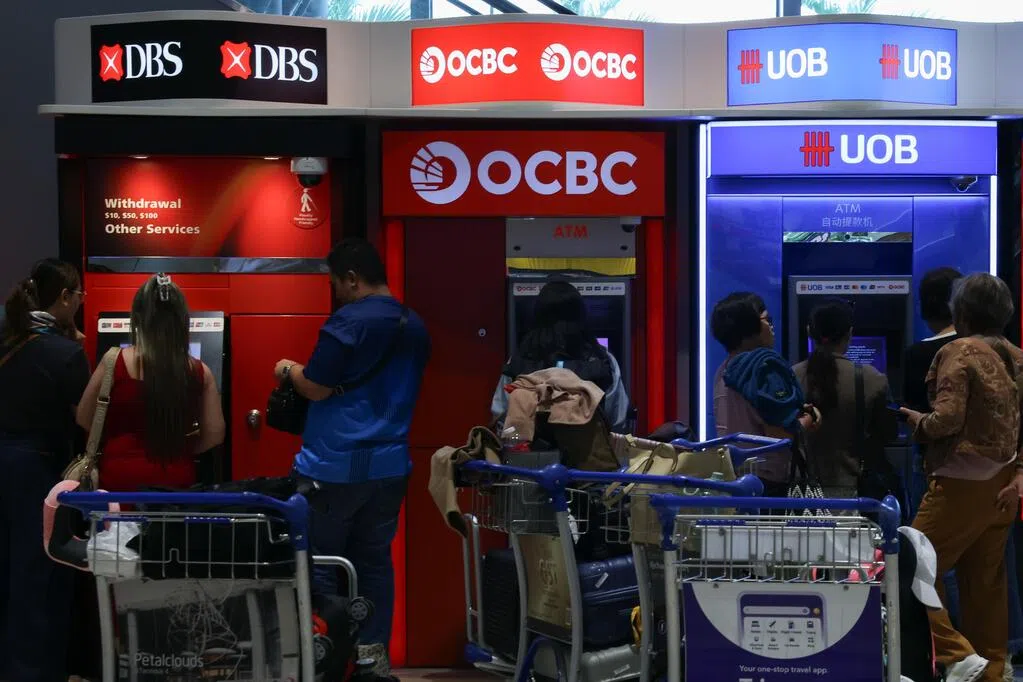
Concerns about the third-quarter results of Singapore's three major banks, combined with rising bond yields, could hit bank earnings and capital levels. Analysts say Singapore bank stocks still face near-term downside and the selloff may not be over.
UOB reported third-quarter net profit below expectations on Wednesday, Nov 4: net profit for the quarter to end-September was S$1.25 billion, down 15% quarter on quarter and about 9% below the Bloomberg consensus of S$1.38 billion. Net interest margin fell six basis points quarter on quarter to 1.68%, mainly on higher deposit costs, while trading and investment income fell 33% year on year. The Straits Times Index is now 10% below its September peak, hitting the threshold commonly used to define a technical correction.
Jayden Vantarakis, head of Asean equity research at Macquarie Capital, said the six-basis-point drop in net interest margin and lower-than-expected net interest income were the weak spots. Xiao Genyu, sales director at CMC Markets Singapore, said the continued narrowing of net interest margin is a bigger concern than the fall in trading income. DBS and OCBC report third-quarter results on Nov 5 and Nov 6 respectively.
Huang Jiaren, a market strategist at Tiger Brokers, said that despite weak overnight Wall Street tech shares, US-Iran tensions and uncertainty from the US midterms, regional markets diverged — suggesting Singapore's weakness is not purely a global risk-off story but also reflects bank-specific earnings worries. As of 3:30 pm Wednesday, UOB's decline had narrowed to 4.82% at S$38.51.
More News
- AI Weekly | Tencent Breaks Into the Open-Weight Top Tier as Enterprises Start Locking Down Agents
- Global Express | November 4, 2026 — Democrats Retake Both Chambers of Congress, Dow Futures Jump 803 Points
- Tech Express | November 4, 2026 Apple Intelligence Opens Testing in China With Qwen-Powered Siri
- Sports Express | November 4, 2026: Canada Blocks Russia from World Junior Hockey Championship
- Maple Express | November 4, 2026 — W5 investigation: alleged cult leader urged Canadians to move to Florida
Comments (0)
View More
 -13%
Zinus Mia Metal Platform Bed Frame, Queen with Headboard — No Box Spring, a Foot of Storage Underneath! $198.55 CAD (13% Off)
 -51%
soundcore Q20i Hybrid ANC Headphones — 40H Battery and Half Price! $49.99 CAD (50% Off)
 -26%
Beelink SER3 Mini PC — Ryzen 5, 16GB RAM, Dual 4K HDMI in a Palm-Sized Box! $429 CAD (26% Off)
 -23%
NHL 27 (PS5) — 32 Authentic Arenas & Team Playbooks! $69.99 CAD (22% Off)
 Sports Express
 | November 4, 2026: Canada Blocks Russia from World Junior Hockey Championship
 Finance Evening
: Stocks Rebound on Election Day; AMD Beats Estimates as Data Center Revenue Nearly Doubles
-13%Zinus Mia Metal Platform Bed Frame, Queen with Headboard — No Box Spring, a Foot of Storage Underneath! $198.55 CAD (13% Off)
Amazon
-51%soundcore Q20i Hybrid ANC Headphones — 40H Battery and Half Price! $49.99 CAD (50% Off)
Amazon
-26%Beelink SER3 Mini PC — Ryzen 5, 16GB RAM, Dual 4K HDMI in a Palm-Sized Box! $429 CAD (26% Off)
Amazon
-23%NHL 27 (PS5) — 32 Authentic Arenas & Team Playbooks! $69.99 CAD (22% Off)
Best Buy
Sports ExpressSports Express | November 4, 2026: Canada Blocks Russia from World Junior Hockey Championship
Finance Evening