
Tech Express | October 30, 2026 — Apple Acknowledges iPhone Duo Screen Defect
Apple acknowledges an internal display defect on some iPhone Duo units and offers free replacements. In earnings, AI spending dominates: Amazon's capex burns cash and its stock drops 7% after hours, Intel falls 23% on weak guidance, and Samsung warns the memory shortage lasts through 2028. The FCC bars Chinese labs from testing US-bound electronics from 2028, Xiaomi's 18 will be the year's only 2nm base flagship, and Apple's first touchscreen MacBook Pro tops out at $14,549.
Source: Mydrivers, Guancha, Cailian Press, New York Post, WIRED
1. Apple Acknowledges iPhone Duo Screen Defect as Durability Doubts Spread
Apple has acknowledged that some iPhone Duo units suffer from an internal display problem and is directing users to file a claim through the Apple Support app. Once an authorized service center confirms the defect, affected owners can get a free replacement regardless of where they bought the phone. Multiple users have reported cracks near the hinge on the folding section of the screen, or bright lines appearing on the display.
Apple says only a small number of units are affected but has not disclosed the cause or the scale of the problem. Repair specialist iFixit, based on a teardown, suggested that a central support component inside the hinge fails to retract fully and may be pressing on the display. In Korean online communities, some users are considering refunds over screen damage and app compatibility concerns, while others plan to return their devices even though the screen still looks fine.
The controversy is showing up in resale prices: the 256GB iPhone Duo launched at 3.29 million won, briefly climbed to 3.82 million won on the secondary market, and has since fallen to 3.4 million won, about 400,000 won below its peak. Counterpoint Research estimates initial global supply at under 6 million units, and new orders in Korea are not expected to open until the end of January. The iPhone 18 Pro series had earlier drawn complaints over unexpected restarts when Face ID failed; Apple said the bug was fixed in the iOS 27.0.1 update on September 29, though some users say restarts continued afterward.
Source: Mydrivers | Source
2. AI Spending Burns Through Free Cash Flow, Amazon Falls 7% After Hours
Amazon reported third-quarter results on October 29: revenue of $201.944 billion, up 12% year over year; operating income of $28.076 billion, up 61%; net income of $20.685 billion, down 2%; and diluted earnings per share of $1.89, below $1.95 a year earlier. Both revenue and EPS missed expectations, and the stock fell as much as 7% in after-hours trading.
What really rattled investors was cash flow. Capital spending on property and equipment reached $77.259 billion in the quarter, versus $35.095 billion a year earlier, for net spending of $75.878 billion after asset sales and incentives — roughly $20 billion above expectations. Amazon burned $42.4 billion in cash over the trailing twelve months, compared with $7.6 billion in the prior quarter, when a year earlier the company generated $14.8 billion in cash.
AWS remained the bright spot: revenue of $45.98 billion, up 39.3%, with a 38.7% operating margin, both ahead of forecasts, contributing about 63% of operating income on 23% of revenue. CEO Andy Jassy said the AWS backlog has reached $578 billion, that the company installs an AI accelerator every 14 seconds on average, and that he expects AWS revenue growth to exceed 40% next year and in 2028. Weak retail and advertising results, however, offset the cloud strength.
Source: Guancha | Source
3. Samsung Warns Memory Shortage Will Last Through 2028 as HBM4 Sells Out
Samsung Electronics warned on its latest earnings call that the global memory chip shortage will not ease soon and will worsen in 2027, with tight supply expected to persist through 2028 — a longer cycle than the industry had generally anticipated.
Jaejune Kim, executive vice president of Samsung's memory business, said that based on orders and demand already booked across the industry, supply pressure in 2027 will be more severe than in 2026 and the gap between supply and demand will widen further. New fabs typically take years from construction to full ramp-up, he explained, meaning no large-scale new supply capable of changing the balance is expected before 2028.
Samsung also disclosed that all of its HBM4 capacity originally slated to come online in 2027 has already been booked by major customers, with no spare volume available. The next-generation HBM4E is scheduled to enter mass production in the first half of 2027 and ramp shipments in the second half. SK Hynix has said the shortage could last until 2030, while Nvidia CEO Jensen Huang has said there will be no broad oversupply until at least 2029.
Source: Mydrivers | Source

4. Intel Falls 23% After Hours as Xeon Demand Outstrips Supply
Intel shares fell as much as 23% in after-hours trading on October 29 after the chipmaker issued a disappointing fourth-quarter forecast. Third-quarter revenue was $16.513 billion, up 21% year over year, while net income attributable to shareholders was $3.32 billion, down 18%. Excluding certain items, adjusted net income was about $2.756 billion, up 169%.
Results diverged sharply by segment. Data center and AI revenue was about $7.3 billion, up 78% and the company's strongest revenue growth in 15 years, while client computing and physical AI revenue was about $8.1 billion, down 5% year over year and 9% sequentially, with operating income of about $2.3 billion, down roughly 15%. Intel guided fourth-quarter revenue to $15 billion to $16 billion, well below the $17.07 billion analysts expected, and adjusted EPS of $0.25 versus an expected $0.43.
Supply also took a hit. An explosion at Intel's Kiryat Gat fab in southern Israel on October 14 killed two people and seriously injured one, halting production for about two weeks. CFO David Zinsner said the incident is expected to cut fourth-quarter revenue by about $300 million and gross margin by about 2 percentage points, with a similar impact possible in the first quarter of 2027 — roughly $600 million combined. The company plans to resume production on October 30.
Source: Guancha | Source
5. FCC Bars Chinese Labs From Testing Electronics for the US Market From 2028
The US Federal Communications Commission voted on October 29 to bar laboratories and certification bodies in countries without a mutual recognition agreement (MRA) with the United States from testing electronics destined for the US market, starting December 1, 2028. Because China and the US have no such arrangement, every testing lab in China is excluded.
FCC Chairman Brendan Carr cited a key figure: 82% of electronic devices authorized for sale in the US in 2025 were tested in Chinese labs, while US labs accounted for less than 4%. He described such labs as "critical gateways" into US communications infrastructure, able to access sensitive information months before a product launch and potentially allowing unsafe devices onto the market.
The industrial impact is concrete. China has roughly 170 to 200 FCC-accredited labs, and basic FCC certification testing costs about $400 to $1,300 there versus $3,000 to $4,000 in the US. Manufacturers must either move testing to MRA regions such as Japan, Vietnam or Taiwan at several times the cost, or risk losing access to the US market. The Consumer Technology Association and the Telecommunications Industry Association have warned that forced relocation could cause testing capacity shortages and certification backlogs, and have asked for temporary waivers and a simplified approval process.
Source: Mydrivers | Source

6. Xiaomi 18 Standard Edition to Use Snapdragon 8E6, the Year's Only 2nm Base Flagship
Tipster "Smart Chip Insider" suggests the standard Xiaomi 18 will run Qualcomm's Snapdragon 8E6 — the sixth-generation Snapdragon 8 Elite — making it the only standard-tier flagship this year built on a 2nm chip. Among Chinese flagships already launched, base models either use last-generation platforms or 3nm chips; only Xiaomi's standard model moves directly to the newest process node.
In September, Qualcomm launched two flagship SoCs, the Snapdragon 8E6 and 8EE6, both built on 2nm with a custom Oryon CPU in a "2+6" dual-cluster layout: two 5.0GHz Prime cores and six 4.0GHz performance cores. The main difference is the NPU. The 8EE6 offers a 35% NPU performance gain for Pro Max and Ultra devices, while the 8E6 delivers a 14% gain to balance flagship performance against cost.
Beyond the chip, the Xiaomi 18's other major upgrade is a dual 200-megapixel setup, with both the main camera and the periscope telephoto using 200MP sensors. The standard model has already received network access approval under the model number M261DB and is expected to launch in December. With 2nm chips and memory costs rising sharply, its starting price is also expected to increase.
Source: Mydrivers | Source

7. Apple's First Touchscreen MacBook Pro Tops Out at $14,549
Apple has unveiled its first touchscreen MacBook Pro, and a fully loaded 16-inch model costs $14,549 — more than four times its $3,399 starting price. The redesigned laptop, introduced Wednesday, features a new OLED display, touch controls and a thinner, lighter body.
Most of the cost comes from options. The top configuration pairs an M5 Max chip with an 18-core CPU and 40-core GPU, 128GB of unified memory, a 16TB SSD and optional nano-texture glass to reduce glare. Going from 2TB to 16TB of storage adds $7,000, maxing out memory at 128GB adds $2,000 over the 48GB configuration, and nano-texture glass costs another $150. The 14-inch model reaches $14,249 when fully equipped.
The 14-inch touchscreen model starts at $2,899 and the 16-inch at $3,399 — both $400 more than comparable non-touch models with M5 Pro chips. The new machines let users move and resize windows with their fingers, drag files between apps, scroll web pages and pinch to zoom on photos. The tandem OLED display, branded PROLED XDR, is claimed to deliver improved brightness, contrast and color accuracy, and Apple says battery life can reach up to 24 hours. After the pricing was announced, Apple fans on Reddit called it too expensive.
Source: New York Post | Source

8. Anthropic Becomes SpaceX's Biggest Customer, Supplying Over a Third of Revenue
Anthropic has become SpaceX's largest customer, contributing more than a third of the company's revenue in the third quarter, according to people familiar with the matter cited by media. In a regulatory filing last week, SpaceX disclosed that about 34.5% of last quarter's revenue came from a customer paying its "Super Intelligence" AI unit, identified only as "Customer B."
The mystery customer is Anthropic, the people said, and it has overtaken the US government as SpaceX's largest source of revenue. The two companies' main tie-up is Anthropic's lease of computing capacity at SpaceX's data center in Memphis, Tennessee. The contract runs through 2029 with a potential spending cap of $120.5 billion, and from December Anthropic will pay about $3.1 billion a month. Anthropic can, however, cancel with 90 days' notice after specific dates in January and March 2027.
The filing also shows SpaceX's second-largest customer contributed 16.6% of third-quarter revenue, versus about 20% in 2025, and Elon Musk expects NASA to account for less than 5% this year. SpaceX revenue grew 161% in the quarter and the company posted its first profit; the Super Intelligence business brought in $7.560 billion, up 830% from $813 million a year earlier and about 52% of total revenue.
Source: Cailian Press | Source
9. Omdia: AI PCs to Hit 60% of Shipments by 2027, but Only 9% of Buyers Want AI
A forecast from research firm Omdia exposes the odd state of the AI PC market: penetration is climbing fast while consumer enthusiasm stays flat. AI PCs are expected to account for 60% of shipments by 2027, yet only 9% of buyers are actually purchasing for AI features — most upgrade because their old machine is slow, broken or simply due for replacement.
The reason penetration rises anyway is the replacement cycle itself: whether or not users choose AI, every natural refresh pushes the installed base of local AI capability forward. A second driver is pressure from cloud AI. As major cloud providers move to token-based billing, costs often only become clear after a task finishes, and AI agents trigger long chains of repeated calls that make spending harder to predict and manage.
Technical progress is also making local AI viable: the gap between open model weights and frontier closed models is narrowing, quantization lets models fit into PC memory, and NPUs are becoming standard. The real hardware bottleneck is memory pricing. Since 2025, memory's share of the bill of materials has jumped from 15% to nearly 40%, forcing vendors into a difficult balance between configuration and price.
Source: Mydrivers | Source

10. Astronomers Find a Possible New Dwarf Planet Up to 1,500 Kilometers Wide
Scientists are close to confirming another member of the solar system. Astronomers at the Vera C. Rubin Observatory in Chile have found a candidate object, provisionally designated 2026 ED138, measuring somewhere between 600 and 1,500 kilometers across and located about 46 astronomical units from the sun — one astronomical unit being Earth's approximate distance from the sun. Pluto, for comparison, orbits at an average of 40 AU.
Based on its location, ED138 belongs to the population of trans-Neptunian objects. Its discoverers say it could be one of the brightest and largest known objects of its kind, and its orbit is tilted relative to the plane in which the planets orbit, much like Pluto's. The difference between a planet and a dwarf planet is largely environmental: both orbit the sun and have enough gravity to be nearly spherical, but a planet has cleared its orbital neighborhood of comparable bodies while a dwarf planet coexists with them — the main reason Pluto was reclassified in 2006.
Matthew Holman, a researcher at the Harvard-Smithsonian Center for Astrophysics and a member of the observatory's operations team, identified the object on October 13 while analyzing Rubin data collected in 2026. The team then found additional observations in archival records dating back to 2016, reconstructing more than a decade of its trajectory. It had been hidden against the disk of the Milky Way, whose dense star fields mask faint objects. Astronomers have yet to confirm it is a dwarf planet; they need a more precise size measurement to determine whether its gravity makes it nearly spherical. If it qualifies, it would join the five dwarf planets recognized by the International Astronomical Union: Ceres, Pluto, Haumea, Makemake and Eris.
Source: WIRED | Source

More News
- Global Express | October 30, 2026: Israel Election Leaves Netanyahu Bloc Short of Majority
- Global Tech Selloff Sweeps Asia; Shanghai Index Slips Below 3,600 as Gold Falls Under $4,000
- Sports Express | October 30, 2026 — Court lifts Russia hockey ban as Brewers celebrate first title
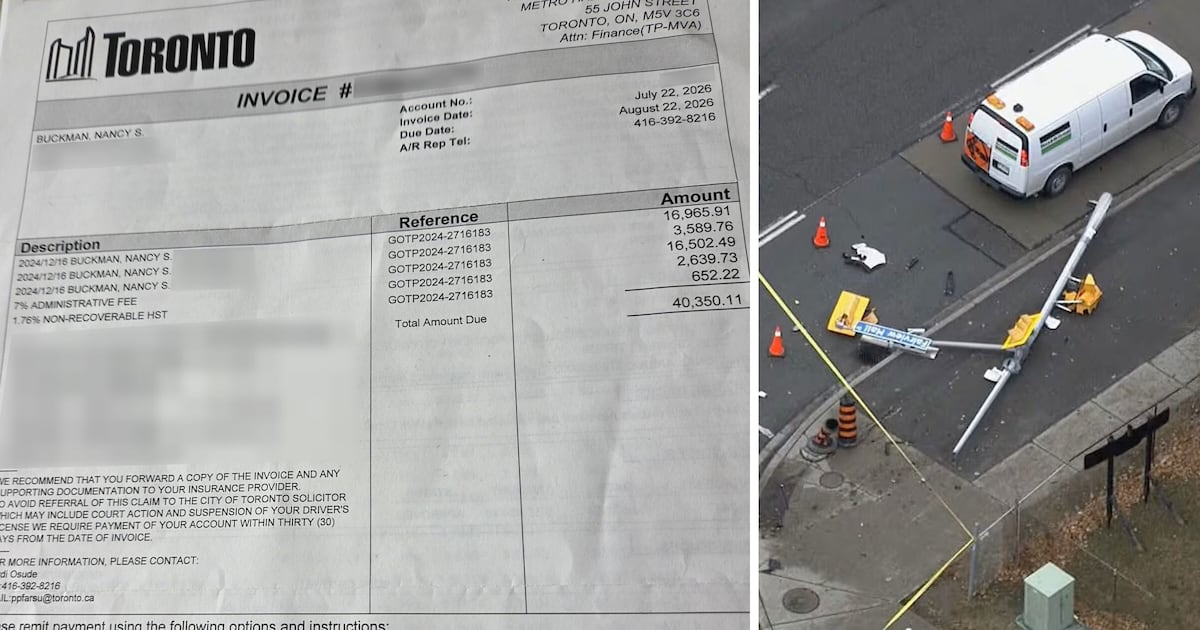
- Maple Express | October 30, 2026 — Toronto Woman Injured by Getaway Driver Gets a $40,000 City Bill Two Years Later
- Finance Evening: Nasdaq Falls 1.38% as Alphabet Sinks 12%; September PCE Hits 3.6%, Q3 GDP Grows 3.4%
Comments (0)
View More
 -21%
shukiku Kids' Backpack — Preschool to SK Size, Water-Repellent with YKK Zippers! $26.39 CAD (20% Off)
 -25%
Whirlpool 24" 3-Rack Dishwasher — 47 dB Quiet With Auto Open Air Dry! $999.99 CAD (25% Off)
 0
Marshall High Back Litter Pan — High Walls That Actually Catch It, Doubles as a Hay Bin! $33.12 CAD
 -49%
Hairitage Extra-Long 1" Ceramic Curling Wand — 6.5" Barrel for Long Hair! $41.47 CAD (48% Off)
 Maple Express
 | October 30, 2026 — Toronto Woman Injured by Getaway Driver Gets a $40,000 City Bill Two Years Later
 Sports Express
 | October 30, 2026 — Court lifts Russia hockey ban as Brewers celebrate first title
-21%shukiku Kids' Backpack — Preschool to SK Size, Water-Repellent with YKK Zippers! $26.39 CAD (20% Off)
Amazon
-25%Whirlpool 24" 3-Rack Dishwasher — 47 dB Quiet With Auto Open Air Dry! $999.99 CAD (25% Off)
Best Buy
0Marshall High Back Litter Pan — High Walls That Actually Catch It, Doubles as a Hay Bin! $33.12 CAD
Amazon
-49%Hairitage Extra-Long 1" Ceramic Curling Wand — 6.5" Barrel for Long Hair! $41.47 CAD (48% Off)
Amazon
Maple ExpressMaple Express | October 30, 2026 — Toronto Woman Injured by Getaway Driver Gets a $40,000 City Bill Two Years Later
Sports Express