
Tech Express | July 13, 2026 Meta's "Iris" AI Chip Enters Production in September
July 13, 2026 Tech Express: Meta plans to mass-produce its custom "Iris" AI chip starting September; TSMC's H1 revenue surges 35.6%; China's Long March 10B achieves first orbital booster recovery; Apple sues OpenAI over trade secret theft; humanoid robot IPOs heat up.
Tech Express | July 13, 2026 Meta's "Iris" AI Chip Enters Production in September
📰 Meta's Custom "Iris" AI Chip Enters Mass Production in September, Shares Jump 6%
Meta Platforms plans to begin mass production of its custom AI chip "Iris" in September 2026, marking the company's most aggressive hardware initiative to date. Part of Meta's latest MTIA series, the chip aims to reduce the company's massive reliance on Nvidia GPUs by providing dedicated compute power for Meta's social platforms and AI model inference.
According to an internal memo, Meta intends to launch a new AI chip every six months and deploy 7GW of computing infrastructure throughout 2026, a scale that ranks among the largest globally. Following the news, Meta's stock surged nearly 6% on July 11, reflecting strong market confidence in the company's hardware self-sufficiency strategy.
Industry analysts note that if Iris successfully meets performance targets, Meta could not only slash data center hardware costs but also reshape the AI chip market by introducing "in-house substitution" pressure on Nvidia from its largest customers. However, some caution that moving from initial production to large-scale deployment still faces yield and capacity challenges.
— Reuters via The Straits Times
📰 TSMC First-Half Revenue Surges 35.6%, June Jumps 68% Year-on-Year
TSMC reported June 2026 revenue of NT$442.68 billion (approximately US$14.6 billion), up 68% year-on-year, setting yet another monthly record. Cumulative first-half revenue reached NT$2.4 trillion (approximately US$75 billion), representing a 35.6% increase over the same period in 2025, underscoring the powerful demand for advanced process capacity driven by AI chips.
TSMC's stellar performance is primarily fueled by sustained order growth for Nvidia GPUs built on advanced nodes, alongside aggressive AI computing investments from AMD, Intel, and other customers. Utilization rates for 3nm and 5nm processes remain near full capacity, serving as the core engine of revenue growth.
Meanwhile, TSMC received regulatory approval to inject an additional US$20 billion into its Arizona subsidiary for constructing a 12-inch wafer fab and advanced packaging facility. This expansion further solidifies TSMC's global semiconductor manufacturing leadership while addressing growing concerns over chip supply chain security.
— CNBC
📰 SK Hynix Shares Plunge Over 15% in Korea After Stellar Nasdaq Debut
SK Hynix debuted on the Nasdaq via ADR on July 10, delivering a strong first-day performance that attracted significant international investor interest. However, on July 13, the company's Korean-listed shares plunged over 15%, marking the largest single-day drop in the stock's history, catching the market by surprise.
Analysts widely view the selloff as classic profit-taking rather than a deterioration in fundamentals. As the undisputed leader in HBM (High Bandwidth Memory), SK Hynix is a core supplier to Nvidia's AI server infrastructure, and structural AI demand continues to far exceed supply, leaving the long-term growth thesis intact.
Market observers note that the Nasdaq listing triggered an expectation-fulfillment effect, compounded by heavy profit-taking among Korean retail investors, leading to extreme short-term volatility. Most institutions believe the pullback is likely temporary and that SK Hynix's critical position in the AI supply chain remains secure.
— CNBC
📰 China's Long March 10B Rocket Achieves First Orbital Booster Recovery
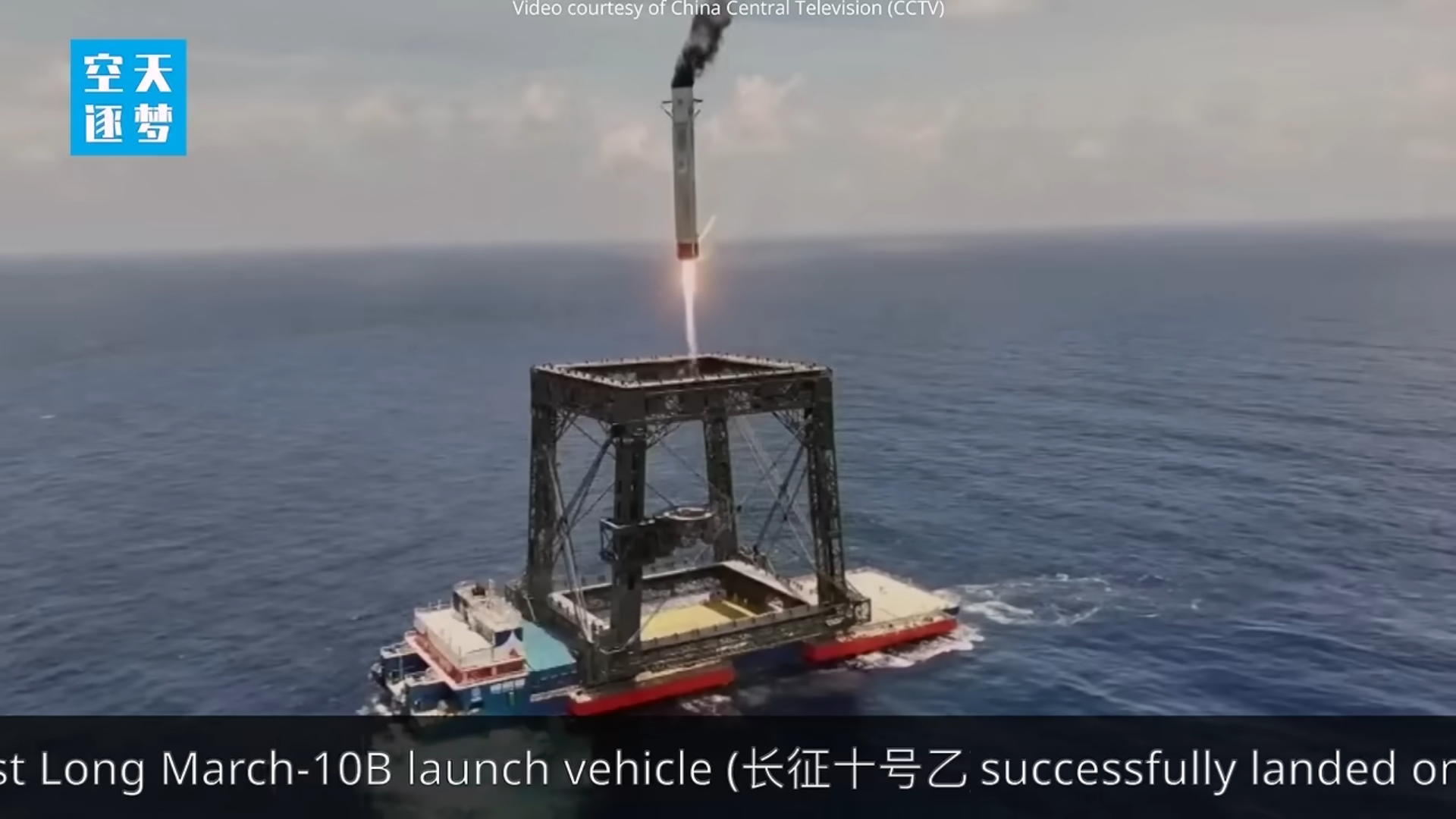
On July 10, the Long March 10B carrier rocket successfully launched from the Hainan Commercial Space Launch Site and achieved controlled recovery of its first-stage booster using a net-capture system on an offshore platform. This marks China's first successful first-stage booster recovery during an orbital launch mission, representing a major milestone in reusable rocket technology.
The Long March 10B is a derivative of China's next-generation crewed lunar rocket, the Long March 10, incorporating multiple reusability technologies including grid-fin control systems and precision landing on maritime platforms. The successful recovery validates China's technical pathway for reducing commercial space launch costs.
Industry experts consider reusable rocket technology a core competitive advantage in commercial spaceflight. China's achievement of orbital-class booster recovery not only significantly lowers the cost of access to space but also lays the technical foundation for future large-scale satellite constellation deployment and deep-space exploration missions.
📰 DeepSeek Tops OpenRouter Usage Rankings as US AI Giants' Share Halves
New data shows that Chinese open-source model DeepSeek has surged to the top of OpenRouter's usage rankings, becoming one of the most popular AI models among global developers. The combined share of Google, Anthropic, and OpenAI on OpenRouter plummeted from 55% in January 2026 to just 33% by June — nearly cut in half.
This trend reflects the growing competitiveness of open-source models in both cost and performance. DeepSeek has rapidly won broad developer community recognition through its exceptional cost-efficiency and reasoning capabilities, highlighting China's increasing influence in the global AI developer ecosystem.
Analysts point out that DeepSeek's rise is reshaping the competitive landscape of the AI industry. While proprietary commercial models still hold advantages in certain scenarios, the rapid iteration and community-driven optimization of the open-source ecosystem are narrowing the gap, with far-reaching implications for pricing models and business strategies across the sector.
📰 Apple Sues OpenAI for Trade Secret Theft, Allegedly Involving 400+ Former Employees
Apple filed a lawsuit on July 10 in the US District Court for the Northern District of California, accusing OpenAI of systematically poaching over 400 former Apple employees and stealing trade secrets, in a case that could tear apart the companies' partnership. The complaint names former Apple designer Tang Tan and engineer Chang Liu as central figures, alleging OpenAI set up a shell company called io Products as cover.
Apple's complaint details how OpenAI used recruiting firms to methodically target senior engineers and designers from Apple's hardware teams, acquiring core trade secrets including chip designs, sensor technologies, and device integration plans. Apple alleges OpenAI sought to use the stolen technology to develop its own hardware devices for ChatGPT.
The timing of the lawsuit is particularly sensitive, as Apple had previously announced plans to integrate ChatGPT into its devices. If Apple prevails, the case could severely disrupt OpenAI's hardware ambitions and reshape cooperation models among tech giants in the AI space. OpenAI has not yet issued a formal response to the lawsuit.

📰 US Chip Factory Construction Faces Labor Shortage, 157,000 Worker Gap by 2030
A new report warns that US semiconductor fabrication plant construction plans could face significant delays due to a severe shortage of skilled workers. Spurred by CHIPS Act incentives, the US is undergoing an unprecedented chip manufacturing buildout, but is projected to face a shortfall of 157,000 skilled workers by 2030 — the biggest bottleneck in the semiconductor revival strategy.
The shortage spans multiple critical roles, including cleanroom technicians, equipment maintenance engineers, and semiconductor process specialists. These positions require years of specialized training and hands-on experience, making them difficult to fill quickly through conventional education pipelines. The report notes that insufficient wage competitiveness and declining youth interest in manufacturing careers are compounding the problem.
Industry groups are calling on the US government to increase investment in semiconductor workforce education and ease high-skilled immigration policies to alleviate the labor gap. Analysts warn that without timely resolution, hundreds of billions of dollars in chip factory investments may struggle to come online on schedule, potentially impacting the stability of the global chip supply chain.
📰 Accenture Confirms Cyberattack, 35GB of Source Code and Credentials Exfiltrated
IT services giant Accenture has confirmed a cyberattack in which a hacker known as "888" claims to have stolen approximately 35GB of data, including source code, RSA/SSH keys, Azure access tokens, and configuration files — highly sensitive information by any measure. The hacker posted screenshots of Azure DevOps activity on PwnForums as evidence.
Accenture stated it has activated incident response procedures and is working with cybersecurity experts and law enforcement to investigate the scope of the breach. Given that Accenture provides IT consulting and outsourcing services to numerous Fortune 500 companies, the data leak has raised widespread concerns about supply chain information security among enterprise clients.
This marks yet another major security incident for Accenture in recent years. Security experts note that consulting and IT services firms, with their broad client network access privileges, are becoming high-value targets for hackers, and the entire industry needs to reassess third-party risk management strategies.

📰 Humanoid Robot IPO Wave: Unitree Targets STAR Market, Agility Goes SPAC
The humanoid robot industry is experiencing an IPO wave. China's Unitree Technology has received approval for a STAR Market IPO at an approximately US$6.2 billion valuation, aiming to raise around US$618 million and planning to ship up to 20,000 humanoid robots in 2026. Meanwhile, US-based Agility Robotics is listing on the NYSE via a SPAC merger at a US$2.5 billion valuation.
However, Unitree's prospectus disclosed that its profits had halved year-on-year, raising questions about the commercialization prospects of humanoid robots. Tesla's Optimus remains for internal use only and is not available for external sale, and the industry as a whole has yet to demonstrate a viable business case for humanoid robots in factory and home settings.
Analysts caution investors that the investment thesis for humanoid robots in 2026 needs to shift from grand total addressable market projections to actual quarterly revenue and profit performance. While the long-term outlook remains promising, the industry still faces multiple near-term challenges in technology maturity, cost control, and application scenario validation.
More News
- Immigration | October 26, 2026 Express Entry's new scoring takes effect November 3: high-wage job offers worth up to 100 points
- Global Express | October 26, 2026 - Serbia's Vucic Concedes Defeat, Ending 14 Years in Power
- Finance Morning | October 26, 2026 — Shanghai Edges Up 0.19% as Banks and Oil Lead, Asia Mostly Lower
- Tech Express | October 26, 2026 - Huawei's Kirin Chips Return to Public View as Mate 90 Lights Up Landmarks
- Sports Express | October 26, 2026: Seahawks Hand Chiefs First Loss of Season
Comments (0)
View More
 -51%
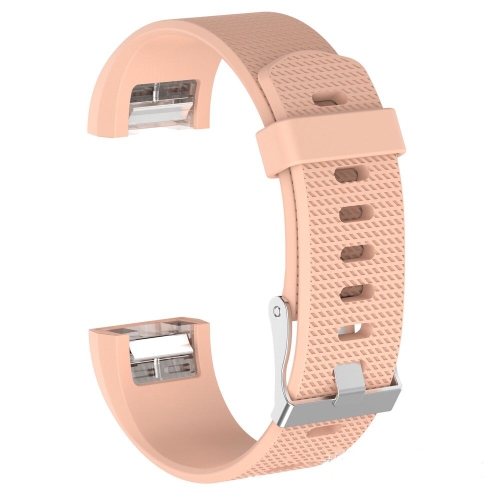
-51%TASNIM Fitbit Charge 2 Silicone Band — Buckle Clicks In Securely, Large Pink! $4.99 CAD (50% Off)
 -22%
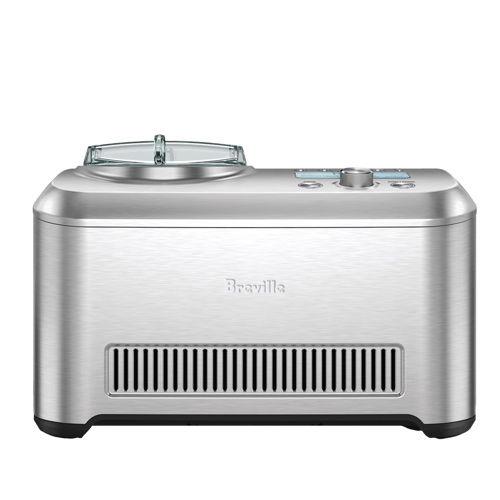
-22%Breville Smart Scoop Ice Cream Maker — 12 Hardness Settings, Self-Refrigerating! $469.99 CAD (22% Off)
 -28%
-28%Dell 27 Plus QHD Monitor S2725DSM — 27-inch 1440p at 144Hz! $219.99 CAD (28% Off)
 -28%
-28%LEGO DC Batman: The Batman Batmobile 76332 — 330 Pieces, With a Golden Coin Hidden Under the Hood! $28.98 CAD (28% Off)
 Immigration
Immigration | October 26, 2026 Express Entry's new scoring takes effect November 3: high-wage job offers worth up to 100 points
 Maple Express
Maple Express | Oct. 25, 2026: Chow and Bradford make final pitch on eve of Toronto mayoral vote
-51%TASNIM Fitbit Charge 2 Silicone Band — Buckle Clicks In Securely, Large Pink! $4.99 CAD (50% Off)
Best Buy
-22%Breville Smart Scoop Ice Cream Maker — 12 Hardness Settings, Self-Refrigerating! $469.99 CAD (22% Off)
Best Buy
-28%Dell 27 Plus QHD Monitor S2725DSM — 27-inch 1440p at 144Hz! $219.99 CAD (28% Off)
Amazon
-28%LEGO DC Batman: The Batman Batmobile 76332 — 330 Pieces, With a Golden Coin Hidden Under the Hood! $28.98 CAD (28% Off)
Amazon
ImmigrationImmigration | October 26, 2026 Express Entry's new scoring takes effect November 3: high-wage job offers worth up to 100 points
Maple Express