
Finance Weekly | As the AI Trade Retreats, Tech Stocks Are Cheaper Than the Market for the First Time Since 2017
A post-midterm AI regulation scare wiped about $4.1 trillion from US stocks in a week, pushing S&P 500 tech to 17 times forward earnings — below the broad index for the first time since 2017 — while 165,000 October payrolls lifted December hike odds to 77%. China extended gold buying to 24 months; Canada lost 4,700 jobs as unemployment hit 6.7%; eurozone inflation returned to 4%; and a December BOJ hike looks close to settled.
This week's keyword was retreat — and repricing. After Democrats swept both chambers of Congress in the US midterms, investors began pricing tighter AI regulation and slower data-centre approvals. The Nasdaq fell more than 5% on Thursday, the three main US indexes shed roughly $4.1 trillion in market value over the week, and the S&P 500 tech sector's forward P/E dropped to about 17 times — below the broad index for the first time since 2017. Money moved into bonds and defensives, while a 165,000 gain in October nonfarm payrolls pushed December rate-hike odds to 77%. In the same week, China's central bank extended its gold-buying streak to 24 months and raised the FX deposit reserve ratio for the first time in nearly five years; Canada unexpectedly lost 4,700 jobs as unemployment rose to 6.7%; eurozone inflation returned to 4% as the race to succeed Lagarde at the ECB entered a decisive window; and expectations for a December hike by the Bank of Japan hardened. Growth is still there — but the price of money is being redefined.
1. Tech is now cheaper than the market for the first time since 2017
Source: Yahoo Finance
Wall Street partied the day after the midterms and woke up Thursday to tech's worst day since the 2020 COVID crash. By Friday's close the S&P 500 and Nasdaq had each fallen about 3% for a fourth straight losing week, with only chip stocks bouncing on Friday. The equal-weight S&P 500, a stand-in for the typical stock, closed at a record on Wednesday and ended the week within about 1% of where it started — strip out the AI trade, and most stocks barely noticed.
The selling produced something few investors would have bet on a year ago: tech became cheaper than the broader market. Truist Wealth chief investment officer Keith Lerner wrote in a Thursday note that the S&P 500 tech sector traded at about 17 times expected earnings this week, below the index's 18 times for the first time since 2017. At the October 2025 peak, the sector fetched 32 times. "At a 32.0x P/E last year, the market had baked in a lot of good news," Lerner wrote. "Arguably, at almost half that level, the market is already pricing in a lot of bad news."
Chips took the brunt. The PHLX Semiconductor Index fell for a fifth straight week and lost nearly 30% over that stretch; Micron and Sandisk each lost more than 20% this week alone. Lerner sees "something of a buyers' strike in tech" and argues chips are the first to feel any slowdown in data-centre building — but a slower build-out could also ease the cash drain on the biggest AI spenders. "If this forces a little bit of a slowdown and maybe a little bit of positive in cash flow, I think that could actually elongate the cycle." Truist's advice is to stay overweight US large caps and add small caps as a partial hedge; it also notes stocks have risen in the year after every midterm since 1946.
Not everyone reads cheap as opportunity. Michael Martin, founder of TraderMindset.com, told Yahoo Finance it is "a time to harvest cash right now. I don't think these are buying opportunities. Everything's in a downtrend." He is unmoved by cheaper multiples: "Lower prices mean lower market cap. It doesn't mean better value." He would only "nibble" with call options if the S&P 500 holds its 200-day moving average. History leaves room too: since 1990 the index has had 33 streaks of four or more losing weeks, and three months later it was higher about 80% of the time with a median gain of 6% — except during the dot-com bust and the 2008 crisis, when it kept falling for another year.
2. As gold fell, China's central bank bought more: 830,000 ounces in October
Source: Phoenix Net (ifeng)
China's central bank bought more, not less, during a window when gold prices were falling. Central bank data released on November 7 showed gold reserves at 78.3 million ounces at end-October, up 830,000 ounces month on month — a 24th consecutive monthly increase and the largest addition since purchases restarted in November 2024. Separate data from the foreign exchange regulator showed reserves at $3.405178 trillion, up $4.927 billion from end-September.
Wang Qing, chief macro analyst at Oriental Jincheng, traced the buying to changed global political and economic conditions since the current US administration took office. "Even though gold prices remain elevated, the necessity of increasing gold holdings has risen from the perspective of optimising the structure of international reserves," he said. He noted the central bank has raised its monthly purchase volume for eight straight months, and pointed to September's Fed rate hike, two consecutive months of sharp declines in gold prices in September and October, and rising concerns about fiscal sustainability in the US, Europe and Japan as likely direct triggers.
Spot gold and gold futures both fell in October, down 6.79% and 7.21% respectively — a second consecutive monthly decline. At end-October, gold accounted for about 7.9% of China's official international reserves, down 0.5 percentage points from a month earlier because of the price decline. For comparison, European Central Bank data published on June 2 showed gold at 27% of global central bank reserve assets at end-2025, up from 20% a year earlier — which is why Wang argues China's share is clearly low and there is substantial room to add.
Central bank buying has become a global norm. The World Gold Council's third-quarter Gold Demand Trends report showed central banks and other official institutions adding 321 tonnes, up 42% year on year and the strongest quarter since Q4 2024; year to date, central banks have bought 675 tonnes, 6% more than a year earlier. Pang Ming, a member of the China Chief Economist Forum, said continued purchases help diversify reserve assets, improve portfolio stability and resilience, and support the yuan's basic stability at a reasonable equilibrium.

3. $4.1 trillion erased in a week as AI fears and December hike bets rise together
Source: Yicai
Wall Street endured another turbulent week, with the combined market value of the three main US indexes falling about $4.1 trillion. The panic followed the Democrats' capture of both chambers in the midterms: investors fear tighter AI regulation and slower approvals for data-centre construction, triggering concentrated selling in tech, while Treasury yields jumped after the latest payrolls report, reinforcing bets on a December Fed hike.
October nonfarm payrolls rose 165,000, far above the consensus 65,000; September was revised up to 60,000 and August to 186,000, a net upward revision of 84,000. Unemployment fell to 4.1% from 4.2%, the participation rate rose to 61.9% from 61.8%, and hourly wages rose 0.4%, above the expected 0.3%. Matthew Martin, senior US economist at Oxford Economics, said the strong gain, upward revisions and lower unemployment "all highlight a labour market that is gradually tightening. That allows the Fed to focus on inflation." Friday's fed funds futures priced a 77% chance of a 25-basis-point December hike, up from 67% on Thursday.
Both the Nasdaq and S&P 500 fell for a fourth straight week, with the S&P posting its biggest weekly drop since April last year. Sector performance was mixed: energy fell 12%, tech 6.9% and industrials 2.8%, while consumer discretionary rose 2.7%, communication services 2.3% and real estate 1.9%. The Nasdaq plunged more than 5% on Thursday. Cohen Hourelbek, investment and options strategist at Saxo Bank, said a Democrat-controlled Congress could scrutinise tech and AI spending more strictly; bearish sentiment on the AI trade had already built before the election, and the Nasdaq in October had its worst month since March 2025.
The debate now sits between an AI-regulation shock and a positioning rebound. JPMorgan is tactically bullish, recommending a barbell of tech and cyclicals; HSBC argues the real catalyst is Anthropic's IPO; Citadel Securities notes systematic fund positioning is the lowest since March and retail investors have bought nearly $33 billion net over 22 straight sessions. Tuesday's October CPI is the biggest variable. Jeffrey Simons, chief US economist at Jefferies, said the data combined with the long-run inflation trend means "a December hike is all but certain." Martin cautions that if the overshoot mostly reflects AI-driven pressure and energy prices, the recent falls in tech shares and oil reduce the odds of further hikes in 2027.
4. Canada unexpectedly sheds 4,700 jobs as unemployment rises to 6.7%
Source: CBC
Canada's labour market contracted for a third straight month. Statistics Canada said Friday that unemployment rose to 6.7% in October from 6.5% in September as the economy lost 4,700 jobs. Economists polled by Reuters had expected a gain of 13,600 and an unchanged jobless rate. The October loss follows back-to-back declines in August and September, when the economy shed more than 100,000 roles cumulatively.
By sector, private employment fell by 53,000, the first decline since February, while public employees — down for four straight months — rose by 50,000. Wholesale and retail trade led the losses with 29,000 fewer roles and has trended down over the past year; transportation and warehousing and food and accommodation also fell, offset by gains in construction and education. Unemployment among those aged 15 to 24 rose 0.7 percentage points to 13.7%, and was higher for students than for youth not in school. Average hourly wages rose 2.2% year on year, down from 2.3%, while the layoff rate was virtually unchanged at 0.7%.
Regional swings were sharp: Alberta shed 24,000 jobs, wiping out the previous month's roughly equal gain, and its unemployment rate rose to 7.3%; British Columbia added 12,000 after September losses. Andrew Grantham, senior economist at CIBC, wrote in a note that "while the Canadian Labour Force Survey is notoriously volatile, three monthly declines in a row is a trend that is hard to ignore," suggesting some slack in the economy.
The figures landed a little over a week after the Bank of Canada delivered its first rate hike in more than three years; officials said at the time that economic resilience and inflation fears supported the move. The slack Grantham describes is notable in its composition: until recently most weakness was in the public sector, and now higher rates and new tariffs appear to be weighing on private employers again. For households, a 13.7% youth unemployment rate combined with wage growth slowing to 2.2% means newcomers to the labour market need longer to find work.

5. Three tools in three days: China re-anchors rates and cools the yuan
Source: Economic Observer
In the space of three days, China's central bank adjusted three instruments. On November 2 it shifted its main open-market operation from seven-day to overnight tenors, formally re-anchoring the short-end policy rate. On November 3 it announced a rise in the FX deposit reserve ratio from 4% to 6%, effective November 15. On November 4 it cut the relending rate for share buybacks and stake increases from 1.25% to 1%, lowering the funding cost of a targeted capital-market tool.
Each has a different focus: the first improves the interest-rate framework, the second targets foreign-currency liquidity, and the third directly supports buybacks. The rate change is a deliberate institutional shift. The seven-day reverse repo rate used to serve as the key policy reference; now the central bank conducts overnight reverse repos daily at a fixed 1.25%, with banks bidding for volume, while seven-day operations are mainly used around tax periods and month-end, with rates set by bank quotes. The old seven-day rate was 1.40% and the new overnight rate is 1.25% — a 15-basis-point gap, but across different tenors, so it should not be read as a broad rate cut.
On the currency side, market forces matter more. In the past, the dollar and China-US rate differentials were key references for the yuan; this year, corporate conversion of foreign-currency receipts has driven appreciation. Whether exporters hold dollars or convert them, and which assets cross-border money prefers, add up to new market supply and demand — and continued appreciation can push more firms to convert faster, reinforcing the expectation. The November 3 reserve-ratio increase was set against that backdrop: it adjusts the foreign-currency liquidity available to banks and signals a guard against one-sided expectations becoming entrenched.
The article stresses this does not mean the currency regime has been formally re-anchored; what has changed is the weight of different factors in pricing. The dollar and rate differentials still matter but no longer explain everything. For companies, cheaper funding will not trigger investment if orders and profit expectations are weak; a stronger yuan lowers some import costs but can squeeze exporters' yuan-denominated revenue. On the day of the relending cut, Chinese tech stocks rebounded sharply, with the STAR Composite index up nearly 10%.
6. Eurozone inflation back at 4% as the ECB succession enters a critical window
Source: BigGo Finance
The next steward of eurozone monetary policy faces a tougher opening than their predecessor. According to Reuters, citing a senior eurozone official, EU leaders aim to finalise the choice of the next ECB president at their December summit, and the political agreement could also cover two other Executive Board seats. Incumbent President Christine Lagarde has said she will step down on February 7, 2027, roughly nine months before the formal end of her eight-year term.
Under the procedure, eurozone governments must submit candidate lists by this Friday, and finance ministers will discuss the nominations next Monday without, at this stage, recommending a single candidate. The Netherlands has nominated former central bank governor Klaas Knot, while Spain may put forward Pablo Hernández de Cos, general manager of the Bank for International Settlements. A formal appointment still requires a recommendation from finance ministers and consultation with the ECB and the European Parliament; because parliament must adopt its opinion in plenary, completing the appointment in December is a tight timeline, and if the process slips the new president could still be appointed in January.
The leadership change coincides with a renewed pickup in inflation. According to Bloomberg, citing Eurostat, eurozone consumer prices rose 4% year on year in October, up from 3.8% in September and the highest since September 2023; core inflation held at 2.5% while services inflation rose to 3.3%. The ECB paused hikes last month and the deposit rate stands at 2.5%; investors expect it could rise to 3% or higher next year.
In an interview with the Yomiuri Shimbun published Saturday, Lagarde said inflation will remain elevated for coming quarters and that "the higher inflation is and the longer it stays high, the greater the risk to our medium-term target," adding that only a "major change" would alter the policy direction from her expectations. She also noted second-round effects remain within the bank's projections and that forward-looking indicators such as multi-year wage agreements and corporate wage expectations show no alarming shifts. Bundesbank President Joachim Nagel said another hike may be needed in December if the inflation outlook does not improve.
7. Is the AI bubble bursting? How one political event forced a valuation reset
Source: The Guardian
Global financial markets have been thrown into a tailspin as investors bet on an AI slowdown after the US midterms. Wall Street plunged on Thursday, and the rout in AI and technology stocks extended to Asia and Europe on Friday. US markets rebounded after trading reopened in New York but failed to recover all the lost ground amid lingering fears of a relapse in selling.
More than $3.2 trillion was wiped from the value of the US stock market on Thursday — more than the annual output of the Canadian economy — after the tech-heavy Nasdaq fell 5.5% and the blue-chip S&P 500 fell 4.4%. After months of warnings over AI valuations, set against fears of tinderbox conditions in the world economy fuelled by the Iran war, the trigger for the sell-off was attributed to the Democrats' sweeping midterm victory.
The logic: a Democrat-controlled Congress could lead to tighter control of AI and data-centre construction, slowing one of the engines of global growth and corporate earnings. Challenging billionaire power and calling out Wall Street and big tech were rallying cries for many Democrats, and with public opposition to vast, resource-hungry facilities growing, moratoriums on data-centre construction were effectively on the ballot in several states. Elon Musk set a record for election spending after pouring nearly half a billion dollars into backing Republicans and moved his residence to Texas, the leading state for data-centre construction; shares in both his companies fell sharply after the midterms.
Fears of an AI bubble had been building for some time. The cyclically adjusted price-to-earnings ratio, a measure of whether a market is overvalued, had risen to its highest level since 2000, showing US stocks were unusually expensive relative to profits. That explains why a single political event could trigger such a violent repricing: when valuations rest on long-run growth assumptions, any policy signal that might change the growth path gets priced immediately — and the fall itself then feeds back into spending capacity measured in market value.
8. Former BOJ chief economist: a December hike looks settled, terminal rate 2%
Source: Cailianshe
Shizu Kameda, a former chief economist at the Bank of Japan, said Friday that the BOJ is expected to raise rates in December and keep hiking next year, pushing the terminal rate to 2% to counter rising inflation. He argued that although the global sell-off dragged Japanese stocks lower on Friday, only a sustained bout of market turbulence running into the December 17-18 policy meeting could stop a hike next month.
On Friday the Nikkei 225 fell 5.96% to 57,434.77, entering bear-market territory after the overnight plunge in US tech shares. Kameda was blunt: "Only if the AI boom collapses completely and the US economy enters a deep downturn that drags Japan down would the BOJ pause." Barring that extreme case, he expects the policy rate to rise to 1.5% in December and then roughly once a quarter until it reaches a 2% terminal rate. "Corporate earnings remain strong, and the planned cut in the consumption tax on food should support spending — the Japanese economy can absorb that pace of hikes."
The BOJ raised rates in June and again in September, a markedly faster cadence than the roughly two hikes a year seen in 2024 and 2025. It held in October but stressed its determination to fight inflation in the statement and said core inflation had reached the 2% target, a hawkish signal that paved the way for further tightening. Kameda argued the October statement came late: most of the gauges the BOJ uses to measure core inflation had already been above 2%.
He attributed the delay to Japan's long experience of low inflation and deflation, which left the bank wary of whether inflation could hold near target, favouring gradual moves. He also expects household inflation to rise further in coming months as firms pass on costs, including food-related ones. With energy costs high and a weak yen pushing up import prices, domestic inflation keeps building. In his view policy turned around June-July, establishing a once-a-quarter pace, with the next hike most likely in December and, even amid market turmoil, no later than January.
9. The CIIE's nine-for-nine exhibitors are talking about more than orders
Source: Xinhua
At the ninth China International Import Expo, exhibitors wearing badges bearing the number 9 stood out — the "nine-for-nine" contingent that has shown up at every edition, many of them foreign companies and institutions. Their persistence reflects both the platform's accumulated influence and continued confidence in China's market opportunities, industrial supply chains and a stable, open policy outlook.
The "Made in Russia" stand brought 63 Russian companies and hundreds of products. The Russian Export Center has organised Russian exhibitors for nine consecutive years, combining displays with matchmaking for distributors and importers. Its chief representative in China, Yevgeny Panov, said past expos have brought substantial orders, and this year the centre will sign a cooperation agreement with Lianhua Supermarket to put more Russian food on Chinese tables.
The "CIIE speed" shows up in shorter approval and market-access timelines. Cao Shan, vice president of corporate affairs and communications at Medtronic Greater China, said 40 innovative medical products have made their debut at the expo over the past eight years and then moved quickly through Chinese approval and launch with policy support, some into local manufacturing. A leadless pacemaker launched at the first CIIE was approved a year later and is now used in more than a thousand Chinese hospitals; Novo Nordisk's weekly insulin, shown as clinical research at the sixth CIIE, reached commercial launch and medical insurance coverage a year later.
The "CIIE heat" shows up in how fast consumer brands build recognition: L'Oreal's labels used debut buzz to enter China quickly, and IKEA's Year of the Horse collection, launched globally at last year's expo, sold more than 380,000 units in about five months. Dow Greater China president Huang Yingxue called the expo "no longer just a trade fair — it is the annual hub connecting the Chinese market, customers and the innovation ecosystem." The first eight editions produced more than $580 billion in intended deals; this year more than 40 trading delegations and over 600 sub-delegations came to observe and buy. Deloitte China chairman Jiang Ying said the "nine-for-nine" commitment and expanded local investment reflect both confidence in China's economic outlook and the institutional opening created by a shortening negative list for foreign investment and a better business environment.
10. Laurentian Bank closes its doors, ending nearly two centuries of retail banking
Source: CBC
Laurentian Bank, founded in Montreal more than 175 years ago, warned customers that its banking services would permanently close at 4 p.m. on Friday. A banner on its website listed the closures: LBCDirect online banking, LBCDirect by phone, the mobile app, debit cards, branches and ATMs. Customers can continue to use their Laurentian Bank Visa credit card as usual.
The bank traces its history to May 26, 1846, when the Montreal City and District Savings Bank was founded by Ignace Bourget, the second Bishop of Montreal, and a group of 15 Montrealers. After its first year of operation it had 500 clients and $117,400 in assets. In late 2025 the bank was split and sold: its commercial operations went to Fairstone Bank of Canada in a C$1.9 billion deal, while National Bank bought the retail and small-business segment for roughly book value.
The deal culminates years of struggle to turn the bank around or find a buyer willing to pay enough to satisfy shareholders. Under the terms, the Laurentian name lives on as part of Fairstone, with the commercial segment's head office remaining in Montreal and chief executive Éric Provost staying in his role. Laurentian's 57 branches will not transfer to National Bank, nor will its employees, who can instead apply for open roles there.
The bank's website said its transactions with National Bank and Fairstone closed on November 1, one of the most significant milestones in its history and the start of a new chapter as a member of the Fairstone group. Laurentian's common shares were delisted from the Toronto Stock Exchange on November 3. From 500 clients in 1846 to a breakup in 2026, the ending points to a plain reality: under the double pressure of digital investment and interest-rate swings, sub-scale retail banks are finding it harder and harder to survive on their own.
More News
- Global Express | November 8, 2026: Russia strikes Ukraine's energy grid ahead of trilateral talks
- Tech Express | November 8, 2026: DeepSeek V4.1 Pro Spotted in Beta as Hard-Task Pass Rate Jumps 16 Points
- Sports Express | November 8, 2026: Elks beat Lions 28-16 to reach first Grey Cup since 2015
- Maple Express | November 8, 2026 — North York residents demand traffic light after girl, 8, seriously injured
- Maple Express | November 7, 2026 — Unemployment Rate Hits 6.7% as Canada Sheds 4,700 Jobs
Comments (0)
View More
 -47%
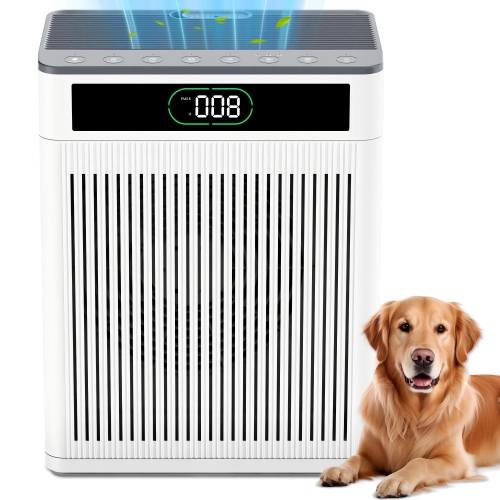
GLOWWISE HEPA Air Purifier — 2,200 Sq. Ft. Coverage with PM2.5 Display and 20 dB Sleep Mode, $159.99 CAD (47% Off)
 -26%
Dreame L40s Ultra Robot Vacuum & Mop — 19,000Pa, 100-Day Auto-Empty Dock! $597.99 CAD (25% Off)
 -27%
Breville Crystal Clear Kettle 1.7L — German Schott Glass, 1800W and Fast! $109.99 CAD (27% Off)
 0
「Worth Buying」Fitbit Inspire 3 — 18 g You Forget You're Wearing, 10-Day Battery! $129.94 CAD
 Tech Express
 | November 8, 2026: DeepSeek V4.1 Pro Spotted in Beta as Hard-Task Pass Rate Jumps 16 Points
 Global Express
 | November 8, 2026: Russia strikes Ukraine's energy grid ahead of trilateral talks
-47%GLOWWISE HEPA Air Purifier — 2,200 Sq. Ft. Coverage with PM2.5 Display and 20 dB Sleep Mode, $159.99 CAD (47% Off)
Best Buy
-26%Dreame L40s Ultra Robot Vacuum & Mop — 19,000Pa, 100-Day Auto-Empty Dock! $597.99 CAD (25% Off)
Amazon
-27%Breville Crystal Clear Kettle 1.7L — German Schott Glass, 1800W and Fast! $109.99 CAD (27% Off)
Amazon
0「Worth Buying」Fitbit Inspire 3 — 18 g You Forget You're Wearing, 10-Day Battery! $129.94 CAD
Amazon
Tech ExpressTech Express | November 8, 2026: DeepSeek V4.1 Pro Spotted in Beta as Hard-Task Pass Rate Jumps 16 Points
Global Express