
Tech Express | November 8, 2026: DeepSeek V4.1 Pro Spotted in Beta as Hard-Task Pass Rate Jumps 16 Points
Nov 8: DeepSeek V4.1 Pro is in beta, hard-task pass rate up from 48% to 64%, top Chinese model; ChatGPT users including $200 Pro subscribers report sudden bans; Musk accuses SoftBank of defaulting on turbine orders; Microsoft ends its Oracle lease; Tesla promises SI6 at 80x SI4; iPhone 20 leak shows a quad-curved display; Razer launches a 1,337-unit magnesium controller; Artemis II could disrupt GPS; Inner Mongolia potato capital turns AI hub; China sees 600bn kWh of new power demand a year.
1. DeepSeek V4.1 Pro Enters Beta Testing as Hard-Task Pass Rate Rises 16 Points
Source: Phoenix News Tech
DeepSeek's V4.1 Pro has entered beta testing, reports said on November 8, one day after the company's service suffered a brief outage — its second within a week. Beyond the disruption, attention has turned to the new model itself.
The benchmark figures come from @MaxForAI, an AI science communicator who also develops and maintains the LobeHub agent client and maintains his own LobeBench test set. On the 50-question set, the older V4 Pro-0813 passed 24 questions for a 48% accuracy rate and 13th place; the latest V4 Pro passed 32 questions for 64%, ranking first among Chinese models.
The gap between the two versions is small on a single attempt — what separates them is the ability to complete a task three times in a row, which rules out lucky results. The report says the current V4 Pro has in fact already been quietly updated, while DeepSeek has yet to announce a release date for V4.1 Pro; optimistic chatter points to some time next week, which would mark three months since V4 Pro-0813 launched.
2. Wave of ChatGPT Account Deactivations Hits Even $200 Pro Subscribers
Source: Phoenix News
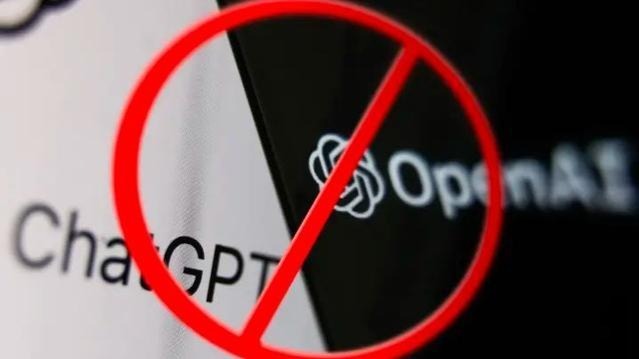
Multiple users reported on Reddit and OpenAI's official developer community in recent days that their ChatGPT accounts were suddenly deactivated, including subscribers on the $200-a-month Pro tier, Phoenix News reported on November 8. Some said they received no notice before the ban and lost access to long-accumulated chat histories and work materials.
On November 7, a user posted in OpenAI's developer community that their Pro account was deactivated that day with the error code "account_deactivated," without any warning or ban-notification email. The user said they had also joined an OpenAI cybersecurity access program and enabled advanced security settings requiring a physical security key, and suspected the ban was related to accessing ChatGPT and Codex through VPN nodes in different regions — while stressing this was only their own speculation.
OpenAI Support replied that it could not handle deactivation appeals in a public community forum because of account-specific information, and that users should appeal via the link in the ban notification email or, failing that, the official appeal form or help centre. It did not explain the specific reason. In a separate Reddit post on November 7, another Pro user said they were told the account was linked to another previously closed account; the user denied having any other account and said an appeal filed about an hour later returned a decision upholding the ban. As of publication, OpenAI had not issued a unified explanation or disclosed how many accounts were affected.
3. Musk Says SoftBank Is Defaulting on Gas Turbine Orders; Five-Year CDS Widens to 466 Basis Points
Source: Mydrivers
Elon Musk, CEO of Tesla and SpaceX, publicly accused SoftBank of defaulting on its gas turbine orders in a post on X on Friday US time, Mydrivers reported on November 8. He made the statement while replying to a user who had shared news that ING plans to sell a data-centre loan portfolio worth about $500 million.
Musk did not provide internal documents or supplier statements to back the claim. As of publication, SoftBank had not responded publicly and the turbine manufacturers also remained silent. SoftBank's AI infrastructure ambitions imply enormous funding needs: it plans to build a hyperscale data-centre campus in Ohio with up to 9.2GW of accompanying gas-fired generation capacity, and in May its clean-energy unit SB Energy said it had secured sufficient turbine capacity from major suppliers including GE Vernova.
Among the loans ING plans to sell is a $25 million credit tranche backed by a large data-centre campus in New Mexico that belongs to the Stargate project jointly pursued by OpenAI, SoftBank and Oracle. Markets have reacted: SoftBank's five-year credit default swap spread rose to 466 basis points on Friday, the highest since October 2022. The report noted, however, that a wider CDS spread does not mean a company has defaulted, nor does it on its own prove Musk's allegation.

4. Microsoft Ends Oracle Compute Lease as Older Nvidia GPUs Fall Short
Source: Mydrivers
Microsoft is reassessing its third-party AI compute strategy, Mydrivers reported on November 8. The company has committed more than $80 billion to leasing external AI compute, but several arrangements are shifting, and the fact that older-generation Nvidia GPUs no longer meet its requirements was a key trigger for adjusting the Oracle relationship. Microsoft had already decided not to renew the relevant contracts and has begun shutting down some computing resources leased from Oracle.
Microsoft's decision to rent servers from rival Oracle was once seen as an early signal of severe AI compute scarcity. As its AI business expanded, Microsoft signed large leasing deals with newer cloud providers including CoreWeave, Nscale and Nebius, committing over $80 billion. For Microsoft, GPU generations and power access have become two hard constraints: older GPU clusters lose cost-effectiveness, while delivery delays at newer cloud providers hold back GPU ramp-ups. Some key managers inside Microsoft are said to be unhappy with the high costs and project delays at the emerging providers.
The pullback is visible in several places: in Texas, Microsoft decided not to renew an expansion worth tens of billions of dollars while existing contracts continue; in West Virginia it withdrew a letter of intent for 1.35GW of capacity; in the UK it cancelled a roughly $3 billion Loughton agreement with Nscale because grid connection delays pushed expected power delivery into the 2030s. On Friday local time in Europe, protesters entered a Microsoft data-centre construction site in Amsterdam, kicking off a two-day rally.

5. Tesla AI Chip Roadmap Leaks: SI6 to Deliver 80x the Performance of SI4 on 2nm
Source: Mydrivers
Tesla recently disclosed an adjusted AI accelerator roadmap, Tom's Hardware reported, according to Mydrivers on November 8. Under its previous naming convention the latest generations would have been AI4, AI5 and AI6, but in the newest presentation they were renamed SI4, SI5 and SI6. Tesla expects the sixth-generation inference accelerator, SI6, to deliver 80 times the compute performance of SI4 — the fourth-generation inference processor currently used in its cars — with 9 times the memory.
That translates to 17,280 to 46,080 TOPS, or 17.28 to 46.08 POPS, depending on how SI4's performance is measured; the report says these are estimates and that it is not yet clear which data formats SI6 supports. For reference, Nvidia's Rubin GPU offers 50 NVFP4 PFLOPS of inference performance and 35 NVFP4 PFLOPS of training performance, and Rubin is already shipping, whereas SI6 is not due until 2029-2030, will be made by Samsung on a 2nm-class process, and is covered by an agreement running to 2033.
The roadmap also shows that the third-generation Dojo training accelerator (D3) will abandon its SRAM-centric architecture in favour of a chiplet design with stacked HBM. The upcoming SI5 will be manufactured by TSMC and Samsung on 3nm-class and 2nm-class processes respectively, use a multi-chip module design, and is expected to deliver 40 times the performance of SI4 with power draw between 250W and 800W and 6 times the memory of its predecessor, or 96GB.

6. iPhone 20 Design Tops Weibo Trends: First Quad-Curved Display, Mute Switch Era Ends
Source: Mydrivers
The iPhone 20's design shot to the top of Weibo's trending list on the evening of November 7, Mydrivers reported. Multiple leaks suggest Apple may skip the iPhone 19 and launch the iPhone 20 directly, with changes to the physical button layout and a display shape not seen in years.
On buttons, the iPhone 20 will reportedly remove the standalone customisable Action button on the left side and fold its functions into the Camera Control button on the right: a single click opens the camera, while a long press triggers custom functions including mute, Focus, flashlight and shortcuts. Apple is not actually dropping customisation, but consolidating it through different press gestures. The iPhone 15 Pro series replaced the traditional mute switch with the Action button and the iPhone 16 series added Camera Control; now the two merge. The foldable iPhone Duo has already dropped the standalone Action button and kept only Camera Control, seen as an early trial of the new layout.
On the display, the iPhone 20 series is said to abandon the flat screen for a quad-curved panel that extends naturally around all four edges for a borderless look. Two sizes are expected, 6.3 inches and 6.9 inches, matching the iPhone 18 Pro and iPhone 18 Pro Max, along with an A21 Pro chip and iOS 28 out of the box. All of this remains unconfirmed by Apple.

7. Razer Unveils Raiju V3 Pro Signature Edition: Magnesium Body at 260g, 1,337 Units Worldwide
Source: Mydrivers
Razer announced the Raiju V3 Pro Signature Edition, Mydrivers reported on November 8. Razer calls it a flagship controller built for players chasing the highest levels of performance and craftsmanship, and it is officially licensed for PlayStation 5. Like other Signature Edition products, it is limited to 1,337 units worldwide and comes in a collector's box.
Unlike the standard version, the controller uses an open-frame exoskeleton made of magnesium alloy, with a nano-coating process that lets internal components show faintly through the shell while keeping out dust and debris. Despite the more durable materials, it weighs just 260 grams and measures 168.8 x 113.4 x 65.1mm.
The controller supports Razer HyperSpeed wireless with a low-latency 2.4GHz connection and a 2000Hz polling rate, optimised for PlayStation 5 and also usable on PC. It has four removable buttons and two grip bumpers, symmetrical TMR sticks with magnetic drift resistance and replaceable caps, and Razer Pro HyperTrigger technology that switches independently between mouse-click and full-analogue modes. Players can adjust stick sensitivity, save onboard profiles and remap six programmable buttons.

8. Study: Artemis II Launch Was Powerful Enough to Briefly Disrupt GPS
Source: Hackaday
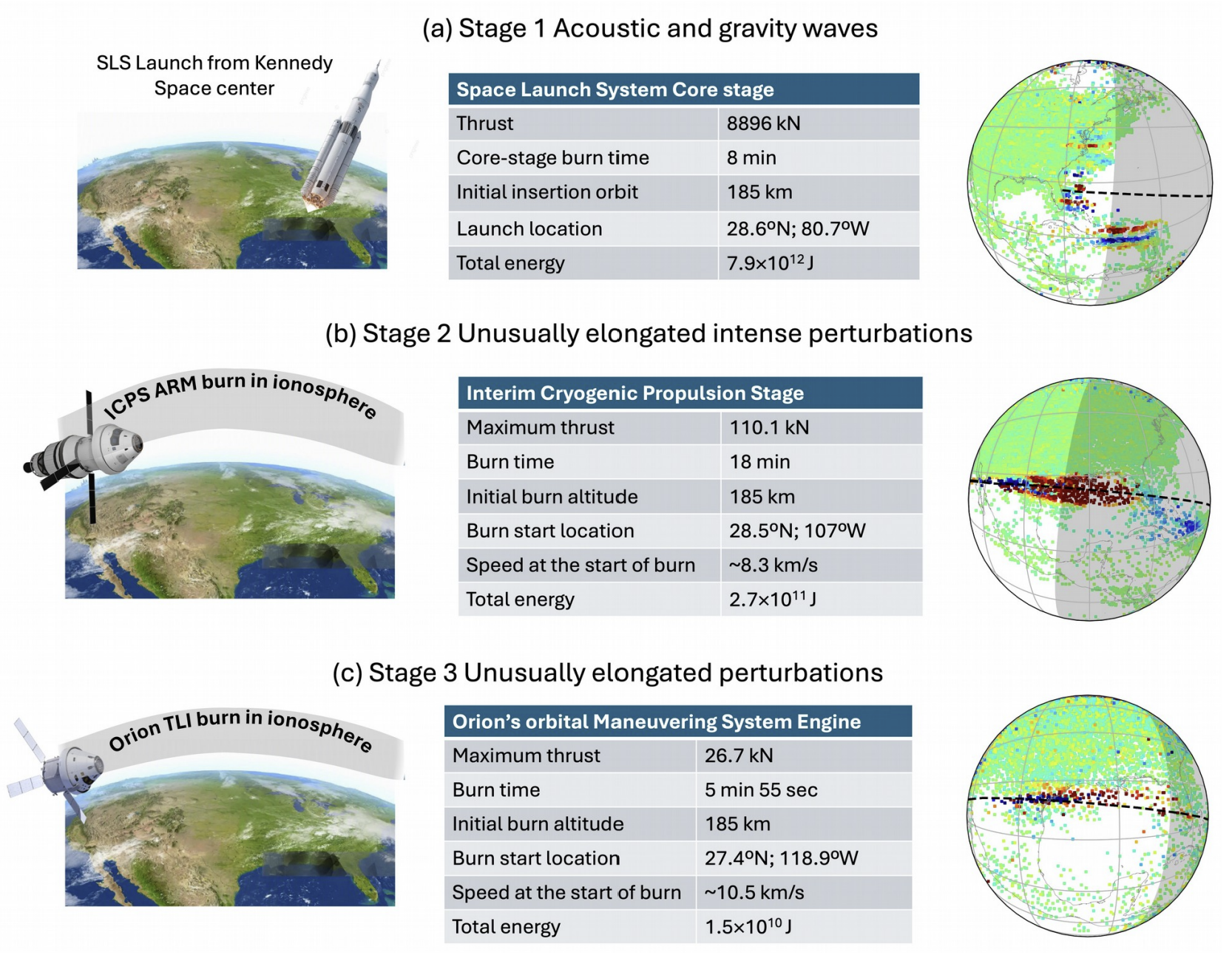
A pre-print study of Artemis II's atmospheric effects found a surprisingly wide range of impacts. The noise, shock waves and heat of a launch are obvious to anyone who has seen one, but less visible is the effect on the upper atmosphere — what scientists call "anthropogenic space weather."
The effects came in waves, according to the research. Each stage of the Space Launch System fires in a different part of the atmosphere, creating growing ripples as the rocket climbs through the layers. The first stage has the most thrust but limited impact on the ionosphere because it burned so low; the second and third stages had an impact large enough that they could have sustainably disrupted GPS signals at the time. Waves in the form of gravity waves travelled across the whole of North America.
The researchers say these ionospheric "holes" are not a major problem now, but are worth thinking about as rocket launches ramp up. The study relied on thousands of sensors around the world.
9. China's "Potato Capital" Turns Into an AI Data-Centre Hub
Source: 8world (CNA)
Ulanqab in China's Inner Mongolia region is transforming from a potato-growing heartland into an artificial intelligence data-centre base. The city's potatoes harvest nearly 4 million tonnes a year, close to 5% of China's total; as of August, AI-related computing power accounted for more than 90% of the city's total, and 109 data-centre projects have been signed. President Xi Jinping visited the city's Chahar High-Tech Development Zone on October 16 to learn about green computing infrastructure.
The land development has brought income and jobs to local farmers. Zhang Zhiyong, 64, has grown potatoes for more than 40 years and said developers began requisitioning village land for data centres two years ago. He gave up about 0.7 hectares and received more than 200,000 yuan (about S$30,000) in compensation; he now farms only about 670 square metres and rents out the rest. The build-out has also boosted nearby businesses — Gao Lina, who runs a pork-rib rice stall, said she sells about 100 portions a day and usually sells out by noon.
The expansion has raised questions about whether a drought-prone region can support it. Ulanqab has long struggled with drought; in June 2011 more than 23,000 square kilometres were affected and about 15,000 residents faced drinking-water shortages. Data from the city water bureau shows big-data firms used 1.54 million cubic metres in 2025, or 0.33% of total city water use. Cloud provider UCloud says its cooling systems cut water use by about 92% versus conventional methods. Experts warn that total water consumption could still rise if data-centre capacity and power demand grow faster than water-saving technology improves.

10. China Expects About 600 Billion kWh of New Power Demand a Year as AI Compute Grows
Source: Mydrivers
AI compute is growing fast and so is the electricity demand behind it, Mydrivers reported on November 8. At a National Development and Reform Commission press conference on November 6, Ge Ju, deputy director of the development planning department at the National Energy Administration, said China's power demand will keep growing during the 15th Five-Year Plan period as emerging industries such as computing scale up.
Ge expects China to add about 600 billion kWh of electricity demand each year in the coming years — equivalent to adding three Shanghai's worth of consumption annually. AI model training and inference, along with data-centre operations, all require large amounts of power, and as AI applications spread and server fleets and compute scale expand, electricity supply has become a foundation for compute development.
The NEA has proposed that by 2030 China's power supply adequacy ratio exceed 1.1, meaning the system should retain more than 10% of spare supply capacity even at peak national load. The plan includes raising wind and solar's share of generation to more than 20% during key periods such as summer and winter evening peaks, about 10 percentage points above current levels; increasing inter-provincial power complementarity by 40 million kilowatts; building more than 50 million kilowatts of virtual power plant capacity; and reaching about 160 million kilowatts of pumped-storage hydro and 300 million kilowatts of new-type energy storage.

More News
- Sports Express | November 8, 2026: Elks beat Lions 28-16 to reach first Grey Cup since 2015
- Maple Express | November 8, 2026 — North York residents demand traffic light after girl, 8, seriously injured
- Maple Express | November 7, 2026 — Unemployment Rate Hits 6.7% as Canada Sheds 4,700 Jobs
- Maple Express | November 7, 2026 — Sister of Whitby crash victim speaks out: 'I can't even look at her body'
- Global Express | November 07, 2026: Paraguay's President Pena Impeached and Under House Arrest
Comments (0)
View More
 -27%
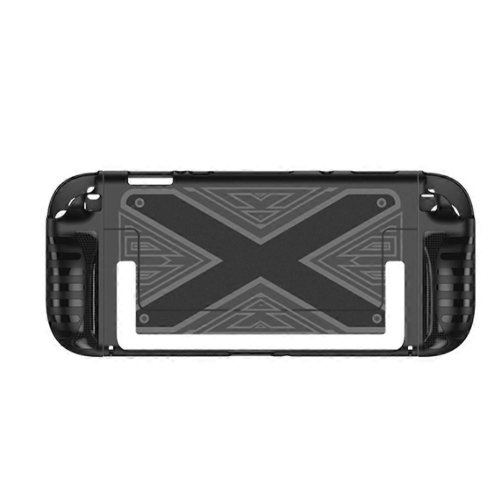
SLOWMOOSE TPU Protective Case for Nintendo Switch 2 — Textured Grip, $30.99 CAD (26% Off)
 -39%
GoveeLife Smart Water Leak Detector 4-Pack — 1,968 ft LoRa Range, SMS Alerts! $79.98 CAD (38% Off)
 -21%
🎉 史新低!Canon IVY 2 Mini Photo Printer — Zero-Ink Prints That Peel and Stick! $127.22 CAD (20% Off)
 -42%
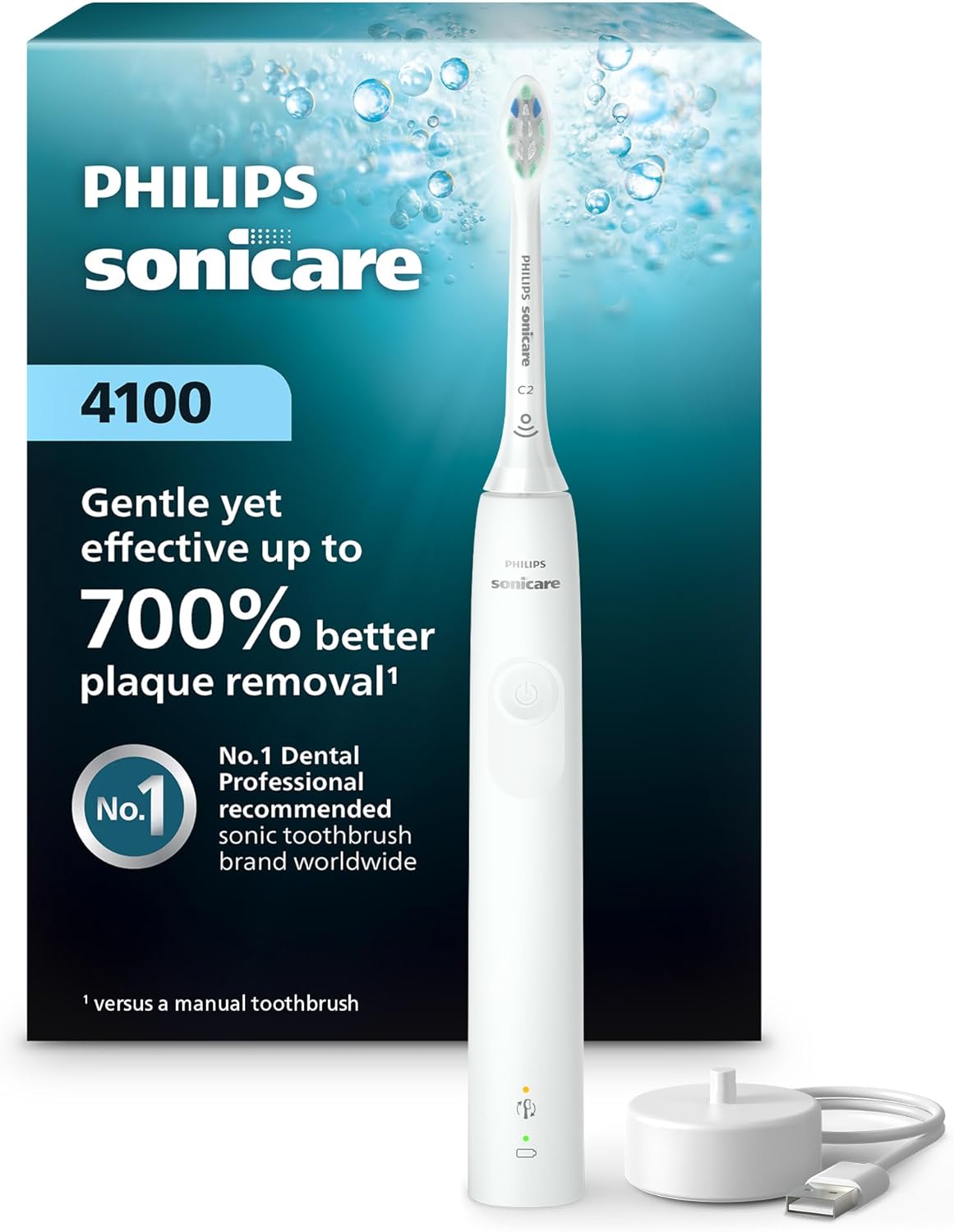
Philips Sonicare 4100 Sonic Toothbrush — 59,000+ Reviews, The Right First Electric! $49.96 CAD (41% Off)
 Maple Express
 | November 7, 2026 — Sister of Whitby crash victim speaks out: 'I can't even look at her body'
Tech ExpressTech Express | November 8, 2026: DeepSeek V4.1 Pro Spotted in Beta as Hard-Task Pass Rate Jumps 16 Points
-27%SLOWMOOSE TPU Protective Case for Nintendo Switch 2 — Textured Grip, $30.99 CAD (26% Off)
Best Buy
-39%GoveeLife Smart Water Leak Detector 4-Pack — 1,968 ft LoRa Range, SMS Alerts! $79.98 CAD (38% Off)
Amazon
-21%🎉 史新低!Canon IVY 2 Mini Photo Printer — Zero-Ink Prints That Peel and Stick! $127.22 CAD (20% Off)
Amazon
-42%Philips Sonicare 4100 Sonic Toothbrush — 59,000+ Reviews, The Right First Electric! $49.96 CAD (41% Off)
Amazon
Maple ExpressMaple Express | November 7, 2026 — Sister of Whitby crash victim speaks out: 'I can't even look at her body'
Tech Express