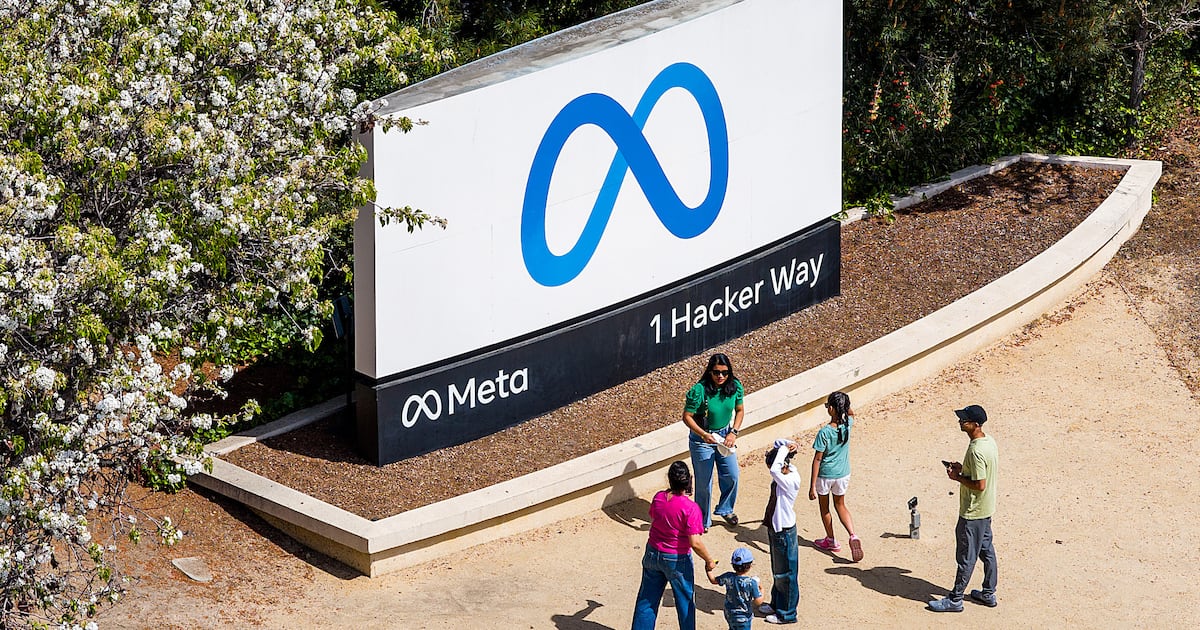
Tech Express | July 9, 2026 Meta Announces $13 Billion AI Data Centre in Alberta, Canada
Today's Tech Express covers a flurry of AI breakthroughs: Meta invests $13B in its first Canadian AI data centre in Alberta; DeepSeek V4 launches with Huawei chips and is reportedly developing its own inference chip; OpenAI debuts GPT-Live-1 full-duplex voice model; xAI drops Grok 4.5.
📰 Meta Announces $13 Billion First Canadian AI Data Centre in Alberta
Meta officially announced on July 8 that it will invest $13 billion to build a massive data centre in Sturgeon County, Alberta. This marks Meta's first data centre project in Canada and the largest data centre investment in Canadian history.
The gigawatt-scale facility is designed to support Meta's global AI computing needs. CEO Mark Zuckerberg previously stated that the company's 2026 capital expenditures will reach $125–145 billion, primarily directed at AI infrastructure. Alberta's Minister of Technology and Innovation, Nate Glubish, said the project "didn't happen by accident — it happened by design," crediting the province's strategic industrial policy.
Alberta's abundant natural gas resources, low electricity prices, and cold climate — which naturally helps with data centre cooling — are making it an increasingly attractive destination for North American data centre investments. Meta VP of Data Centre Strategy Gary Demasi said the project will create thousands of construction and operational jobs in the region.
📰 DeepSeek V4 Launches with Huawei Ascend Chips, Breaking the Closed-Source Monopoly
In the early hours of July 9, DeepSeek officially released DeepSeek-V4 preview and open-sourced the model. The new model delivered impressive results across multiple benchmarks, breaking the monopoly previously held by closed-source models. Notably, DeepSeek confirmed that V4 was trained using Huawei's Ascend chips, marking a major milestone for China's domestic AI chips in large-scale model training.
DeepSeek-V4 achieves industry-leading performance across reasoning, code generation, and multilingual understanding. According to the technical report, V4 employs a novel Mixture of Experts (MoE) architecture that significantly boosts model capacity and performance while maintaining inference efficiency. The release has reignited the open-source vs. closed-source debate, with DeepSeek continuing its commitment to open-source in stark contrast to the proprietary approaches of OpenAI and Anthropic.
— 36Kr
📰 Reuters: DeepSeek Secretly Developing Its Own AI Inference Chip
According to a Reuters report on July 7, three sources familiar with the matter revealed that Chinese AI company DeepSeek is quietly developing its own AI inference chip. If successful, the project would mark DeepSeek's entry into semiconductor development, potentially reducing its dependence on both NVIDIA and Huawei chips. Sources said the project has been underway for about a year, with DeepSeek discreetly recruiting chip design engineers.
The chip is reportedly aimed at AI inference rather than training — a telling strategic choice. Training a large model is a one-time expense, but inference costs grow exponentially with user scale, representing the real "cost sinkhole" of AI commercialization. Previously, DeepSeek's models including R1 were primarily trained on NVIDIA H800 GPUs, with increasing use of Huawei's Ascend chips following tightened US export restrictions.
If successful, DeepSeek's in-house inference chip would mark its strategic transformation from a pure software AI company to an integrated hardware-software player, while also bolstering China's push for AI chip self-reliance.

— Engadget
📰 WAIC 2026 Kicks Off Next Week in Shanghai: Over 300 AI Products to Debut Globally
The 2026 World Artificial Intelligence Conference (WAIC 2026) will take place from July 17–20 at the Shanghai World Expo Center. This year's exhibition area exceeds 100,000 square meters for the first time, with over 1,100 exhibitors, 3,000+ exhibits, and more than 300 AI products making their global debut — all setting new records for the conference.
Highlights include the first public appearance of Huawei's Atlas 950 super-node, the industry's largest AI computing cluster; the debut of MiniMax M3 multimodal model and the Jieyue Agent operating system; and ZTE Nubia's showcase of the world's first AI agent smartphone. The conference will also host over 140 forums with more than 1,400 experts from China and abroad.
The event introduces five ecosystem pillars — venture capital, connection, knowledge, youth innovation, and global expansion — alongside the AI-native platform "Hi WAIC," forming a full-cycle service loop that spans pre-conference, during, and post-conference phases.
— Xinhua
📰 OpenAI Launches GPT-Live-1 Full-Duplex Voice Model for More Natural ChatGPT Conversations
OpenAI released its new voice model GPT-Live-1 on July 8, bringing a transformative upgrade to ChatGPT's voice mode. The new model features a full-duplex architecture that can listen and speak simultaneously, creating a far more natural conversational experience. OpenAI research lead Kundan Kumar called it the company's "smartest voice model" yet.
GPT-Live-1 automatically routes queries requiring deep reasoning or web search to its most powerful text models like GPT-5.5, seamlessly transitioning from research to conversation. The upgraded voice mode also supports real-time AI-generated visual charts when discussing weather, stocks, or sports, expanding voice interactions beyond audio-only experiences.
Previously, ChatGPT voice relied on an older turn-based architecture prone to interrupting users or feeling unnatural. GPT-Live-1 addresses these pain points by waiting patiently when users pause or hesitate rather than jumping in prematurely.

📰 Google Photos Introduces AI "Video Remix" for Instant Creative Editing
Google Photos launched its "Video Remix" feature on July 8, powered by the latest Gemini Omni multimodal model, bringing AI-driven video editing to everyday users. New capabilities include cinematic relighting, custom background replacement, and artistic treatments such as watercolor and sketchbook effects — allowing anyone to produce professional-looking video content.
The feature is available to Google AI Plus, Pro, and Ultra subscribers. Users simply select video clips and enter a brief text prompt, and the AI handles the style transformation and effects automatically. Google first demonstrated Gemini Omni's multimodal capabilities at I/O this year, and the Video Remix launch marks a significant step toward bringing this technology to consumer applications.
The AI video editing race is heating up rapidly. From Adobe Firefly to Runway and now Google Photos, AI is democratizing professional creative tools and putting them at the fingertips of ordinary users. The barriers to video creation are being fundamentally rewritten by AI.

📰 xAI Releases Grok 4.5, Musk Calls It an "Opus-Class Model"
Elon Musk's AI company xAI released Grok 4.5 on July 8, its first major model update since going public several weeks ago. Musk described Grok 4.5 as an "Opus-class model" — directly benchmarking against Anthropic's Claude Opus — with significant improvements in reasoning, mathematics, and code generation.
xAI has maintained a rapid iteration pace since its IPO, with Grok 4.5 arriving just months after the previous generation. The new model is rolling out first to Premium+ subscribers on X (formerly Twitter) and will soon expand to enterprise API services, directly challenging the dominance of OpenAI and Anthropic in the business market.
Competition in the AI industry has reached fever pitch, with major releases nearly every week. Grok 4.5 underscores that the "large model arms race" is far from over — OpenAI, Anthropic, Google, Meta, and xAI are all competing fiercely across model capabilities, product experience, and commercialization strategies.

📰 SpaceX Falcon 9 Aims for Record 36th Reuse, Redefining Rocket Reusability
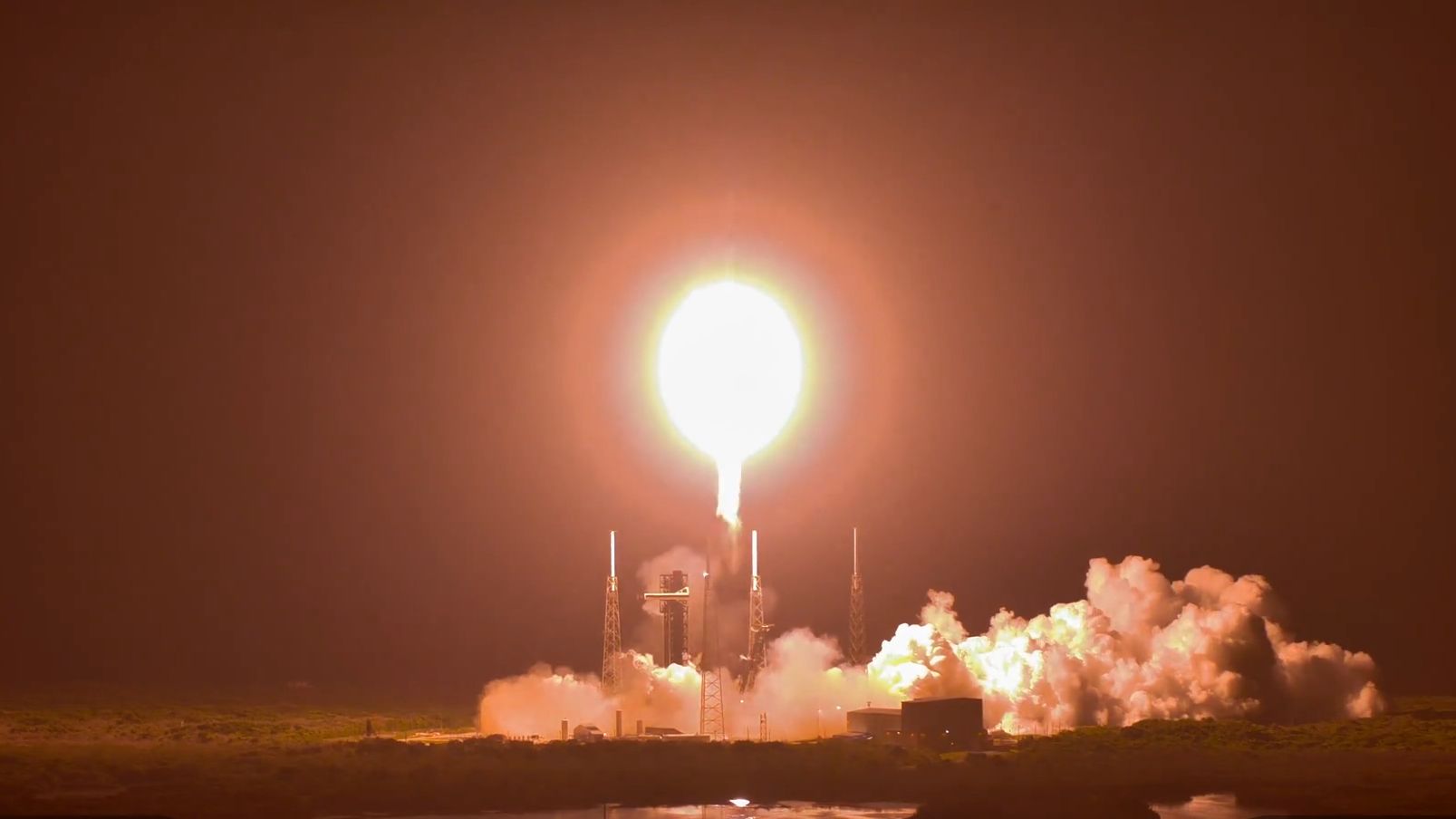
SpaceX is scheduled to launch a Falcon 9 rocket early on July 9 to deploy the next batch of Starlink broadband satellites. If successful, this will mark the 36th reuse of this booster, shattering SpaceX's own world record for rocket reusability.
Falcon 9's reusable technology has become the gold standard of commercial spaceflight. This mission's booster has previously executed missions ranging from ISS resupply to commercial satellite deployments, demonstrating how reusability has revolutionized launch cost economics. Through continuously optimized recovery processes, SpaceX has driven marginal launch costs to the industry's lowest levels.
Additionally, on July 7, SpaceX successfully launched the world's first commercial nuclear-powered satellite via its Transporter-17 rideshare mission, signaling the transition of space nuclear technology from government-led research to commercial applications — opening new energy pathways for deep-space exploration and long-duration orbital missions.
More News
- Immigration | October 26, 2026 Express Entry's new scoring takes effect November 3: high-wage job offers worth up to 100 points
- Global Express | October 26, 2026 - Serbia's Vucic Concedes Defeat, Ending 14 Years in Power
- Finance Morning | October 26, 2026 — Shanghai Edges Up 0.19% as Banks and Oil Lead, Asia Mostly Lower
- Tech Express | October 26, 2026 - Huawei's Kirin Chips Return to Public View as Mate 90 Lights Up Landmarks
- Sports Express | October 26, 2026: Seahawks Hand Chiefs First Loss of Season
Comments (0)
View More
 -37%
-37%Casio Tough Solar AQ-S810W Analog-Digital Watch — Charge It With Light, Never Swap a Battery! $57.19 CAD (36% Off)
 -55%
-55%Casio MH-10M Business Calculator — 10-Digit Display, Cost/Sell/Margin Keys! $9.00 CAD (55% Off)
 -29%
-29%Acer Nitro EDA270U 27" WQHD 1500R Curved Gaming Monitor — 170Hz, 1ms, FreeSync Premium! $179.99 CAD (28% Off)
 -14%
-14%ASUS Chromebook CX1 15.6" — 11 Hours of Battery for Class and Couch! $389.99 CAD (13% Off)
 Immigration
Immigration | October 26, 2026 Express Entry's new scoring takes effect November 3: high-wage job offers worth up to 100 points
 Maple Express
Maple Express | October 26, 2026: Ontario votes today as Toronto's mayoral race stays tight
-37%Casio Tough Solar AQ-S810W Analog-Digital Watch — Charge It With Light, Never Swap a Battery! $57.19 CAD (36% Off)
Amazon
-55%Casio MH-10M Business Calculator — 10-Digit Display, Cost/Sell/Margin Keys! $9.00 CAD (55% Off)
Amazon
-29%Acer Nitro EDA270U 27" WQHD 1500R Curved Gaming Monitor — 170Hz, 1ms, FreeSync Premium! $179.99 CAD (28% Off)
Amazon
-14%ASUS Chromebook CX1 15.6" — 11 Hours of Battery for Class and Couch! $389.99 CAD (13% Off)
Amazon
ImmigrationImmigration | October 26, 2026 Express Entry's new scoring takes effect November 3: high-wage job offers worth up to 100 points
Maple Express