
Immigration | September 07, 2026 Express Entry Issues 2,000 Invitations to Canadian Experience Class
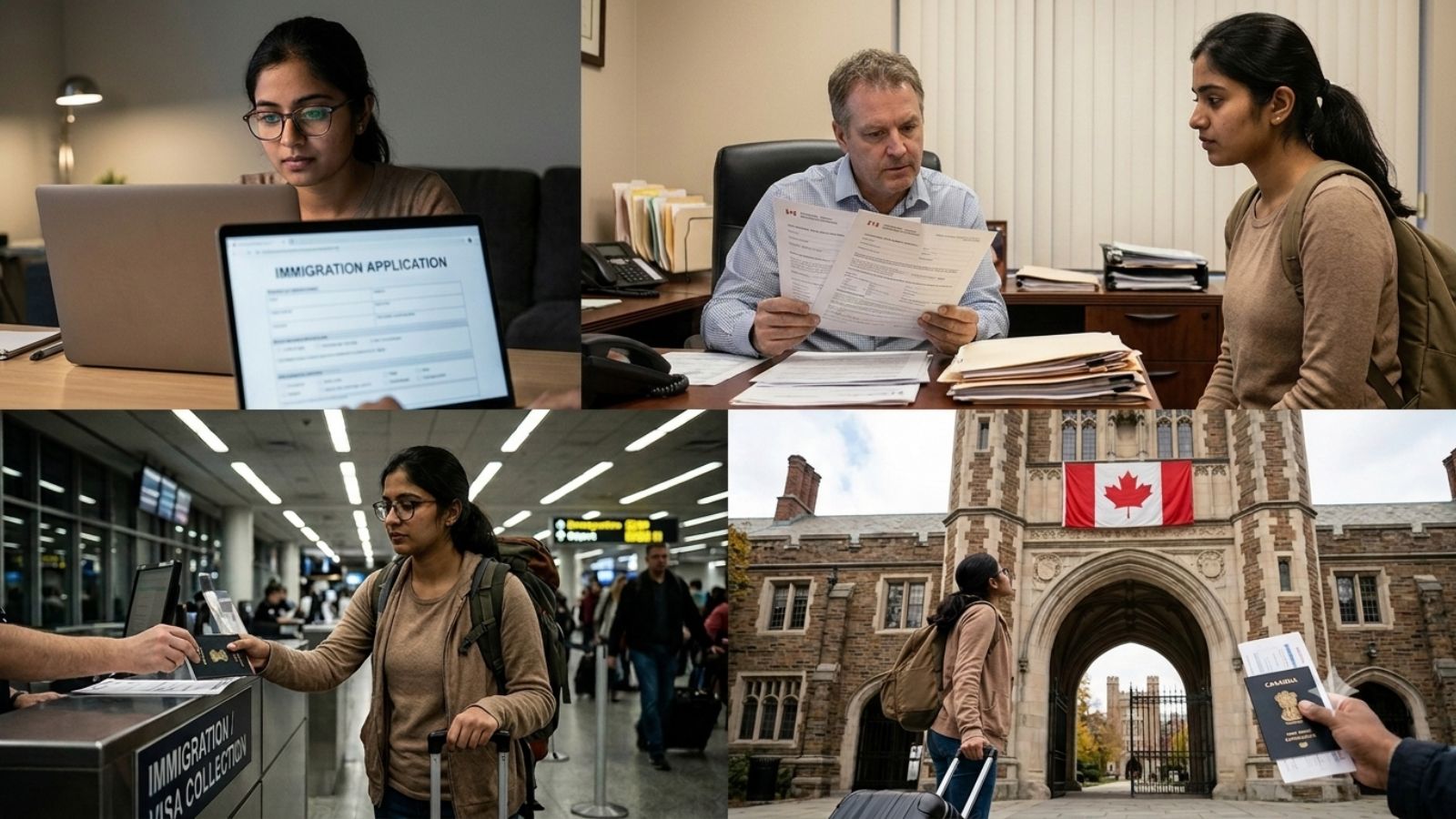
This week's immigration briefing: Express Entry issued 2,000 invitations to Canadian Experience Class candidates and 3,500 to healthcare and social services workers; the study permit financial requirement rose to $23,448 on September 1; over 250 organizations backed Calgary international students facing deportation; Hongkonger permanent residence pathways closed; PR and citizenship processing times rose; and Saskatchewan reserved 550 immigration spots for retail, trucking and other sectors.
1. Express Entry issues 2,000 invitations to Canadian Experience Class candidates
Source: CIC News
On September 1, Immigration, Refugees and Citizenship Canada (IRCC) held an Express Entry draw and issued 2,000 invitations to apply (ITAs) for permanent residence to Canadian Experience Class (CEC) candidates — foreign workers who have gained work experience in Canada and are seeking to become permanent residents.
To be invited in this round, candidates needed a Comprehensive Ranking System (CRS) score of 521. This was IRCC's 51st Express Entry draw of 2026. According to CIC News, Canada has now issued 117,427 ITAs through Express Entry so far this year, including 51,250 under the CEC.
Draws in 2026 have generally favoured candidates already connected to Canada, particularly provincial nominees and those with Canadian work experience. The CEC has been drawn 15 times this year, making it one of the most frequently invited categories.
2. Express Entry issues 3,500 invitations in healthcare and social services draw
Source: CIC News
On September 4, IRCC held a category-based Express Entry draw and issued 3,500 invitations to apply for permanent residence to candidates in healthcare and social services occupations. This was IRCC's 53rd Express Entry draw of 2026.
The CRS cut-off score for this round was 475. The healthcare and social services category has been drawn three times this year, issuing 11,500 ITAs in total. With this latest round, IRCC has now issued 121,156 ITAs through Express Entry in 2026.
The federal government continues to prioritize in-demand healthcare and social services occupations, giving overseas professionals working in these fields a pathway to permanent residence.

3. Study permit financial requirement rises to $23,448 as of September 1
Source: immigration.ca
International students planning to study in Canada now need to prove they have more money available. As of September 1, 2026, a single study permit applicant studying outside Quebec must show access to at least $23,448 for first-year living expenses — an increase of $553 from the previous requirement of $22,895.
The amount covers living expenses only, not tuition or transportation. For example, a student with $20,000 in first-year tuition would need to demonstrate the $23,448 living-expense requirement on top of tuition and sufficient transportation funds, potentially pushing total required resources well above the headline minimum. IRCC updates the requirement annually to reflect the cost of living.
Officers will also assess not only how much money an applicant has, but where it came from and whether it will remain available throughout their studies. Students in programs longer than one year must also explain how they plan to finance the full duration. The new rule applies to applications submitted on or after September 1, 2026.

4. More than 250 organizations stand behind Calgary international students facing deportation
Source: Calgary Herald
International students in Calgary who received removal orders after protesting rejected post-graduation work permits (PGWPs) are gaining growing support. This week, more than 250 Canadian organizations — including Amnesty International Canada, the United Church of Canada and the Canadian Union of Public Employees (CUPE) — signed an open letter calling on the provincial and federal governments to investigate and change immigration policy.
The letter asks the governments to investigate the Calgary Police Service and the Canada Border Services Agency (CBSA) for carrying out immigration enforcement during a protest, citing the protection of peaceful assembly and freedom of expression under Section 2 of the Charter of Rights and Freedoms. It also calls for the removal orders to be suspended and for the students to receive their work permits.
According to the CBSA, 20 people had their status verified at the August 12 protest, 12 were identified as potentially inadmissible, and 10 ultimately received removal orders. One student, Gurpreet Singh, graduated from Portage College in December 2024 and said IRCC rejected roughly 400 to 500 PGWP applications within one week in July. He has spent more than $8,000 on judicial reviews.
5. Canada shuts the door to Hongkonger permanent residence pathways
Source: CIC News
The window has closed for Hong Kong residents seeking Canadian permanent residence through the Hong Kong pathways. According to an IRCC news release published on August 28, no further applications will be accepted as of August 31, 2026, while applications submitted on or before that date will continue to be processed.
A three-year open work permit for foreign nationals who have applied for permanent residence under the Hong Kong pathways remains available, with intake open through May 2029. Due to high demand, processing times for Hong Kong pathway permanent residence applications now stretch beyond 10 years, with more than 33,000 applications still in the backlog.
Since the pathways launched in June 2021, Canada has received more than 46,000 applications and admitted 13,370 new permanent residents through them. For 2026, admissions allotted to Hongkongers come from a 5,800-person "Other" category that also covers Canada's responses to the situations in Ukraine and Sudan.

6. Processing times rise for permanent residence and citizenship applicants
Source: CIC News
Applicants waiting for Canadian permanent residence or citizenship decisions should note that processing times have risen in several categories. IRCC's updated processing times, released on September 3, show lengthening wait times, with three categories each rising by one month — the largest increase in this update.
The Federal Skilled Worker Program (FSWP) rose from 6 to 7 months, while the Canadian Experience Class (CEC) held steady at 6 months. For family sponsorship, in-Canada spousal sponsorship fell from 27 to 26 months, out-of-Canada spousal sponsorship rose from 17 to 18 months, and parent and grandparent sponsorship fell from 29 to 28 months. Citizenship grants stayed at 12 months, while search of citizenship records rose to 18 months.
The Start-Up Visa and Federal Self-Employed Persons programs continue to show processing times exceeding 10 years. As of September 3, the citizenship grant inventory stood at 327,100 applications, down 1,100 from August 10.

7. Saskatchewan earmarks 550 immigration spots for retail, trucking and other sectors
Source: CIC News
For Saskatchewan employers seeking provincial nomination spots for workers in retail, trucking, accommodation and food services, September 14–15 will be the last chance this year. The Saskatchewan Immigrant Nominee Program (SINP) has set aside 550 provincial immigration spaces for these capped sectors, to be distributed on a first-come, first-served basis.
According to a SINP processing statistics update on September 2, the intake windows and spots are: retail, trade and other services 175 (opening September 14 at 9:30 a.m.), trucking 150 (same time), accommodations 50 (1:30 p.m. that day), and food services 175 (September 15 at 1:30 p.m.). The SINP also cancelled the intake originally planned for November 2.
Employers must submit an Employer Position Assessment (EPA) application to move a worker onto the provincial immigration track, and intake closes once the cap of 550 applications is reached. The SINP's 2026 nomination allocation is 4,761, and as of June 30 it had issued 2,628 nominations — about 55% of its annual allocation.

8. Canada study permit changes 2026: lower targets and tighter scrutiny
Source: The Indian Express
International students considering Canada face a series of rule changes this year. Beyond the higher living-expense requirement that took effect September 1, Canada is tightening its broader International Student Program, including lower student targets, stronger verification of admission documents and changes to work authorizations.
Under the 2026–2028 Immigration Levels Plan, Canada has set a target of 155,000 new student arrivals in 2026, while IRCC expects to issue up to 180,000 study permits to applicants who require a provincial or territorial attestation letter. Most international students now need a Provincial Attestation Letter (PAL) or Territorial Attestation Letter (TAL) before applying, confirming there is space within the province or territory's allocation.
IRCC is also strengthening checks against fraudulent letters of acceptance, with a centralized function being expanded to verify "no match" cases — which can trigger procedural fairness processes — targeting September 30, 2026. There is also easing: as of April 1, 2026, eligible post-secondary students no longer need a separate co-op work permit for mandatory placements such as co-ops and internships.
More News
- Maple Express | October 22, 2026: Ottawa Gives Stelco 15 Days to Reverse Layoffs or Face Legal Action
- Global Express | October 22, 2026: Two Killed at Saudi Arabia's Dammam Airport as U.S. Orders Diplomats Out
- Asia Stocks Slump: ChiNext Falls 4.37%, Hang Seng Tech Below 3,800, Oil Tops $100
- Tech Express | October 22, 2026 — Japan Launches MMX Probe in First Attempt to Land on Phobos
- Sports Express | October 22, 2026 — Forge FC Win Canadian Championship on Penalties, a First for the CPL
Comments (0)
View More
 -24%
-24%Globlazer Cactus Cat Tree 74" — Two Condos & Seven Sisal Posts for Multi-Cat Homes! $129.99 CAD (24% Off)
 -27%
-27%Geekpure 2-Stage Whole House Water Filter, 20" Housings — Sediment + Carbon! $227.98 CAD (26% Off)
 -45%
-45%AMBOR 17.3" Anti-Theft Laptop Backpack — Combination Lock + USB Port! $37.13 CAD (45% Off)
 -65%
-65%JBL Tune 670NC On-Ear Noise Cancelling Headphones — 70 Hours of Playtime with Adaptive ANC! $49.99 CAD (64% Off)
 Tech Express
Tech Express | October 22, 2026 — Japan Launches MMX Probe in First Attempt to Land on Phobos
 Global Express
Global Express | October 22, 2026: Two Killed at Saudi Arabia's Dammam Airport as U.S. Orders Diplomats Out
-24%Globlazer Cactus Cat Tree 74" — Two Condos & Seven Sisal Posts for Multi-Cat Homes! $129.99 CAD (24% Off)
Amazon
-27%Geekpure 2-Stage Whole House Water Filter, 20" Housings — Sediment + Carbon! $227.98 CAD (26% Off)
Amazon
-45%AMBOR 17.3" Anti-Theft Laptop Backpack — Combination Lock + USB Port! $37.13 CAD (45% Off)
Amazon
-65%JBL Tune 670NC On-Ear Noise Cancelling Headphones — 70 Hours of Playtime with Adaptive ANC! $49.99 CAD (64% Off)
Best Buy
Tech ExpressTech Express | October 22, 2026 — Japan Launches MMX Probe in First Attempt to Land on Phobos
Global Express