
Tech Express | October 22, 2026 — Japan Launches MMX Probe in First Attempt to Land on Phobos
In today's Tech Express: Japan launches its MMX probe in the first bid to land on Phobos; DeepSeek reportedly closes a 100 billion yuan round led by CATL and Tencent; Musk says most humanoid robot demos are pre-programmed; AI uncovers a critical PHP flaw; Chinese tech giants place $35 billion in Nvidia orders; Micron unveils 1TB DDR6; iPhone Duo joins TIME's Best Inventions; Windows gets a major Bluetooth upgrade; QQ adapts to iPhone Duo; a Hangzhou student's AI video startup tops 600,000 yuan.
Source: The Guardian, Mydrivers, Nikkei Chinese, VOA Chinese, China.com
1. Japan Launches MMX Probe in First-Ever Attempt to Land on Phobos
Japan's space agency JAXA launched its Martian Moons Exploration (MMX) spacecraft from the Tanegashima Space Centre at 4:41 a.m. local time on October 22, riding the country's flagship H3 rocket into a pitch-black sky. About an hour later, JAXA declared the launch a success after the probe separated from the rocket's upper stage, prompting celebrations in the flight control room.
The spacecraft is expected to reach Mars's orbit in August next year and collect at least 10g of soil and rock from the surface of Phobos before returning to Earth in 2031. Phobos measures about 22.5km across and orbits Mars three times a day about 6,000km above its surface. It is the first time anyone has attempted to land on Phobos or the smaller moon Deimos. The $578m mission involves five space agencies.
Once it arrives, MMX will eject a French-German rover named Idefix. Because gravity on Phobos is 1/1,000th as strong as on Earth, the four-wheeled rover will bounce for several minutes before coming to a halt, then spend 100 days surveying the surface to find safe landing and sampling sites. A four-legged lander will spend only two hours drilling and vacuuming up material before launching back into space. JAXA hopes the samples will establish whether the two moons formed from a giant impact or were asteroids captured by Mars's gravity.
2. DeepSeek Reportedly Closes 100 Billion Yuan Round, With CATL and Tencent as Top Investors
DeepSeek has completed a funding round of about 100 billion yuan (roughly $15 billion), according to Chinese tech media reports on October 22 — one of the largest financing deals in the history of China's tech industry. With the money in place, the company will be able to compete directly with international leaders such as Anthropic and OpenAI in the global large-model market.
People involved in the round said DeepSeek raised its target at least twice during negotiations: from an initial 50 billion yuan to 80 billion yuan, before settling at about 100 billion yuan. CATL and Tencent are among the largest strategic investors, bringing deep experience in new-energy computing support and consumer internet ecosystems respectively — synergies that could help DeepSeek bring its technology into real-world scenarios.

3. Musk: Many Jaw-Dropping Humanoid Robot Demos Are Just Pre-Programmed
Speaking at the X Takeover event, Elon Musk said most of the visually stunning humanoid robot videos circulating online do not rely on advanced general-purpose AI. Instead, they are fixed scripts and pre-programmed motions, and some are even carried out by remote human operators behind the scenes.
In his view, a genuinely intelligent robot's core ability is handling unfamiliar scenarios and tasks it has never seen. Pre-programmed robots can only repeat rehearsed movements in a prepared environment; once an object moves, an unknown obstacle appears or the surroundings change, they easily fail — such performances demonstrate motion capability, not autonomous intelligence.
On the technical path, Optimus and Tesla's FSD share the same end-to-end vision AI framework, relying on the Dojo supercomputer to learn from massive video and real-world operating data. Musk acknowledged that dexterous hands are the biggest hardware bottleneck: a human hand has dozens of degrees of freedom, and actuators and tactile sensors must be developed from scratch. Motor magnets and other key components also carry supply-chain risk — a magnet supply problem previously delayed the Optimus project by months. A dedicated Optimus line has been set up at the Fremont factory, with early units kept in-house to work and collect real-world data.

4. AI Finds Critical PHP Flaw as World Braces for a 'Vulnerability Doomsday'
PHP, the development language used by roughly 70% of the world's websites, has been found to contain serious vulnerabilities, forcing governments to respond urgently. The PHP Foundation reported "critical vulnerabilities" in the software and released fixes on October 21. The US National Security Agency issued a statement the same day advising all organizations using PHP to prepare to upgrade, adding that taking systems offline until the flaw is fully patched is an effective measure.
According to W3Techs, PHP is used by 69% of websites worldwide, including government agencies, banks, online stores and corporate sites. Finland and the Netherlands have temporarily blocked government agency websites; Japan's Sakura Internet suspended cloud services and Shizuoka Bank shut down its online banking, with more than 20 affected organizations known so far. Cloudflare said on October 21 that it had detected traffic attempting to exploit the flaw and blocked attacks on its customers.
The flaw was discovered by three tech companies — OpenAI and Google-owned security firm Wiz among them — using cutting-edge AI, and reported to the foundation separately in August. Wiz said the vulnerability had persisted for more than a decade. Because details leaked on social media on October 20, the risk of attacks before patching came into focus. Epoch AI statistics show that about 3,500 vulnerabilities above a certain severity level were published by 21 major organizations in September, a tenfold jump from March.
5. $35 Billion Nvidia Order From China's Tech Giants Exposes Gaps in Domestic Alternatives
Reuters reported on October 20, citing two people familiar with the matter, that ByteDance, Alibaba and Tencent ordered more than 3 million of Nvidia's new RTX PRO 5500 graphics cards, with an order value of more than $35 billion at list prices. Because demand from Chinese companies far exceeds Nvidia's planned output, the company has told customers that final deliveries may be only 5% to 10% of the orders. VOA said it could not independently verify the figures.
The RTX PRO 5500 is designed mainly for professional workstations, based on the Blackwell architecture with 84GB of GDDR7 memory, and is used primarily for AI inference. Its memory is smaller than the 141GB of H200 data-center processors and the 288GB high-bandwidth memory of the more advanced B300, but it does not run afoul of current US export restrictions. The report argues the buying spree reflects insufficient computing supply inside China, the long-standing pull of Nvidia's CUDA ecosystem, and uncertainty over whether Huawei can ramp production and deployment of its Ascend systems fast enough.
Nvidia expects to produce at most 3 million RTX PRO 5500 units globally in 2027, while orders from Chinese customers already exceed 6 million. Huawei says it has deployed more than 300 Atlas 900 A3 SuperPoD systems built around Ascend 910C processors to over 20 customers in internet services, telecom and manufacturing, and that its Ascend 960DT is expected to launch in the first quarter of 2027. Those performance claims have not been independently verified.
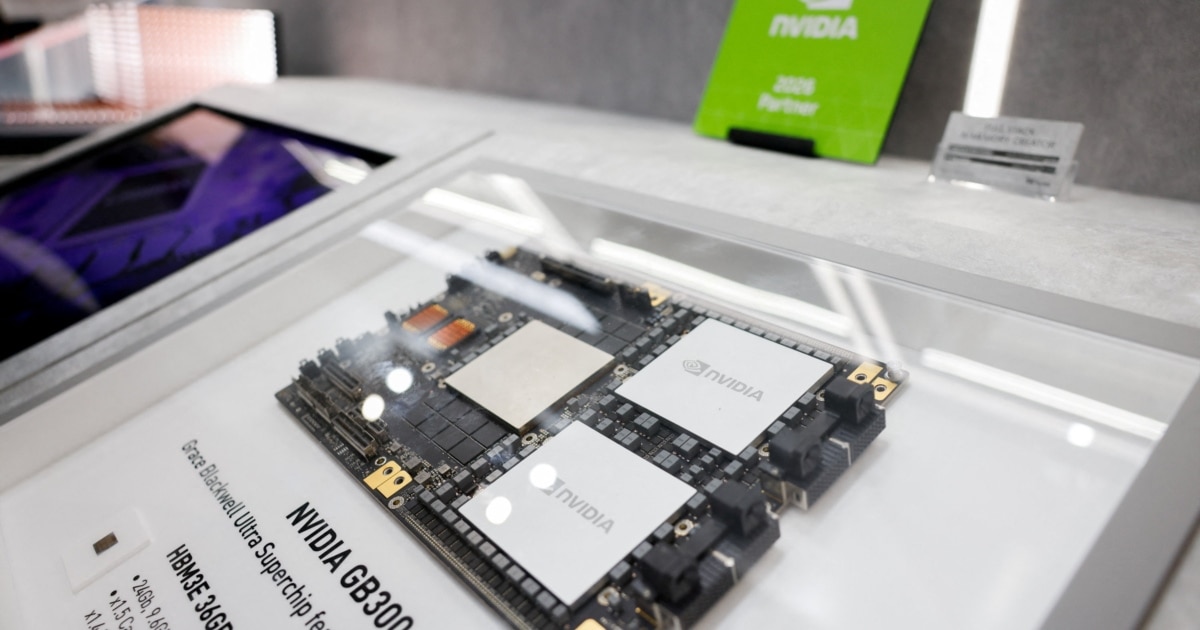
6. Micron Unveils 1TB DDR6 Modules With More Than Twice DDR5 Bandwidth
At the OCP 2026 Summit, Micron laid out its next-generation memory roadmap covering DDR6, LPDDR6, HBM and G11 NAND. DDR6 is positioned for the high-reliability server market, with Micron saying bandwidth will reach more than twice that of DDR5, and it plans to offer 1TB RDIMM modules.
For reference, current DDR5 RDIMMs top out at 512GB per module at 9200MT/s. The 1TB target relies on the 1δ (1-Delta) DRAM process node, which improves bit density by about 20% to 25% over the previous generation, with a mass-production ramp planned in the US in the second half of 2027. The first DDR6 products are expected in 2027, with servers and data centers first in line.
On architecture, Micron said it will stick with 6F² cells rather than move to 4F², arguing after more than two decades of research that there is no reliable scaling path for 4F². CXMT is expected to launch 4F²-based DDR5 products by the end of the year, while Samsung plans to begin 4F² production in 2028. Micron also said LPDDR6 improves energy efficiency by more than 35% over LPDDR5, and G11 NAND stacks more than 400 layers. All bandwidth, capacity and efficiency figures are roadmap targets pending standards finalization and customer platform validation.

7. iPhone Duo Makes TIME's Best Inventions List as Ternus Explains the Seven-Year Wait
Apple's first foldable phone, the iPhone Duo, has been named to TIME magazine's list of the 2026 Best Inventions. Counting from Samsung and Huawei's first-generation foldables in 2019, Apple entered the category a full seven years late. In the magazine's latest cover story, new Apple CEO John Ternus explained why the company held back.
Ternus said Apple filed foldable-related patents 15 years ago but did not want to rush in before the technology and experience were mature, describing rivals' early foldables as "cheap and crappy." In 2011, he and five other Apple engineers filed a patent for a folding electronic device, studying flexible displays, related batteries and circuit board design.
During development, Apple's vice president of product design Richard Ding at one point proposed using competitors' outer screen material. The team ultimately developed a nano-texture process applied over a hinge containing hundreds of precision parts. Ding said early users reported almost no visible crease when the phone is fully open. Still, after the iPhone Duo launched on September 9, digital bloggers who tested it found the crease remains fairly visible at certain angles and in certain light, with the crease area feeling softer and showing a water-ripple effect when a finger slides across it.

8. Windows Gets Its Biggest Bluetooth Upgrade in a Decade: AirPods Pair 15 Seconds Faster
Microsoft delivered a major Bluetooth upgrade in the Windows 11 October 26H2 update, cutting AirPods pairing time by up to 15 seconds and fixing long-standing issues with call volume control, Bluetooth toggle status and microphone compatibility. Windows' Bluetooth stack had not seen a major update in nearly a decade.
Microsoft's documentation says the improvements are based on Build 26200.8737, with actual results varying by AirPods model, device configuration and usage. Windows Latest found that Samsung Galaxy Buds also pair about 20% faster. In addition, the Windows 11 volume pop-up now displays properly when adjusting volume with a headset's physical buttons or touch controls during calls; a bug where Bluetooth appeared off in settings but was not actually disabled has been fixed, and Bluetooth audio quality and shared-audio features were improved.
Build 26300.9711, 26200.9711 or 26100.9711 and above will receive these fixes automatically in the coming days. Users can check their build number under Settings > System > About.

9. Tencent's QQ Completes iPhone Duo Adaptation, WeChat Still Waiting
Tencent's QQ has announced that it has completed adaptation for the iPhone Duo; users can get the experience by upgrading to version 9.3.77. Previously, opening QQ on the foldable's large screen produced large black bars with the interface squeezed into the middle, a problem the new version resolves. The company said users who still see display issues after updating can report them in the comments, and later versions will fine-tune further.
Tencent Video, QQ Music and WorkBuddy have also been adapted, but WeChat — the app users care about most — has yet to release a compatible version and still shows black bars. Apple has set a hard requirement that all apps complete foldable adaptation by April next year.
Many bloggers who tested the iPhone Duo complained that app adaptation is uneven: mainstream apps have not caught up with the foldable's screen ratio, so content is squeezed and large areas are left blank. QQ finishing first is only a first step; the foldable ecosystem will not be truly complete until more high-frequency apps are tuned.

10. Hangzhou Sophomore's One-Person AI Video Startup Tops 600,000 Yuan in Revenue
Wang Yiqing, a sophomore studying computer science at Zhejiang University of Technology, founded a company on his own and taught himself to build an AI video generation website. It took him just two months from starting development to completing regulatory filing. After launch, the product quickly attracted 20,000 users and passed 600,000 yuan in revenue, and a Shanghai film company signed on to use his tool for a movie slated for next summer.
The idea came from a practical observation: many short-drama creators struggle to find cost-effective AI video tools, with market rates around 1 yuan per second. Wang optimized open-source models to cut the price to 5 to 8 fen per second. The platform also supports one-click distribution to more than 150 countries and regions, where overseas views can earn 5 to 8 yuan each.
Running a one-person company means handling development, operations and client communication alone. He was once reduced to tears by a customer's negative review, but still changed the code and adjusted features as suggested, often working until two or three in the morning. The project only worked after repeated trial and error.
More News
- Global Express | October 22, 2026: Two Killed at Saudi Arabia's Dammam Airport as U.S. Orders Diplomats Out
- Asia Stocks Slump: ChiNext Falls 4.37%, Hang Seng Tech Below 3,800, Oil Tops $100
- Sports Express | October 22, 2026 — Forge FC Win Canadian Championship on Penalties, a First for the CPL
- Maple Express | October 22, 2026 — Final Toronto mayoral debate tonight, with nearly 30% of voters open to switching
- Finance Evening: Meta Posts Record Revenue With 2-for-1 Split; Musk Pledges SpaceX Shares to US Children
Comments (0)
View More
 -51%
Razer Kishi V3 Pro Mobile Gaming Controller — Full-Size Console Grips, Half Price! $109.96 CAD (50% Off)
 -41%
🎉 史新低!bella 3.5 Qt 2-in-1 Hand & Stand Mixer — Switch Modes Mid-Recipe, Nests Into One Bowl! $77.32 CAD (41% Off)
 -34%
Samsung Odyssey G73H 32" 4K OLED Gaming Monitor — 165Hz, 0.03ms, G-Sync & FreeSync Premium Pro! $999.99 CAD (33% Off)
 -34%
AEGTEST HOUND-1011 Portable Radon Detector — First Reading in 6 Hours, 45-Day Standby! $66.99 CAD (33% Off)
 Finance Morning
Asia Stocks Slump: ChiNext Falls 4.37%, Hang Seng Tech Below 3,800, Oil Tops $100
 Sports Express
 | October 22, 2026 — Forge FC Win Canadian Championship on Penalties, a First for the CPL
-51%Razer Kishi V3 Pro Mobile Gaming Controller — Full-Size Console Grips, Half Price! $109.96 CAD (50% Off)
Amazon
-41%🎉 史新低!bella 3.5 Qt 2-in-1 Hand & Stand Mixer — Switch Modes Mid-Recipe, Nests Into One Bowl! $77.32 CAD (41% Off)
Amazon
-34%Samsung Odyssey G73H 32" 4K OLED Gaming Monitor — 165Hz, 0.03ms, G-Sync & FreeSync Premium Pro! $999.99 CAD (33% Off)
Best Buy
-34%AEGTEST HOUND-1011 Portable Radon Detector — First Reading in 6 Hours, 45-Day Standby! $66.99 CAD (33% Off)
Amazon
Finance MorningAsia Stocks Slump: ChiNext Falls 4.37%, Hang Seng Tech Below 3,800, Oil Tops $100
Sports Express